Yes, mobile detailing can remove pet hair from seats by loosening trapped fur and vacuuming it away with upholstery-safe tools. Embedded hair needs more attention than loose surface hair, and a standard interior cleaning does not automatically include that work. The result depends on the seat material, its condition, and how deeply the hair is caught—not whether the service takes place at your home or a shop.
- Can mobile detailing remove pet hair from seats? Yes—confirm embedded-hair removal is included before booking.
- Royal Touch Mobile Detailing LLC offers mobile vehicle detailing; discuss pet hair and upholstery condition before scheduling.
- Dry hair removal and upholstery shampooing solve different problems; stained seats can need both.
- Ask for realistic expectations, not a promise that every strand will disappear.
Why this matters
Royal Touch Mobile Detailing LLC brings a faith-driven commitment to doing work right the first time, with services spanning daily drivers, premium vehicles, RVs, and aircraft. Royal Touch Mobile Detailing LLC is best for owners seeking mobile vehicle detailing across auto, RV, and aviation needs. For pet owners, the practical next step is to describe the hair problem when discussing mobile detailing, rather than assuming every interior service covers it.
A clean-looking seat and a thoroughly de-haired seat are not always the same thing. Hair can remain along stitching, between cushions, and beneath removable mats after the obvious surface debris is gone. For your 2026 booking, make pet-hair removal a named part of the conversation.
Can mobile detailing remove pet hair from seats?
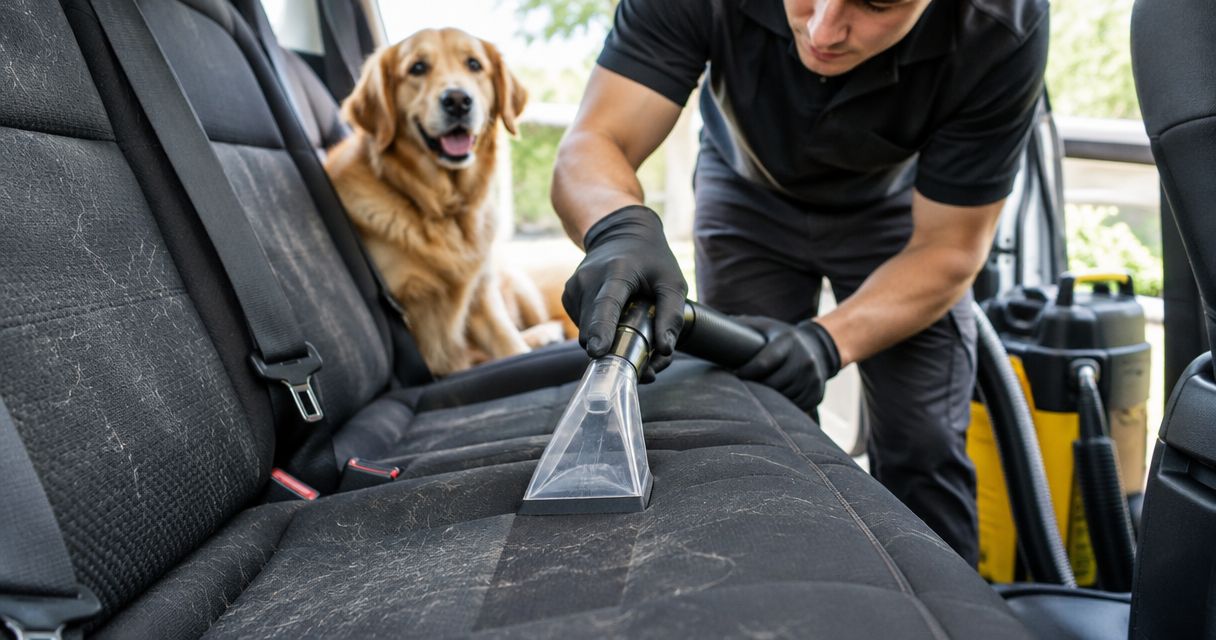
Yes—mobile detailing can remove loose and embedded pet hair, but the detailer needs an appropriate method and an agreed scope. A vacuum collects accessible hair; upholstery-safe agitation helps release strands caught in the material. Those tasks work together rather than replacing each other.
A sensible process starts with inspection, moves through dry removal, and ends with a check of the treated areas. Shampooing belongs in the plan when the upholstery also needs wet cleaning, not simply because hair is present.
- Inspect the seats. Identify the upholstery, worn areas, stitching, perforations, and places where hair has collected. Discuss any existing damage before work starts.
- Remove loose debris. Clear accessible hair and dirt with suitable vacuum attachments. This makes the remaining embedded strands easier to see.
- Loosen trapped hair. Use tools suited to the material and its condition. Aggressive scrubbing is not an acceptable substitute for careful removal.
- Vacuum again. Collect the released hair instead of pushing it into another seam or onto the carpet.
- Check the result. Review cushions, backrests, seams, and adjacent areas. Discuss any remaining hair or material limitations before calling the work complete.
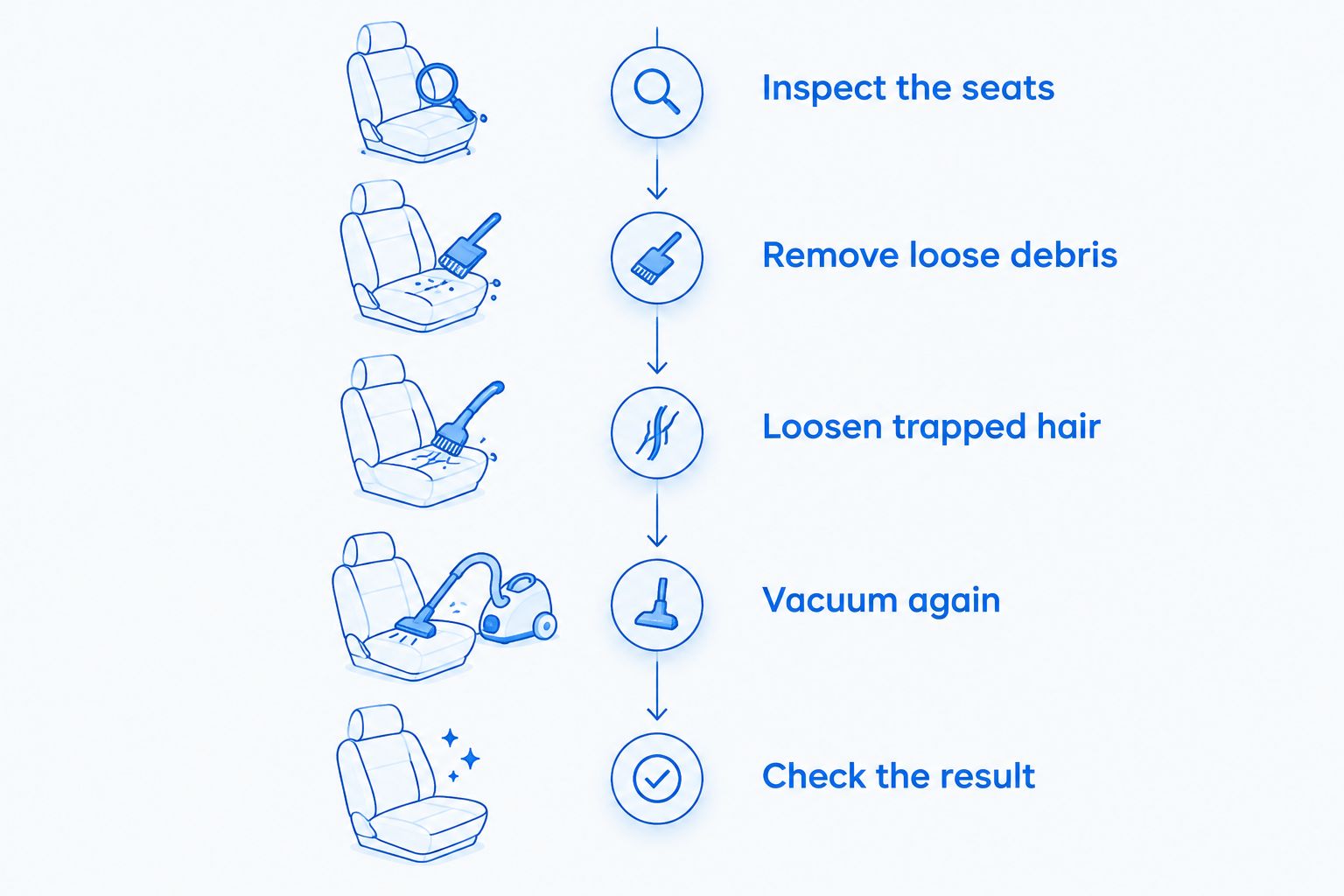
For a 2026 appointment, ask whether that process fits the service being discussed. A package name alone does not explain how much attention embedded hair will receive.
Which cleaning method fits the problem?
No single tool answers every pet-hair problem. The useful question is what the method does, where it fits, and what it leaves unresolved.
| Method | Best for | Main benefit | Limitation |
|---|---|---|---|
| Vacuuming | Loose hair and accessible debris | Collects hair without wetting upholstery | Does not reliably release every embedded strand |
| Upholstery-safe agitation | Hair caught in fabric | Helps loosen strands for collection | The wrong tool or pressure can damage material |
| Lint rolling | Light surface hair between details | Convenient for small touch-ups | Does not replace seam cleaning or deep removal |
| Upholstery shampooing | Compatible fabric with soil or stains | Addresses cleaning needs beyond loose debris | Does not replace deliberate pet-hair removal |
Choose a process matched to the upholstery, not the most aggressive tool. If your seat already has loose threads, a worn finish, or damaged stitching, point those areas out before cleaning begins.
Cloth seats: embedded hair needs deliberate removal
Cloth seats give hair places to catch among the fibers. Some strands sit on top and vacuum away readily; others remain woven into the surface after a basic pass. A seat that looks tidy from the doorway can still have visible hair when you inspect it closely.
The practical approach is to loosen and collect hair in manageable sections. Repeated vacuuming without releasing trapped strands does not address the reason they remain. Equally, forceful brushing can pull at vulnerable fabric instead of solving the problem safely.
For cloth upholstery, ask what the detailer recommends for the specific material. Mention whether previous cleaning has caused fuzzing, color changes, or loose fibers. Preserving the seat matters more than chasing a final strand with an unsuitable tool.
Leather and perforated seats: protect the finish
Leather seats still collect pet hair, particularly around seams, cushion edges, and gaps beside the backrest. A smooth seating surface does not mean the whole seat is easy to clean. Perforations and trim joints need careful attention.
Avoid treating leather like carpet. Abrasive scrubbing can damage the finish, while unnecessary liquid can enter openings. The vehicle manufacturer's care instructions should guide material compatibility and cleaning precautions.
For a luxury or performance vehicle, identify any unusual upholstery before your 2026 appointment. That includes delicate trim and existing wear. A useful consultation addresses what can be cleaned safely, not just how clean the seat might look afterward.
Why pet-hair removal varies
The difficulty comes from the hair, the surface, and the areas included in the job. These factors explain why a quick description such as “some dog hair in the back” is less useful than clear photos and a specific request.
- Upholstery texture. A woven seat and a smooth surface hold hair differently. The method should suit the material rather than follow one fixed routine.
- Hair characteristics. Fine strands, short hairs, and longer fur can catch differently in fabric. Describe what remains after your usual vacuuming.
- Amount and distribution. Hair concentrated on a cushion is a different task from hair spread across seats, carpets, mats, and the cargo area.
- Access. Seat gaps, fixed trim, and tight spaces affect what tools can reach. Do not assume the service includes removing seats or interior panels.
- Material condition. Loose stitching, worn finishes, and damaged fabric limit how aggressively an area should be worked.
- Other contamination. Mud, oily residue, stains, and pet accidents require separate cleaning decisions. Removing hair does not resolve every condition around it.
Ask for expectations based on the actual interior. A promise made without understanding the material or condition is not a useful substitute for an assessment.
What should you tell a mobile detailer before booking?
Describe where your pet rides and which areas you want addressed. “Rear bench, seat seams, floor mats, and cargo carpet” gives a clearer scope than “interior cleaning.” Include the front seats if hair travels there on clothing or blankets.
For your 2026 booking, send clear photos of the seating surface and close-ups of stubborn areas. Include a wider view so the detailer can understand the spread. Photos help explain the request, but an in-person inspection still matters for material condition and access.
Ask these questions before agreeing to the service:
- Does the proposed service include embedded pet-hair removal?
- Which seats, carpets, mats, and cargo surfaces are included?
- How will the method change for worn or delicate upholstery?
- Are stains and odors part of the same request or separate concerns?
- What limitations should you expect around inaccessible gaps?
- Will any wet-cleaned upholstery need drying before you use it?
Royal Touch Mobile Detailing LLC serves customers throughout North Carolina and parts of Virginia and South Carolina. Discuss your location, vehicle, and interior condition directly; do not assume that a general service description confirms a particular pet-hair treatment.
Discuss your interior detailing needs
Describe the pet hair, seat material, and areas you want included before scheduling.
Will shampooing remove pet hair from car seats?
Shampooing does not replace deliberate pet-hair removal. Wet cleaning addresses compatible upholstery that needs cleaning for soil or stains, while trapped strands still need to be loosened and collected. A seat can need both tasks for different reasons.
Ask why shampooing is recommended for your interior. If the main complaint is dry fur, the explanation should address fur removal rather than jump straight to a wet treatment. If stains are also present, ask how drying will be handled before the vehicle returns to use.
Does removing pet hair also remove pet odor?
Pet-hair removal does not automatically remove pet odor. Hair, soiled fabric, damp materials, and residue from an accident are separate cleaning concerns. A visibly improved seat is not proof that the source of an odor has been addressed.
Tell the detailer about known accidents and where they happened. Fragrance does not establish that the underlying contamination is gone. Request a separate assessment when odor remains after loose hair and debris have been removed.
Can a detailer remove every strand of pet hair?
A detailer should not promise removal of every strand before inspecting the interior. Deeply trapped hair, inaccessible spaces, and fragile upholstery create limits. Ask what result is realistic for the specific areas included.
Review the finished work in good light, especially where the seat cushion meets the backrest. If hair remains, ask whether another safe pass is appropriate. The right stopping point protects the material rather than sacrificing it for an absolute claim.
How can you prepare without making the job harder?
Remove personal belongings so the detailer can reach the agreed areas. Take out loose blankets and pet accessories, and follow the relevant manufacturer's instructions for cleaning them. Otherwise, hair left on those items can return to a freshly cleaned seat.
Avoid experimenting with stiff brushes, household cleaners, or sticky materials immediately before the appointment. An unfamiliar method can create a second problem, particularly on delicate trim. Tell the detailer what you have already used, even if it seemed harmless.
For ongoing care in 2026, concentrate on the surfaces your pet actually touches. A removable, vehicle-appropriate seat cover can make routine cleanup easier, but it must not interfere with airbags, seat belts, or other safety equipment. Follow the vehicle and cover manufacturers' instructions.
FAQ
Can mobile detailing remove pet hair from seats at my home?
Yes, mobile detailing can remove pet hair from seats at your home when the provider accepts the location and the work is included. Confirm property access, workspace requirements, and the areas to be treated before scheduling.
Is a regular vacuum enough to remove dog hair from cloth seats?
A regular vacuum collects loose dog hair but does not reliably release every strand embedded in cloth. Material-appropriate agitation followed by vacuuming addresses hair that remains caught in the fibers.
Should I shampoo my car seats before the detailer arrives?
Do not shampoo the seats first unless the detailer specifically recommends it. Discuss the hair, stains, upholstery material, and any products already used so the cleaning approach addresses the actual condition.
Can pet-hair tools damage leather seats?
Unsuitable pet-hair tools and aggressive pressure can damage leather finishes. Use the vehicle manufacturer's care guidance and ask how the proposed method protects seams, perforations, and worn areas.
Does pet-hair removal include the trunk and floor mats?
Pet-hair removal includes the trunk and floor mats only when those areas are part of the agreed scope. Name each area you want treated rather than assuming an interior service covers every surface.
Will mobile detailing make my car safe for someone with pet allergies?
Mobile detailing should not be treated as a guarantee that a vehicle is safe for someone with pet allergies. Removing visible hair does not establish that allergens are absent; discuss medical concerns with a qualified healthcare professional.
What should I ask before booking pet-hair removal in 2026?
Before booking pet-hair removal in 2026, ask whether embedded hair is included and which surfaces will be treated. Also discuss upholstery condition, access limitations, stains, odors, and drying if wet cleaning is recommended.
One last thing
Clean the pet blanket as well as the seat. Returning a hair-covered blanket or carrier to the vehicle can undo part of the visible improvement immediately. Follow its care instructions and put it back only when it is clean and appropriately dry.
At the final inspection, look beyond the center of the cushion. Check the edges, backrest junction, and nearby carpet against the scope you agreed to. That gives you a practical way to assess the work without relying on a promise of a hair-free interior.