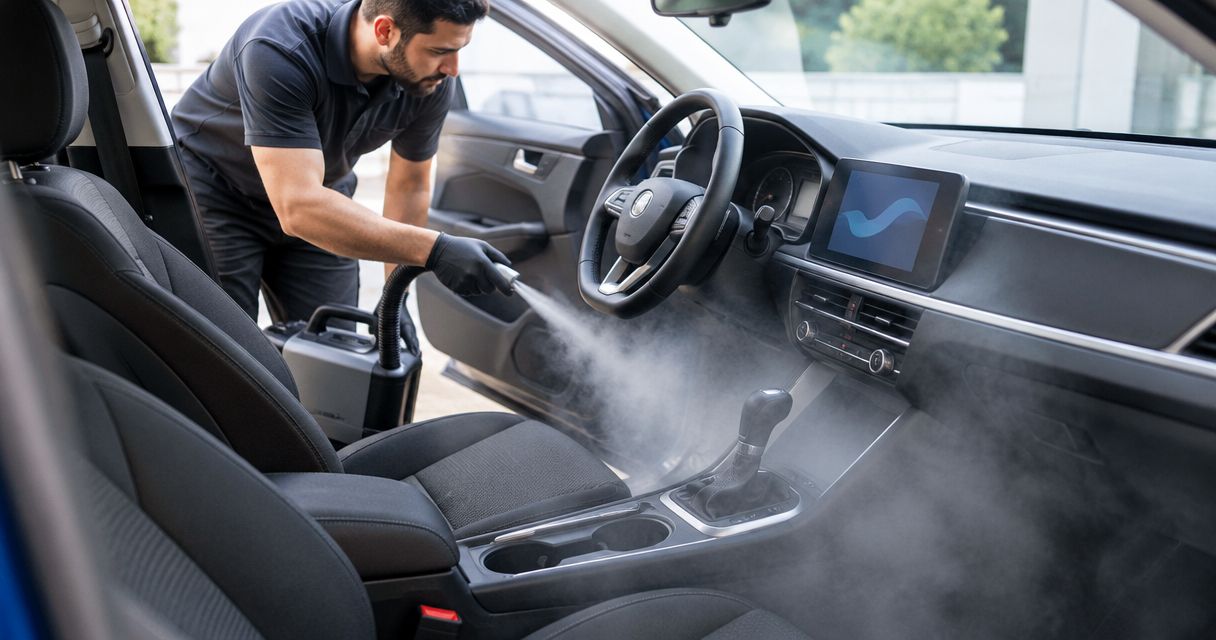
Yes, mobile detailing can remove smoke odor from a car when the cleaning addresses smoke residue rather than covering it with fragrance. Deep contamination in upholstery, the headliner, or ventilation system can require work beyond a standard interior detail. Ask for an inspection and a source-focused cleaning plan, not a promise that every smoke smell will disappear.
- Can mobile detailing remove smoke odor from a car? Yes, but cleaning must address the source.
- Royal Touch Mobile Detailing LLC offers mobile vehicle care; discuss smoke contamination before choosing your service.
- Interior detailing should address contaminated surfaces, not just add fragrance or vacuum visible debris.
- Persistent smoke odor can require attention to upholstery, the headliner, and the ventilation system.
Why this matters
Smoke odor is more than an unpleasant smell during your commute. Tobacco smoke leaves residue on interior surfaces, including places you rarely touch or see, so a clean-looking cabin can still smell smoky.
Faith-driven service and doing work right the first time guide Royal Touch Mobile Detailing LLC, a family-owned business providing mobile auto, RV, and aviation detailing. Royal Touch Mobile Detailing LLC is best for owners seeking mobile vehicle detailing rather than a shop visit. For a smoke-affected vehicle, confirm the cleaning scope and limitations before booking.
When you book in 2026, describe the odor specifically. A general request for an interior detail does not tell a detailer whether you need crumbs removed, upholstery cleaned, or smoke contamination assessed.
Can mobile detailing remove smoke odor from a car?
Yes. Mobile detailing can remove smoke odor by cleaning the surfaces and materials holding the residue, provided the contamination is accessible and the treatment suits the interior. The important difference is removing the source versus making the cabin smell different temporarily.
Use this comparison to understand what a proposed treatment actually addresses. These are cleaning approaches to discuss, not a statement that every mobile detailer offers each one.
| Approach | Best for | Benefit | Limitation |
|---|---|---|---|
| Vacuuming | Loose ash and debris | Removes material from carpets, mats, and crevices | Does not remove all sticky or absorbed smoke residue |
| Surface cleaning | Residue on washable interior surfaces | Cleans contamination from compatible trim and glass | Requires material-safe products and careful application |
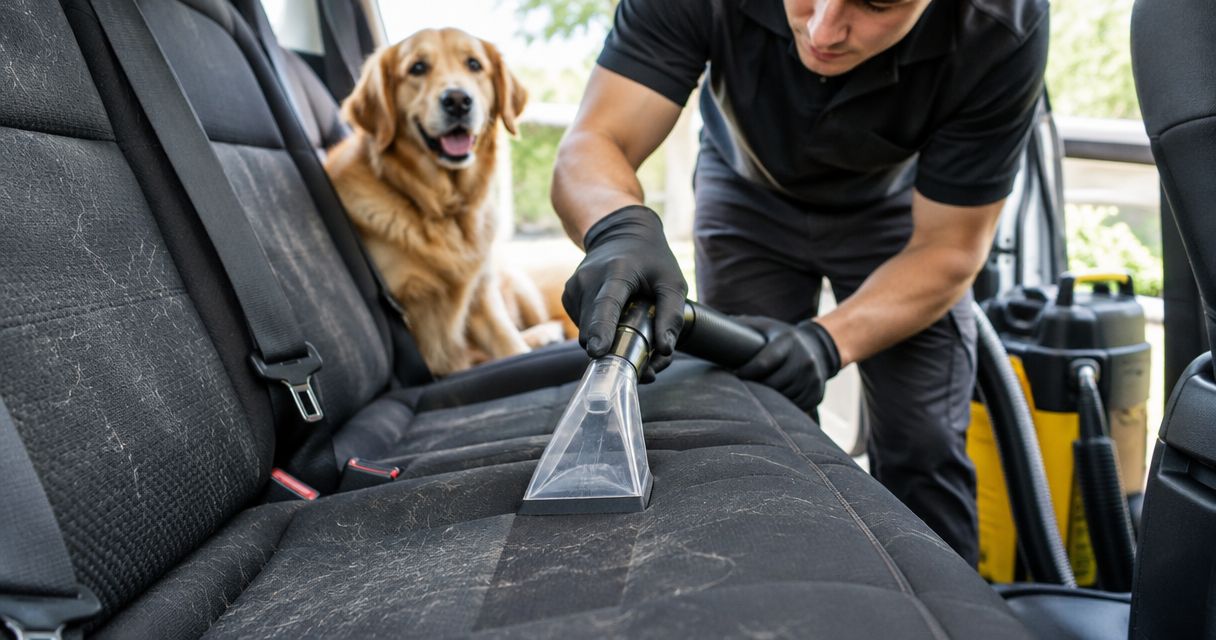
| Upholstery extraction | Suitable fabric seats and carpets | Flushes loosened contamination from compatible textiles | Does not suit every material; drying matters |
| Fragrance | Adding a chosen scent | Changes the immediate cabin smell | Does not remove smoke contamination |
| Cabin filter inspection | Odor associated with airflow | Identifies a potentially contaminated filter | Does not clean the rest of the ventilation system |
A useful plan explains which materials need cleaning, which methods are appropriate, and what falls outside the appointment. An exterior wash alone does not address smoke residue inside the cabin.
Recent smoke exposure: inspect before choosing treatment
If smoke exposure was brief, start by identifying where it occurred and removing loose debris. Empty removable ash containers, check beneath seats, and inspect floor mats before deciding how much cleaning the cabin needs.
Do not judge the problem only with the windows open. Fresh airflow changes what you notice without proving that residue is gone.
Tell the detailer whether the smell began after a particular event or has been present since you bought the car. That history gives the inspection a useful starting point without substituting for an actual assessment.
Repeated smoking: look beyond the seats
A car used regularly for smoking needs attention beyond the most obvious contact areas. Residue can collect on glass, trim, carpet, upholstery, and the headliner—the fabric-covered panel above your head.
Cleaning only the seats leaves other potential sources untreated. Likewise, a pleasant scent immediately after cleaning does not establish that the underlying contamination has been removed.
For a used-car purchase in 2026, ask about smoking history before treating a freshly scented interior as evidence of cleanliness. Inspect the cabin itself rather than relying on fragrance or listing photos.
Odor through the vents: separate cleaning from mechanical work
If the smell becomes stronger when the fan runs, tell the detailer before the appointment. The cabin air filter and ventilation system deserve inspection rather than repeated applications of interior scent.
A filter replacement is not the same as cleaning the ventilation system. Neither task automatically removes residue from seats, carpets, or trim.
Ask who will handle work outside the detailer's scope. Do not assume an interior detail includes ventilation-system service or removal of dashboard components.
Why smoke odor removal results vary
The same cleaning approach does not fit every smoke-affected car. These factors determine what needs attention and where a detailer's work reaches its limits:
- Exposure history: Repeated smoking creates more opportunities for residue to accumulate than an isolated exposure.
- Interior materials: Fabric, leather, vinyl, carpet, and headliners require different cleaning methods.
- Contamination location: Accessible trim is different from padding beneath upholstery or concealed ventilation components.
- Previous treatments: Strong fragrance can make it harder to locate the remaining smoke odor during inspection.
- Drying conditions: Wet-cleaned materials need suitable drying before you assess the finished interior.
- Continued smoking: New smoke introduces contamination after cleaning, regardless of how carefully the cabin was detailed.
Explain these conditions honestly. The goal is a suitable plan for your vehicle, not the strongest chemical treatment available.
What should a smoke-focused interior cleaning plan include?
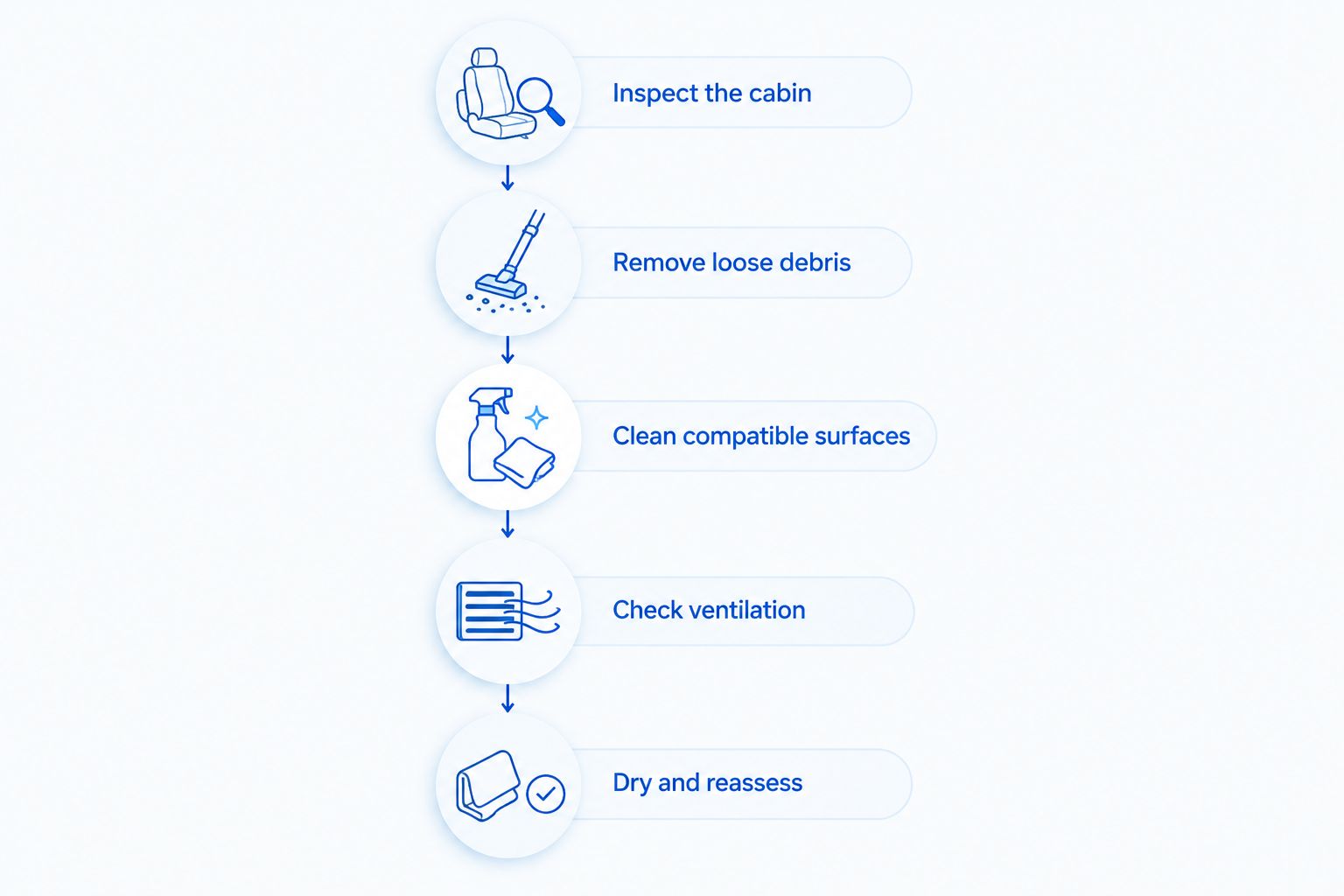
For a 2026 appointment, ask the detailer to walk through the process before work starts. These steps provide a practical discussion guide; the vehicle's materials and condition determine the actual treatment.
Inspect the cabin
Identify the strongest odor areas and discuss the smoking history. Check whether the odor is present with the ventilation off, with the fan running, or both.
Point out delicate trim, damaged upholstery, loose headliner fabric, and previous repairs. Existing damage matters when selecting a cleaning method.
Remove loose debris
Remove trash and personal belongings, then address loose ash and debris in accessible areas. Cupholders, seat gaps, floor mats, and the space beneath seats all deserve attention.
Vacuuming is a preparation step, not proof that smoke residue is gone. It clears loose material so the remaining cleaning addresses the surfaces themselves.
Clean compatible surfaces
Use cleaning methods suited to each material. Glass and washable trim need a different approach from absorbent fabrics or a delicate headliner.
Avoid treating the entire cabin as one washable surface. Excess moisture and aggressive scrubbing can damage materials, especially where fabric, adhesive, electronics, or seams are involved.
Check ventilation
Discuss the cabin filter and any odor associated with airflow. Confirm whether inspection, replacement, or additional ventilation work is included or requires another provider.
Spraying scent into a vent is not a substitute for finding the source. Keep the discussion focused on what will actually be inspected and cleaned.
Dry and reassess
Allow cleaned materials to dry appropriately before evaluating the result. Then check the cabin without relying on an added fragrance to judge whether smoke odor remains.
What should you ask before booking mobile detailing?
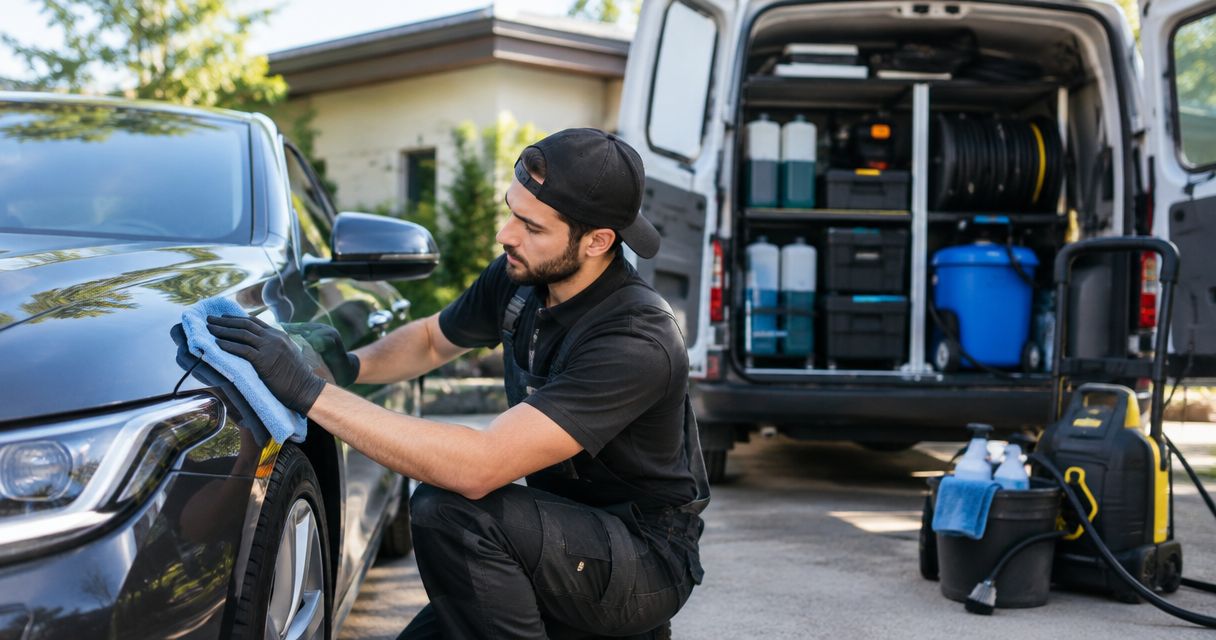
Mobile service brings the work to your location, but the cleaning still needs an appropriate workspace. Confirm access, parking permission, weather arrangements, and any water or electricity requirements directly with the provider.
For Royal Touch Mobile Detailing LLC, describe the smoke problem before selecting mobile detailing services. Its stated vehicle-detailing services do not, by themselves, establish which odor treatments are included in your appointment.
Use these questions to make the conversation specific:
- Does the proposed service address smoke residue, or is it a general interior cleaning?
- Which interior surfaces are included, and which are excluded?
- How will delicate leather, headliner fabric, screens, and trim be protected?
- Is cabin filter work included, excluded, or referred elsewhere?
- What drying arrangements does the vehicle need afterward?
- What is the next step if a particular area still smells after drying?
For a 2026 booking, ask for the agreed scope in writing. A clear description of the work is more useful than a vague label such as a complete refresh.
Discuss Your Interior Detailing Needs
Describe the smoke odor and ask which cleaning steps fit your vehicle.
Will shampooing the seats remove cigarette smell?
Shampooing suitable seats can help remove smoke contamination, but it does not clean the entire cabin. Carpets, trim, glass, the headliner, and ventilation-related sources can still hold odor.
Ask whether the proposed cleaning covers the affected materials rather than assuming seat shampooing is a complete smoke treatment. Repeatedly wetting the same seats without checking other sources is not a substitute for inspection.
Is ozone necessary to remove smoke odor?
Ozone is not a substitute for removing smoke residue, and it is not a treatment to run around people or pets. Ozone irritates the lungs; avoid treating an occupied vehicle or treating the equipment as an ordinary air freshener.
If a provider proposes ozone, ask why it is appropriate, what cleaning happens first, and how safe re-entry is determined. Do not accept an unsupported claim that it makes every smoke-contaminated interior safe or permanently odor-free.
Can a car smell clean but still contain smoke residue?
Yes, a car can smell pleasant while smoke residue remains. Fragrance changes your immediate impression, and removing detectable odor does not certify the absence of tobacco-related contamination.
Ask for a fragrance-free assessment if your priority is identifying remaining smoke odor. Cleaning results and health assurances are different claims; an interior detail should not be presented as proof that every exposure concern has been resolved.
FAQ
Can mobile detailing remove smoke odor from a car permanently?
Mobile detailing can remove smoke odor, but permanent removal is not something to assume before inspection. Hidden contamination and new smoking can leave or reintroduce odor after cleaning.
Will an air freshener get cigarette smell out of my car?
An air freshener does not remove cigarette smoke residue. It adds fragrance while the contaminated materials remain untreated.
Can smoke odor remain in leather seats?
Smoke odor can remain around leather seating, including seams and adjacent materials. Use a cleaning method suited to the leather's finish rather than assuming fabric shampoo is appropriate.
Does replacing the cabin air filter remove all smoke smell?
Replacing a contaminated cabin air filter does not remove smoke residue throughout the car. Seats, carpet, trim, and other affected areas still need assessment.
How long does mobile smoke odor removal take?
The time depends on the affected materials, cleaning scope, and drying requirements. For a 2026 appointment, request a vehicle-specific estimate rather than applying a general interior-detail timeline.
Does Royal Touch Mobile Detailing LLC offer mobile interior care?
Royal Touch Mobile Detailing LLC offers mobile vehicle detailing. Describe the smoke odor before booking and confirm which interior-cleaning steps and any odor treatments are included.
Should I use more shampoo if the smoke smell comes back?
A returning smoke smell calls for reassessment, not automatically more shampoo. Check untreated surfaces, concealed materials, ventilation-related sources, and whether smoking has continued.
One last thing
Ask to assess the finished cabin without added fragrance. That gives you a clearer basis for discussing remaining smoke odor than a strong new scent.
Before your 2026 appointment, remove personal belongings and explain when you notice the smell most. That simple preparation helps keep the conversation focused on the source—and on doing the work right the first time.