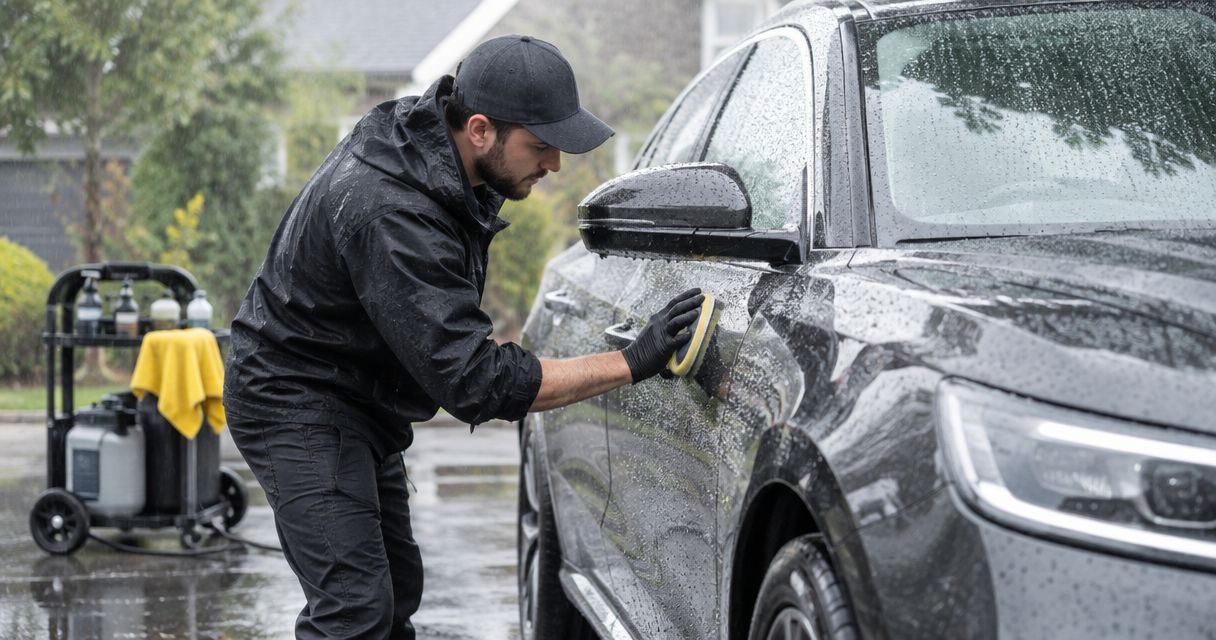
Yes, mobile detailing can be done in the rain when the work area stays dry, conditions are safe, and the service does not require exposed surfaces to remain dry afterward. Interior cleaning is often more practical than exterior finishing during wet weather; paint correction and ceramic coating need a protected workspace and suitable conditions, not just a break between showers.
- Can mobile detailing be done in the rain? Yes, with safe shelter and conditions suited to the service.
- Interior detailing is the practical wet-weather option when open doors and cleaned materials stay protected.
- Paint correction and ceramic coating need dry working conditions; a portable canopy is not always enough.
- Royal Touch Mobile Detailing LLC offers mobile detailing for auto, RV, and aviation customers; discuss weather and access before booking.
Can mobile detailing be done in the rain?
Rain does not automatically cancel mobile detailing, but shelter alone does not make every service suitable. The decision depends on what is being cleaned, whether rain reaches the vehicle, and what happens after the work finishes.
At Royal Touch Mobile Detailing LLC, faith-driven service and doing work right the first time shape the approach to vehicle care. That means matching the job to the conditions rather than treating a wet driveway like a dry indoor workspace.
| Service | Best for during wet weather | Practical benefit | Limitation |
|---|---|---|---|
| Interior detailing | Vehicles with protected door access | Cabin cleaning can proceed without exposing the entire exterior | Rain entering open doors can wet cleaned surfaces |
| Exterior washing | Routine cleaning in a safe, sheltered work area | Removes existing dirt even when the forecast is wet | Rain and road spray can dirty the vehicle afterward |
| Paint correction | Vehicles inside a suitable dry workspace | Controlled conditions support inspection and polishing | Exposed wet panels are unsuitable for the work |
| Ceramic coating | Vehicles with protected application and initial care conditions | Separates coating work from outdoor weather | Protection must continue according to the coating instructions |
| Window tint | Vehicles with protected glass and door access | Interior glass work can remain sheltered | Windblown dirt and rain can interfere with preparation |
Use this table to choose a conversation, not to assume an appointment is approved. The detailer still needs to assess the location, weather, and requested work.
Why this matters
A rainy appointment is not just a question of whether your car will get wet again. Wet weather affects access, electrical safety, visibility, surface preparation, and drying.
For your 2026 maintenance plan, separate routine cleaning from work that depends on controlled conditions. Vacuuming a sheltered cabin and applying a coating to exposed paint are different jobs, even if both appear under mobile detailing.
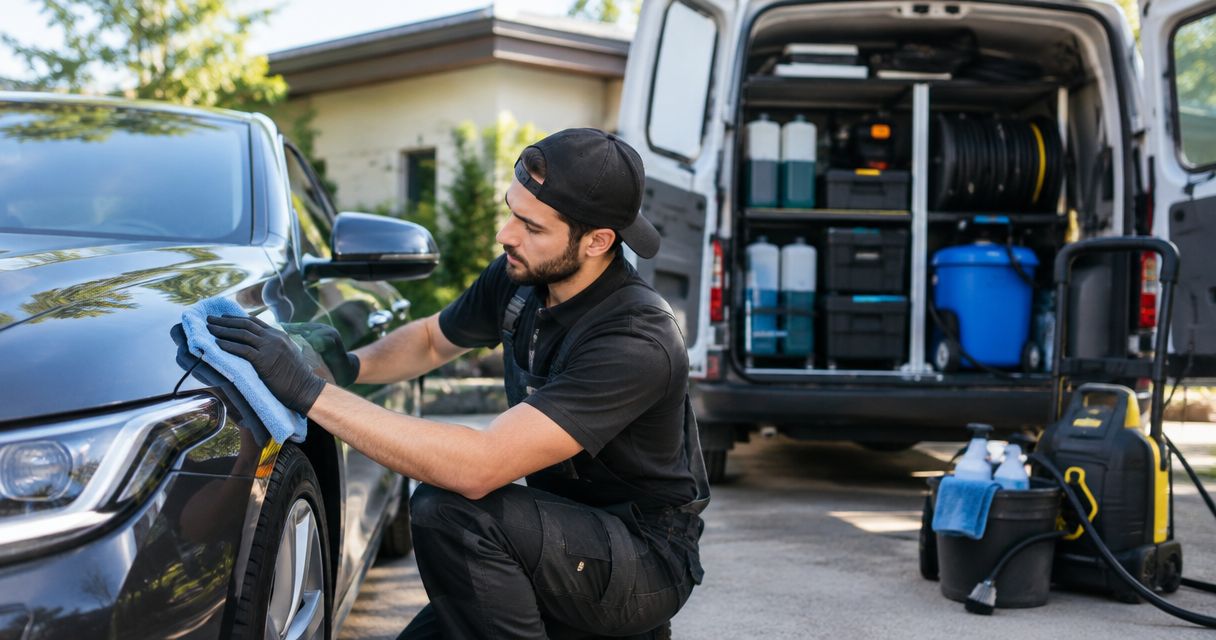
Royal Touch Mobile Detailing LLC is a fit for auto, RV, and aviation owners seeking mobile detailing and vehicle-protection services. Mobile service brings convenience, but the location still has to support the work. Weather does not remove that requirement.
Interior detailing: keep the cabin and door openings protected
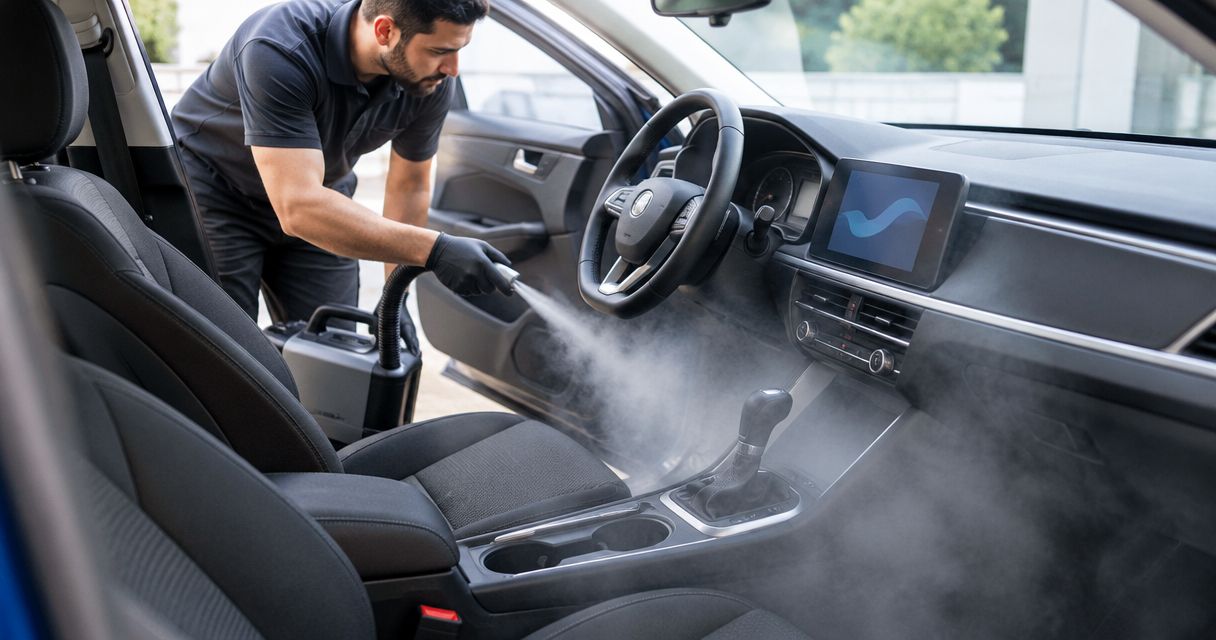
Interior detailing is the most practical rainy-day option when the vehicle sits under suitable cover. Vacuuming, wiping surfaces, and cleaning interior glass do not require the entire vehicle exterior to stay dry.
The weak point is access. A garage roof helps little if the doors open beyond its edge and rain reaches the seats, switches, or carpet.
Before the appointment, explain whether the vehicle fits fully inside the sheltered area with doors open. Include access to the trunk or rear hatch if those areas need cleaning.
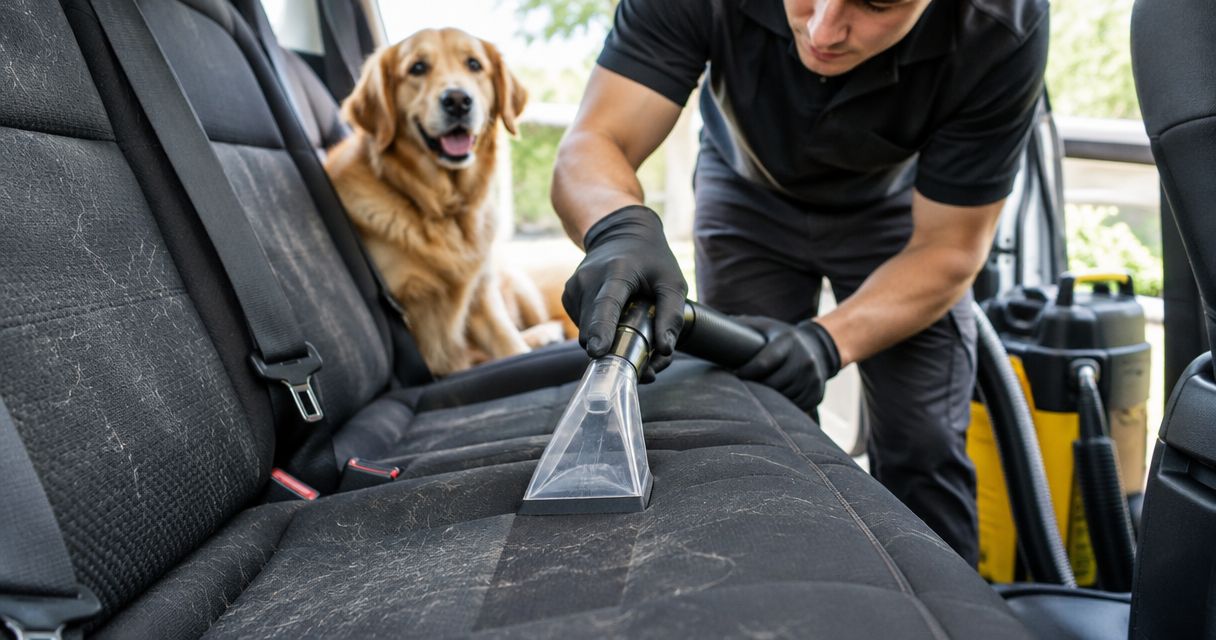
Choose interior work only when the cleaned materials can also dry appropriately. Carpet and upholstery cleaning introduces moisture, so the plan should account for ventilation and drying rather than closing everything up immediately. Ask what care the specific cleaning method requires afterward.
Do not leave windows open in rain to speed drying. A protected, ventilated setting is the goal—not exchanging cleaning moisture for fresh rainwater.
Exterior washing: useful cleaning, with a weather trade-off
An exterior wash can still remove dirt before more rain arrives. Rain does not replace washing because it does not provide the controlled cleaning needed to remove road film and adhered contamination.
However, rain changes the finish expectations. Fresh road spray can mark lower panels on the first drive, while runoff or dripping trees can leave new contamination on a parked vehicle.
For daily drivers, cleaning existing grime can remain worthwhile even with wet weather ahead. For a vehicle being prepared for photographs or an event, schedule the final appearance-focused work around protected parking and the intended use.
A wet forecast in 2026 is therefore a planning issue, not proof that washing is pointless. Decide whether your priority is removing existing dirt or keeping a freshly finished appearance until a specific occasion. Those priorities lead to different scheduling choices.
Paint correction and ceramic coating: protect the whole process
Paint correction needs clean surfaces, suitable lighting, and conditions that support controlled polishing. Rain reaching the working panel interrupts that process and complicates inspection.
Ceramic coating adds another consideration: the vehicle's treatment after application. A dry application area is not enough if the vehicle must immediately leave that area before the coating's instructions permit water exposure.
There is no single drying or curing deadline that applies to every coating. Follow the exact product instructions and the installer's directions rather than borrowing a timeline from another vehicle or product.
The distinction between application and curing matters when discussing how long ceramic coating takes to cure. Ask where the vehicle will stay during each stage, including any period when it needs protection from water.
For a 2026 coating appointment, confirm the shelter plan before arranging your schedule. If the necessary conditions are unavailable, postpone coating rather than treating a temporary pause in rainfall as a complete solution.
Why rainy-day detailing decisions vary
Rain intensity matters, but it is only part of the decision. These factors determine whether the work area supports the requested service:
- Shelter coverage: The roof must protect the working surfaces and the openings used during cleaning.
- Wind exposure: Sideways rain can reach beneath an open-sided carport or canopy.
- Service requirements: Interior cleaning, polishing, coating, and tint installation need different working conditions.
- Drying conditions: Cleaned upholstery and newly applied products need the care specified for the method or product used.
- Site safety: Standing water, slippery ground, lightning, and exposed electrical connections can make work unsafe.
- Vehicle access: Vehicle height, door clearance, equipment placement, and property permission affect whether the site is workable.
A forecast icon cannot answer all of these questions. A description of the parking area and the exact service gives the detailer a much clearer basis for deciding.
How should you prepare for a rainy mobile detailing appointment?
Send the location details before the appointment instead of waiting until the detailer arrives. A photo of the space can show roof coverage, side exposure, and access more clearly than describing it as covered parking.
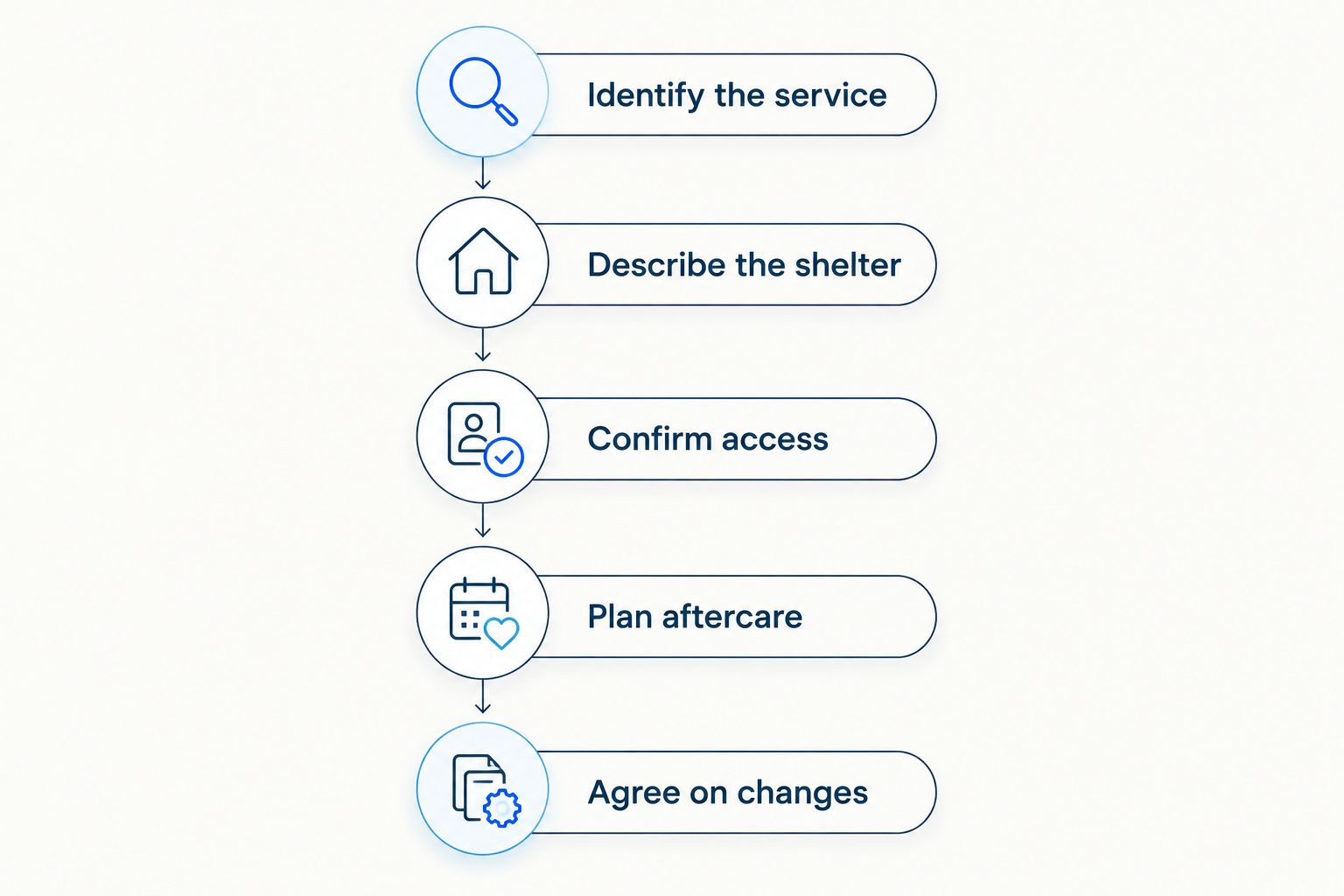
Use this sequence when making your 2026 appointment:
- Identify the service. Say whether you want interior cleaning, exterior cleaning, paint correction, coating, or tint.
- Describe the shelter. Explain whether the area is enclosed, open-sided, or exposed to windblown rain.
- Confirm access. Check door clearance, property permission, and any water or electricity arrangements with the provider.
- Plan aftercare. Explain where the vehicle will stay and whether you need to drive it immediately afterward.
- Agree on changes. Discuss whether unsuitable conditions mean a different scope of work or rescheduling.
Keep the conversation specific. Mention a sloped driveway, a garage filled with storage, or a parking bay shared with other vehicles. Those details affect the workspace more than simply saying there is room to park.
What changes for RVs, premium vehicles, and aircraft?
Vehicle size and access change the rain plan. A shelter that covers a passenger car might leave an RV's roof, rear section, or sidewalls exposed.
For an RV, discuss the entire vehicle rather than only the entrance or front end. Exterior cleaning also requires access around the body; being able to drive beneath a roof does not establish that the work can happen there safely.
Planning drying time for RV detailing means accounting for the cleaned materials, sheltered airflow, and the vehicle's next use—not just when the shower ends. If interior fabrics are cleaned, explain whether the RV will remain parked and ventilated or be closed up for travel.
Premium and performance vehicles deserve the same practical assessment. Existing coatings, delicate finishes, and the requested correction work should guide the process; the vehicle's value does not make outdoor conditions more suitable.
Aircraft require a separate discussion about approved access, sensitive areas, and the operator's procedures. Private aircraft owners, flight schools, and charter operators should coordinate the workspace with the person responsible for the aircraft rather than assuming car-detailing arrangements transfer directly.
Royal Touch Mobile Detailing LLC offers auto, RV, and aviation detailing. Discuss the specific vehicle and location before treating a covered space as suitable for any of those services.
When should you reschedule instead of working around rain?
Reschedule when the location cannot keep the required working surfaces dry, when aftercare cannot be followed, or when weather makes the work unsafe. A booked time is not a reason to compromise the process.
A portable canopy is shade and rain cover, not lightning protection. The National Weather Service advises staying in safe shelter for at least 30 minutes after the last thunder. A substantial building or enclosed hard-topped vehicle provides lightning shelter; an open carport does not.
Do not try to solve every weather problem by moving equipment closer together. Standing water, cords, limited footing, and strong wind require a fresh safety assessment, not a tighter setup.
For a 2026 appointment, agree beforehand on how weather-related changes will be communicated. Do not assume a provider supplies a canopy, has an indoor alternative, or automatically changes the service to interior-only work.
Will rain ruin a freshly detailed car?
Rain does not automatically undo every part of a detail. A cleaned cabin remains cleaned if water stays outside, while exterior surfaces can collect new dirt after the vehicle returns to use.
Freshly applied protection is a different question. Follow the instructions for the specific coating or treatment, especially any restrictions on water exposure, washing, and aftercare.
If rain reaches a newly treated surface sooner than instructed, contact the installer. Do not improvise with household cleaners, aggressive wiping, or another product before getting suitable advice.
Is a garage better than a canopy for rainy-day detailing?
An enclosed garage generally offers better protection from windblown rain than an open-sided canopy. Suitability still depends on room to work, ventilation, lighting, and the service being performed.
A garage is not automatically usable because the vehicle fits inside. Open doors, safe equipment placement, and the ability to complete the work without exposing prepared surfaces also matter.
FAQ
Can mobile detailing be done in light rain?
Yes, mobile detailing can proceed in light rain when suitable shelter keeps the work area protected and conditions are safe. The requested service and its aftercare requirements still determine whether the appointment is practical.
Can I get my car interior detailed when it is raining?
Yes, interior detailing can be practical in rain when door openings and cleaned materials stay protected. Upholstery and carpet cleaning also need an appropriate drying plan.
Can a mobile detailer apply ceramic coating under a canopy?
A canopy alone does not establish suitable ceramic coating conditions. The workspace must meet the product's application requirements, and the vehicle must receive the specified protection afterward.
Does rain wash my car well enough to skip detailing?
No, rain does not replace controlled washing that removes road film and adhered dirt. It also does not clean the cabin or provide paint correction.
Should I cancel my detail if the forecast shows rain?
Contact the detailer before canceling because the service and workspace determine whether the appointment can proceed. Discuss shelter, access, aftercare, and the plan for unsafe weather.
Can mobile detailing continue during a thunderstorm?
Outdoor detailing should stop when thunder indicates a lightning threat. The National Weather Service advises remaining in safe shelter for at least 30 minutes after the last thunder.
Does Royal Touch Mobile Detailing LLC detail RVs and aircraft?
Royal Touch Mobile Detailing LLC offers RV and aviation detailing as well as auto detailing. Confirm the vehicle, location, requested service, and weather arrangements before booking.
One last thing
The most useful weather question is not whether it will rain during the appointment—it is where the vehicle will stay afterward. That answer matters for damp upholstery, newly treated paint, and your expectations for the next drive.
Tell the detailer when you need the vehicle back in use. A plan built around that detail is more practical than one built around the forecast alone.