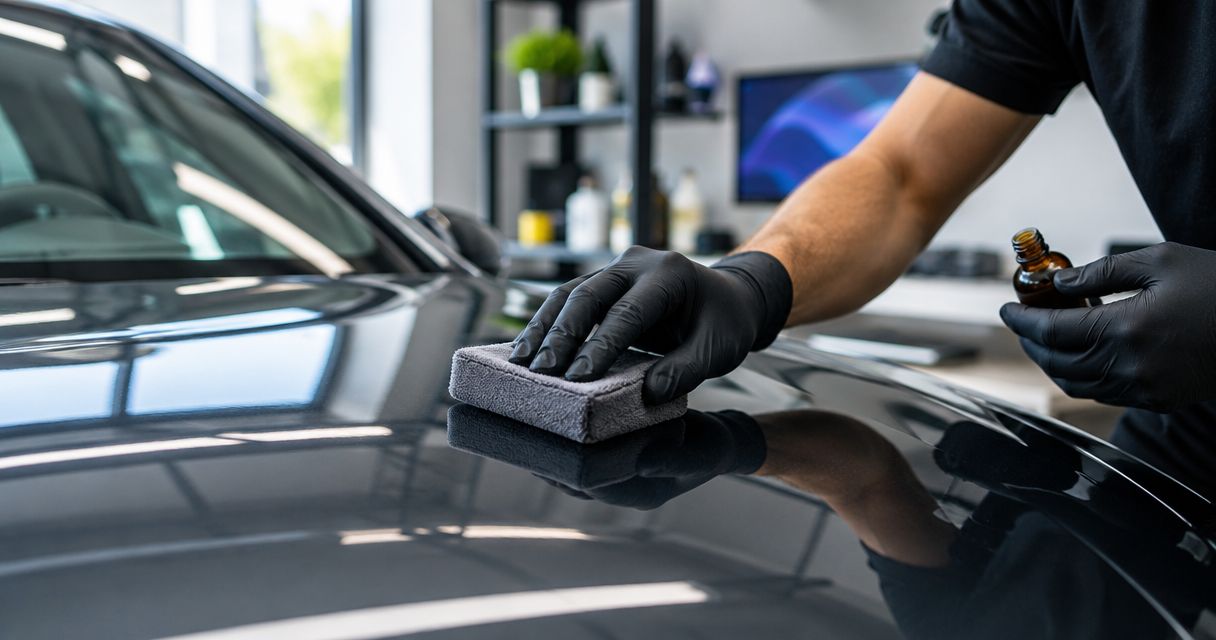
Ceramic coating cure time depends on the exact coating and its application conditions; the manufacturer's instructions determine when you can expose it to water, wash it, and treat it as fully cured. Being ready to drive does not necessarily mean the coating is ready for rain or a wash, so get each restriction separately before taking your vehicle home.
- How long does ceramic coating take to cure? Follow the exact coating's instructions, not a universal countdown.
- Initial setting, water exposure, washing, and full cure are different milestones.
- Royal Touch Mobile Detailing LLC offers ceramic coating; ask for product-specific aftercare before scheduling.
- Plan protected parking and your first wash before application day.
Why this matters
Royal Touch Mobile Detailing LLC brings a faith-driven commitment to doing work right the first time to its auto, RV, and aviation detailing services. That care includes understanding what happens after the application, whether you drive a daily commuter, care for a premium vehicle, or manage an aircraft.
The appointment is not the whole protection plan. You also need a suitable place to park and clear instructions for the period when the coating is still developing its intended properties.
For your 2026 appointment, discuss those arrangements with Royal Touch Mobile Detailing LLC before choosing a date. A coating appointment should fit your actual driving and parking needs, not leave you guessing afterward.
How long does ceramic coating take to cure?
There is no single cure time that applies to every ceramic coating. Use the instructions for the product actually applied, including any requirements tied to temperature, humidity, and the application method.
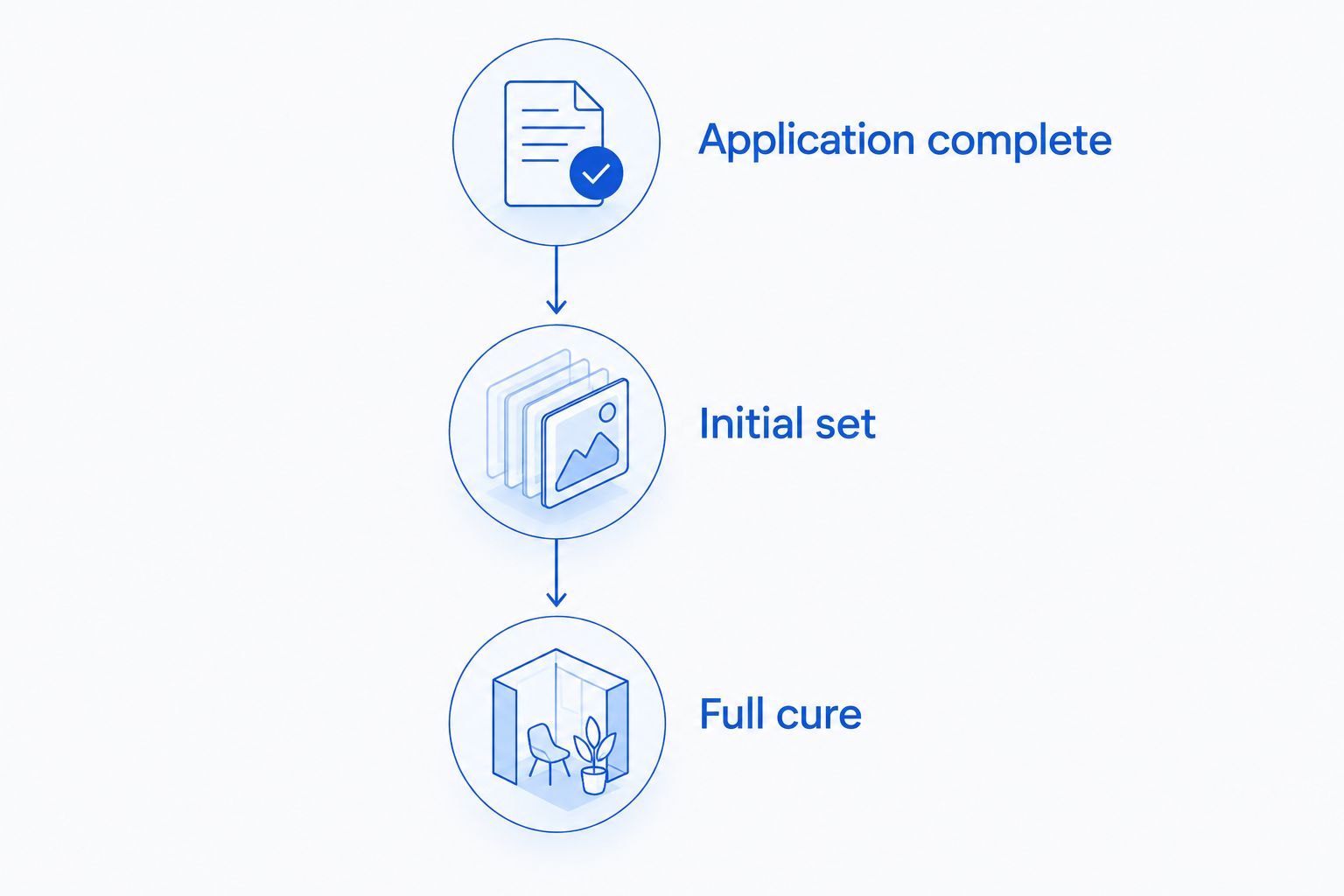
The most useful answer separates the milestones below. A statement such as ready tomorrow is incomplete unless you know exactly what ready means.
| Milestone | What it means | What you need to confirm |
|---|---|---|
| Application complete | The coating has been applied and finished according to its instructions | Whether the vehicle must remain in the application space |
| Initial set | The coating has reached an early stage of setting | Whether moving or driving the vehicle is permitted |
| Water exposure | The product's specified restriction on getting wet has ended | Whether rain, dew, and standing water require different precautions |
| First wash | Washing is permitted under the coating's aftercare instructions | Which wash method and cleaning products are appropriate |
| Full cure | The coating has reached its stated curing milestone | Which ongoing care instructions still apply |
These are questions to ask, not interchangeable labels. Permission to drive does not automatically answer the washing question, and visible water beading does not establish that curing is complete.
Ask for the product name and written aftercare instructions. Keep them somewhere you can find them before your next wash, rather than relying on a remembered conversation.
Initial set is not full cure
A coating can appear dry before it reaches its stated full-cure milestone. Looking at the finish or touching a panel does not give you a reliable cure test.
That distinction matters when your vehicle needs to leave the work area. The installer should explain whether the coating can be moved, what exposure remains restricted, and what conditions are required afterward.
Think of application and curing as connected but separate parts of the job. Application is the work performed on the vehicle; curing is the product-dependent process that continues under specified conditions.
Do not test a fresh coating with water, a towel, or a cleaning chemical just to see whether it is ready. Follow the written release conditions instead of creating your own test.
Water exposure and the first wash need separate instructions
Rain and washing are not the same event. Washing adds cleaning chemicals, handling, and a drying process, so permission for water exposure should not be treated as permission to wash.
Ask specifically about dew if the vehicle stays outside overnight. A dry afternoon does not describe the conditions your vehicle will face through the entire restricted period.
Also ask what to do if exposure happens unexpectedly. The right response depends on the coating and its stage of cure; immediately scrubbing or applying another product is not a sound default.
Your first wash should follow the coating manufacturer's guidance on timing, chemicals, and technique. Save those instructions for whoever washes the vehicle, including another household member or a fleet employee.
Why ceramic coating cure time varies
The coating's instructions are the starting point. These factors explain why an aftercare schedule should match the actual job rather than a general internet answer:
- Coating formulation. Different products have different application and curing requirements. The word ceramic alone does not identify a schedule.
- Temperature. The air and surface conditions must meet the product's requirements. A time estimate without those conditions is incomplete.
- Humidity. Moisture conditions affect the curing behavior of moisture-reactive coatings. Use the humidity guidance for the selected product.
- Application process. Required intervals between layers and any specified curing equipment belong to the installation instructions, not a universal rule.
- Post-application environment. A protected indoor space and an exposed driveway present different risks of dew, rain, dust, and contamination.
For a 2026 booking, ask the installer which conditions the schedule assumes. If those conditions change, get updated directions rather than keeping the original countdown unchanged.
Covered parking helps manage exposure, but covered does not necessarily mean dry or climate-controlled. Describe your parking space accurately so the aftercare plan reflects where the vehicle will actually sit.
Plan the appointment around your real schedule
Start with the next time you must use the vehicle. Then work backward with the installer to establish whether application, initial setting, and your expected exposure fit that schedule.
Use this checklist before confirming the appointment:
- Identify the coating. Ask for the exact product name and its written aftercare requirements.
- Describe your parking. Explain whether you have an enclosed garage, a carport, or open parking.
- Explain your next trip. Mention commuting, outdoor parking, travel, or other use that cannot be postponed.
- Separate the milestones. Confirm driving, water exposure, first washing, and full cure individually.
- Agree on an exposure response. Ask whom to contact and what to do if rain or contamination reaches the finish early.
- Keep the instructions. Share them with anyone responsible for driving, parking, or washing the vehicle.
This is especially useful for a daily driver. You do not need a complicated maintenance system, but you do need an aftercare plan you can follow.
Royal Touch Mobile Detailing LLC is a fit for vehicle owners seeking mobile detailing and ceramic coating services. The convenience of mobile service does not remove the coating's environmental requirements or your responsibility to follow aftercare instructions.
Plan your ceramic coating appointment
Discuss your vehicle, parking conditions, and coating aftercare before choosing a date.
Preparation time is separate from cure time
A ceramic coating appointment can include cleaning, surface preparation, and paint correction before the coating is applied. Those tasks do not count as post-application curing time.
This distinction prevents a common scheduling mistake: treating the time spent detailing as if it also satisfied the coating's cure requirements. Ask when application finishes and which event starts each aftercare interval.
Paint condition also affects the work required before coating. If correction is part of your plan, read how long paint correction takes to complete and discuss that preparation separately from coating aftercare.
For your 2026 schedule, request an appointment plan with clear handoff instructions. You need to know both when the work ends and what remains restricted afterward.
What should you do if it rains before the coating cures?
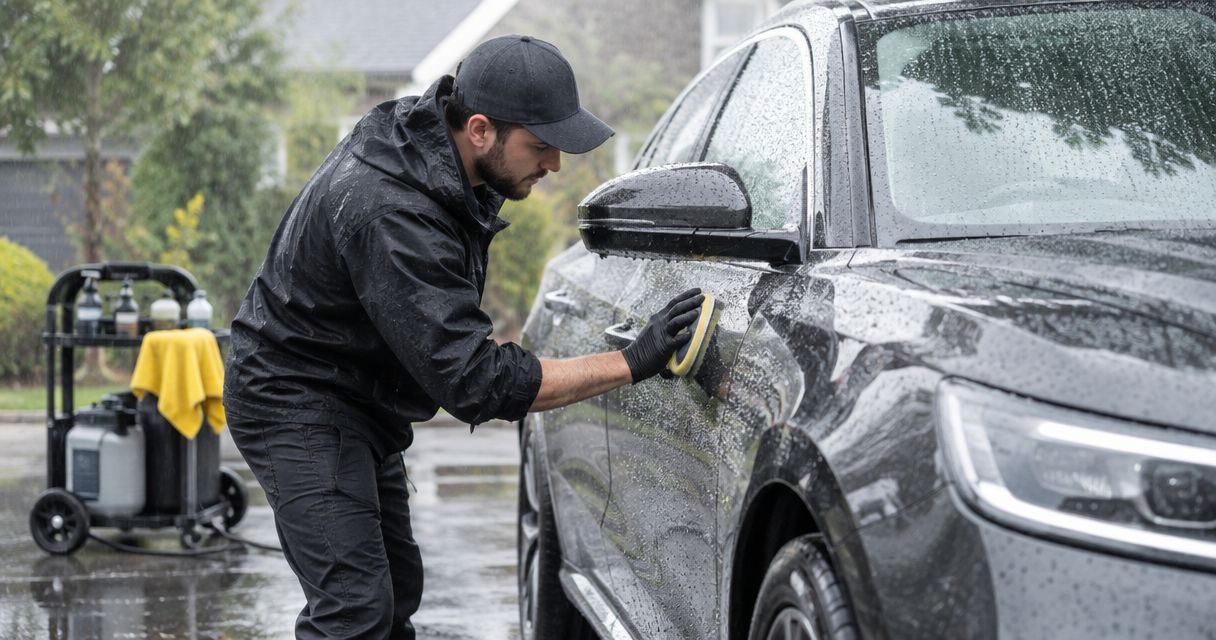
Contact the installer and describe when the coating was applied, when it got wet, and whether water remains on the surface. Follow the response specified for that coating rather than assuming that rain either ruined it or caused no problem.
Do not reach straight for polish, a water-spot remover, or another protective product. Those products change what is happening on the surface and should not be your first response without direction.
If practical, move the vehicle to an appropriate sheltered area without touching the finish. Then ask whether drying or inspection is needed and how it should be handled.
The same approach applies to bird droppings or other contamination: get prompt, product-specific advice. Waiting indefinitely and aggressive cleaning are not the only choices.
Can you drive before ceramic coating fully cures?
Driving before full cure is permitted only when the coating's application and aftercare instructions allow it. Ask about your actual trip, including weather, road spray, parking, and whether the vehicle will remain outside afterward.
A short drive in dry conditions and a wet highway trip create different exposure conditions. Describe the intended use instead of asking only whether you can drive.
If the coating's requirements conflict with an essential trip, change the appointment or arrange another vehicle. Do not turn a scheduling problem into an improvised curing procedure.
Does the same advice apply to RVs and aircraft?
The principle is the same: use instructions for the exact coating and the surface receiving it. Do not transfer a passenger-car schedule to another product or application without confirmation.
For an RV, discuss where the vehicle will remain after application and whether that space protects the coated surfaces from weather. Its parking arrangement matters just as much as the date on the calendar.
For aircraft, coating care must remain consistent with applicable aircraft maintenance instructions and operational requirements. Private owners, flight schools, and charter operators should coordinate the work with the people responsible for aircraft maintenance and release to service.
Convenience matters, but it does not replace surface compatibility or an appropriate return-to-use decision. Ask those questions before the work begins.
FAQ
How long does ceramic coating take to cure in 2026?
Ceramic coating cure time depends on the exact product and its specified application conditions. Get separate instructions for driving, water exposure, washing, and full cure rather than using a universal countdown.
Can I leave my car outside after ceramic coating?
Leave your car outside only when the coating's aftercare instructions permit the expected exposure. Discuss rain, overnight dew, and your parking arrangement with the installer before application.
Does water beading mean my ceramic coating is fully cured?
Water beading does not establish that a ceramic coating is fully cured. Follow the product's curing instructions rather than testing the surface with water.
Can I wash my car as soon as I am allowed to drive it?
Permission to drive does not automatically mean permission to wash. Confirm the first-wash timing, cleaning products, and wash method separately.
Will hot weather make ceramic coating cure faster?
Hot weather is not a reason to shorten the specified curing schedule. Use the coating's temperature requirements and ask the installer whether actual conditions change the instructions.
What should I ask before booking ceramic coating in 2026?
Ask which coating will be applied, where the vehicle must stay afterward, and when driving, water exposure, and washing are permitted. Request written aftercare instructions you can share with anyone who handles the vehicle.
Does ceramic coating mean I can stop washing my car?
Ceramic coating does not eliminate washing. Follow the product's ongoing maintenance instructions after the initial curing restrictions end.
One last thing
The most useful question at handoff is not simply when is it cured. Ask: What can I do with the vehicle now, and what must still wait?
For your 2026 appointment, put those answers in your calendar and share them with anyone who washes or drives the vehicle. A clear handoff is more useful than a countdown that leaves you guessing about rain, parking, or the first wash.