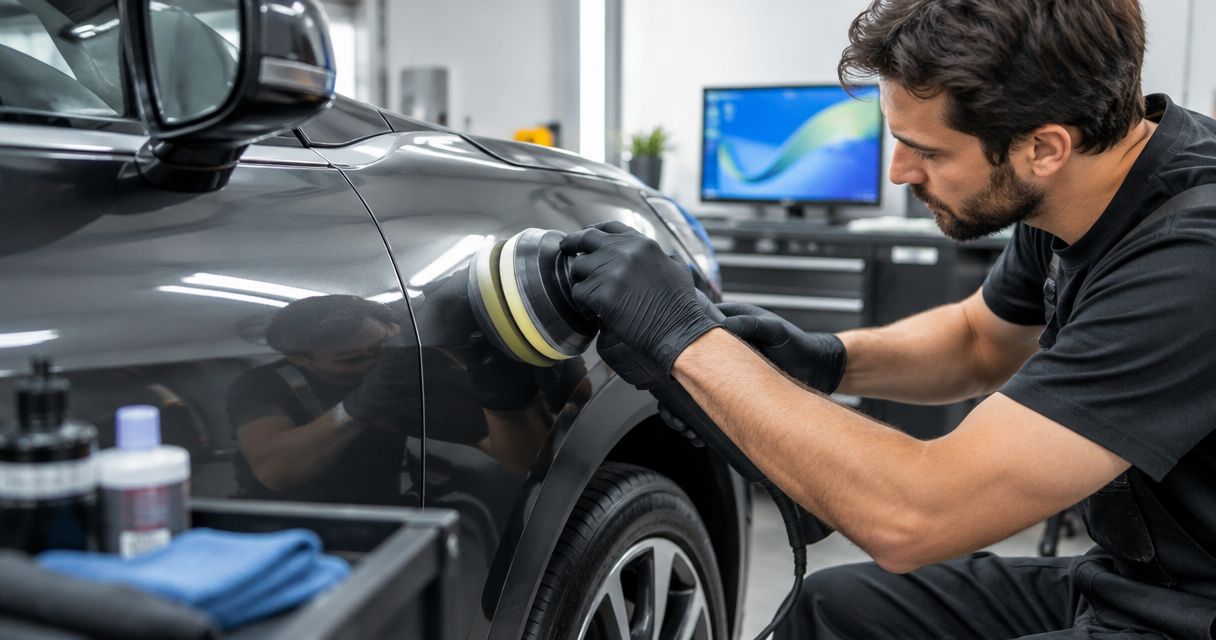
Paint correction has no fixed completion time: the schedule depends on the paint’s condition, vehicle size, preparation, and polishing work agreed after inspection. The full appointment also includes cleaning and checking the finish, while any added protection has its own application and aftercare requirements. Doing the work right the first time means setting the schedule around the paint—not promising a finish time before seeing it.
- How long does paint correction take? Inspection and the agreed correction scope determine the schedule.
- Royal Touch Mobile Detailing LLC offers paint correction and ceramic coating; discuss preparation and protection together.
- A 1-step polish and a 2-step correction involve different amounts of work; neither guarantees scratch removal.
- Ask for both the estimated completion time and any restrictions before driving, washing, or exposing new protection to water.
Why this matters
An appointment that fits your calendar still needs to fit your vehicle. A quick gloss improvement and a more involved correction are different jobs, even when both are described as paint correction. Compare the work included before comparing completion times.
Royal Touch Mobile Detailing LLC brings a faith-driven commitment to doing work right the first time, with experience serving premium vehicles and aircraft. For owners seeking mobile paint correction and vehicle protection, Royal Touch Mobile Detailing LLC is a service option that brings both services together. Mobile service adds convenience, but the paint still needs careful preparation and inspection.
For your 2026 appointment, explain when you need the vehicle back before agreeing to the work. That gives the conversation a practical starting point without making your deadline the standard for the finish.
How long does paint correction take to complete?
The useful estimate is the one tied to your vehicle and the agreed result. Photos help start the conversation, but lighting, contamination, previous repairs, and the condition of the finish affect what a detailer sees during inspection. A schedule should account for the whole job rather than polishing alone.
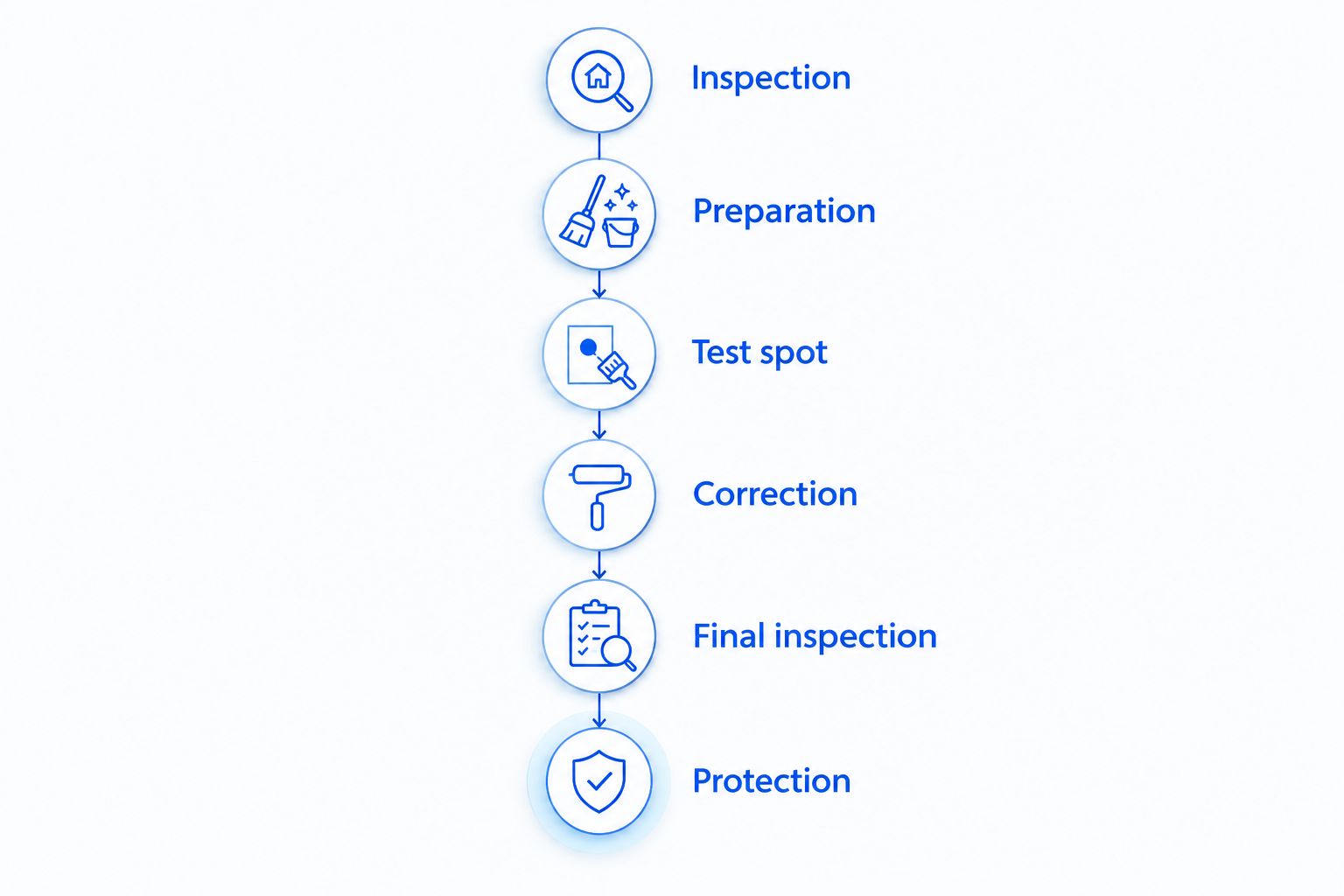
Ask your detailer to explain these parts of the appointment:
- Inspection: Review the visible defects, paint history, sensitive areas, and your appearance goals.
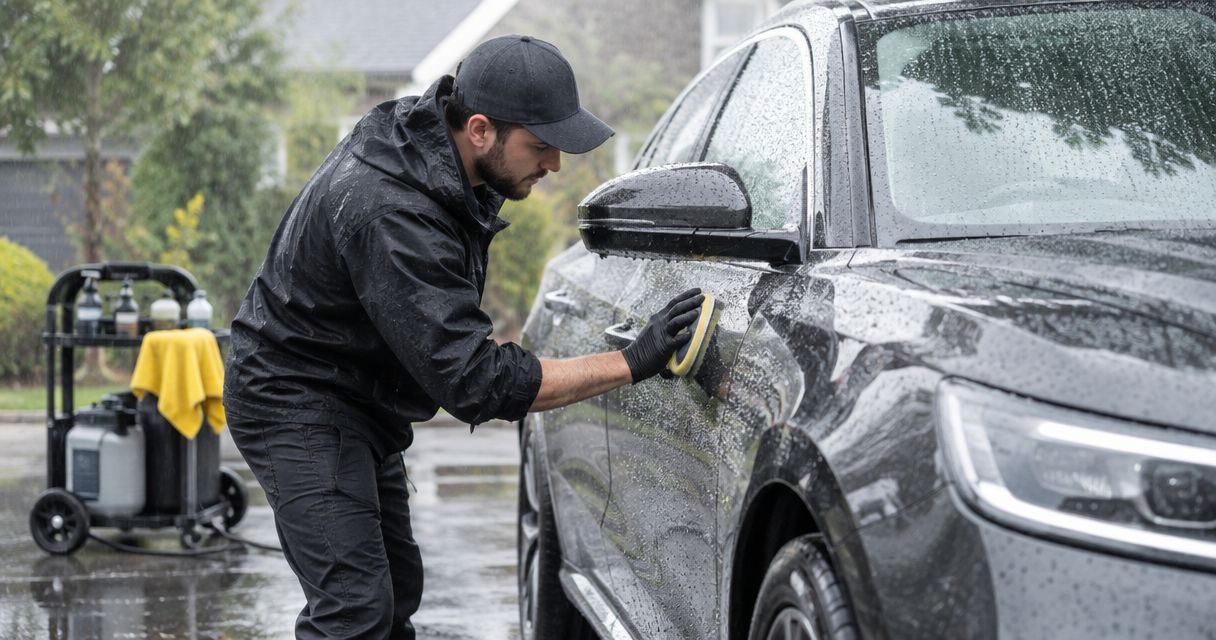
- Preparation: Wash the vehicle and remove contamination that interferes with evaluating or polishing the surface.
- Test spot: Check a small area to establish an appropriate polishing approach and realistic expectations.
- Correction: Work through the agreed areas using the selected polishing process.
- Final inspection: Check the finish under suitable lighting and address any remaining work within the agreed scope.
- Protection: Apply any agreed protective treatment and explain its aftercare separately.
These are work phases, not a fixed appointment formula. Preparation and inspection remain necessary even when the polishing scope is limited. If you also request interior detailing or another service, ask how that changes the overall appointment.
For scheduling in 2026, request an estimated completion window after the scope is clear. Also ask what happens if the test spot shows that the original approach needs changing. Additional work should be discussed before the scope expands.
1-step paint correction: a simpler polishing scope
A 1-step paint correction uses a single polishing stage intended to improve the finish. It balances defect reduction and appearance within that stage rather than separating heavier correction from a dedicated finishing stage.
Best for: Owners seeking a practical improvement in gloss and lighter visible defects, provided inspection supports that approach. The advantage is a simpler polishing scope. The limitation is that deeper defects and some visible marks remain outside what that approach can safely achieve.
One stage does not mean one quick pass across the vehicle. The detailer still works section by section, checks the result, and adjusts technique to the surface. Vehicle size, preparation, and access remain part of the schedule.
For a daily driver, discuss the marks that actually bother you. A finish that looks cleaner and more consistent can be a useful goal without pursuing every scratch. Choose the result you need, not the largest stage count.
2-step paint correction: correction followed by refinement
A 2-step process separates a more corrective polishing stage from a finishing stage. The first addresses suitable defects; the second refines the finish left by that work. These are distinct tasks, not simply repeated names for the same service.
Best for: Owners whose paint assessment supports more involved correction and a separate refinement stage. The benefit is room to address defects and finishing quality independently. The trade-off is additional polishing work, with the same need to respect the finish’s condition.
A 2-step process is not a promise that every scratch disappears. Some damage is too deep for safe polishing, and previous repairs require particular attention. Ask which defects are expected to improve and which should remain.
If your 2026 booking includes ceramic coating, clarify whether correction and coating are part of the same appointment. Polishing changes the appearance of the finish; a coating is a separate protection service. Their schedules should not be treated as interchangeable.
3-step paint correction: an additional polishing stage
A 3-step description indicates an additional polishing stage, but the label alone does not explain the job. Ask what each stage does and why your vehicle needs it. Different service descriptions can use stage names differently.
Best for: Owners with an inspected finish and appearance goals that justify the additional stage. The advantage is a more specifically divided process. The limitation is more work without any automatic guarantee of a better or safer result.
A higher stage count does not make correction appropriate for damaged or compromised paint. Sound judgment includes knowing when to leave a mark alone. Preserving the finish matters more than making the service sound extensive.
Use this comparison to frame the conversation, not to choose a package without an inspection:
| Approach | Best for | Main benefit | Main limitation | Scheduling question |
|---|---|---|---|---|
| 1-step polish | Practical gloss improvement and suitable lighter defects | Combines correction and finishing goals in one stage | Leaves defects beyond that stage’s scope | What preparation and finishing checks are included? |
| 2-step correction | Paint needing separate correction and refinement | Gives each task its own stage | Adds polishing work and does not remove every defect | Are both stages included in the completion estimate? |
| 3-step correction | Inspected paint that justifies an additional stage | Divides the polishing process further | Stage count alone does not establish value or safety | What does the additional stage accomplish on this vehicle? |
Why paint correction time varies
Paint correction time varies because the detailer is working on a particular finish, not an identical surface on every vehicle. These factors affect the amount and sequence of work:
- Paint condition: Light surface marks, heavier defects, and damaged areas require different decisions. Damage that cannot be corrected safely should not become a reason to keep polishing.
- Vehicle size and shape: More painted surface means more areas to prepare, inspect, and polish. Curves, narrow sections, and trim also affect access.
- Surface contamination: Bonded contamination needs attention before polishing. A vehicle that looks clean from a distance can still need substantial preparation.
- Agreed appearance goal: A general gloss improvement differs from closely addressing visible defects across the vehicle. Make that distinction before scheduling.
- Paint history: Repainted panels, existing damage, and previous correction affect the assessment. Share what you know rather than assuming every panel is original.
- Added services and working conditions: Protection, interior work, and the suitability of the mobile work area affect the appointment plan. Confirm the setup requirements beforehand.
For your 2026 service, tell the detailer about repaired panels and any protection already on the vehicle. You do not need to diagnose the paint yourself. You do need to share its known history and point out the areas you want assessed.
What should you ask before booking paint correction?
Ask questions that connect the completion estimate to actual work. A useful answer explains the scope, not just a stage label or a promised finish time.
- What is the appearance goal? Identify the swirls, haze, or scratches you want assessed.
- What is included? Confirm preparation, polishing, inspection, and any protection.
- What will remain? Ask about defects that polishing should not pursue.
- When is the estimate confirmed? Establish whether inspection or a test spot changes the initial schedule.
- When can I use the vehicle normally? Separate completion from any protection-related restrictions.
Share your practical deadline, too. If you need the vehicle for work, travel, or a special event, say so before agreeing to the appointment. That allows a clear discussion about a suitable scope rather than pressure to rush an unsuitable one.
Royal Touch Mobile Detailing LLC offers paint correction and ceramic coating for owners seeking appearance improvement and vehicle protection. Ask how those services fit your vehicle’s condition and your schedule; do not assume either service includes the other.
Discuss Your Paint Correction
Explain your paint concerns, protection goals, and the date you need your vehicle back.
Can paint correction be finished the same day?
Same-day completion depends on the inspected vehicle and the agreed scope; the service name alone does not establish it. Confirm the completion estimate before arranging transportation or planning to use the vehicle immediately afterward.
For a 2026 appointment, ask whether the quoted finish time includes preparation, final inspection, and any protective treatment. A polishing completion time is not necessarily the end of every service you requested.
Does ceramic coating add time after paint correction?
Ceramic coating adds a separate preparation and application process after any agreed correction. Its handling and aftercare requirements depend on the coating used, so ask for those instructions before booking around a firm deadline.
Do not treat coating as a substitute for correcting visible defects. Discuss the appearance you want first, then decide on protection. That keeps the two decisions clear and avoids assuming that a protective service includes polishing.
Does a bigger vehicle always take longer to correct?
A bigger vehicle adds surface area, but size alone does not determine completion time. Paint condition, access, and the agreed correction scope still matter.
An RV, passenger vehicle, and aircraft should not receive the same scheduling assumptions. For aircraft owners, flight schools, and charter operators, discuss the specific surfaces and operational requirements with an aviation detailing provider rather than applying a car-polishing plan unchanged.
FAQ
How long does paint correction take in 2026?
Paint correction time in 2026 depends on inspection, preparation, vehicle size, and the agreed polishing scope. Request a completion estimate that includes the full appointment and separates any protection-related aftercare.
Can I book paint correction without an inspection?
You can start a booking conversation before inspection, but the paint assessment should determine the final correction scope. Photos and known repair history help explain your concerns.
Is 2-step paint correction better than 1-step?
A 2-step correction is not automatically better than a 1-step polish. The appropriate choice depends on the finish’s condition, the defects being addressed, and your appearance goals.
Will paint correction remove every scratch?
Paint correction does not remove every scratch. Deep damage and compromised areas require different decisions, and some marks should remain rather than be pursued through further polishing.
Do I need paint correction before ceramic coating?
Paint correction is an appearance decision to discuss before ceramic coating, not an automatic requirement for every vehicle. Preparation remains necessary, and the visible defects you want addressed should be assessed separately.
Does mobile paint correction skip any preparation?
Mobile paint correction still requires appropriate preparation and inspection. Convenience changes the service location, not the need to assess and prepare the finish.
Does Royal Touch Mobile Detailing LLC offer paint correction?
Royal Touch Mobile Detailing LLC offers paint correction and ceramic coating, alongside mobile auto, RV, and aviation detailing. Discuss your vehicle’s condition and requested services to establish the appointment scope.
Can I wash my car immediately after correction and coating?
Follow the aftercare instructions for the protection applied rather than assuming an immediate wash is appropriate. Ask when washing and water exposure are permitted before the appointment ends.
One last thing
Ask the detailer which marks should be left alone. That question reveals more about the correction plan than asking only how quickly the vehicle will be finished. A responsible appearance goal allows for defects that should not be chased.
Before your appointment, list the areas that bother you and the date you need the vehicle back. Bring those two priorities to the conversation. The right scope connects a finish you will appreciate with a schedule you understand—without promising perfection.