
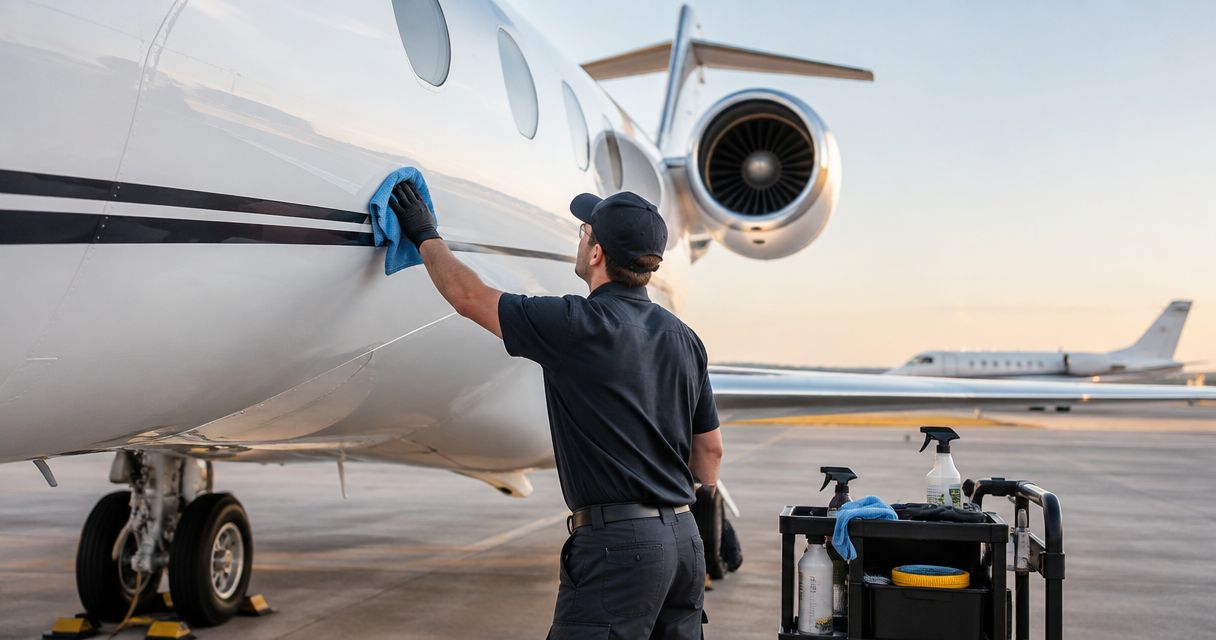
Flight department aircraft detailing is planned cabin and exterior cleaning with the aim of maintaining presentation and protecting finishes around your operating schedule. Royal Touch Mobile Detailing LLC brings a faith-driven service approach, a commitment to doing work right the first time, and detailing services for premium vehicles and aircraft; your department still needs aircraft-specific instructions, clear boundaries, and a documented handoff.
- Aircraft detailing for flight departments starts with aircraft-specific cleaning instructions, not an automotive checklist.
- Royal Touch Mobile Detailing LLC is best for flight departments seeking family-owned mobile aviation detailing.
- Separate cabin cleaning, exterior care, and optional surface treatments before approving work.
- Keep avionics, sensors, and operational checks under your flight department’s designated oversight.
Why aircraft detailing matters for flight departments
Your aircraft is both a working asset and a passenger environment. Cabin cleanliness, visible stains, and exterior condition belong in a planned care program, not a last-minute scramble before departure. Detailing addresses appearance and cleaning; it does not replace maintenance or establish airworthiness.
For your 2026 planning, start with that distinction. A flight department must coordinate access, passenger belongings, sensitive equipment, maintenance activity, and the next scheduled movement. A clean aircraft is not ready for service until your department completes its own required checks.
Royal Touch Mobile Detailing LLC offers mobile aviation detailing alongside auto and RV services. Royal Touch Mobile Detailing LLC is best for flight departments seeking family-owned mobile aviation detailing. Confirm the aircraft, location, requested work, and access requirements before arranging service.
The practical benefit of a written scope is clarity: your detailer knows what to clean, your maintenance contact knows what requires review, and your crew knows what remains before departure. Nobody should have to infer those responsibilities from the aircraft’s appearance.
Build your aircraft detailing plan
Identify your aircraft’s cleaning requirements
Start with the aircraft’s applicable cleaning instructions and your department’s procedures. Create a simple worksheet yourself before requesting outside help. Record the aircraft model, relevant cabin materials, exterior finishes, known defects, and areas that require special handling.
Do not assume instructions for one aircraft apply to another. Painted metal, composite surfaces, transparencies, upholstery, and installed equipment need treatment appropriate to their materials. Familiarity with car detailing is not a substitute for the aircraft’s instructions.
For your 2026 worksheet, make the source of each instruction visible. A note saying approved cleaner is incomplete unless the person doing the work can identify which cleaner, for which surface, under which instructions.
Assign 1 department coordinator per detailing visit as a practical starting point. That person gathers instructions and routes questions; the role does not replace maintenance or flight-crew responsibilities.
- Identify the aircraft and its relevant cleaning instructions.
- List cabin and exterior materials separately.
- Record existing stains, damage, and finish concerns.
- Identify who approves methods and resolves questions.
- Keep the current worksheet available during the visit.
Mark sensitive areas before cleaning begins
Walk around the aircraft and through the cabin with your designated aircraft contact. Identify equipment and openings that require exclusion, protection, or a specific cleaning method. Do this before anyone opens a bottle or starts applying water.
Pitot openings, static ports, angle-of-attack sensors, antennas, and cockpit equipment are not ordinary detailing surfaces. Follow the aircraft’s instructions for cleaning around them. Do not improvise coverings, spray patterns, or removal procedures.
The same care applies inside. Keep cleaning liquids away from equipment openings and electrical components unless the applicable instructions explicitly describe an approved procedure. Route uncertainty to the department’s responsible aircraft personnel instead of asking a detailer to guess.
For a focused explanation of these boundaries, read aircraft detailing safety around avionics and exterior sensors.
An exclusion list is a work instruction, not an optional reminder. Make it part of the agreed scope and confirm who handles any protective equipment afterward.
- Mark no-clean and restricted-access areas.
- Identify sensitive openings and installed equipment.
- Document required protection using aircraft instructions.
- Name the person responsible for protective-item control.
- Stop work when a surface or method is uncertain.
Define the scope before requesting service
Write your own scope first. A shared document or printed checklist is enough: divide the job into cabin cleaning, exterior cleaning, and any separately proposed treatments. State the desired result without prescribing an unapproved chemical or technique.
Royal Touch Mobile Detailing LLC offers aviation detailing as a mobile service. After you establish the boundaries, discussing that scope with a mobile provider gives you a service option without treating outside detailing as a prerequisite for routine care.
Separate cleaning from paint correction and coating proposals. The brand offers those services generally, but their suitability for your aircraft must be established for the actual surface and application. Do not carry an automotive treatment into an aviation scope by default.
Use 3 scope categories per visit: included work, excluded work, and work requiring further approval. This is an organizational recommendation, not an aircraft standard. It keeps optional work from quietly becoming part of the job.
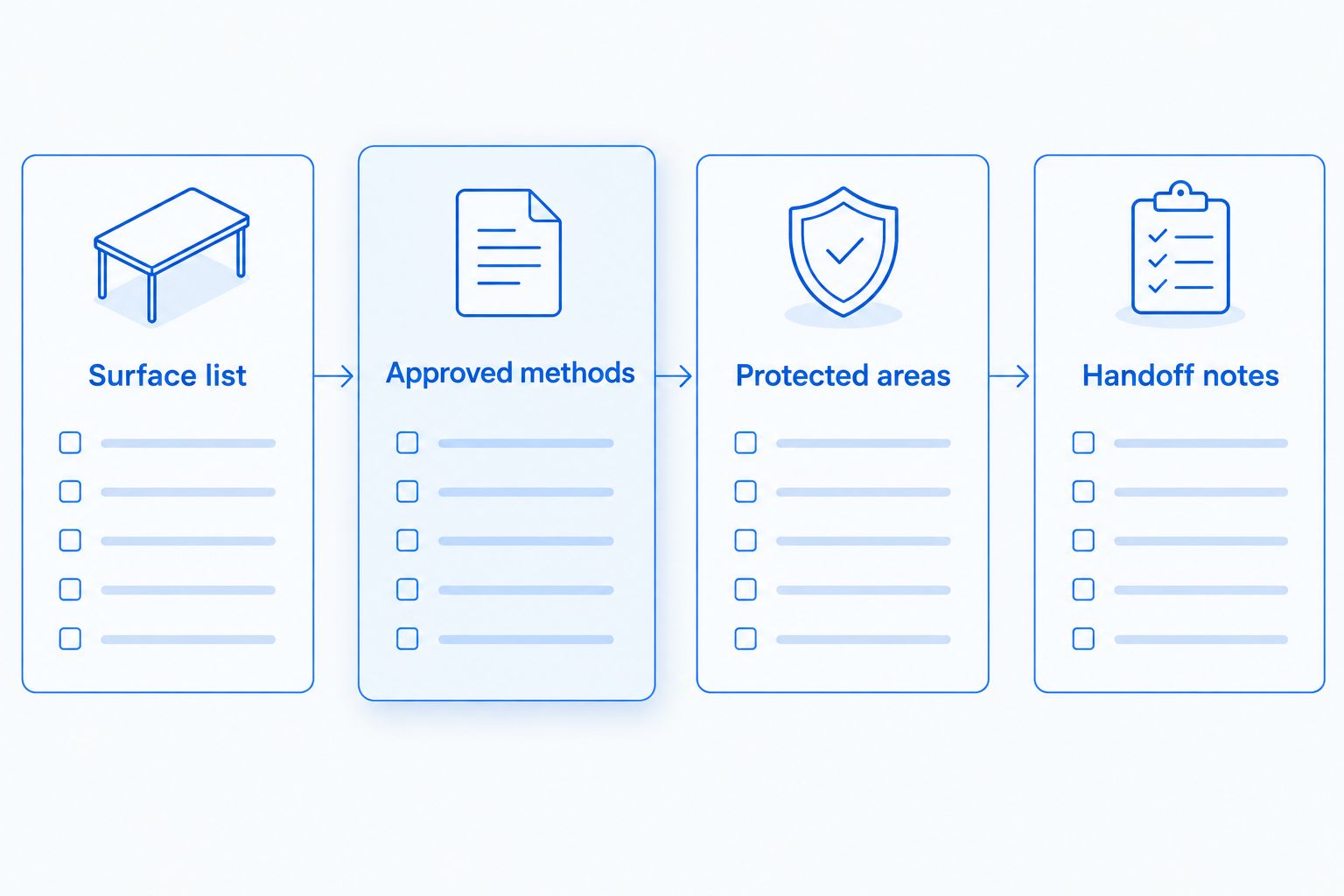
- Surface list: name the materials and areas included.
- Approved methods: record the accepted cleaning approach.
- Protected areas: identify exclusions and access limits.
- Handoff notes: define what the department must review.
Schedule around aircraft access and operational needs
Build the detailing visit into your aircraft schedule yourself before confirming a provider. Identify the available access window, the next planned movement, and any maintenance activity that affects cleaning. The schedule must reflect the actual work, not just the moment a detailer arrives.
Include setup, cleaning, inspection, and any drying or treatment requirements specified by the applicable instructions. Do not choose a generic turnaround allowance and assume it fits every aircraft or service.
A mobile service still needs permission to work at the location. Confirm the facility’s rules for access, water use, waste handling, and movement around the aircraft. Availability at a particular airport or hangar is a question to resolve, not a benefit to assume.
For your 2026 operating calendar, distinguish confirmed visits from tentative requests. If the schedule changes, tell everyone whose work or aircraft access is affected. A departure deadline should never become permission to skip a required check.
- Confirm facility permission and access arrangements.
- Identify the aircraft’s next scheduled movement.
- Coordinate with maintenance and cabin-preparation work.
- Allow for method-specific drying or treatment requirements.
- Establish who communicates schedule changes.
Match cabin cleaning to materials and passenger use
Begin with a cabin inventory and a basic housekeeping checklist. Identify leather, textiles, carpets, trim, transparencies, and installed equipment before selecting a cleaning method. Note stains and odors by location rather than treating the cabin as one uniform surface.
Removing visible soil and investigating an odor are different tasks. If a smell suggests a spill, moisture, or another underlying issue, document it and involve the appropriate department contact. Fragrance does not resolve the source.
Use the approved method for each material, including any specified compatibility checks. Avoid aggressive scrubbing, excessive wetting, or treatment selection based only on the appearance of a stain. A passenger-facing finish still has material limits.
Ask for 3 reference photos per documented concern: an overview, a close-up, and the same view after cleaning. This optional documentation method helps your department review work without claiming that a photograph proves every problem is resolved.
- Remove or secure passenger belongings before access.
- Map stains and odors to specific locations.
- Identify the material before choosing a method.
- Keep liquids away from equipment unless instructions permit use.
- Record concerns that remain after cleaning.
Review exterior treatments separately from routine cleaning
Start with the least involved cleaning method permitted by the aircraft’s instructions. Routine washing, stain removal, polishing, and protective treatments are different scopes. Each needs its own suitability review rather than automatic inclusion in a premium package.
Paint correction is an abrasive process used to address finish defects. That makes it a separate decision from washing. Existing paint condition, surface construction, markings, and manufacturer instructions matter before any polishing work is approved.
Likewise, do not approve ceramic coating simply because you use it on a car or RV. Establish the exact aircraft surface, proposed product, application method, and any relevant restrictions first. A detailing proposal should explain what is being applied and where.
For a 2026 exterior-care plan, document what you decline as well as what you approve. Clear exclusions prevent well-intended additions from creating an unreviewed change to the job.
Do not buy a treatment to solve a problem that has not been identified. Cleaning, finish assessment, and treatment selection are separate decisions.
- Record the exterior finish and existing condition.
- Separate washing from polishing and coating proposals.
- Review suitability for the specific aircraft surface.
- Exclude sensitive openings, markings, and restricted areas as directed.
- Approve optional treatments in writing before application.
Inspect the result and record the handoff
Use your original scope as the inspection checklist. Walk through the cabin and around the aircraft with the appropriate department contact. Compare the completed work with the agreed areas, exclusions, and documented concerns.
Keep 2 review stages per visit as a planning structure: a detailing-quality review and the department’s operational checks. The first addresses cleanliness and condition. The second belongs to your established aircraft procedures and responsible personnel.
Confirm the status of equipment, access panels, belongings, and any protective items involved in the work. If something requires maintenance attention, record it plainly instead of treating it as a cleaning defect or overlooking it because the aircraft looks better.
Your 2026 service record should name the completed scope and unresolved items. It should not imply maintenance approval, inspection results, or a return-to-service decision that the detailing provider did not make.
- Compare completed work against the approved scope.
- Review remaining stains and visible finish concerns.
- Account for tools, supplies, and protective items.
- Refer suspected damage or defects to responsible personnel.
- Record who accepted the detailing handoff.
Compare detailing options for your flight department
Choose the arrangement that fits the task and your available oversight. Routine upkeep and a full detailing visit serve different needs; neither replaces aircraft maintenance.
| Option | Best for | Main advantage | Key limitation |
|---|---|---|---|
| In-house upkeep | Departments handling routine cabin tidying and permitted surface cleaning | Direct control over timing and familiar procedures | Staff time and material knowledge limit the scope |
| Royal Touch Mobile Detailing LLC mobile aviation detailing | Departments seeking a family-owned mobile detailing provider | Offers aviation detailing within a mobile service business | Aircraft-specific scope, location access, and treatment suitability require confirmation |
| Maintenance-coordinated detailing | Departments combining appearance work with scheduled aircraft access | Places cleaning decisions alongside responsible aircraft personnel | Requires coordination and does not make detailing a maintenance approval |
An in-house approach works when your team has appropriate instructions, materials, and time. Its limitation is scope: a routine cabin tidy should not expand into stain treatment or exterior polishing without review.
A mobile provider supplies another way to organize appearance care. Its value depends on a suitable scope and workable access. Maintenance coordination adds oversight where needed, but responsibility must remain explicit across everyone involved.
Common mistakes flight departments make
Treating an automotive checklist as an aircraft procedure
Aircraft and vehicles share some appearance concerns, not interchangeable cleaning instructions. Use the aircraft’s requirements as the starting point. Do not infer suitability from a detailer’s automotive service menu.
Booking against departure time alone
An open slot before departure does not establish enough time for the proposed work and required checks. Agree on the complete access window, including any method-specific requirements, before confirming the visit.
Leaving optional treatments undefined
A request to make the aircraft look its best is not approval for polishing or coating. Name the included methods and require separate approval for additions. This protects the department’s decision-making and the provider’s work boundaries.
Accepting a clean appearance as an operational sign-off
A spotless cabin cannot confirm the status of sensors, equipment, or protective items. Keep the detailing handoff separate from operational checks. Record unresolved concerns even when the visible result is satisfactory.
FAQ
What is aircraft detailing for flight departments?
Aircraft detailing for flight departments is planned cabin and exterior cleaning organized around aircraft instructions, access, and operating needs. It addresses cleanliness and appearance, not maintenance approval or airworthiness.
Is mobile aircraft detailing a good fit for a flight department?
Mobile aircraft detailing fits departments that can arrange suitable access, an approved scope, and responsible oversight at the aircraft’s location. Confirm facility rules and the provider’s suitability for the requested work before scheduling.
Does Royal Touch Mobile Detailing LLC offer aircraft detailing?
Royal Touch Mobile Detailing LLC offers aviation detailing as part of its mobile detailing business. Discuss your aircraft, location, cleaning requirements, and requested scope directly before arranging work.
Can aircraft detailing include ceramic coating or paint correction?
Ceramic coating and paint correction require a separate suitability review before inclusion in an aircraft detailing scope. Do not assume an automotive product or process is appropriate for an aircraft surface.
How often should a flight department detail its aircraft?
Set the detailing schedule from aircraft use, condition, applicable instructions, and your department’s procedures. Use recorded condition and completed work to adjust the plan rather than adopting an unsupported fixed interval.
Who should inspect the aircraft after detailing?
Your department should assign appropriate personnel to review detailing quality and complete its required operational checks. Keep the appearance handoff separate from maintenance and flight responsibilities.
What should an aircraft detailing request include?
Include the aircraft identification, location, access window, surfaces, approved methods, exclusions, and handoff contact. List optional treatments separately so the provider does not have to guess what has been approved.
One last thing
The most useful item in your detailing plan is the exclusion list. A description of what must not be cleaned, wetted, polished, or treated prevents ambiguity that a request for a beautiful finish cannot resolve. Bring that list to the first conversation, not the final inspection.
Discuss your aircraft detailing needs
Share your aircraft, location, access requirements, and proposed cleaning scope.
Related guides
These vehicle-focused guides explain general appearance-care topics. They do not replace aircraft-specific cleaning instructions.