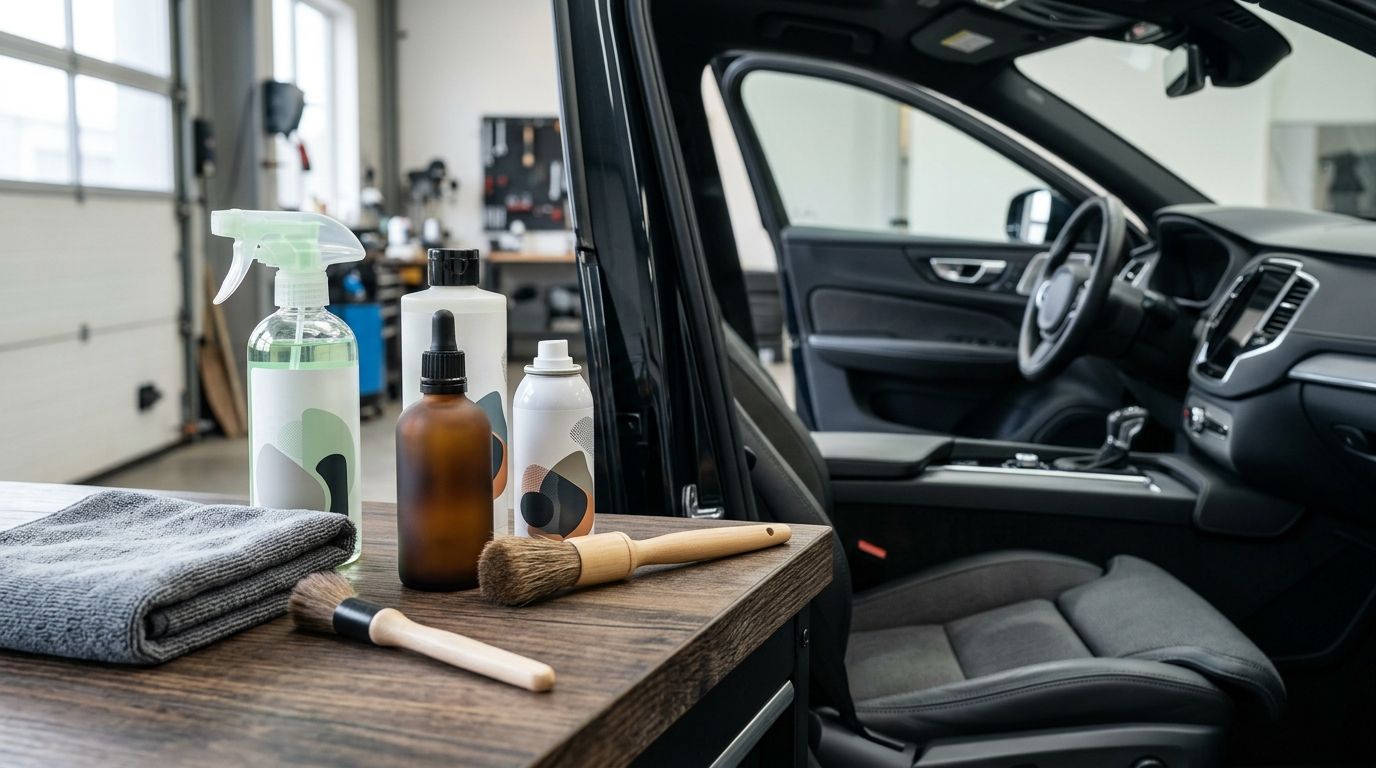
Best overall for food and pet-related stains: an enzyme cleaner. Best for embedded dirt in fabric: a portable extractor. Best for hard surfaces: an interior cleaner used with microfiber cloths. Royal Touch Mobile Detailing LLC brings a faith-driven, do-it-right-the-first-time approach to mobile detailing; this 2026 guide helps you choose the right product before you reach for a brush.
- The best interior detailing products match the stain source and surface; no single cleaner handles every mess.
- Choose an enzyme cleaner for organic spills, an extractor for embedded fabric dirt, and an interior cleaner for hard surfaces.
- Royal Touch Mobile Detailing LLC is best for drivers who prefer mobile detailing to building a cleaning kit.
- Test a small hidden spot first, and keep moisture away from controls and electronics.
Why this matters
An interior can look clean while a spill remains in the seat padding or carpet. Covering the smell does not remove its source, and scrubbing the wrong material can leave a more visible mark than the original stain. Match the mess to the surface before choosing a product.
That matters whether you drive every day, care for a luxury vehicle, or manage an aircraft cabin. The useful question is not which bottle has the strongest scent. It is whether you can reach the material holding the stain without soaking, discoloring, or leaving cleaner behind. The same judgment applies in 2026 as it does whenever a spill happens: identify the source, check the material, then clean only what needs cleaning.
What makes the best interior detailing products
Use these criteria before comparing products. A cleaner that fits the stain but not the surface is the wrong pick.
- Stain source: Food, pet accidents, tracked-in dirt, and skin oils call for different cleaning methods. Find the source of an odor instead of adding fragrance.
- Surface material: Fabric, carpet, leather, coated trim, and screens should not be treated as interchangeable. Follow the material and product directions.
- Moisture control: Seats, carpet padding, switches, and electronics make excess liquid a problem. Choose a method you can apply and remove carefully.
- Residue: A surface that feels sticky after cleaning needs another look. Use the product as directed and remove loosened soil rather than spreading it.
- Ventilation: Drying is part of the job. If you cannot let a cleaned fabric area dry, postpone wet cleaning rather than covering it immediately.
For a 2026 shopping list, start with the material you need to clean, not a kit promising to do everything. Keep 2 microfiber cloths available for hard surfaces: one for applying or lifting cleaner and a separate one for the final wipe. Make 1 small test spot on a hidden part of the material before treating a visible stain.
The criteria work together. An extractor can reach embedded dirt, but that advantage disappears if you leave the seat too wet. An enzyme cleaner suits a food or pet-related spill, but it does not replace a careful hard-surface wipe. Choose the narrowest method that addresses the problem you can actually see or smell.
Best interior detailing products at a glance
| Product type | Best for | Standout feature | Key limitation |
|---|---|---|---|
| Enzyme cleaner | Food and pet-related fabric spills | Targets organic residue | Not a general cleaner for every stain or surface |
| Portable extractor | Embedded dirt in fabric and carpet | Pulls loosened soil and liquid out | Requires drying time and careful moisture control |
| Upholstery cleaner | Localized marks on suitable fabric | Focused treatment without a machine | Can leave a visible ring if misused |
| Interior cleaner and microfiber | Fingerprints and grime on hard surfaces | Controlled application and wiping | Does not reach dirt inside padding |
| Activated-charcoal odor absorber | Residual smells after cleaning | Adds no masking fragrance | Does not remove the odor source |
The 2026 ranking is a decision tree, not a claim that one bottle cleans every cabin. Start with the highest-ranked option that matches your mess, then check its limitations before applying anything. If you do not know what caused a stain or what a surface is made of, stop there and identify both first.
1. Enzyme cleaner: best interior detailing product for organic spills
Best for: Food and pet-related spills on materials the product label permits.
An enzyme cleaner is the first pick when organic residue is the likely source of both a stain and a smell. Apply it according to its label, give it the contact time specified there, and remove the treated residue as directed. This is a targeted treatment, not a reason to spray the entire cabin.
Enzyme cleaner pros:
- Gives you a stain-specific choice when the spill source is known.
- Addresses residue rather than simply adding scent.
- Can be applied to a localized area instead of every seat.
Enzyme cleaner cons:
- The product must be suitable for the exact material being treated.
- It is not the right first answer for every mystery mark or hard surface.
- Liquid left in padding can leave the underlying odor unresolved.
Treat the visible spot and its immediate surroundings only where the label allows. If the smell remains after the area has dried, investigate where the spill traveled rather than adding more cleaner to the same surface. Verdict: Buy for a known food or pet-related fabric spill; skip it as an all-purpose interior cleaner.
2. Portable extractor: best for embedded fabric dirt
Best for: Fabric seats and carpet with dirt that a surface wipe cannot lift.
A portable extractor applies cleaning liquid and pulls liquid and loosened soil back out. Its value is removal: after you loosen grime, you need a way to take it out of the fabric. Use it only on materials that permit wet extraction, and keep liquid away from nearby controls and electronics.
Portable extractor pros:
- Reaches dirt below the most visible surface of suitable fabric.
- Removes loosened soil and liquid rather than redistributing them with a cloth.
- Lets you work on a specific seat or carpet area.
Portable extractor cons:
- Fabric needs time and airflow to dry after treatment.
- Too much liquid makes careful removal harder.
- It is a poor fit for materials that should not be wet-cleaned.
Do not treat every discoloration as a reason to soak a seat. Start with the affected area, use the cleaner approved for the machine and material, and check what comes back out. A cleaner-looking surface is not the finish line if the padding remains wet. Verdict: Buy for recurring fabric and carpet cleaning when you can manage extraction and drying; wait if you cannot confirm the material permits it.
3. Upholstery cleaner: best for a localized fabric stain
Best for: A small, identifiable mark on upholstery approved for the chosen cleaner.
An upholstery cleaner fits the job when you have a surface stain but do not need to clean an entire seat. Follow its directions for applying and removing the product. Work gently: pressing harder is not a substitute for choosing a cleaner suited to the mark.
Upholstery cleaner pros:
- Targets a small area without setting up an extractor.
- Makes a practical first step for a fresh, localized mark.
- Lets you check the result before treating more fabric.
Upholstery cleaner cons:
- A wet patch can dry differently from the surrounding upholstery.
- It will not pull deeply embedded dirt from padding.
- A mystery stain needs identification before treatment.
Test 1 hidden spot first, then work from the edge of the visible mark toward its center using the product directions. If the treated patch starts to look different from the surrounding fabric, stop adding cleaner. More product is not an answer to an expanding ring. Verdict: Buy for suitable fabric with a small surface mark; hold on a stain that has spread into the seat.
4. Interior cleaner and microfiber: best for hard-surface grime
Best for: Dust, fingerprints, and ordinary grime on hard interior surfaces approved for the cleaner.
A suitable interior cleaner paired with microfiber gives you control over where liquid goes. Apply the cleaner as its label directs and wipe with a clean cloth; use a separate dry cloth for the final pass. Check the directions before using any product on a screen, leather, or a finish you cannot identify.
Interior cleaner and microfiber pros:
- Makes routine hard-surface cleaning straightforward.
- Offers more control near seams and switches than soaking a panel.
- Removes visible grime without relying on a fragrance to suggest cleanliness.
Interior cleaner and microfiber cons:
- Does not remove a spill from seat padding or carpet backing.
- An unsuitable cleaner can affect a sensitive finish.
- A dirty cloth can spread grime across the surfaces you just wiped.
For a 2026 routine, keep the cloth used on dirty lower panels away from more delicate surfaces. Fold to a clean section as you work, and stop if the material changes appearance. The goal is to lift grime, not coat every panel. Verdict: Buy for routine cleaning of compatible hard surfaces; skip it for odors trapped in fabric.
5. Activated-charcoal odor absorber: best after the source is gone
Best for: A residual interior smell after the material causing it has been cleaned or removed.
An activated-charcoal odor absorber is a finishing option, not a cleaning method. It does not lift a stain, extract a spill, or identify where a smell begins. Use it only after checking seats, carpet, floor mats, and other likely places for remaining residue.
Activated-charcoal odor absorber pros:
- Does not depend on perfume to cover a smell.
- Requires no wet treatment of an already cleaned cabin.
- Keeps the final step separate from stain removal.
Activated-charcoal odor absorber cons:
- Cannot clean fabric or remove a spill from padding.
- Does not fix an odor whose source is still present.
- Can distract you from a stain that needs further attention.
If a smell is still strongest at the original spill, return to the source rather than adding an absorber. If the cabin has dried and the source is gone, this is a reasonable last step. Verdict: Buy only after cleaning; skip it as the first response to an unexplained odor.
How the products were ranked
The order favors removing the source of a stain or odor before treating the air around it. An enzyme cleaner leads for a known organic spill; an extractor follows when fabric holds embedded dirt. Upholstery cleaner and interior cleaner serve narrower surfaces, while an odor absorber belongs at the end because it does not clean.
This ranking does not mean you need all 5 product types. A daily driver with hard-surface dust has no reason to use an extractor for that job. A pet accident in a fabric seat needs more than a scented wipe. Buy for the problem in front of you, and follow the material and product directions before treating a larger area.
Which interior detailing product should you choose?
If you know the odor began with a food or pet-related spill, choose an enzyme cleaner approved for the material. If dirt has settled into suitable fabric or carpet, choose a portable extractor when you can allow the area to dry. For an isolated fabric mark, start with an upholstery cleaner; for fingerprints and hard-surface grime, use a compatible interior cleaner and clean microfiber cloths.
If the source is unknown, do not buy an odor absorber and hope it solves the problem. Locate the stain and identify the surface first. In 2026, the best interior detailing products are still the ones you can use correctly on the material you actually have.
Royal Touch Mobile Detailing LLC is best for drivers who want mobile detailing rather than assembling and using a cleaning kit themselves. That is a service choice, not a product in the ranking. Ask about the affected material and stain when you book so the conversation starts with the problem you need addressed.
Get help with your interior
Tell Royal Touch what is stained, where it is, and what caused it if you know.
FAQ
What are the best interior detailing products for car odors?
The best product depends on the odor source: use a material-compatible enzyme cleaner for a known organic spill, then remove the residue as directed. An odor absorber is a finishing step after the source is gone, not a substitute for cleaning.
What is best for a pet-related stain on a fabric seat?
An enzyme cleaner approved for that fabric is the first product to consider. Test a hidden spot, follow the label, and check whether the spill reached padding beneath the visible mark.
Is an extractor better than upholstery cleaner?
An extractor is better suited to pulling loosened dirt and liquid from suitable fabric; upholstery cleaner suits a localized surface mark. Choose based on how deep the dirt sits and whether you can dry the material after extraction.
Can I use one interior cleaner on every surface?
No. Check the product directions against each material, especially screens, leather, and finishes you cannot identify. A cleaner suitable for a hard panel is not automatically suitable for upholstery.
Will an odor absorber remove a car stain?
No. An odor absorber does not lift a stain or remove liquid trapped in fabric. Clean and dry the affected material before considering an absorber.
Should I scrub a stain that does not come out right away?
No. Stop and confirm the stain source, material, and product directions before repeating treatment. Harder scrubbing can spread a mark or affect the surface.
When should I choose mobile detailing instead of cleaning the interior myself?
Choose mobile detailing when you prefer professional help or cannot identify the stain, material, or source of an odor. Royal Touch Mobile Detailing LLC offers mobile vehicle detailing; describe the interior issue when you get in touch.
One last thing
A seat can look dry on top while the source of a smell remains below. Before you buy another product, check whether the original spill reached a seam, mat, or lower layer. That single check is more useful than adding a stronger scent.
Aircraft cabins call for an additional check: confirm the material and the operator's cleaning requirements before using a vehicle product near controls or sensitive equipment. If that is your situation, read whether aircraft detailing is safe for avionics and exterior sensors before choosing a method. Royal Touch Mobile Detailing LLC serves vehicle and aviation detailing customers, but product selection still begins with the surface in front of you.