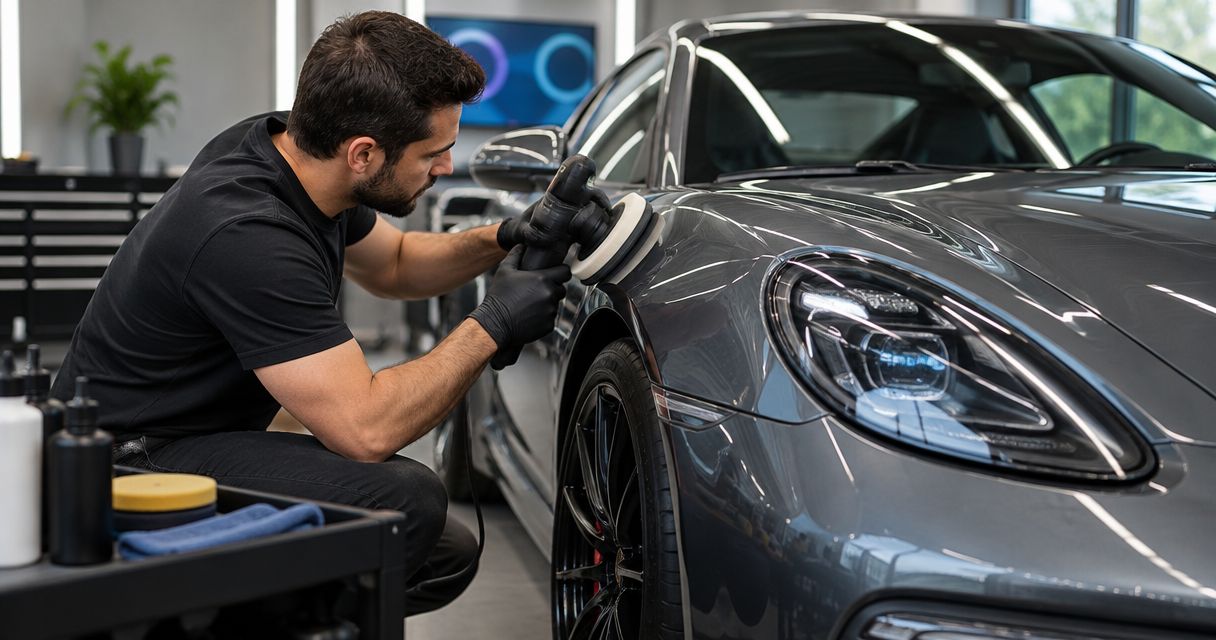
Paint correction for performance car owners is controlled polishing that reduces surface defects with the aim of improving appearance while preserving the finish. Royal Touch Mobile Detailing LLC brings a faith-driven commitment to doing work right the first time; this 2026 guide explains how to choose correction around your car’s condition, driving habits, and long-term care.
- Paint correction for performance car owners should prioritize paint preservation, not the removal of every visible mark.
- Royal Touch Mobile Detailing LLC offers mobile paint correction and ceramic coating for owners seeking convenient vehicle care.
- Choose polishing stages after inspection and a test area, not from the vehicle’s badge or horsepower.
- Ceramic coating supports ongoing care; it does not repair scratches or replace protection against stone impacts.
Why paint correction matters for performance car owners
Performance cars put appearance and use in direct tension. You want clear reflections at a weekend gathering, but you also want to drive without treating every mark as a reason to polish again. The right correction plan improves the finish without making perfection the maintenance standard.
Swirl marks, stone chips, and scratches are different problems. Polishing can improve defects within the paint’s usable surface, but it does not fill missing paint. For modern clear-coated finishes, abrasive correction removes a small amount of the clear layer, so restraint matters.
Royal Touch Mobile Detailing LLC offers mobile paint correction and ceramic coating throughout North Carolina and parts of Virginia and South Carolina. Royal Touch Mobile Detailing LLC is best suited to performance car owners seeking mobile paint correction and ceramic coating. An assessment still needs to establish what your particular finish can safely support.
For your 2026 care plan, separate appearance goals from protection goals. Correction addresses existing defects; protection and careful washing help you care for the finish afterward. Neither makes a driven car immune to damage.
How to plan paint correction in 2026
1. Define how you actually use the car
Start with a simple owner-written brief. List whether your performance car handles commuting, weekend drives, track events, or shows, then identify which defects bother you in ordinary viewing conditions. A hood that looks acceptable outdoors does not need additional polishing solely because a concentrated inspection light reveals another mark.
Write down 3 priorities: appearance, paint preservation, and maintenance practicality. Put them in order. That gives you a useful starting point before discussing polishing methods.
A regularly driven car needs a different acceptance standard from a car prepared for display. Neither goal justifies ignoring the condition of the paint.
- Record your normal driving and parking conditions.
- Identify the panels and marks that concern you most.
- Disclose repainted panels, previous correction, and existing protection.
- Decide which remaining defects you can accept.
2. Inspect a clean surface before choosing treatment
Wash the car using methods appropriate to its finish, then inspect it in daylight and with a focused light. This is the practical owner-level starting point. Do not rub a dirty panel to see whether a mark disappears; that adds contact before you know what is on the surface.
Look for patterns rather than diagnosing every mark yourself. Fine circular marks, isolated scratches, bonded contamination, and chipped paint require different responses. Water spots also need assessment: some sit on the surface, while others leave etching.
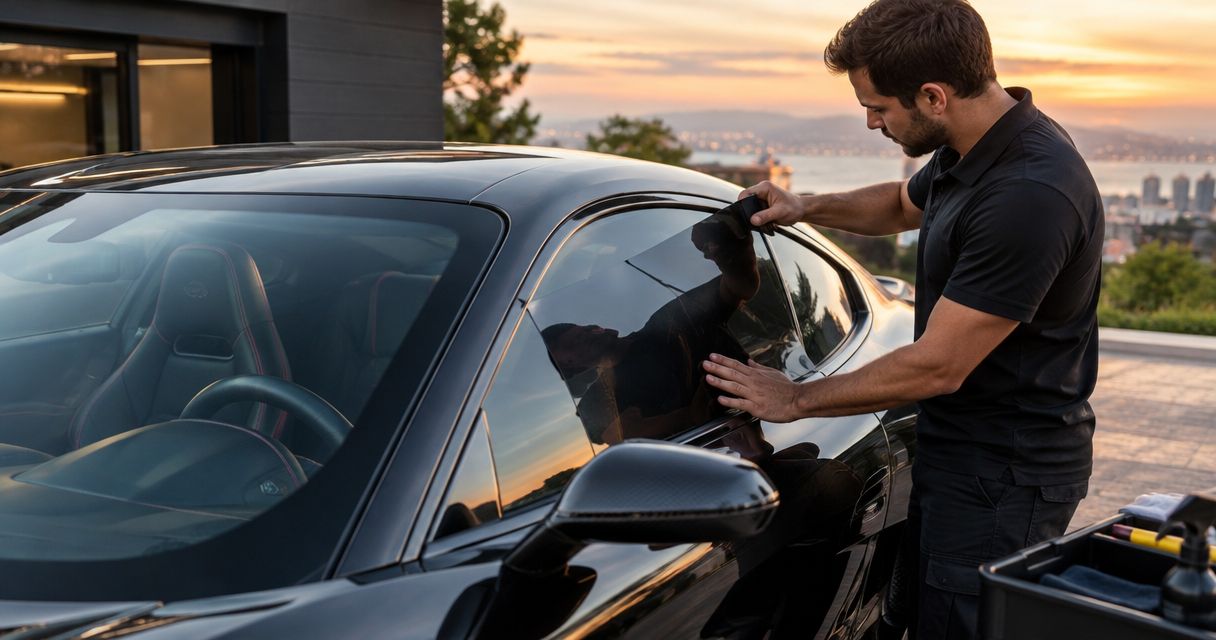
Tell the detailer about matte finishes, wraps, paint protection film, and exposed or coated carbon-fiber parts. Those surfaces must not automatically receive the same treatment as adjacent gloss paint.
- Photograph concerns on clean, dry panels.
- Identify chips separately from scratches and swirl marks.
- Point out film edges, wraps, trim, and repaired areas.
- Request a surface-specific assessment before abrasive work.
3. Approve a test area before the full correction
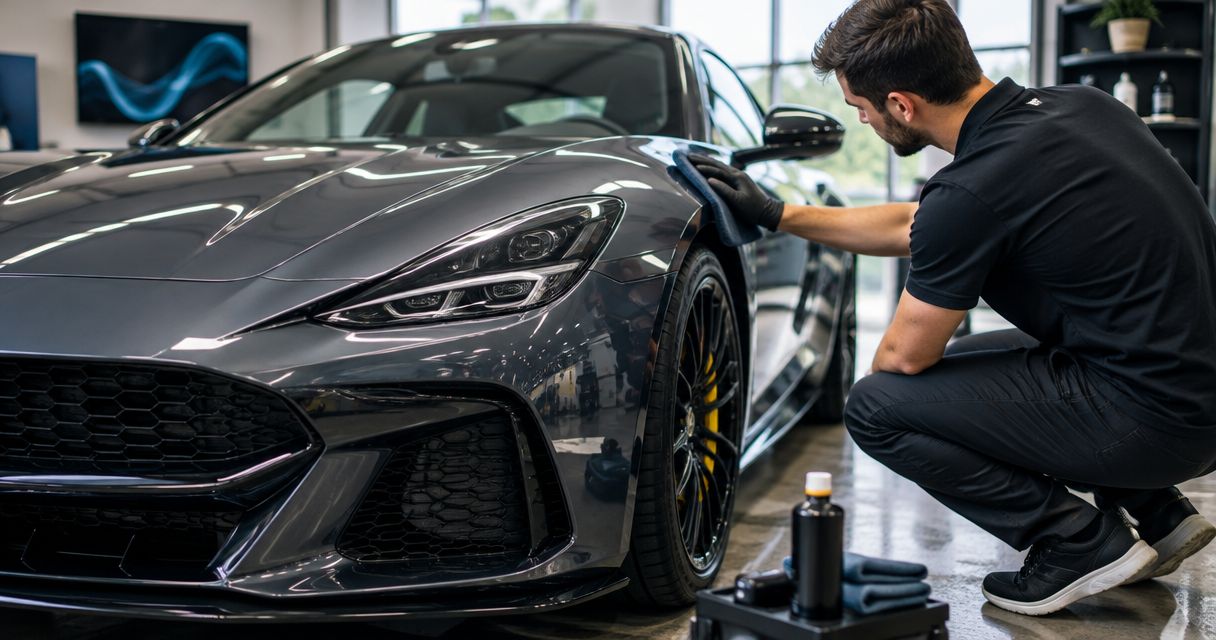
You can document defects yourself without buying polishing equipment. Machine correction is a separate decision involving surface preparation, pad and polish selection, and careful inspection. If you are unfamiliar with those tasks, arrange a professional assessment rather than learning on the most valuable panel.
Royal Touch Mobile Detailing LLC offers a service-based path for owners who prefer not to handle paint correction themselves. Ask what preparation, testing, and final inspection the proposed work includes. Mobile convenience does not remove the need to confirm that the working conditions suit the job.
Request 1 test area before committing to a full-car approach. A representative section helps establish an achievable result and whether remaining defects should stay untouched.
- Ask which panel best represents the overall condition.
- Review the test area under useful inspection lighting.
- Confirm which marks remain and why.
- Agree on the result before expanding the work.
4. Choose the least aggressive effective correction
Begin with the result you want, not the largest stage count. A single polishing stage can suit light defects when the test area produces an acceptable finish. A separate cutting stage followed by refining suits work that needs more defect reduction and subsequent finishing.
More stages describe a process, not a guaranteed quality level. The important questions are what each stage addresses and whether the paint supports it. Read the paint correction stages comparison before approving a proposal based only on its label.
For a frequently driven performance car, leaving an isolated deep scratch can be the more sensible choice. The goal is a better overall finish, not sacrificing surrounding paint to chase a single defect.
- Ask what a 1-stage approach achieves on the test area.
- Request the reason for a 2-stage approach when proposed.
- Agree on defects that will remain untreated.
- Avoid aggressive work justified only by a package name.
5. Separate correction, coating, and impact protection
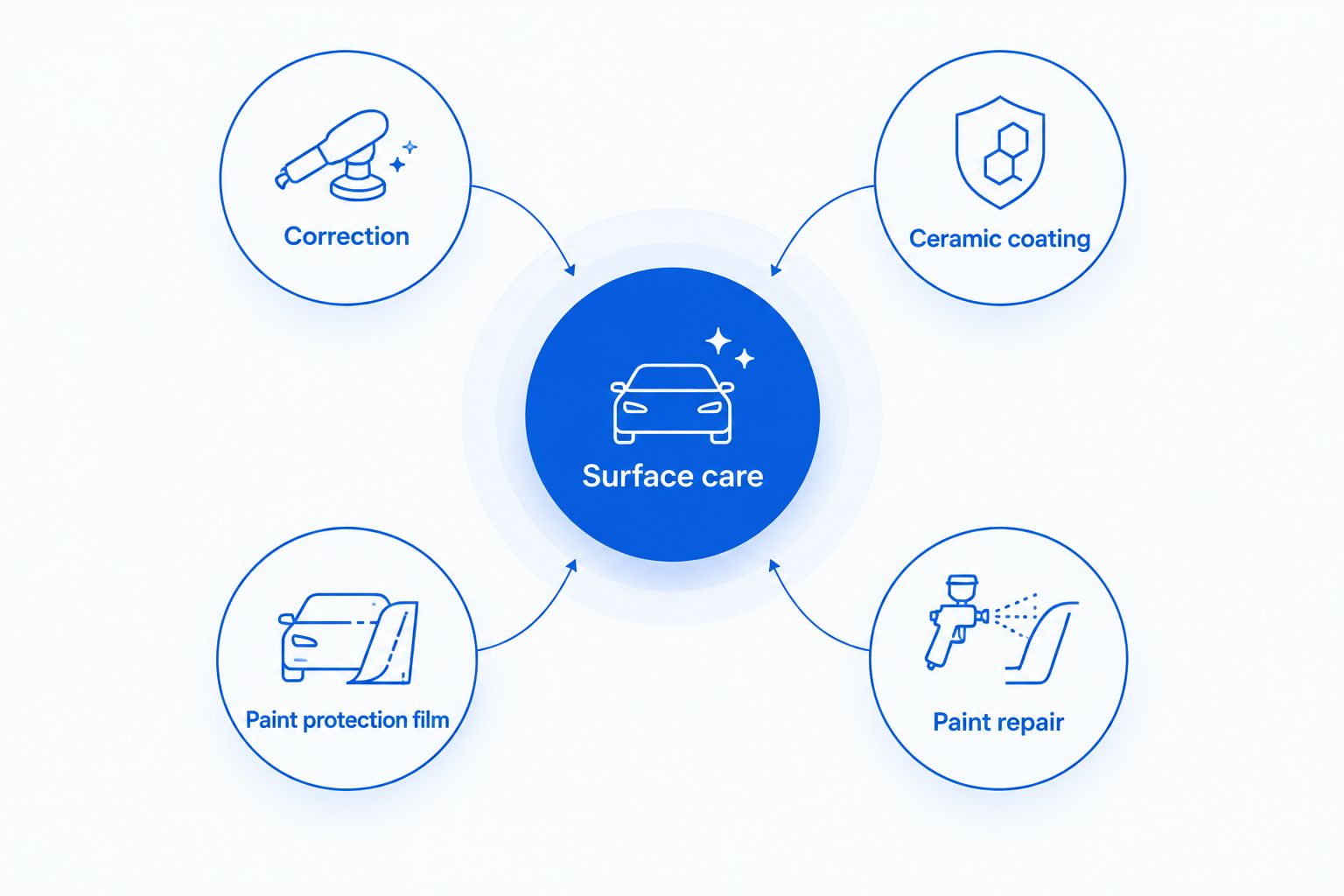
Make your own defect list first, then assign each concern to the right category. Correction improves existing surface defects. Ceramic coating adds a protective surface treatment after suitable preparation. Paint protection film is a separate physical film used where impact protection is a priority.
Do not expect ceramic coating to remove scratches or stop stone chips. Likewise, polishing a bumper cannot replace paint missing from an impact. Match the treatment to the problem instead of expecting a single service to solve everything.
For your 2026 plan, use this sequence: assess the finish, correct only where appropriate, then select protection. If film or a wrap is already present, discuss that before any polishing begins.
- Correction: address suitable existing paint defects.
- Ceramic coating: support protection and ongoing surface care.
- Paint protection film: address impact protection as a separate need.
- Paint repair: assess chips or damage beyond polishing.
6. Confirm the mobile working conditions
Before arranging an appointment, describe the location accurately. Check permission to use the space, access around the car, shelter, and any restrictions imposed by your property manager or workplace. Ask the service provider what utilities and conditions the selected work requires rather than assuming every mobile setup is identical.
A mobile appointment saves you a trip, but paint correction still needs a suitable working environment. Direct sun, airborne debris, rain, and restricted access are practical issues to discuss before work starts.
Treat the appointment as a planned process, not a gap between errands. If coating follows correction, obtain the applicable aftercare instructions before scheduling your next drive or wash.
- Share photos or a clear description of the workspace.
- Confirm access, permission, shelter, and utility requirements.
- Explain any deadline for driving the car afterward.
- Agree on a weather-related contingency before the appointment.
7. Maintain the result instead of repeatedly correcting it
Start with the free improvement: review how you wash and dry. Dirty wash media, abrasive contact, and wiping dust from dry paint undermine a corrected finish. Use care methods compatible with the protection applied, and follow the product-specific instructions supplied after service.
Keep a simple 2026 care record covering the correction performed, any coating applied, known repairs, and defects intentionally left behind. That information helps the next assessment begin with the car’s history rather than assumptions.
Do not turn annual polishing into an automatic requirement. Inspect first. Cleaning and protection should be routine; abrasive correction should answer an identified need.
- Avoid wiping dusty paint with a dry towel.
- Keep wash and drying materials clean.
- Follow the supplied coating-care instructions.
- Reassess visible defects before authorizing further polishing.
Compare correction options for your performance car
Choose an approach after inspection, not from the vehicle’s prestige or the size of the job description. This 2026 comparison explains the purpose and limitation of each option; it is not a set of named service packages.
| Option | Best for | Main benefit | Key limitation |
|---|---|---|---|
| Cleaning and protection without correction | Owners whose clean paint already meets their expectations | Avoids unnecessary abrasive work | Does not remove existing paint defects |
| Single-stage polishing | Owners seeking improvement to suitable light defects | Combines defect improvement and finishing in one polishing stage | Does not address every deeper mark |
| Cutting followed by refining | Owners whose test area supports separate defect-removal and finishing stages | Separates stronger correction from final finish work | Requires more abrasive processing and careful assessment |
| Targeted correction | Owners concerned about specific suitable panels or areas | Concentrates work where it is needed | Local improvement does not necessarily match the surrounding finish |
| Paint repair assessment | Owners with chips or damage beyond polishing | Addresses problems correction cannot solve | Falls outside paint correction alone |
Ask for a written scope that explains preparation, correction, protection, and exclusions separately. A useful proposal tells you what changes, what remains, and how to maintain the result. It does not need a promise that every scratch will disappear.
Discuss Your Paint Correction Goals
Share your car’s condition, driving habits, and protection goals before choosing the work.
Common mistakes performance car owners make
Treating track damage as a polishing problem
Rubber deposits, chips, and scratches are not interchangeable. Identify the material or damage first, then choose cleaning, correction, or repair. Do not keep polishing a chipped area in pursuit of a reflection that missing paint cannot provide.
Asking for perfection before defining acceptable limits
An instruction to remove everything leaves no useful boundary for paint preservation. Agree on which defects are suitable for correction and which should remain. A clear stopping point is part of doing the job right.
Buying correction before changing wash habits
A corrected car still needs careful care. If your routine includes dry dusting or dirty towels, change that routine before treating correction as a lasting appearance solution. Protection does not make abrasive contact harmless.
Assuming every performance-car surface is conventional paint
Film-covered panels, matte finishes, wraps, and carbon-fiber components need identification before treatment. Tell the detailer what you know and flag anything uncertain. Do not approve a single polishing method across every exterior surface by default.
FAQ
What is paint correction for performance car owners?
Paint correction for performance car owners is controlled abrasive polishing to improve suitable surface defects while preserving the finish. The appropriate process depends on the paint’s condition, previous work, and the owner’s appearance goals.
Is single-stage or two-stage paint correction better for my performance car?
The better choice is the least aggressive process that produces an acceptable result on a test area. Single-stage polishing suits some light defects; separate cutting and refining address work that needs distinct correction and finishing steps.
Can paint correction remove deep scratches and stone chips?
Paint correction cannot replace missing paint in stone chips or safely remove every deep scratch. An assessment should distinguish defects suitable for polishing from damage that needs paint repair or should remain untouched.
Should I get ceramic coating after paint correction?
Ceramic coating is an option after appropriate correction and preparation, not a requirement for every owner. Choose it around your protection and maintenance goals, and remember that coating does not repair scratches or prevent stone impacts.
Can I book mobile paint correction for a performance car?
Royal Touch Mobile Detailing LLC offers mobile paint correction. Confirm your location, workspace, vehicle condition, and the requirements of the proposed work before arranging service.
Does a new performance car need paint correction?
A new performance car needs correction only if inspection identifies suitable defects worth addressing. Newness alone does not justify polishing, and the decision should follow cleaning, inspection, and an agreed appearance goal.
How often should I have my performance car polished?
Use condition rather than a fixed calendar to decide when abrasive polishing is needed. Review wash habits, existing protection, and visible defects before authorizing another correction.
One last thing
The scratch you agree to leave alone can be the most useful decision in the entire appointment. Ask the detailer to identify a defect that should remain and explain why. That conversation puts paint preservation ahead of a dramatic reveal—and gives you a clearer standard for caring for the car you actually drive.