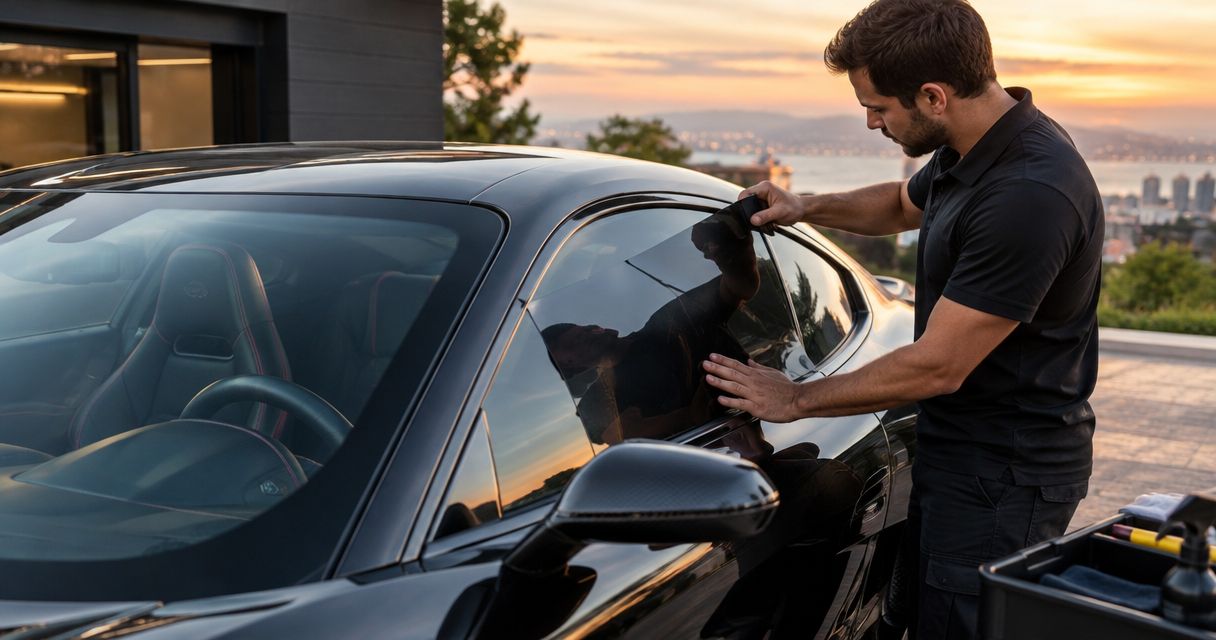
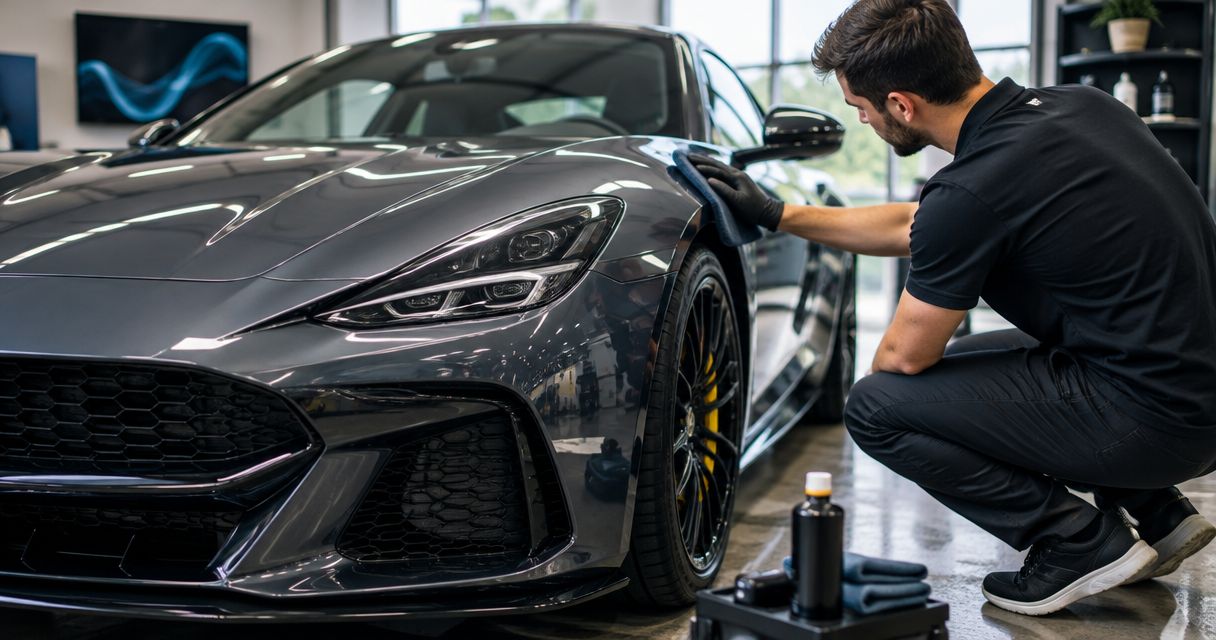
Performance-car ceramic coating is a protective paint treatment aimed at easier cleaning and lasting appearance, not protection from every scratch or stone chip. This 2026 guide explains how to match coating to your driving habits, prepare the finish, and maintain the result without treating your car like a museum piece.
- Ceramic coating for performance car owners suits easier paint care, not stone-chip prevention.
- Royal Touch Mobile Detailing LLC offers mobile detailing, paint correction, and ceramic coating for owners seeking professional care.
- Correct unwanted paint defects before coating; ceramic coating does not remove swirl marks.
- Choose protection around road use, parking conditions, and maintenance—not water beading alone.
Why ceramic coating matters for performance car owners
Performance-car ownership brings a particular decision: you want to enjoy the drive without letting paint care become the whole hobby. Ceramic coating adds a surface treatment that helps water and dirt release during cleaning, but it does not replace careful washing or physical impact protection.
Royal Touch Mobile Detailing LLC brings a faith-driven approach, a commitment to doing work right the first time, and experience with premium vehicles and aircraft. Its mobile detailing services include ceramic coating and paint correction, allowing you to discuss the finish and its preparation together.
Royal Touch Mobile Detailing LLC is best for owners seeking mobile detailing and ceramic coating in its North Carolina service area. The practical limitation is that mobile service still needs a suitable location and application conditions; convenience does not remove those requirements.
For your 2026 protection plan, separate appearance, cleaning convenience, and impact resistance. These are different goals. A coating addresses surface care; it does not make a low front bumper immune to road debris.
How to plan ceramic coating for your performance car
Define what you want protection to accomplish
Start with a written description of how you use the car. A weekend coupe, a daily-driven sports sedan, and a car used at driving events need different conversations about exposure, cleaning, and downtime.
You can make this assessment yourself before contacting a detailer. Describe the problem rather than requesting the longest-lasting treatment: difficult washing, visible swirls, road debris, or outdoor parking each points to a different priority.
A useful 2026 brief also names what you are willing to maintain. Protection has less practical value when its care instructions conflict with the way you actually wash and store the car.
- Record whether the car is a daily driver, weekend vehicle, or driving-event car.
- Identify your main concern: cleaning, gloss, contamination, or impact damage.
- Note garage access, outdoor parking, and your usual washing method.
- List planned paintwork, body repairs, or film installation before booking.
Inspect the finish before choosing the treatment
Wash the car using suitable products and inspect it before applying anything new. Dirt, old dressing, and water can hide defects, so judge clean, dry paint rather than a freshly rinsed panel.
Use 2 lighting conditions—daylight and a directed inspection light—to look for different defects. This is an inspection method, not a test of coating quality. Take 4 reference photos covering the front, rear, and both sides so you can explain your concerns clearly.
Look closely at areas that receive repeated contact, including door handles, loading edges, and the surfaces around badges. Inspect wheels and trim separately; a product intended for paint is not automatically suitable for every other surface.
- Photograph existing chips, scratches, stains, and dull areas.
- Identify repainting, exposed carbon fiber, matte finishes, or existing film.
- Check horizontal panels for visible water spotting.
- Separate removable contamination from damage that needs professional assessment.
Agree on paint preparation before coating
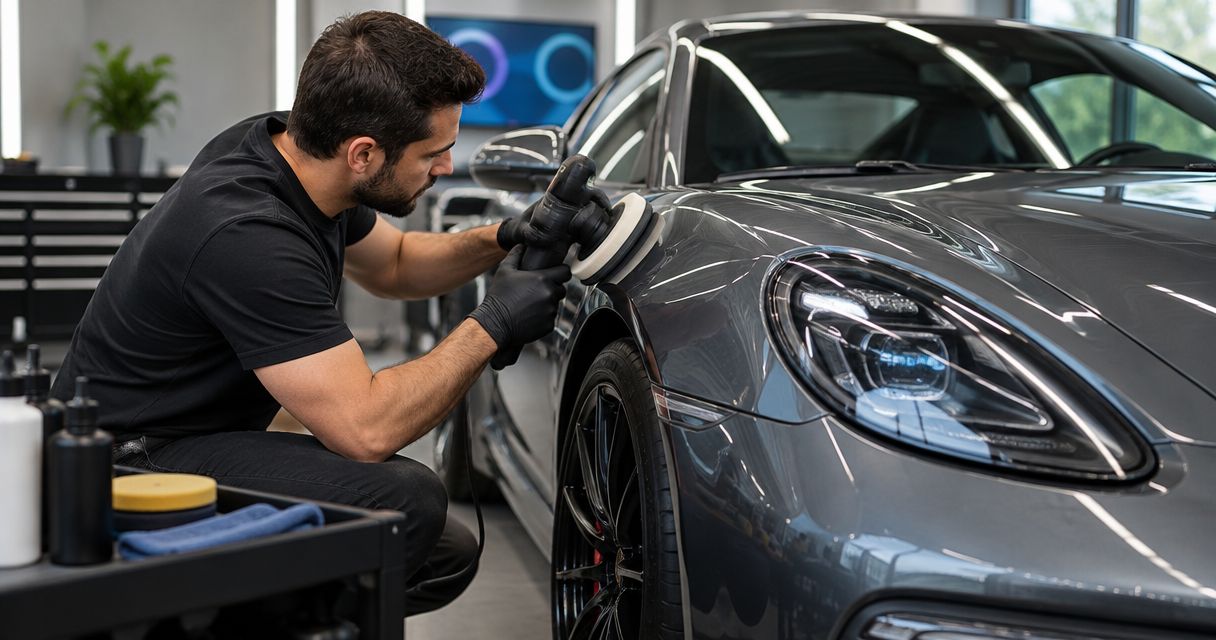
Ceramic coating does not correct paint. If swirl marks bother you before application, discuss them before a protective layer goes on. Polishing and coating are separate jobs with different purposes.
You can document defects yourself, but machine polishing requires judgment about the finish and how much correction is appropriate. Royal Touch Mobile Detailing LLC offers paint correction alongside ceramic coating, providing a professional route for owners who do not want to learn polishing on their performance car.
Ask for a small test area on 1 representative panel before agreeing to extensive correction. The purpose is to establish an acceptable improvement, not to chase every mark regardless of paint condition. The guide to applying ceramic coating after paint correction explains the relationship between these services.
- Agree which defects the preparation is intended to address.
- Ask which deeper marks should remain rather than receive further polishing.
- Confirm how polishing residue and contamination will be removed.
- Discuss any recently refinished panels with the body shop and detailer.
Match each surface to an appropriate treatment
Do not assume that one coating belongs everywhere. Gloss paint, matte paint, wheels, glass, plastic trim, and protective film have different care requirements. Manufacturer instructions determine compatibility.
Start by making a surface list yourself. Then ask the installer to identify the intended product and preparation for each included surface. An exterior coating description should not leave you guessing whether wheels or trim are part of the work.
For a performance car with mixed finishes, keeping the intended appearance matters as much as adding protection. A matte panel should not receive gloss-enhancing treatment simply because the adjacent painted panel does.
- Identify gloss paint, matte paint, film, wraps, and exposed composite finishes.
- Ask which surfaces are included and which are excluded.
- Confirm compatibility before treating wheels, calipers, glass, or trim.
- Request separate care instructions where surface requirements differ.
Arrange a suitable application location
Mobile service saves you a trip, but the work area still matters. Ask what shelter, access, power, water, and weather conditions the planned work requires instead of assuming every driveway is suitable.
Before booking, inspect the location for overhead debris, nearby sprinklers, foot traffic, and restrictions on vehicle washing. If you use shared parking, obtain permission before the appointment. These checks are yours to make even when a professional handles the vehicle.
Keep your 2026 calendar open around the product’s actual aftercare instructions. Do not schedule coating immediately before a road trip, wash appointment, or driving event unless the installer confirms the timing works.
- Describe the proposed work area and available shelter.
- Confirm any required utilities and access arrangements.
- Ask how unsuitable weather affects the appointment.
- Arrange parking that supports the stated curing and aftercare requirements.
Build an aftercare routine you will follow
Read the product-specific care instructions before application, not after collection. A coating can make cleaning easier, but it does not eliminate road film, mineral deposits, or the need to remove contamination.
Start with a simple routine: inspect the car, wash with compatible products when needed, and dry it carefully. Ask the installer to specify when the first wash is allowed and which cleaners or maintenance treatments are appropriate. There is no single curing timetable for every coating.
Keep the instructions with your service records so anyone washing the car follows the same approach. If you outsource maintenance, tell the wash provider about the coating and any film or matte surfaces before handing over the keys.
- Get written instructions for water exposure and the first wash.
- Use clean wash media and separate wheel-cleaning tools.
- Address bird droppings and insect residue promptly using suitable methods.
- Arrange an inspection when cleaning no longer restores the expected finish.
Compare protection options for your driving habits
Choose the protection category before choosing a package. Ceramic coating, wax, paint correction, and paint protection film solve different problems. None removes the need to understand the condition of your paint.
For a 2026 decision, ask what the treatment does, what it leaves unresolved, and what maintenance you will perform. An option that suits a garaged weekend car does not automatically fit a daily commuter exposed to highway debris.
| Option | Best for | Main benefit | Key limitation |
|---|---|---|---|
| Ceramic coating | Owners prioritizing easier cleaning and surface appearance | Adds a water-repellent surface treatment | Does not prevent stone chips or eliminate washing |
| Wax or paint sealant | Owners comfortable renewing surface protection | Provides a renewable protective treatment | Requires renewal according to the product and use |
| Paint protection film | Owners prioritizing a physical barrier on exposed paint | Places a protective film over selected surfaces | Coverage, installation quality, and film care still matter |
| Paint correction | Owners dissatisfied with swirls or dullness | Improves suitable defects through polishing | Is not a substitute for protection and removes some finish |
Paint protection film and ceramic coating can serve complementary purposes, but compatibility and installation order need confirmation. Do not assume a paint coating is approved for an existing film or wrap.
Likewise, correction is not mandatory simply because coating is planned. The right preparation follows the actual finish, your expectations, and the amount of correction that is appropriate.
Judge water behavior without confusing it with protection
Water beading is easy to notice, which makes it tempting to treat it as the whole result. Hydrophobicity describes how a surface repels water; it does not measure resistance to flying gravel or prove that paint preparation was done well.
Comparisons of ceramic coating brands by hydrophobicity address water behavior, not the separate question of physical impact protection. For a performance car, keep those decisions separate: easier washing is one goal, preserving a front bumper against road debris is another.
Do not select a coating on bead shape alone. Look at how the finish cleans, whether contamination remains after a suitable wash, and whether the maintenance instructions fit your habits. Avoid adding an unfamiliar product just to make the water pattern look different.
If water behavior changes, ask for an assessment before declaring the coating worn out. Surface contamination can affect the result, and adding another treatment without diagnosis makes the condition harder to judge.
Common mistakes performance car owners make
Expecting coating to replace impact protection
A glossy surface is not armor. If your main concern is debris striking the front of the car, discuss physical protection rather than buying coating for a job it does not perform. Keep cleaning convenience and impact protection as separate decisions.
Paying for correction without agreeing on the finish
A request for perfect paint leaves too much undefined. Identify the marks that matter, inspect a test area, and agree on what should remain. Preserving the finish takes priority over removing every visible defect.
Booking around application but forgetting aftercare
The appointment is only part of the plan. Arrange suitable parking and follow the actual product instructions before washing, exposing the car to avoidable contamination, or leaving for an event. Do not substitute a generic internet timetable for the installer’s instructions.
Treating every exterior surface the same
Performance cars can combine paint, film, matte trim, composite parts, and different wheel finishes. Confirm compatibility surface by surface. A treatment suitable for one area is not automatic approval for the rest.
FAQ
Is ceramic coating worth it for a performance car?
Ceramic coating is a practical choice when easier cleaning and paint appearance are your priorities. It is not a substitute for impact protection, careful washing, or repairing damaged paint.
Will ceramic coating stop stone chips on my sports car?
Ceramic coating does not stop stone chips. If impact damage is your main concern, discuss paint protection film and its coverage limitations separately.
Does a brand-new performance car need paint correction before coating?
A new performance car needs inspection before anyone decides on paint correction. Correct only the defects that warrant it, rather than treating correction as an automatic requirement.
Can ceramic coating go over paint protection film?
Ceramic coating can go over paint protection film when the coating is approved for that film. Confirm compatibility and care requirements with the installer before application.
Can I wash my car immediately after ceramic coating?
Follow the specific coating’s instructions before washing your car. Ask the installer for written guidance on water exposure, the first wash, and suitable cleaning products.
Can a mobile detailer apply ceramic coating at my home?
Mobile application depends on whether your location meets the requirements of the planned service and coating. Confirm shelter, weather conditions, utilities, and aftercare parking before booking.
What should I ask before booking ceramic coating in 2026?
Ask about paint preparation, included surfaces, product compatibility, application conditions, and written aftercare. Royal Touch Mobile Detailing LLC offers ceramic coating and paint correction, so discuss both the finish you want and the preparation it needs.
One last thing
Keep a baseline of clean, dry paint—not just a video of water beads. Photograph the finish after the completed service and retain the care instructions. During your 2026 maintenance checks, those records give you a clearer basis for discussing new marks, contamination, or changes in appearance.
The royal treatment your car deserves starts with choosing the right work, not the biggest claim. Protect the way you actually drive, and make room for the care that follows.