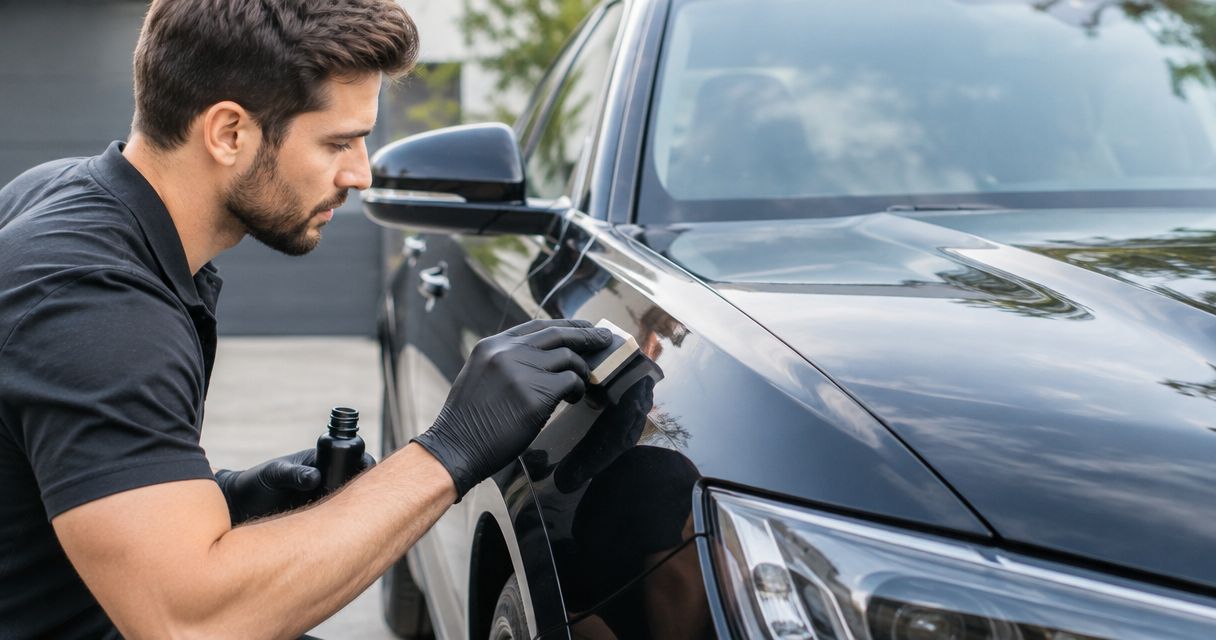
Ceramic coating has no single lifespan: how long it lasts depends on the product, surface preparation, exposure, and maintenance. Treat the manufacturer's stated durability as a conditional expectation—not a guaranteed replacement date—and check the coating's condition before deciding to reapply. Royal Touch Mobile Detailing LLC brings faith-driven service and a commitment to doing work right the first time to vehicle and aircraft care, where choosing the right protection starts with understanding those conditions.
- How long does ceramic coating last? Follow the specific coating's durability guidance, then assess its condition and maintenance history.
- Royal Touch Mobile Detailing LLC offers ceramic coating services for owners seeking mobile vehicle care.
- Weak water beading alone does not prove a ceramic coating needs replacement.
- Ceramic coating supports easier cleaning; it does not make paint scratch-proof or replace regular washing.
How long does ceramic coating last?
A ceramic coating's stated lifespan is a product claim with conditions, not a universal countdown. For a coating appointment in 2026, ask which product will be applied, what its manufacturer says about durability, and which care instructions apply to your vehicle.
Start that conversation with Royal Touch Mobile Detailing LLC, a family-owned mobile detailing company offering ceramic coating, paint correction, and other vehicle-care services. The useful question is not simply how long a coating can last, but what you must do to maintain the particular coating being installed.
Separate these terms when reviewing a recommendation:
| Term | What it tells you | What it does not establish |
|---|---|---|
| Stated durability | The manufacturer's expected service life under its stated conditions | The exact replacement date for your vehicle |
| Warranty coverage | The written coverage, exclusions, and maintenance requirements | Protection against every kind of damage |
| Current condition | How the coated surface behaves after appropriate cleaning | A precise amount of remaining life |
A longer stated lifespan is not enough to choose a service. You also need a preparation plan, clear aftercare instructions, and an explanation of what happens if performance changes.
Why this matters
Ceramic coating is best for owners who want a more manageable exterior-care routine and accept that protection still needs attention. Its benefit is practical: a properly selected and maintained coating helps water and dirt release from the surface during cleaning. Its limitation matters just as much—it does not eliminate washing, water spots, scratches, or impact damage.
Daily drivers, luxury-car owners, and performance-car owners often have different priorities. You might care most about easier washing, preserving a carefully corrected finish, or keeping an outdoor vehicle presentable. Explain that priority before choosing a coating, because a durability label does not describe the whole ownership experience.
Royal Touch Mobile Detailing LLC is best for owners seeking mobile ceramic coating and vehicle detailing services. Convenience belongs in the decision, but it should sit alongside proper preparation and a care routine you can realistically follow.
Read the durability claim before choosing a coating
When comparing ceramic coating recommendations in 2026, ask for the exact product name and its current manufacturer instructions. A description such as professional ceramic protection does not tell you which formulation is being used or how it should be maintained.
Read the durability statement together with its conditions. Check whether it distinguishes between different surfaces, requires maintenance treatments, or describes exposure assumptions. Do not transfer a claim for painted bodywork to wheels, glass, trim, or another material without confirming that the product is intended for it.
Warranty language needs a separate review. Look for what is covered, what is excluded, and what records or inspections are required. A written warranty and a coating's physical performance answer different questions; neither should be used as shorthand for the other.
Before authorizing work, request these details:
- The coating's exact name and intended surfaces.
- The preparation included before application.
- The manufacturer's curing and aftercare instructions.
- Any maintenance conditions attached to the durability claim.
- The process for assessing reduced performance.
Keep that information with your vehicle records. It gives you a useful reference when the surface behaves differently later, instead of leaving you to judge everything from memory.
Why ceramic coating lifespan varies
The calendar is only part of the story. These factors help explain why the same durability description cannot predict the condition of every coated vehicle:
- Surface preparation: Residue and contamination can interfere with application. The installer should assess the surface and prepare it according to the coating manufacturer's directions.
- Application and curing: Product instructions determine suitable application conditions and early care. Treat those instructions as part of the service, not optional reading.
- Outdoor exposure: Sun, weather, tree residue, bird droppings, and road contamination create different care demands from sheltered storage.
- Washing methods: Dirty wash tools, abrasive contact, and unsuitable chemicals can harm the finish or affect coating performance. Use the approved care method.
- Contamination management: Deposits can change how the surface feels and how water behaves. An appropriate cleaning assessment helps distinguish buildup from deterioration.
- Vehicle use: A frequently driven vehicle and a sheltered occasional-use car encounter different conditions. Describe actual use rather than choosing protection from mileage alone.
You cannot control every exposure. You can control whether contamination sits unattended, whether wash tools stay clean, and whether the care routine follows the installed product's instructions.
How to tell whether your coating needs attention
Inspect a clean surface before deciding that a coating has failed. Dirt, mineral deposits, and other buildup can interfere with the water behavior you expect to see.
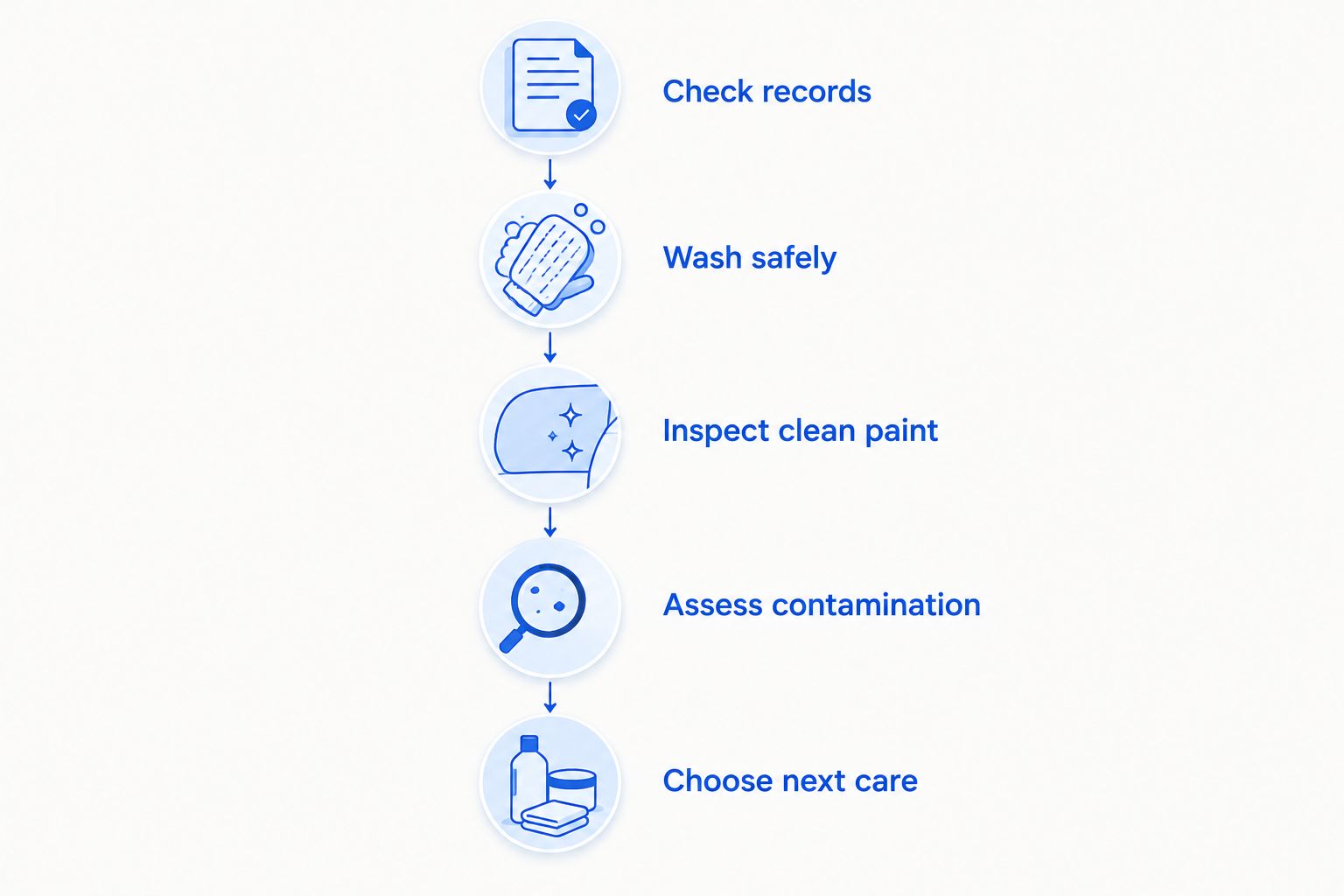
Use this sequence when planning ceramic coating maintenance in 2026:
- Check records. Identify the installed coating, application date, aftercare instructions, and any maintenance requirements.
- Wash safely. Clean the vehicle using the coating manufacturer's recommended method and suitable tools.
- Inspect clean paint. Look at water behavior, visible deposits, and changes across different panels rather than judging a dirty surface.
- Assess contamination. Ask a qualified detailer whether remaining deposits need a coating-compatible treatment before drawing conclusions.
- Choose next care. Decide whether the surface needs routine maintenance, further assessment, or preparation for a new application.
This order helps prevent unnecessary reapplication. It also keeps a cosmetic symptom from becoming a diagnosis before the surface has been properly checked.
Does water beading mean the coating is still working?
Water beading is a useful observation, not a complete condition report. Surface contamination and recently applied maintenance products can affect how water looks on the paint.
Watch for changes after an appropriate wash and compare different areas of the vehicle. If performance remains uneven, explain what changed to the detailer rather than assuming the coating is either fully intact or completely gone.
Does weak beading mean you need a new coating?
Weak beading does not automatically mean you need a new coating. Deposits can interfere with water behavior, so cleaning and inspection come before a replacement decision.
Do not reach immediately for a polish or an aggressive cleaner. Abrasive polishing can remove coating, and a cleaner that is unsuitable for the installed product can create another problem instead of identifying the original one.
Can ceramic coating last without regular washing?
Ceramic coating does not remove the need for regular washing. Leaving dirt and contamination on the surface makes care harder and prevents you from assessing the coating accurately.
Build the washing routine around exposure and the product's instructions. A vehicle parked under trees needs attention to different contamination than one stored indoors; a universal calendar does not account for that difference.
Preparation matters before the coating goes on
Ceramic coating is not a substitute for correcting paint defects. If swirl marks or other visible imperfections bother you before application, discuss them before the coating is installed.
Paint correction uses controlled polishing to address suitable defects. Coating serves a different purpose: protecting the prepared surface and supporting its ongoing care. Ask which defects can reasonably be improved and which should remain untouched rather than requesting unnecessary polishing.
The guide to how long paint correction takes to complete explains why preparation deserves its own discussion. The condition of the finish should shape the work, not a desire to fit every vehicle into the same process.
For a coating booked in 2026, confirm the plan for application conditions and curing before arranging your schedule. Ask when the vehicle can encounter water, when washing can resume, and what to do if unexpected exposure occurs. Follow the installed product's directions rather than a generic timeline from another coating.
Keep the coating useful without overcomplicating care
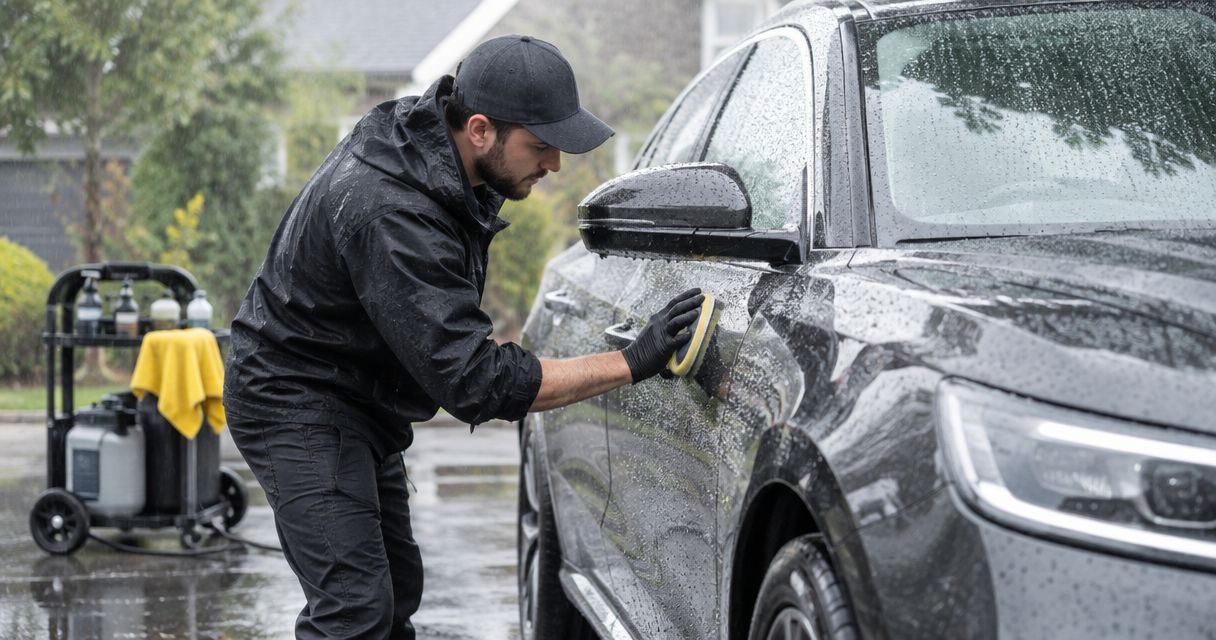
A sensible routine starts with clean tools and the right wash method. Remove loose contamination before contact washing, avoid rubbing dry dirt across the paint, and dry the vehicle using a method suitable for the coated surface.
Deal with bird droppings, bug residue, and other stubborn contamination promptly using an approved method. Do not scrape or scrub aggressively just because the surface has protection. Ceramic coating does not turn damaging cleaning into safe cleaning.
Keep maintenance treatments purposeful. Before adding a spray product, ask whether it is compatible and whether it serves a documented care need. Layering unfamiliar products makes it harder to understand what is producing the current appearance or water behavior.
For premium vehicles, appearance is often the reason owners notice a problem first. Report haze, persistent spots, or a change in surface feel instead of trying increasingly aggressive treatments at home. A focused assessment is more useful than repeatedly changing products.
Discuss your ceramic coating care
Explain your vehicle's condition, storage, and washing routine before choosing the next service.
RVs and aircraft need surface-specific decisions
Do not assume an automotive coating recommendation applies unchanged to an RV or aircraft. Different finishes, materials, and manufacturer requirements need their own assessment.
For an RV, identify which surfaces are being treated and discuss existing oxidation, decals, and the condition of the finish. The coating's intended use matters more than applying the same durability description across the whole vehicle.
For private aircraft owners, flight schools, and charter operators, appearance must remain secondary to approved care procedures. Confirm material compatibility and aircraft manufacturer requirements before any product is applied. Never treat sensors, openings, or specialized surfaces as ordinary painted bodywork.
Explain how the vehicle or aircraft is stored and used. That conversation helps define the care requirements without promising that every surface will perform the same way.
FAQ
How long does ceramic coating last on a daily driver?
Ceramic coating lifespan on a daily driver depends on the installed product, preparation, exposure, and maintenance. Use the manufacturer's stated durability as a conditional expectation, then assess the clean surface rather than relying on age alone.
Does ceramic coating wear off all at once?
Ceramic coating performance does not have to change uniformly across the vehicle. Different panels experience different contamination, contact, and exposure, so inspect more than a single area.
Can I make ceramic coating last longer?
You can support ceramic coating performance by following its care instructions, using suitable wash tools, and addressing contamination promptly. Maintenance does not guarantee a particular lifespan or make the finish damage-proof.
Do automatic car washes damage ceramic coating?
Contact wash equipment can introduce scratches to the finish, and ceramic coating does not prevent that damage. Choose a washing method consistent with the coating manufacturer's guidance rather than assuming every automatic wash is suitable.
Does ceramic coating stop water spots?
Ceramic coating does not make a vehicle immune to water spots. Mineral deposits can remain when water dries, so use suitable washing and drying methods and seek advice before treating persistent marks.
Should I polish my car before ceramic coating?
Polishing before ceramic coating depends on the paint's condition and your appearance goals. Have the finish assessed, discuss which defects need correction, and avoid treating polishing as an automatic requirement for every vehicle.
Can I apply another coating over the old one?
Apply another coating only when the product instructions and surface assessment support that approach. The existing finish may need cleaning, other preparation, or coating removal before a new application.
One last thing
Record the coating's identity, not just its installation date. A dated receipt without the product name leaves you without the instructions that matter most when maintenance questions arise.
For your 2026 care records, keep the product information, preparation details, aftercare directions, and maintenance history together. That simple habit makes the next decision clearer: clean it, assess it, or prepare it for a new coating—based on the surface, not the calendar alone.