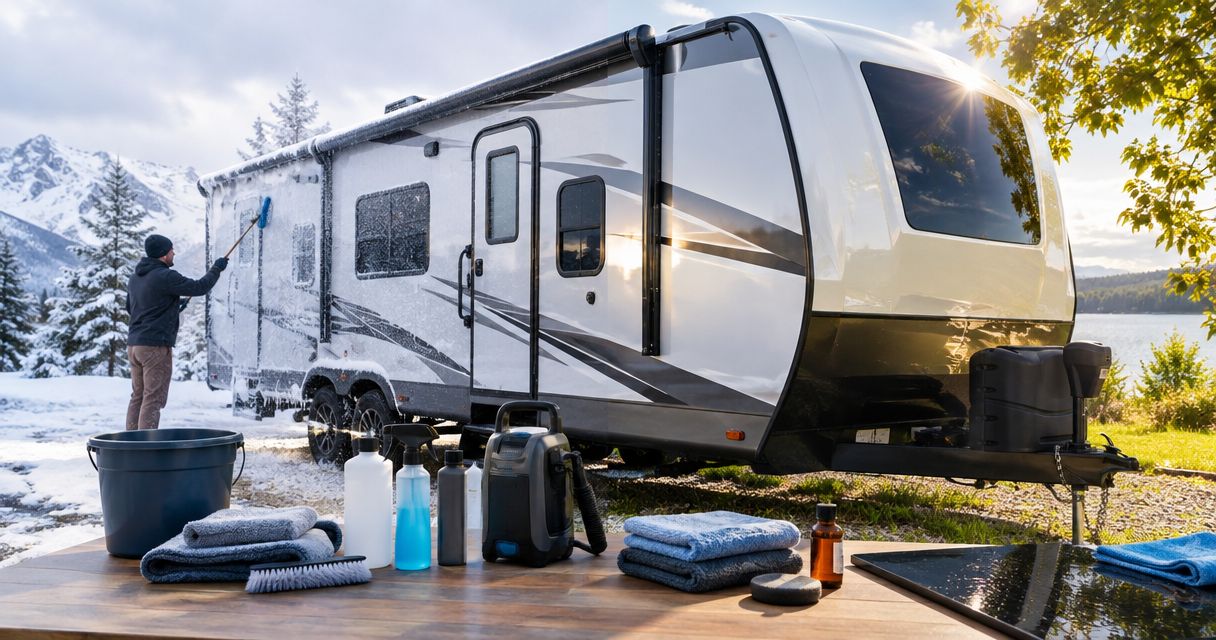
Royal Touch Mobile Detailing LLC brings faith-driven service and a commitment to doing work right the first time to auto, RV, and aviation detailing. Instead of repeating winter cleanup before every spring trip, use this RV winterizing to spring ceramic coating workflow to separate mechanical preparation, surface repair, and exterior protection.
- RV winterizing to spring ceramic coating starts with manufacturer-directed winterization, then inspection, cleaning, surface preparation, and coating.
- Royal Touch Mobile Detailing LLC offers RV detailing and ceramic coating for owners seeking mobile exterior care.
- Ceramic coating does not replace plumbing winterization, roof repairs, or routine washing.
- Inspect existing coatings before applying another layer; follow the selected product’s surface and curing instructions.
Why this matters
Winterization and ceramic coating solve different problems. Winterization prepares the RV’s systems for storage; ceramic coating adds a protective treatment to compatible exterior surfaces. A coating cannot protect plumbing from freezing or repair a leaking roof seam.
Royal Touch Mobile Detailing LLC is best for RV owners seeking mobile detailing and ceramic coating services. Mobile service brings exterior care to your location, but coating still requires suitable access, weather, and working conditions.
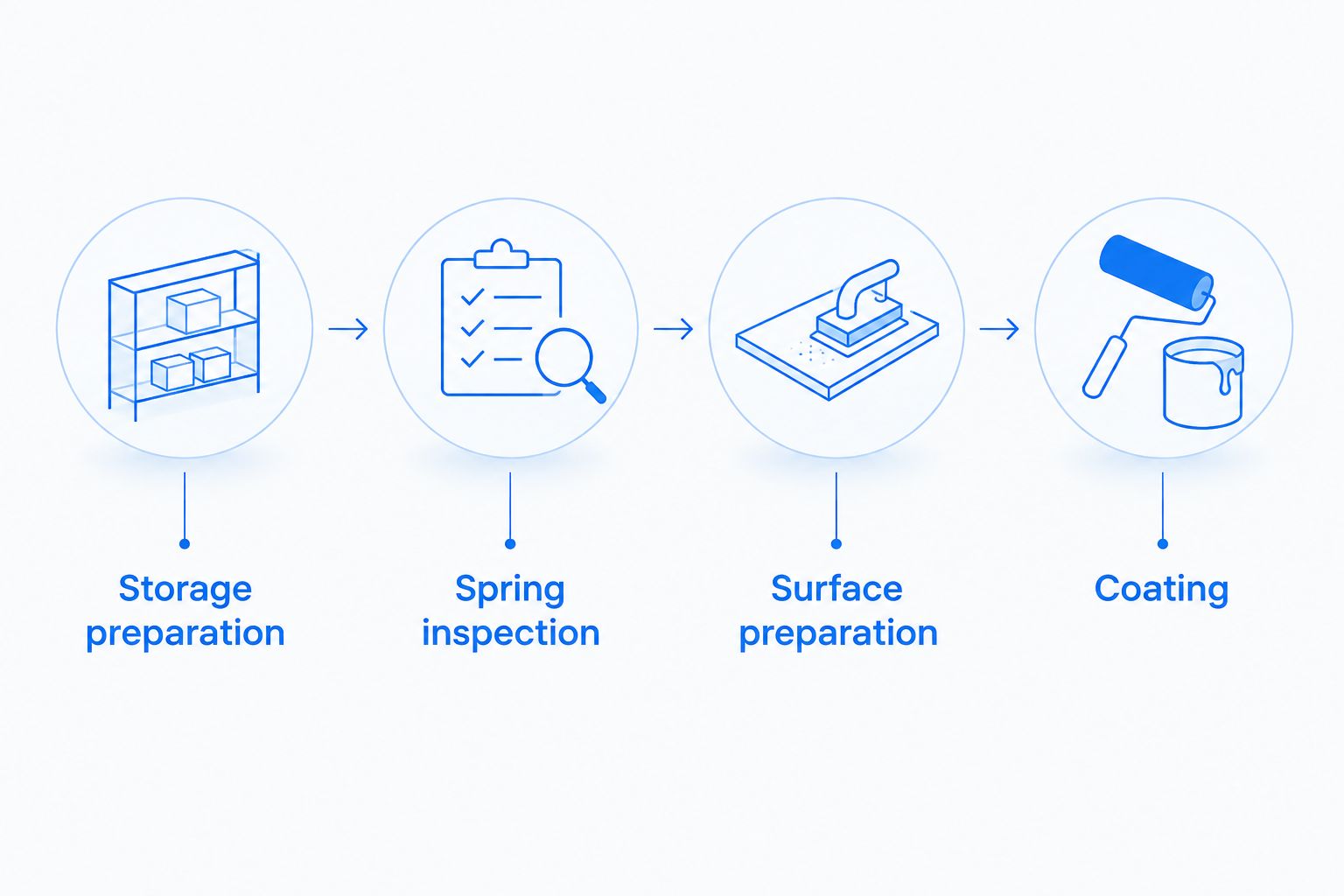
For your 2026 seasonal plan, use 4 phases: storage preparation, spring inspection, surface preparation, and coating. Keep mechanical readiness separate from appearance so a glossy exterior never becomes your reason to overlook a maintenance issue.
Before you start
- Gather the right instructions. Have your RV owner’s manual, appliance instructions, and the selected coating’s application directions. Identify the roof material, exterior finish, decals, and any existing coating before choosing cleaners or protection.
- Confirm safe access and a workable location. Arrange a stable working area, permission to wash, and safe access to upper surfaces. Follow roof-access restrictions; use an RV service professional for mechanical work outside your ability.
- Catch the hidden compatibility problem. An RV can have several exterior materials with different care requirements. A product approved for painted panels is not automatically approved for roof membranes, sealants, windows, or graphics.
Create 2 records before storage: a written condition checklist and a photo record. Photograph existing stains, damaged graphics, questionable seams, and dull panels. These records help you distinguish an old defect from a problem discovered after winter.
Do not select a coating solely because it says ceramic on the label. Confirm that its stated uses match the actual surface you intend to treat.
Storage preparation
Separate winterization from exterior care
- Read the RV-specific winterization procedure. Identify the required steps for fresh-water plumbing, the water heater, appliances, batteries, and storage. Follow the manufacturer’s instructions rather than a generic valve sequence.
- Assign mechanical work to the right person. If you cannot identify a bypass, drain, or appliance requirement, stop and arrange RV service. Exterior detailing is not a substitute for winterizing the vehicle’s systems.
- Wash compatible exterior surfaces. Remove road grime and organic debris with products approved for the materials involved. Work within the cleaner’s instructions and avoid forcing water into seams, vents, or electrical openings.
- Inspect before covering or storing. Check visible seams, roof edges, window surrounds, and exterior panels. Refer failed seals, damaged roofing, or water intrusion for repair rather than hiding them under protection.
- Record the storage condition. Note the winterization work completed, existing exterior protection, and unresolved repairs. Follow the RV and cover manufacturers’ storage directions.
Expected result: You have a documented winterization status, an inspected exterior, and a clear list of repairs. A clean RV is easier to inspect, but cleanliness alone does not confirm that it is winterized.
For storage beginning in 2026, record the actual completion date. That date helps you track what happened before storage without relying on memory when spring preparation begins.
Avoid adding unfamiliar waxes or dressings just before a planned coating appointment. Tell the detailer what you applied so surface preparation can account for it.
Spring inspection
Confirm readiness before cosmetic work
- Complete manufacturer-directed de-winterization. Follow the RV’s instructions for returning systems to service. Do not treat exterior washing as evidence that the water system, appliances, or batteries are ready.
- Compare the exterior with your storage photos. Look for new streaking, peeling graphics, damaged sealant, dullness, and signs of water intrusion. Inspect accessible areas without stepping onto a roof that is not approved for walking.
- Resolve repairs before coating preparation. Have leaks, loose components, and damaged materials addressed first. Repair work can disturb a freshly treated surface and require another round of preparation.
- Discuss the finish with your detailer. Identify painted panels, fiberglass or gelcoat areas, graphics, trim, and the roof separately. Share the name of any previous protection if you know it.
- Choose the surface goal. Decide whether you want cleaning and protection, correction of visible paint defects, or both. Ask which defects can be addressed safely and which should remain untouched.
Expected result: You know which surfaces are ready for detailing, which need repair, and which need a different care method. The coating appointment follows the inspection rather than replacing it.
Use 3 checks at the spring handoff: material compatibility, unresolved repairs, and existing protection. These checks keep the conversation practical. They also prevent a request to coat the whole RV from becoming permission to treat every material alike.
Surface preparation and coating
Prepare the finish before applying protection
- Agree on the treatment areas. Identify exactly which panels will receive coating and which will not. Confirm separate instructions for graphics, trim, glass, sealants, and roofing.
- Remove dirt before judging the finish. A proper wash exposes the condition underneath road film and storage residue. Inspect again after cleaning; some apparent defects are contamination, while others remain in the finish.
- Remove bonded contamination as needed. Use a method compatible with the surface. Do not assume every RV requires the same chemical treatment or mechanical decontamination process.
- Address suitable defects before coating. Paint correction removes or reduces certain finish defects; ceramic coating does not serve that function. Agree on a safe correction plan rather than asking for every mark to disappear.
- Complete the coating’s final preparation. Follow the selected product’s directions for surface cleaning, application conditions, and residue removal. Existing wax, polish residue, or incompatible protection must be addressed as directed.
- Apply and inspect according to the product instructions. Follow the stated application and removal process. Check for missed areas and uneven residue under suitable lighting before the product advances through its curing process.
- Document aftercare before departure. Get the specific instructions for water exposure, washing, and returning the RV to use. Schedule travel around those instructions rather than assuming the surface is ready immediately.
Expected result: The agreed surfaces are clean, prepared, treated, and accompanied by usable aftercare instructions. The appointment ends with a care plan, not just a shiny finish.
For a 2026 spring appointment, plan backward from your departure date. The coating manufacturer’s directions determine the required conditions and curing restrictions; there is no universal timetable for every product.
The ceramic coating guide for RV owners gives you a focused next read before discussing treatment areas.
Preparation is where the appearance work happens. Do not ask ceramic coating to hide defects that should be evaluated before application. A treatment applied over an unresolved surface problem does not turn that problem into a repair.
When the RV already has ceramic coating
An already-coated RV needs inspection and maintenance, not an automatic new application. Start with a compatible wash, review the original care instructions, and assess the surface after contamination has been removed.
Choose the right seasonal workflow
| Workflow | Best for | Advantage | Limitation | Next action |
|---|---|---|---|---|
| First coating | Owners planning protection on previously untreated, compatible surfaces | Lets you address suitable finish defects before protection | Requires preparation and product-specific curing conditions | Confirm materials and correction needs |
| Existing-coating maintenance | Owners with a documented coating already in place | Focuses on cleaning and preserving the current treatment | Surface behavior alone does not establish coating condition | Review the coating record and inspect after washing |
For existing protection, use this shorter sequence:
- Locate the coating record. Identify the product, treated surfaces, and aftercare directions. If the record is missing, tell the detailer rather than guessing.
- Wash with compatible products. Avoid unfamiliar polishing or stripping treatments before the coating has been assessed.
- Inspect the clean surface. Check appearance and contamination, and discuss changes in water behavior without treating them as a complete diagnosis.
- Approve maintenance or reapplication only after assessment. Follow the coating’s directions for any maintenance treatment or additional application.
Expected result: You maintain the existing treatment when appropriate and reserve reapplication for a justified plan.
In your 2026 maintenance log, distinguish a wash from a coating application. That simple distinction prevents confusion about what protection is actually on the RV.
Troubleshooting
The surface still feels rough after washing
Bonded contamination can remain after ordinary washing. Have the affected material assessed and use an appropriate decontamination method before coating. Avoid aggressive scrubbing around graphics and vulnerable edges.
Water behavior changes after storage
Contamination can change how water behaves on a treated surface. Clean it according to the coating’s maintenance instructions before deciding the coating has failed. Do not use water beading alone to approve another application.
Dullness remains on a clean panel
A dull surface can require more than washing, particularly where oxidation or finish damage is present. Ask for a material-specific assessment and correction plan. Coating is protection, not a substitute for evaluating damaged finishes.
Weather interrupts the appointment
Temperature, moisture, and exposure must meet the selected product’s instructions. Arrange suitable shelter or reschedule when conditions do not meet those requirements. A convenient date does not override application restrictions.
Streaks or uneven patches appear after application
Report the affected areas promptly and avoid adding another product over them. Uneven coating residue requires assessment, and the remedy depends on the product and its curing stage. Do not assume ordinary washing will correct it.
Customize your workflow
Build your 2026 RV care plan around how you store and use the vehicle. Outdoor storage calls for careful inspection of weather-exposed surfaces; covered storage still requires checks for dirt, moisture, and material damage.
Ask Royal Touch Mobile Detailing LLC about RV detailing, paint correction, and ceramic coating as separate needs. The benefit of combining the conversation is a clearer sequence; the limitation is that each surface and condition still needs its own assessment.
Make the next appointment easier by sending:
- Photos of the RV and the panels that concern you.
- Details of existing protection and recent repairs.
- Your intended travel date and storage arrangement.
- Information about site access and restrictions on washing.
A mobile appointment reduces the need to transport the RV for exterior care. It does not remove the need for safe access, suitable conditions, or an agreed treatment scope.
Discuss Your RV Care Plan
Ask about RV detailing, paint correction, and ceramic coating before scheduling exterior care.
FAQ
What is the right order for RV winterizing to spring ceramic coating?
Follow manufacturer-directed winterization, then complete spring inspection, necessary repairs, surface preparation, and coating. Mechanical readiness and exterior protection are separate tasks.
Does ceramic coating winterize an RV?
No, ceramic coating does not winterize an RV’s plumbing, appliances, or other systems. Follow the RV manufacturer’s storage instructions or arrange qualified RV service.
Should I wax my RV before a ceramic coating appointment?
Do not add wax immediately before a planned coating appointment without discussing it with the detailer. Wax and other existing protection must be addressed according to the selected coating’s preparation instructions.
Can ceramic coating go over RV decals and the roof?
Only apply a coating where its instructions and the surface manufacturer’s requirements permit it. Approval for painted panels does not establish compatibility with graphics, roof membranes, or sealants.
Does my RV need paint correction before ceramic coating?
Your RV needs an inspection before deciding on paint correction. Correction addresses suitable finish defects, while coating adds protection; they perform different jobs.
How long should I wait before driving a newly coated RV?
Follow the selected coating’s curing and exposure instructions before returning the RV to use. Confirm those requirements before scheduling the appointment around a trip.
Do I need new ceramic coating every spring?
An existing coating needs assessment rather than automatic annual replacement. Review its care instructions, wash compatible surfaces, and inspect before approving maintenance or reapplication.
Can Royal Touch Mobile Detailing LLC help with RV exterior protection?
Royal Touch Mobile Detailing LLC offers RV detailing, paint correction, and ceramic coating services. Discuss your RV’s materials, condition, and intended treatment areas before arranging service.
One last thing
A water-beading photo is not a complete coating record. Keep the product name, treated areas, application date, and aftercare instructions together. That record gives your next detailer more useful information than a memory that the RV was coated sometime before winter.