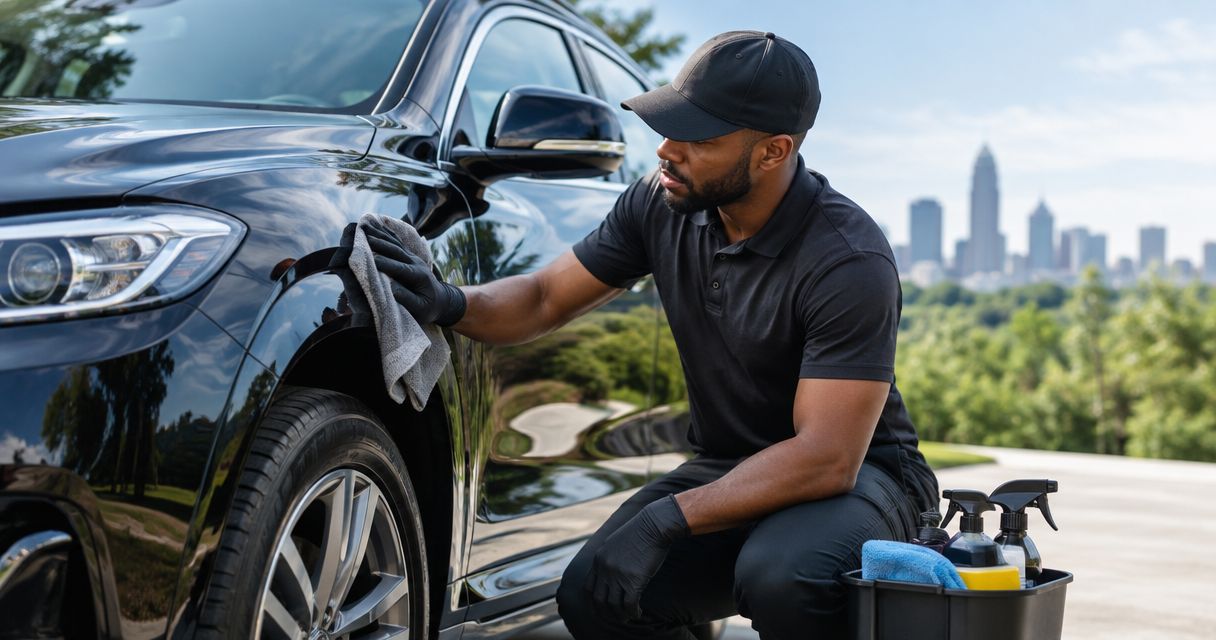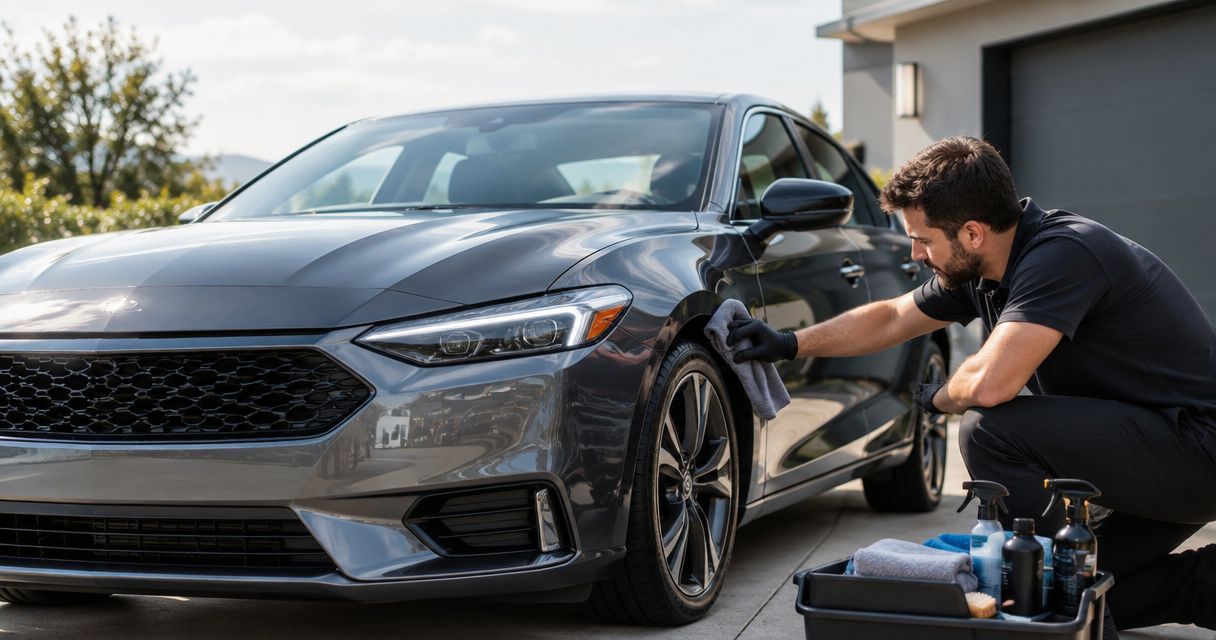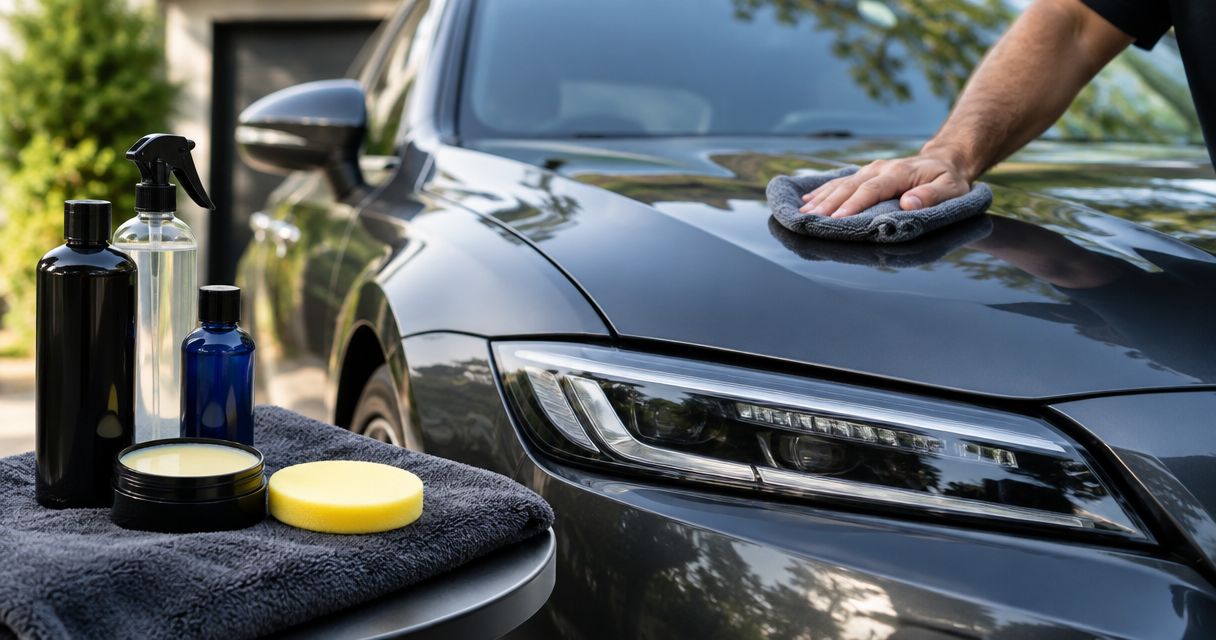
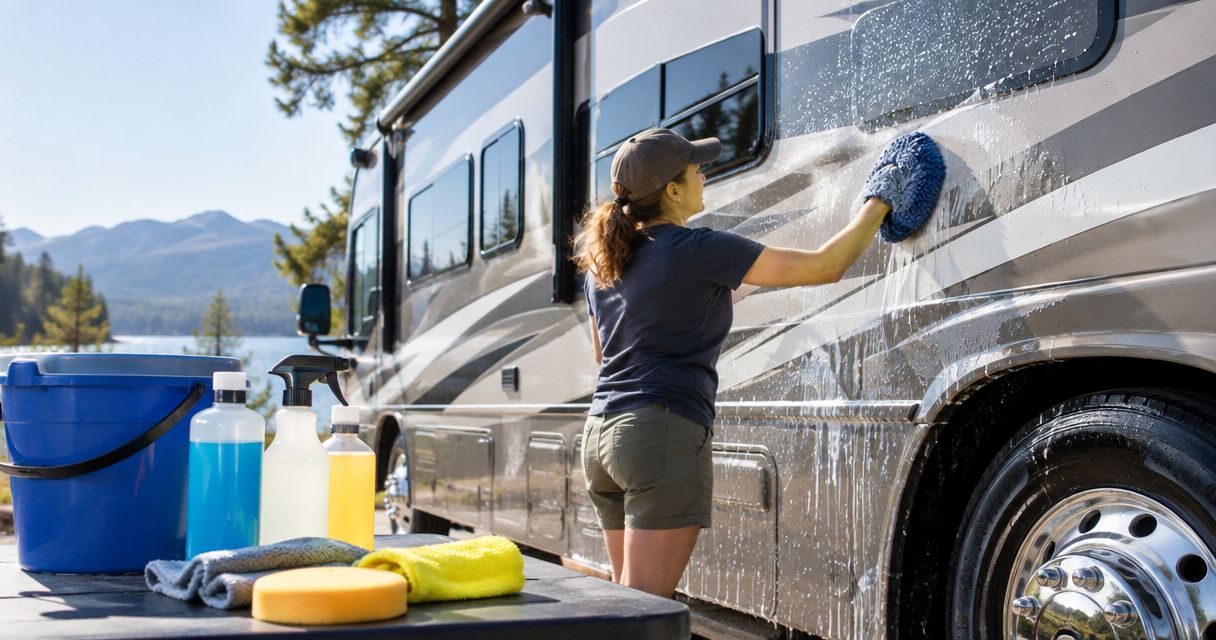
Best overall for road grime: a surface-compatible RV shampoo followed by separate wax or sealant; best for routine upkeep: an RV wash-and-wax formula; best for front-cap bug residue: a compatible spot cleaner. This 2026 guide reflects Royal Touch Mobile Detailing LLC’s faith-driven approach to service and commitment to doing work right the first time: choose care that fits your RV’s finish, not just its size.
- The best rv wash and wax products match your RV’s paint, fiberglass, decals, and existing protection.
- Separate RV shampoo and wax is the default for road grime that needs cleaning before protection.
- RV wash-and-wax formulas suit routine upkeep, not oxidation repair or stubborn stain removal.
- Royal Touch Mobile Detailing LLC offers mobile RV detailing for owners who prefer service over a DIY wash.
Why this matters
An RV combines surfaces that need different care. Painted panels, fiberglass gelcoat, graphics, roof materials, seals, and windows do not automatically accept the same cleaner.
Road grime also comes in different forms. Loose dirt needs rinsing, oily residue needs suitable cleaning, and dried insects need targeted attention before you drag a wash mitt across them.
Royal Touch Mobile Detailing LLC offers mobile RV detailing alongside auto and aviation detailing. For your 2026 maintenance routine, the useful question is not which bottle promises the most shine. It is which cleaning approach suits the surface and the dirt actually on it.
This ranking compares product types, not competing brands. Start with the label and your RV manufacturer’s care instructions; a category recommendation does not make every formula in that category suitable.
What makes the best RV wash and wax products
Use these criteria before choosing your 2026 wash supplies:
- Surface compatibility: Look for explicit suitability for your finish, graphics, and existing protection. Do not treat an exterior-body cleaner as a roof cleaner by default.
- Cleaning purpose: Match the formula to maintenance dirt, concentrated bug residue, or oily road film. Wax is not a substitute for cleaning.
- Controlled contact: Choose a method that lets you remove dirt without repeatedly rubbing contamination across the finish.
- Application requirements: Read dilution, drying, temperature, rinsing, and removal instructions before opening the bottle.
- Protection requirements: Check whether the product cleans, adds protection, or does both. Existing coatings can have their own maintenance instructions.
- Practical reach: Consider how you will safely access upper panels. A suitable product does not solve an unsafe working position.
A clean, sound surface comes before shine. If the finish is chalky, peeling, or damaged, assess that condition before adding another protective layer.
RV wash and wax options at a glance
| Rank and option | Best for | Standout feature | Key limitation |
|---|---|---|---|
| 1. RV shampoo plus separate wax or sealant | Thorough post-trip cleaning | Separates dirt removal from protection | Requires separate application stages |
| 2. RV wash-and-wax formula | Routine maintenance washes | Combines washing and a protective component | Does not replace correction or targeted cleaning |
| 3. Compatible bug and road-film cleaner | Concentrated front-cap residue | Targets dirty areas before the main wash | Needs careful compatibility checks |
| 4. Rinseless wash formula | Light dirt where hose rinsing is impractical | Uses a controlled towel-based washing method | Not the default for heavy mud or grit |
| 5. Spray wax | Touchups on an already-clean finish | Adds a separate protective application | Does not clean a dirty RV |
These options serve different jobs. A spot cleaner or spray wax can belong in the same routine as shampoo, but neither replaces the main wash.
1. RV shampoo plus separate wax: best for post-trip road grime
A compatible shampoo handles washing; a separate wax or sealant handles protection after the surface is clean. Splitting those jobs gives you a chance to inspect the finish before applying anything that adds gloss.
This is the default approach for an RV returning with road film across its lower panels. It also lets you leave protection off areas where the product is unsuitable rather than spreading one formula everywhere.
RV shampoo plus separate wax pros:
- Keeps cleaning and protection as distinct decisions.
- Lets you inspect remaining residue after washing.
- Allows different protection choices for compatible surfaces.
RV shampoo plus separate wax cons:
- Requires separate washing and application stages.
- Still needs a spot cleaner when ordinary washing leaves stubborn residue.
Check both labels, not just the shampoo label. Painted finishes, gelcoat, decals, and previously coated surfaces can have different care requirements; confirm the protective product’s suitability before use.
Do not wax over grit or treat a glossy result as proof that contamination is gone. Run your inspection after rinsing and drying, with enough light to see the surface clearly.
Best for: Owners who want a deliberate post-trip routine rather than a single-bottle shortcut.
Buy: Choose compatible shampoo and separate protection when cleaning control matters more than combining steps.
2. RV wash-and-wax formula: best for routine maintenance
An RV wash-and-wax formula combines a cleaning product with a protective component. Its role is maintenance washing on compatible surfaces, not repairing a neglected finish.
Use this category when your RV needs ordinary upkeep and its finish is already in sound condition. Judge the product by its directions and suitability, not by how much foam it produces.
RV wash-and-wax pros:
- Combines washing and a protective component in one formula.
- Keeps the product selection simple for routine care.
- Fits maintenance between more involved cleaning sessions.
RV wash-and-wax cons:
- Does not correct oxidation, scratches, or peeling clear coat.
- Cannot replace targeted treatment for every stubborn deposit.
Check the instructions for existing ceramic coatings or other protection. Do not assume a wax-containing wash matches every coating’s recommended maintenance routine.
If the RV still has visible residue after washing, address that residue with a suitable method. Repeating the same wash harder is not a sound substitute for identifying the problem.
Best for: Owners maintaining a regularly cleaned RV with compatible exterior surfaces.
Buy: Choose RV wash-and-wax for upkeep; skip it as a stand-alone restoration plan.
3. Compatible bug and road-film cleaner: best for front-cap residue
A targeted cleaner addresses concentrated residue before the full wash. The front cap, mirror housings, and lower exterior panels often need a different level of attention from cleaner upper bodywork.
Select a product approved for the exact surface you intend to treat. Follow its instructions for dwell time and rinsing, and never let a cleaner dry on the surface unless its directions explicitly permit that method.
Compatible bug and road-film cleaner pros:
- Concentrates cleaning on affected areas.
- Helps separate stubborn-residue treatment from ordinary washing.
- Reduces the temptation to scrub the whole RV more aggressively.
Compatible bug and road-film cleaner cons:
- Compatibility varies across finishes, graphics, and protective layers.
- Adds a treatment step and does not replace the main wash.
Start with a small, inconspicuous test area when the care instructions allow it. A cleaner that works on one painted panel is not automatically suitable for nearby decals or trim.
Avoid treating household cleaners, abrasive pads, and exterior detailing products as interchangeable. Identify the surface first, then choose the cleaning method.
Best for: RV owners dealing with localized insect residue or road film after travel.
Buy: Add a compatible spot cleaner for a defined residue problem, not as an all-surface default.
4. Rinseless wash formula: best for lightly dirty surfaces
A rinseless wash uses its specified solution and towel technique instead of a conventional hose-rinse routine. It is an option for light dirt when the location makes hose washing impractical.
The method still requires water, clean towels, correct dilution, and careful inspection. It is not permission to wipe heavy grit across a large panel.
Rinseless wash pros:
- Offers an alternative where hose rinsing is impractical.
- Supports controlled work on individual panels.
- Lets you replace dirty towel faces throughout the wash.
Rinseless wash cons:
- Heavy mud and grit need removal before contact washing.
- Large RV surfaces demand careful towel management and safe access.
Read the formula’s directions rather than borrowing instructions from another product. Stop when your towels are dirty; continuing with contaminated fabric defeats the point of controlled washing.
For a heavily soiled RV after a wet-road trip, choose a method that allows thorough pre-rinsing. The parking situation should not force an unsuitable cleaning technique.
Best for: Owners cleaning light dirt in a setting where a conventional hose wash is impractical.
Buy: Choose rinseless wash for suitable light-soil conditions; skip it as the first move on heavy grit.
5. Spray wax: best for clean-surface touchups
Spray wax is a protective application for a surface that is already clean and compatible. Some formulas have specific wet-application directions; others require a dry surface.
Follow the actual label. The word spray describes how the product is dispensed, not permission to use it on every material or skip preparation.
Spray wax pros:
- Provides a separate protection step after cleaning.
- Allows focused application on compatible exterior panels.
- Fits touchup work without turning it into finish correction.
Spray wax cons:
- Does not remove road grime, oxidation, or scratches.
- Requires attention to residue, excess application, and sensitive adjacent surfaces.
Keep the application method appropriate to the panel and surrounding materials. More product is not a substitute for following the specified spreading and removal instructions.
If the finish needs cleaning or correction, deal with that first. Spray wax belongs at the end of the appropriate routine, not over the evidence that the wash was incomplete.
Best for: Owners refreshing protection on an already-clean, sound finish.
Buy: Choose spray wax for compatible clean-surface touchups; skip it as a cleaner.
How to wash an RV without mixing up the jobs
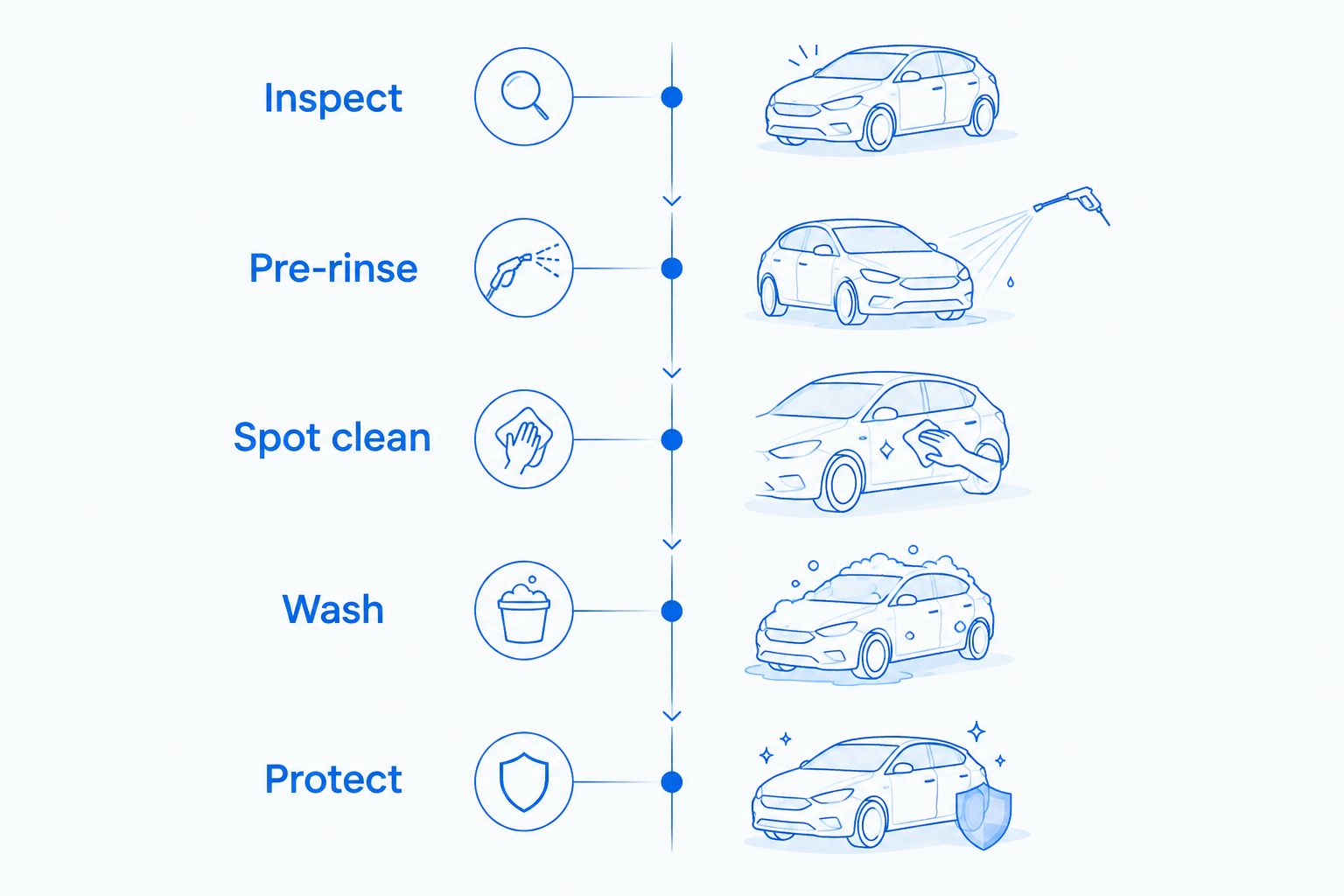
A practical wash separates inspection, dirt removal, contact washing, and protection. Use this sequence as a planning checklist, while letting the RV and product instructions control the actual work.
Inspect
Identify paint, gelcoat, graphics, roof materials, and existing protection. Check for damaged finishes or seals, and plan safe access before wetting the RV.
Pre-rinse
Remove loose dirt before contact washing when the chosen method permits rinsing. Avoid directing water into vents, openings, damaged seals, or electrical components.
Spot clean
Treat concentrated residue with a compatible cleaner. Work on 1 manageable panel at a time where practical, rather than letting applied cleaner dry while you move around the RV.
Wash
Follow the shampoo’s dilution and tool instructions. For a conventional bucket wash, consider 2 buckets to separate wash solution from mitt rinsing; replace contaminated water rather than treating the bucket count as protection by itself.
Protect
Inspect the cleaned surface before applying wax or sealant. Keep 2 separate towels for application and removal when the product’s directions call for those tasks, and replace either towel when contaminated.
Do not combine chemicals to create a stronger cleaner. For reach, follow the RV manufacturer’s access instructions and use suitable equipment rather than improvising around a tall, wet vehicle.
How these options are ranked
The 2026 ranking puts cleaning control first, followed by surface compatibility, appropriate protection, and practical application. Separate shampoo and protection takes the default slot because it keeps those jobs distinct.
Wash-and-wax earns the maintenance slot. Targeted cleaner, rinseless wash, and spray wax each address narrower needs; none is a universal replacement for the whole routine.
Which RV wash and wax approach should you choose?
Choose compatible shampoo followed by separate wax or sealant if you are undecided. That approach gives you a clear stopping point to inspect the cleaned surface before protection.
Choose wash-and-wax for routine upkeep, a targeted cleaner for concentrated residue, and rinseless wash only when soil level and instructions suit the method. Choose spray wax after cleaning, not instead of it.
Royal Touch Mobile Detailing LLC is an RV detailing option for owners who want mobile service instead of a DIY wash. Its service offering includes RV detailing, so you can discuss your vehicle’s condition without guessing which bottle addresses it.
For your 2026 service inquiry, describe the finish, existing protection, visible residue, and access situation. Those details make the conversation more useful than asking for shine alone.
Discuss your RV detailing needs
Share your RV’s finish, road grime, and existing protection before choosing a care approach.
FAQ
What are the best RV wash and wax products in 2026?
Surface-compatible RV shampoo followed by separate wax or sealant is the default choice for thorough road-grime cleaning. An RV wash-and-wax formula suits routine upkeep when its label matches your finish and existing protection.
Is RV wash-and-wax better than separate shampoo and wax?
RV wash-and-wax is better suited to a combined maintenance routine, while separate shampoo and wax keeps cleaning and protection distinct. Choose according to the RV’s condition and the product instructions, not the number of bottles.
Can I use the same cleaner on my RV roof and painted sides?
Use the same cleaner only when the RV and cleaner instructions approve it for both surfaces. Roof membranes, paint, fiberglass, decals, and seals can have different care requirements.
Will wash-and-wax remove oxidation from fiberglass?
Wash-and-wax is not a correction treatment for oxidized fiberglass. Assess chalky or dull gelcoat before choosing a surface-appropriate restoration method.
Can I use rinseless wash on an RV covered in road grit?
Rinseless wash is not the default first step for an RV covered in heavy road grit. Remove loose contamination appropriately before contact cleaning and follow the formula’s instructions.
Can I put spray wax directly over road grime?
Do not apply spray wax over road grime. Clean the compatible surface first, then follow the wax’s application and removal directions.
Does Royal Touch Mobile Detailing LLC offer RV detailing?
Royal Touch Mobile Detailing LLC offers mobile RV detailing. Its stated service area covers North Carolina and parts of Virginia and South Carolina; discuss your location and vehicle needs when making an inquiry.
One last thing
Your next wash starts with the labels, not the hose. For your 2026 care plan, keep a note of the RV’s surface materials and existing protection beside your cleaning supplies so you do not have to guess each time.
Choose the gentlest suitable method that addresses the actual residue. A shiny panel is not a reason to ignore a damaged finish, and an extra coat of wax is not a repair.