Yes—mobile detailing can remove mold from accessible car-interior surfaces when the detailer accepts that work, but it cannot solve every mold problem. Wet seat foam, contaminated carpet backing, ventilation-system involvement, or an unrepaired leak can require specialist assessment, repairs, or material replacement. Royal Touch’s faith-driven approach centers on doing work right the first time, with vehicle and aircraft care that starts by matching the job to the right service—not promising a quick fix.
- Can mobile detailing remove mold from car interiors? Yes, for suitable accessible-surface cases—not every contaminated interior.
- Royal Touch offers mobile vehicle detailing; confirm mold-related scope before booking.
- Repair the moisture source and assess hidden materials before treating the job as routine interior cleaning.
- A fresh smell does not prove mold removal, complete drying, or safe occupancy.
Why this matters
Mold cleanup is a moisture problem as well as a cleaning problem. A seat can look better while the padding underneath stays damp. Adding fragrance or cleaning only the visible patch does not address that hidden condition.
For your 2026 vehicle-care plan, separate ordinary interior maintenance from suspected contamination. Royal Touch offers mobile detailing, but a standard detailing appointment should never be assumed to include mold remediation.
Mold exposure can cause allergic reactions and respiratory irritation. If you have asthma, a weakened immune system, or symptoms associated with being inside the vehicle, seek medical advice and avoid handling the cleanup yourself. A detailer cannot certify that a vehicle is medically safe for a particular person.
Can mobile detailing remove mold from inside a car?
Mobile detailing can address suitable surface contamination when the provider has an appropriate process and the interior can be thoroughly dried. The deciding factor is where the contamination goes—not whether the equipment arrives in a van or stays in a shop.
Use the following distinctions to discuss the job before booking. These are assessment routes, not diagnoses you can confirm from a photograph.
| Route | Best for | Main benefit | Main limitation |
|---|---|---|---|
| Surface cleaning by a qualified provider | Accessible contamination on cleanable materials | Removes contamination from reachable surfaces | Does not establish the condition of concealed layers |
| Specialist mold assessment | Recurring growth, extensive contamination, or uncertain depth | Defines the affected materials and appropriate next steps | Is different from routine detailing |
| Leak repair and interior-material assessment | Persistent dampness, soaked padding, or water intrusion | Addresses the source and materials holding moisture | Cleaning alone cannot replace this work |
These routes can be needed together. Repairing a leak does not clean contaminated upholstery, and cleaning upholstery does not repair a leak.
Accessible surface growth: cleaning has limits
A small visible patch on a cleanable surface presents a different job from growth throughout a seat cushion. A provider should assess the material, surrounding condition, and water history before selecting a treatment.
Hard, nonporous surfaces are generally easier to clean than absorbent materials. Fabric, carpet backing, headliners, and seat foam require closer attention because contamination and moisture can extend beyond what you see.
Avoid deciding that a patch is harmless based on its color. Appearance does not establish mold species, exposure risk, or the depth of contamination. Likewise, a stain remaining after cleaning does not, by itself, prove that active growth remains.
For a 2026 booking, ask a direct question: “Does your service cover suspected mold, and what conditions would make you decline or refer the job?” A clear answer protects your time and helps prevent an ordinary shampoo from being mistaken for a complete remediation plan.
Hidden contamination: detailing alone is not enough
A car with saturated padding, recurring mustiness, or visible growth returning after cleaning needs more investigation. Water can remain under carpet even when the upper fibers feel dry.
Removing seats or trim also introduces vehicle-specific concerns, including wiring, airbags, sensors, and installation requirements. Leave disassembly to someone qualified for that vehicle rather than treating it as a casual cleaning step.
Floodwater adds another concern: contamination is not necessarily limited to mold. Tell the provider about flooding before anyone enters the vehicle or begins work. A mechanic, insurer, or appropriately qualified remediation professional can help determine the next step.
Do not book around the problem. If a provider says the vehicle needs repair, material removal, or specialist attention first, another routine interior detail is not an equivalent solution.
Why mold-removal results vary
The condition of the vehicle determines the work. These factors explain why the same visible spot can lead to different recommendations:
- Material: A cleanable plastic panel and absorbent seat foam require different decisions.
- Depth: Surface growth is different from contamination beneath upholstery or carpet.
- Moisture source: A repaired spill and an active roof leak create different cleanup conditions.
- Water history: Flooding, repeated rain intrusion, and a forgotten wet item need different assessments.
- Access: Concealed areas cannot be evaluated or cleaned without suitable access.
- Drying conditions: Weather, shelter, ventilation, and equipment affect whether wet cleaning is appropriate at the location.
There is no responsible universal promise that every moldy car can be restored through one mobile appointment. The useful answer is a defined scope with clear limits.
What should happen before and during cleanup?
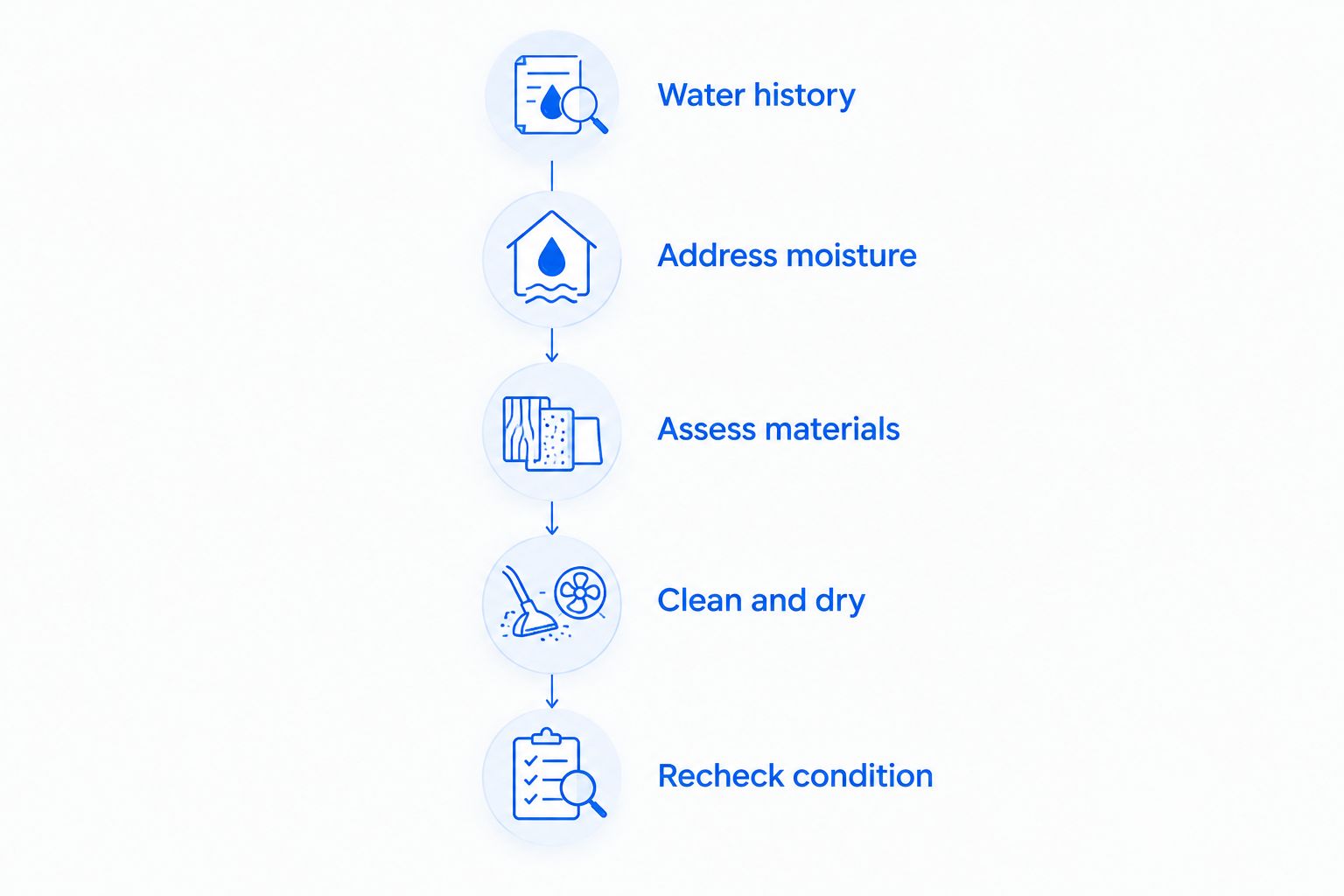
A sensible 2026 cleanup plan follows the condition of the vehicle rather than a fixed menu. Ask the provider to explain the sequence before work starts.
Establish the water history
Explain when you first noticed the odor or growth, whether the car flooded, and whether the problem returns after rain. Include previous cleaning attempts and any products already applied.
Photos help show visible areas, but they do not replace an assessment. Do not disturb contaminated materials simply to get a better picture.
Address the moisture
An active leak needs repair. Otherwise, newly cleaned materials face the same wet conditions that supported growth in the first place.
EPA mold guidance emphasizes drying water-damaged materials within 24–48 hours to help prevent mold growth. That prevention window is not a guarantee that an already moldy car can be cleaned or dried within that time.
Assess the materials
The provider should distinguish surfaces that can be cleaned from materials needing further assessment or removal. Some mold-contaminated porous materials cannot be adequately cleaned and must be discarded.
This decision matters more than choosing the strongest-smelling chemical. Cleaning products also need to suit the vehicle’s finishes and be used according to their labels.
Clean and dry
The method should remove contamination rather than merely cover its odor. Wet cleaning must be paired with an appropriate drying plan; adding moisture without controlling its removal creates another problem.
Mobile convenience does not eliminate environmental limits. Whether mobile detailing can be done in the rain becomes especially relevant when interior drying is part of the job.
Recheck the condition
Ask what was cleaned, what remained inaccessible, and what follow-up is needed. A documented limitation is more useful than a blanket assurance that everything is fine.
What should you avoid doing yourself?
Do not dry-brush suspected mold or use an ordinary household vacuum on it. Disturbing growth can spread spores, and ordinary vacuuming is not a substitute for appropriate contaminated-material handling.
Avoid mixing cleaning chemicals. Never mix bleach with ammonia or other cleaners, and do not assume a household disinfectant is suitable for leather, fabric, headliner adhesive, or interior electronics.
Fragrance is not cleanup. Neither a pleasant smell nor the absence of visible spots establishes that hidden materials are clean and dry. Do not use ozone as a shortcut or treat an ozone treatment as proof of safe occupancy; ozone can harm the lungs.
If you are considering a chemical treatment, ask what it is intended to do and what its label permits. “Kills mold” and “removes contaminated material” are different claims. A complete plan must address the material and the moisture, not just the organism on a reachable surface.
How should you compare a mold-related cleaning quote?
Comparing car interior sanitization costs is meaningful only when each quote covers the same work: routine sanitization, visible-surface cleaning, and remediation of contaminated materials are not interchangeable services. A lower total for deodorizing does not make it equivalent to investigating damp padding and addressing the source.
Ask for the proposed scope in plain language:
- Which materials and areas will the provider assess?
- Does the work include suspected mold, or only ordinary interior cleaning?
- Who handles leak diagnosis and repairs?
- What happens if concealed contamination is found?
- How will the interior be dried before normal use resumes?
- What limitations and follow-up instructions will you receive?
For 2026 appointments, compare the answers before comparing the headline service description. The right booking is the one that addresses the condition you actually have. Do not interpret an “interior detail” label as evidence of specialist mold capability.
What should you tell a mobile detailer before booking?
Disclose suspected mold at the first contact—not when the technician opens the door. That allows the provider to decide whether the job fits their service and what precautions or referrals are needed.
Describe the affected locations without guessing at the species. “White patches on the rear seat after a window was left open” is more useful than an unsupported diagnosis. Mention whether the carpet is damp, whether the odor returns, and whether anyone has experienced symptoms.
Explain the parking situation as well. Shelter and a suitable working area matter when drying is involved. Do not assume an apartment garage, office lot, or shared parking area permits this work.
Royal Touch provides mobile vehicle detailing throughout North Carolina and parts of Virginia and South Carolina. Confirm both location coverage and the exact job scope; that service area does not establish that a suspected mold case is suitable for mobile treatment.
Can mold come back after interior detailing?
Yes—mold can return if moisture persists or contaminated material remains. Cleaning the visible patch while leaving wet backing untouched does not address the whole condition.
A returning odor or new visible growth calls for reassessment, not another layer of fragrance. Record when it happens, especially whether it follows rain or vehicle washing. That history helps a qualified repair professional investigate water entry.
Does shampooing car seats remove mold?
Shampooing alone does not establish that mold has been adequately removed. It cleans upholstery, but the assessment must also consider foam, backing, surrounding surfaces, and drying.
A second cleaning pass is not automatically wrong, but repeated wetting without understanding the remaining moisture is not a plan. Ask why the selected method fits the material and what confirms the drying stage is complete.
Is a moldy car safe to drive after cleaning?
A fresh smell or clean appearance does not establish that a previously moldy car is safe for every occupant. Exposure concerns depend on the condition and the person, and a routine detail is not a medical clearance.
If symptoms occur in the vehicle, avoid further exposure and seek medical advice. Ask the service provider to explain what was addressed and what remains uncertain rather than requesting a guarantee they cannot responsibly give.
Where Royal Touch fits
Royal Touch mobile detailing is best for owners seeking convenient vehicle care—not as a substitute for specialist mold assessment. The family-owned company offers auto, RV, and aviation detailing alongside ceramic coating, paint correction, and window tint services.
For suspected mold, the first move is a scope conversation. That respects the same “done right the first time” principle that matters when caring for a daily driver, premium vehicle, or aircraft: select the right work before starting it.
Discuss your interior detailing needs
Describe the moisture history and affected areas so the service scope can be discussed before booking.
FAQ
Can mobile detailing remove mold from car seats?
Mobile detailing can address suitable accessible-surface contamination, but mold in seat foam or other concealed materials needs further assessment. Confirm that the provider accepts suspected mold work before booking.
Will a regular interior detail get rid of mold?
A regular interior detail should not be assumed to include mold remediation. Ask whether the service addresses contamination, moisture, drying, and inaccessible materials.
How quickly should a wet car interior be dried?
EPA guidance recommends drying water-damaged materials within 24–48 hours to help prevent mold growth. This is prevention guidance, not a guaranteed drying time or treatment standard for an already contaminated vehicle.
Can I tell whether car mold is dangerous by its color?
No—color does not establish mold species or health risk. Avoid disturbing suspected growth and seek appropriate assessment when the extent or exposure concern is unclear.
Does removing the musty smell mean the mold is gone?
No—odor removal does not prove that contamination or hidden moisture has been addressed. Ask what materials were assessed and cleaned, and what remained inaccessible.
Should I repair a car leak before getting the interior cleaned?
The moisture source needs to be addressed as part of the cleanup plan. Cleaning without correcting ongoing water intrusion leaves the interior exposed to the same wet conditions.
Can I book Royal Touch for a car with suspected mold?
Contact Royal Touch before booking and disclose the suspected mold, affected areas, and water history. Confirm whether the condition falls within the available service scope rather than assuming a standard detail covers it.
One last thing
The driest-looking surface is not always the driest part of the interior. Carpet can feel acceptable on top while its backing or underlying padding retains water.
Before closing out a 2026 cleanup appointment, ask one specific question: “What supports the decision that the affected materials are dry, including anything beneath the surface?” An answer that explains the assessment and its limits is more useful than a strong fragrance or a shiny dashboard.