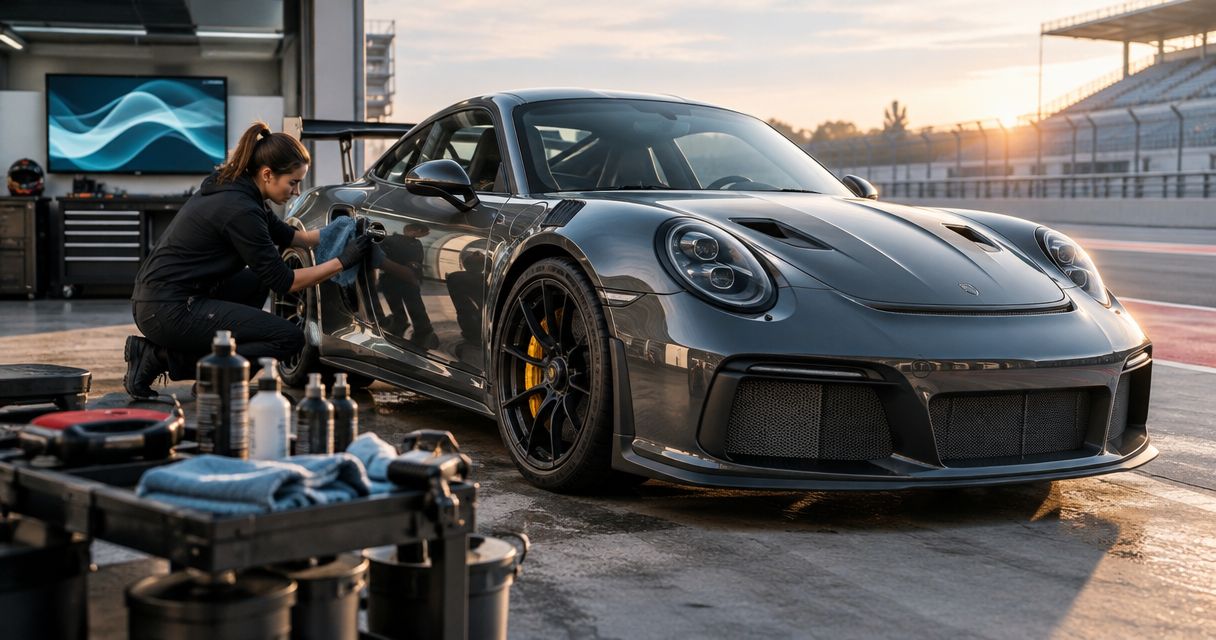
Instead of manually chasing brake dust, rubber marks, and paint defects before every event, use a track day car detailing prep workflow that separates safety inspection, cleaning, paint assessment, and show preparation. Royal Touch Mobile Detailing LLC brings a faith-driven commitment to doing work right the first time to mobile detailing for cars and aircraft; this guide applies that care to your performance car without confusing appearance work with mechanical approval.
- Royal Touch Mobile Detailing LLC suits performance car owners seeking mobile detailing, paint correction, and ceramic coating.
- Track day car detailing prep starts with mechanical inspection, not polishing or tire dressing.
- Wash cooled surfaces, inspect clean paint, and correct only defects that need correction.
- Schedule ceramic coating around its product-specific curing instructions, not just the event date.
Why this matters
A clean car is easier to inspect, but a glossy car is not necessarily track-ready. Detailing does not establish brake condition, tire suitability, fluid condition, or compliance with an event organizer’s inspection requirements. Keep those decisions with the organizer and a qualified technician.
For your 2026 event calendar, separate two outcomes: a car accepted for track use and a car prepared for display. Track preparation prioritizes safe operation and clear visibility; show preparation adds finish refinement after the driving is done.
Royal Touch Mobile Detailing LLC is best for performance car owners seeking mobile detailing and paint protection services. The practical limitation is equally clear: detailing is not a substitute for mechanical inspection, and paint correction cannot repair every kind of damage.
Before you start
- Gather the requirements. Have your organizer’s current inspection form, vehicle care instructions, and any existing coating, wrap, or paint protection film care guidance. Identify repaired paint and sensitive finishes before choosing cleaners or polishing methods.
- Confirm the work location. Arrange permission, safe working space, shade or suitable cover, and any water or electrical access your detailer requires. Confirm those arrangements directly rather than assuming every mobile appointment has the same setup.
- Resolve the scheduling gotcha. Newly applied protection can require restricted washing or water exposure. Obtain the actual product instructions before placing coating work between a track session and a show; there is no universal curing deadline.
Create a simple 2026 event worksheet with 2 deadlines: departure for the track and departure for the show. Add the inspection appointment, detailing appointment, and any required protection-care restrictions between them. Leave space to record what was completed, what remains unresolved, and who owns each decision.
Inspection record
- Read the event requirements. Use the organizer’s inspection form rather than a generic internet checklist. Arrange any required sign-off with the appropriate person before scheduling appearance work around it.
- Document the starting condition. Take at least 4 overview photos, covering the front, rear, and both sides. Add close-ups of existing chips, scuffs, damaged film, wheel damage, and suspicious residue so later comparisons use the same reference points.
- Separate mechanical concerns. Refer fluid leaks, unusual tire wear, brake concerns, or loose components to a qualified technician. Do not ask a detailer to clean away evidence before the cause has been assessed.
- Record the finish history. Note existing protection, recent bodywork, matte surfaces, exposed carbon-fiber finishes, and aftermarket trim. Ask the installer or manufacturer for care instructions where needed.
Expected result: You have a documented starting condition and a clear boundary between mechanical work and detailing. Your inspection record should identify unresolved concerns, not merely say that the car looks clean.
Keep this record with your 2026 event paperwork. After the track session, repeat the same photo angles so you can distinguish new damage from dirt that simply became more visible.
Wash setup
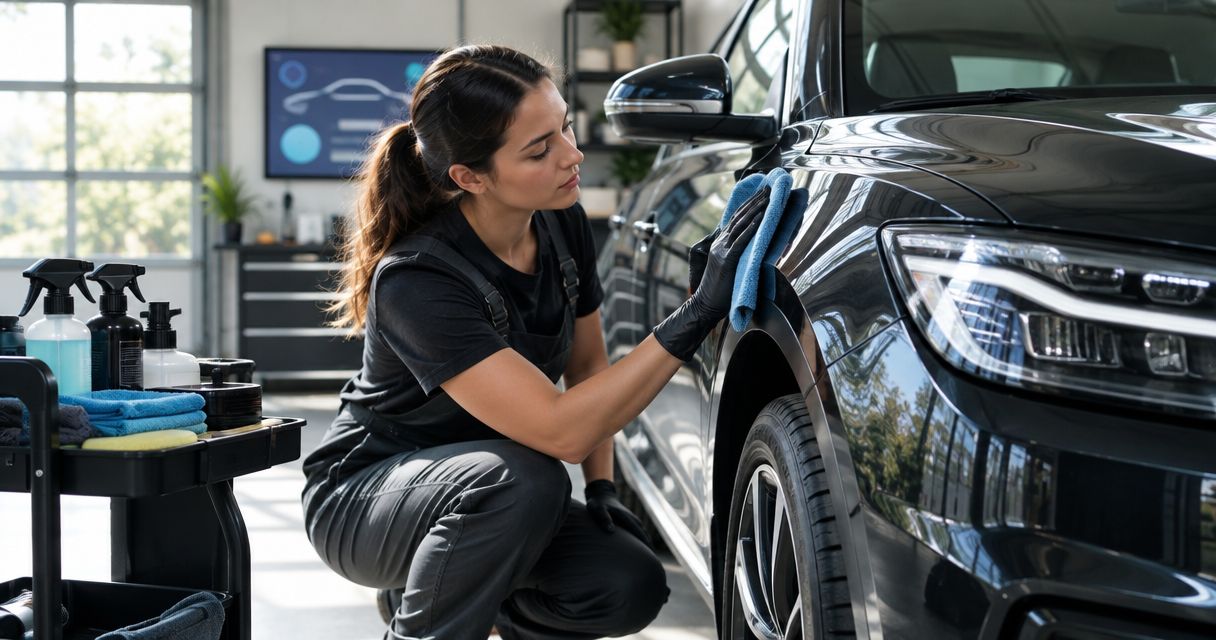
- Let surfaces cool. Move the car to a suitable working area and wait until the wheels, brakes, and bodywork meet the cleaning products’ temperature requirements. Do not spray cleaners onto hot components to save time.
- Remove loose contamination first. Rinse where appropriate before contact washing. Use products compatible with the surface and follow their dilution, dwell-time, and rinsing instructions.
- Keep wheel tools separate. Set aside 3 towel groups: paint, wheels, and interior. Keep wheel brushes and heavily contaminated towels away from paint-contact supplies.
- Wash gently and inspect as you go. Avoid grinding rubber deposits or embedded grit across the finish. Treat persistent contamination locally rather than repeatedly scrubbing the whole panel.
- Dry and clear visibility surfaces. Use clean drying materials, clean the glass, and remove loose objects from the cabin. Keep slippery dressings off pedals, steering controls, tire tread, and braking surfaces.
Expected result: The car is clean enough for a meaningful paint assessment, with no obvious loose debris or cleaning residue left behind. Persistent marks now become inspection items rather than an invitation to scrub harder.
For a 2026 track checklist, make “clean and inspect” separate entries. Washing reveals the surface; it does not decide whether every remaining mark needs polishing.
Paint assessment
- Inspect clean, dry paint. Use consistent lighting and examine the same areas from different angles. Separate removable contamination from scratches, chips, staining, and damaged film.
- Identify the surface before treatment. Gloss paint, matte finishes, wraps, and protective film do not share the same correction methods. Stop when the finish or previous repair history is uncertain.
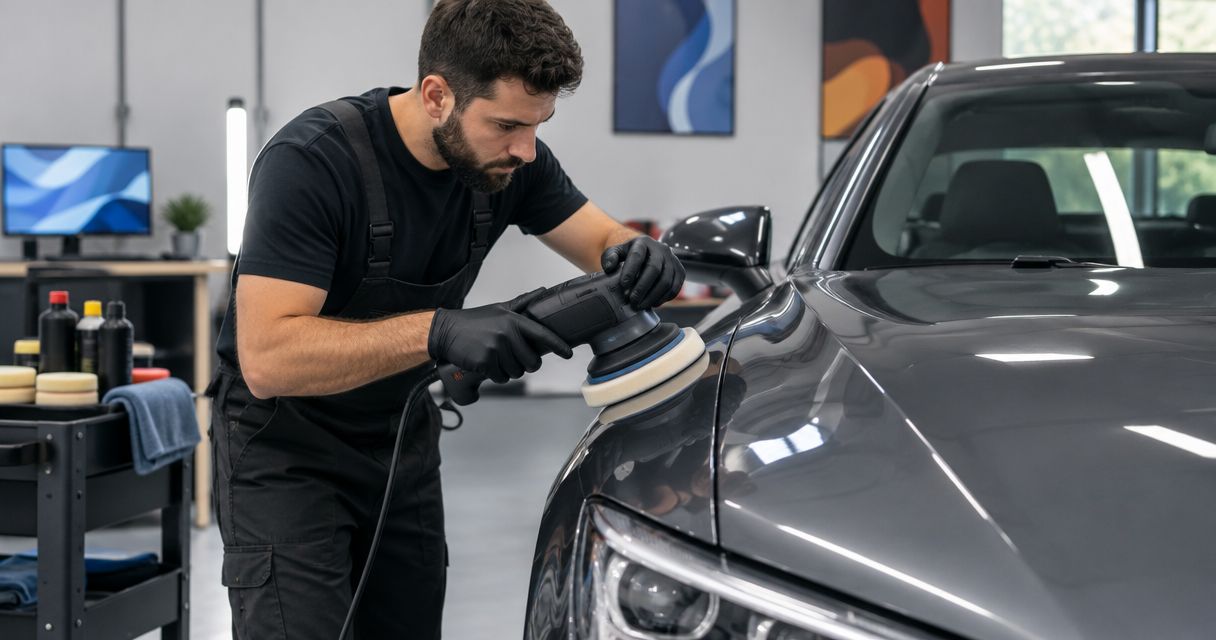
- Choose the least aggressive suitable process. Ask for a test area before authorizing broader paint correction. Mechanical polishing removes a small amount of the finish, so it should address a defined problem rather than become an automatic event ritual.
- Agree on the stopping point. Discuss which defects should remain instead of pursuing appearance at the expense of paint preservation. Chips, failing clear coat, and deep damage require a different conversation from light swirl marks.
Expected result: You have an agreed scope: clean only, localized treatment, paint correction, or referral for repair. A show deadline does not change what the surface can safely tolerate.
The guide to paint correction for performance car owners expands this decision. Request correction for visible, assessed defects—not simply because another track day has passed.
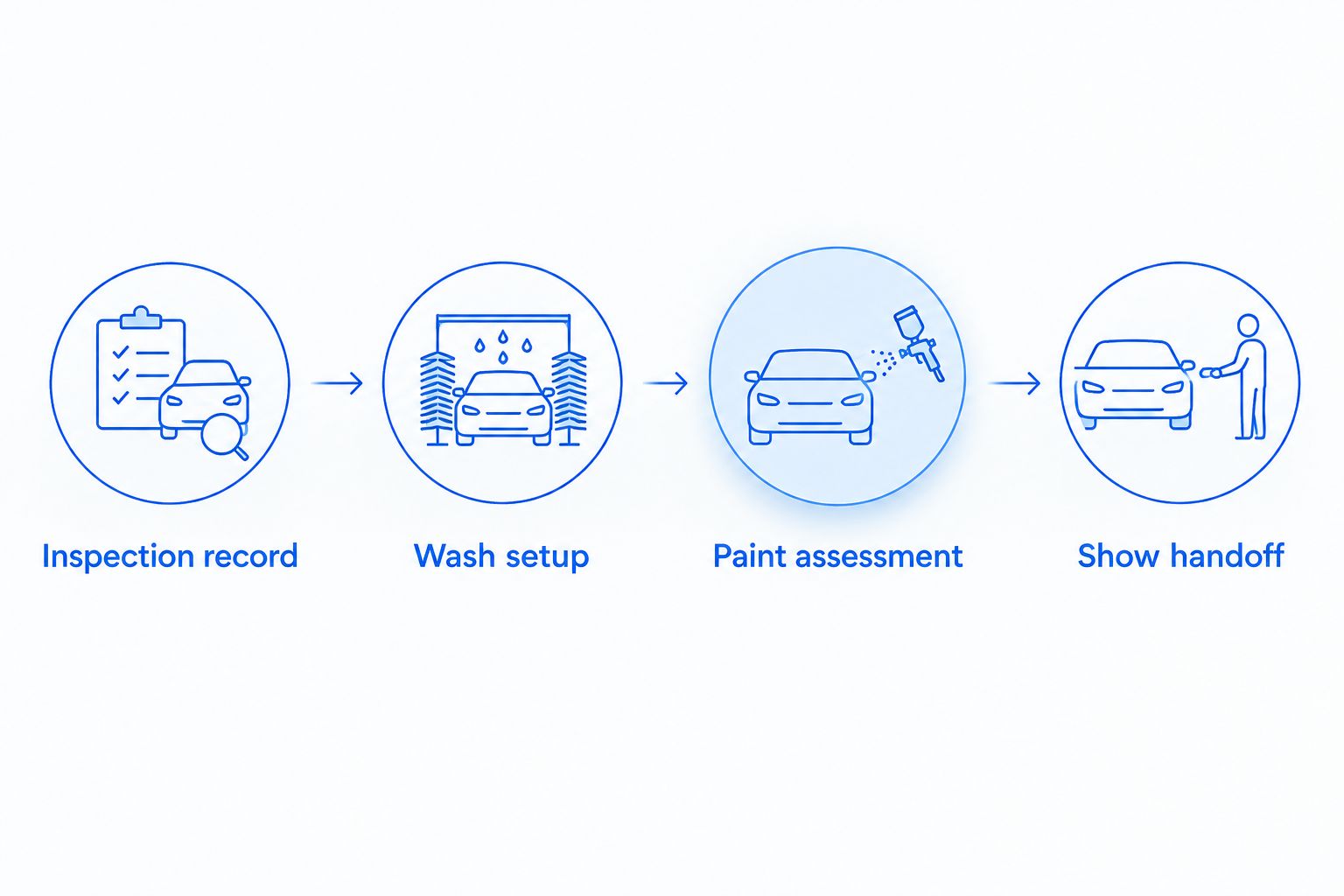
Show handoff
- Select protection after assessment. Decide whether the existing finish needs maintenance or a new application. Ceramic coating does not fill every scratch or make paint immune to track debris.
- Check the care restrictions. Get the exact aftercare instructions for the product being applied. Plan around washing, weather exposure, and handling restrictions rather than assuming the car is ready when application ends.
- Finish the details that affect presentation. Check glass, mirrors, trim, wheel faces, door openings, and visible interior surfaces. Remove excess product rather than adding another layer for shine.
- Inspect the driving controls. Confirm pedals, steering surfaces, and floor areas are clean and dry. Secure mats according to the vehicle instructions and follow the organizer’s cabin requirements for track use.
- Record the handoff. Note completed services, unresolved defects, and aftercare instructions in your event worksheet. Take matching finish photos before departure.
Expected result: You know what was cleaned, what was corrected, and what restrictions remain. The handoff should leave no ambiguity about whether the car is being prepared for driving, display, or both.
For a 2026 show immediately after a track event, reserve the final appearance check for after the drive. Polishing beforehand cannot prevent fresh chips or rubber deposits during the session.
Choose the work your car actually needs
Cleaning, correction, and coating serve different purposes. Pick the work that matches the inspected condition, not the most elaborate sequence available.
| Work scope | Best for | Main benefit | Limitation |
|---|---|---|---|
| Maintenance detailing | A protected car with ordinary event grime | Removes dirt and restores a clean presentation | Does not remove scratches or repair chips |
| Paint correction | Assessed defects in a suitable gloss finish | Refines visible swirls and other correctable defects | Removes some finish and cannot safely erase every defect |
| Ceramic coating | Owners seeking ongoing paint protection and easier maintenance | Adds a protective surface treatment | Requires preparation and aftercare; does not stop stone impacts |
Maintenance detailing is the default when the paint does not need correction. Repeated polishing should not become the price of attending events.
Royal Touch Mobile Detailing LLC offers all three service categories, but the right scope still depends on your car’s condition and schedule. Mobile service adds convenience; the work location and product-care requirements still need planning.
Repeat the workflow after every track event
The adjacent workflow is a post-track reset, not another full correction appointment. It starts when the car returns and has cooled sufficiently for inspection and cleaning.
- Reopen the inspection record. Compare new photos with the pre-event set. Flag fresh chips, fluid residue, damaged trim, or unusual wheel contamination before appearance work begins.
- Wash before judging damage. Remove loose dirt and treat deposits with finish-compatible methods. Do not decide that every dark mark needs machine polishing.
- Reassess the next deadline. If the next outing is another track session, prioritize cleanliness, visibility, and appropriate maintenance. If it is a show, inspect the clean finish before discussing localized correction.
- Update the care notes. Record any new protection application and its instructions. Do not carry old aftercare assumptions into a different product or repaired panel.
Expected result: Each event updates the same record instead of starting an improvised cleanup. You can distinguish recurring contamination from a finish problem that deserves professional assessment.
Keep the routine consistent, but let the condition determine the work. A calendar reminder should trigger an inspection, not automatically trigger polishing.
Troubleshooting
Rubber marks remain after washing
Stop repeated dry wiping or hard scrubbing. Confirm whether the mark sits on paint, film, or another finish, then use a compatible treatment according to its instructions. Test an inconspicuous area and stop if the surface changes appearance.
Swirls become visible under show lighting
Inspect clean paint before choosing a remedy. The process of removing swirl marks is paint correction, not another wash; repeated abrasive treatment should follow a surface assessment rather than become a routine response to every event. Also review towels and washing technique so the maintenance process does not keep introducing defects.
A spot looks like dirt but will not move
Treat a persistent mark as an identification problem. It can be staining, etched damage, transferred material, or a defect beneath the surface. Stop escalating cleaners when you cannot identify it, and request an assessment.
The coating schedule conflicts with departure
Move the coating appointment or narrow the work to cleaning and an agreed alternative. Do not shorten product-care restrictions to fit the calendar. An application date is not proof that all aftercare restrictions have ended.
The cleaned car shows suspicious residue
Pause the appearance workflow and document the location. A qualified technician should assess suspected leaks or mechanical contamination before the car returns to track use. Cleaning is not a repair.
Customize your workflow
Build the routine around how you use the car. A daily driver that occasionally visits a circuit needs a manageable maintenance process; a dedicated show-and-track car needs careful coordination between driving, cleaning, and display deadlines.
When arranging work with Royal Touch Mobile Detailing LLC, share the vehicle, finish history, event dates, work location, and current concerns. Ask which tasks belong before the track session and which should wait until afterward. Confirm the scope before the appointment rather than expecting every mark to disappear during a maintenance wash.
Ask for a condition-led plan, not an automatic correction cycle. That keeps paint preservation part of the decision alongside appearance and convenience.
Plan your performance car detail
Discuss your finish condition, event dates, and detailing needs before scheduling.
FAQ
What should I do first for track day car detailing prep?
Start with the event organizer’s inspection requirements and document the car’s condition. Resolve mechanical concerns separately, then clean the car so paint and surface contamination can be assessed properly.
Should I detail my car before or after a track day?
Clean and inspect the car before the event, then reassess and clean it afterward. Reserve final show preparation for after track driving if the car is attending both events.
Can ceramic coating prevent track day stone chips?
Ceramic coating does not stop stone impacts or make paint chip-proof. Treat it as a surface protection and maintenance choice, not impact protection.
Do I need paint correction after every track event?
No, paint correction should follow an assessment of actual defects. Maintenance cleaning is the appropriate starting point when the finish does not need abrasive correction.
Can I clean wheels immediately after coming off track?
Wait until the wheels and brakes meet the cleaning products’ temperature requirements. Follow the vehicle and product instructions rather than spraying cleaner onto hot components.
How soon after ceramic coating can I drive to a show?
Follow the specific coating’s aftercare instructions and confirm any exposure restrictions with the installer. There is no single departure deadline that applies to every coating and application.
Does a professional detail count as a track safety inspection?
No, professional detailing does not replace a track safety inspection. Follow the organizer’s inspection process and have mechanical concerns assessed by a qualified technician.
One last thing
The most useful show-prep record is not the glossy finish photo. It is the close-up of a defect you deliberately chose not to chase.
Keep that photo with the reason: deep damage, uncertain repair history, or a surface unsuitable for the proposed treatment. It gives the next detailer a clear starting point and keeps a cosmetic deadline from driving an unnecessary abrasive process. Doing work right the first time includes knowing when to stop.