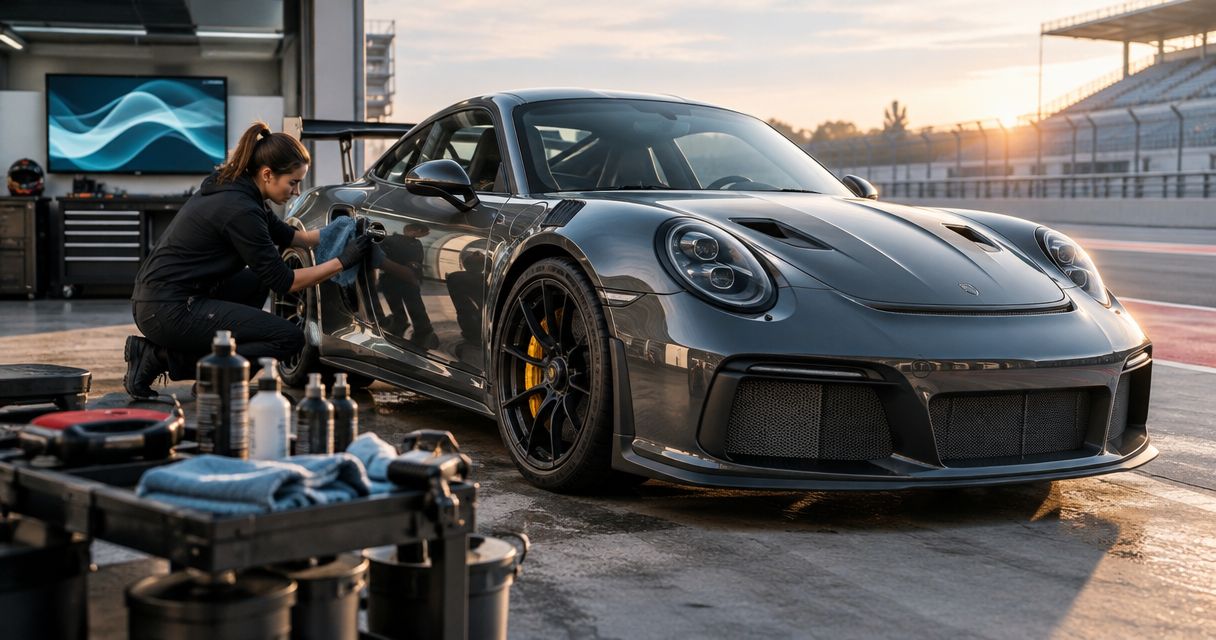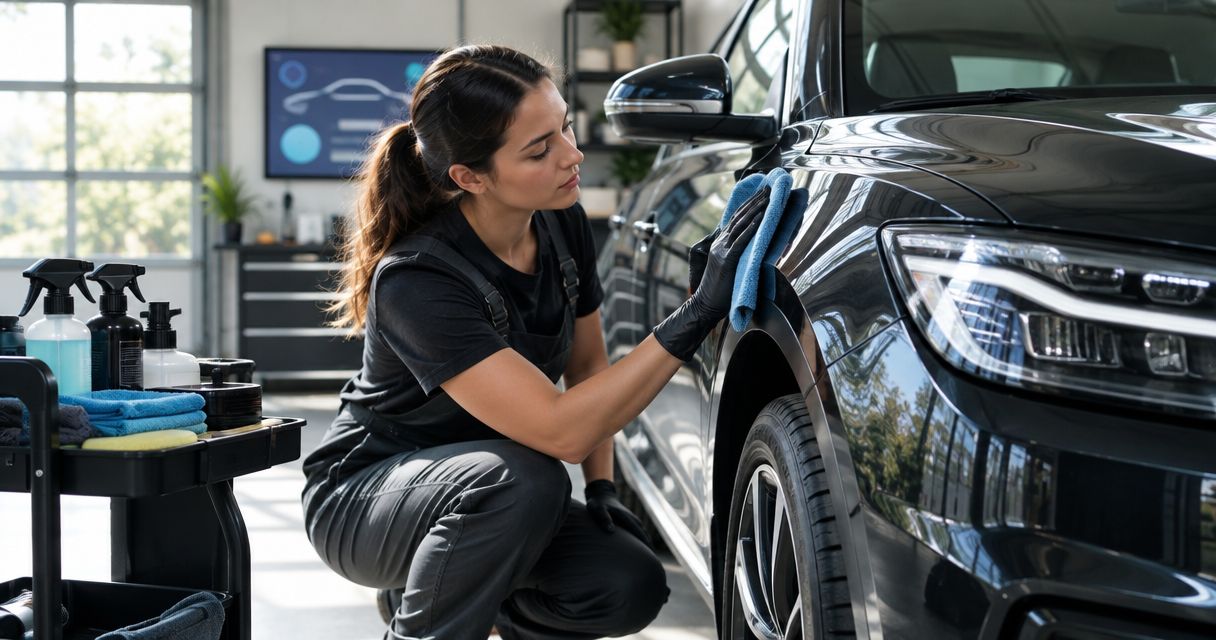
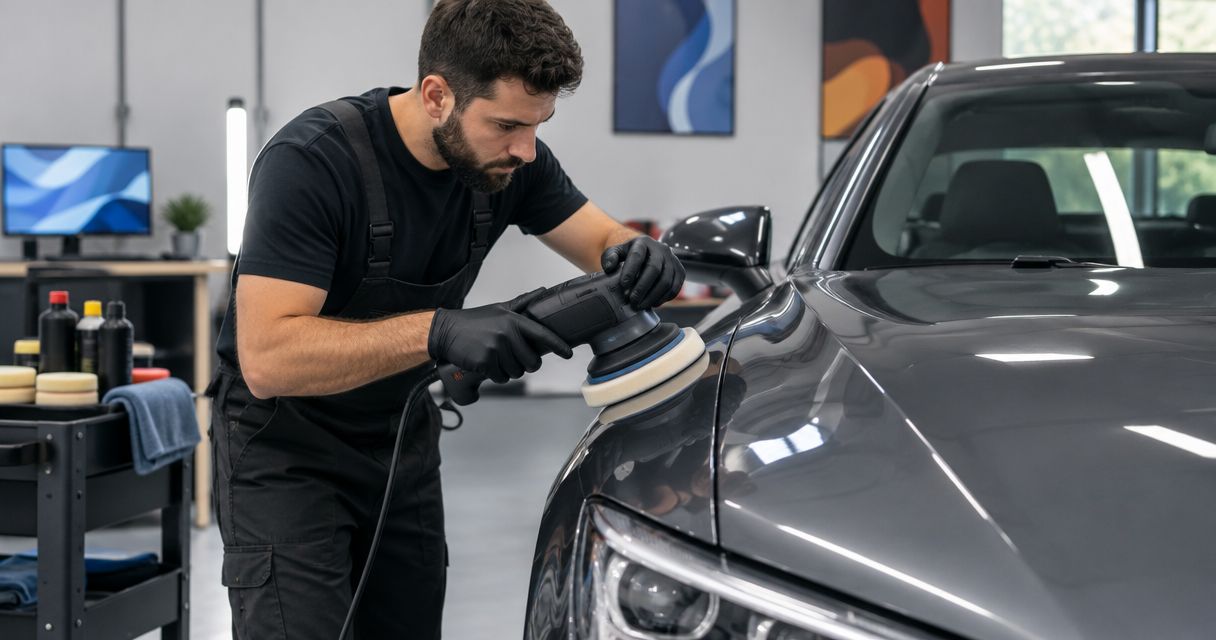
Instead of arranging paint correction and wrap installation separately, use a shared inspection, cleaning, correction, and handoff plan for your 2026 project: paint correction before vehicle wrap is selective, not automatic. Royal Touch Mobile Detailing LLC brings faith-driven service, a commitment to doing work right the first time, and experience with premium vehicles and aircraft to the detailing side of that preparation.
- Paint correction before vehicle wrap addresses suitable surface defects; it does not repair failing paint.
- Royal Touch Mobile Detailing LLC offers mobile paint correction; coordinate the preparation scope with your wrap installer.
- Remove contamination and polishing residue before installation; do not add wax or ceramic coating to the bonding surface.
- Let paint condition and the film manufacturer's instructions determine preparation, not a fixed correction package.
Why this matters
A wrap needs a suitable surface underneath it. Dirt, polish residue, protective coatings, and loose paint create different problems, so polishing every vehicle is not a complete preparation plan. A shiny panel can still be unsuitable for adhesive film.
For a 2026 wrap project, separate appearance correction from installation readiness. Polishing improves suitable paint defects by removing a small amount of the finish; it cannot rebuild peeling clear coat or repair a chip. The wrap installer must assess the surface against the selected film's requirements.
Royal Touch Mobile Detailing LLC is best for owners seeking mobile detailing and paint correction as part of a coordinated pre-wrap preparation plan. Start with the condition of your vehicle, not a show-car finish target; the guide to paint correction for daily drivers explains that distinction.
Before you start
- Bring the vehicle's history. Tell the detailer and installer about repainting, body repairs, previous wraps, ceramic coatings, waxes, and sealants. Include any peeling, cracking, or exposed edges you have noticed.
- Confirm the installation requirements. Obtain the selected film's current preparation instructions and ask the installer to approve the correction scope. Confirm access, workspace, transport, and who performs the final cleaning.
- Catch the non-obvious problem early. Do not finish pre-wrap polishing with wax, sealant, or ceramic coating. Existing coatings also need an agreed removal or preparation procedure; a quick wipe is not proof that they are gone.
Use a shared 2026 preparation record rather than relying on separate conversations. The owner, detailer, and installer are the 3 parties who need the same scope, even when one business handles several roles. Record decisions before any polishing begins.
Inspection
Agree on the surface condition
- Inspect clean, dry paint under good lighting. Identify rough deposits, scratches, chips, peeling clear coat, corrosion, and previous repairs. Photograph the affected areas so the detailer and installer discuss the same defects.
- Separate appearance defects from paint failure. Light swirls in sound clear coat are not the same as lifting paint. Flag deep scratches and damaged areas for assessment rather than assuming additional polishing will solve them.
- Ask the installer to approve the preparation route. Discuss the selected finish, the panels being wrapped, and any areas that need repair. Have a refinisher assess repaired paint when its condition or readiness is uncertain.
Expected result: You have an agreed defect map and a preparation scope, including any reason to pause the installation.
Choose the least aggressive suitable route
These are preparation options, not service packages. Choose by surface condition and the installer's requirements.
| Preparation route | Best for | Benefit | Limitation |
|---|---|---|---|
| Cleaning and decontamination | Sound paint without defects requiring polishing | Removes dirt and bonded contamination without unnecessary correction | Does not level scratches or repair damaged paint |
| Targeted paint correction | Sound paint with defects the installer identifies for correction | Addresses selected imperfections before film application | Removes some finish and requires careful residue removal |
| Paint repair before wrapping | Peeling, unstable, or otherwise damaged paint | Addresses a surface problem polishing cannot repair | Requires repair assessment and an approved refinishing schedule |
Do not chase every swirl simply because the vehicle is being wrapped. Film appearance and paint condition affect what preparation is useful. Agree on the necessary work before choosing polishing stages.
Cleaning
Remove contamination before judging correction needs
- Wash the vehicle thoroughly. Use a method suitable for its finish, then rinse away cleaning residue. Pay attention to panel gaps, handles, badges, and areas near the intended wrap edges without forcing water into sensitive components.
- Treat bonded contamination only where needed. Identify deposits before choosing a compatible chemical or mechanical treatment. Mechanical decontamination can mark paint, so reassess the finish afterward rather than treating it as a harmless extra step.
- Dry and inspect again. Look for remaining deposits, trapped moisture, and defects that were hidden by dirt. Keep cleaning tools and towels separate from products containing wax or dressing.
Expected result: The paint is clean enough to assess accurately, with remaining contamination or damage clearly identified.
Cleaning does not prove that a ceramic coating has been removed. Water behavior alone is not a complete adhesion assessment either. Tell the installer what products were previously applied and let the preparation procedure follow the film manufacturer's requirements.
On installation day, the bonding surface needs the installer's specified final cleaning, even if the vehicle was detailed beforehand. Transport can introduce fresh dirt, and gaps can release water after the main panels appear dry. Agree on who handles that final check rather than assuming the earlier wash covers it.
Correction
Correct only the approved defects
- Start with a small test area. Let a qualified detailer establish the least aggressive suitable method on sound paint. Inspect the result before extending the process across a panel.
- Address the agreed defects. Keep the goal tied to wrap preparation, not maximum gloss. Stop and reassess any area where correction would require removing more finish than the paint condition supports.
- Remove residue and inspect the actual finish. Use a paint-compatible preparation method accepted by the installer. Check edges, gaps, and textured trim for polishing dust or residue; do not cover the result with a protective finishing product.
Expected result: The approved defects have been addressed as far as the paint safely allows, and remaining issues are documented for the installer.
A scratch that extends through the clear coat is not a routine polishing target. Trying to erase it through additional abrasion risks sacrificing surrounding finish without repairing the damage. A visible defect left for assessment is better than unnecessarily thinned paint hidden under film.
Paint correction also has a trade-off for owners of luxury and performance vehicles: it can improve appearance, but every abrasive correction removes material. Preserve sound finish when additional correction has no agreed purpose. The installer should explain which defects matter for the planned wrap rather than requesting an unspecified full correction.
Handoff
Transfer the vehicle with a clear record
- Record what was done. List the washed and corrected panels, products used, known coatings, repaired areas, and unresolved defects. Keep 2 photo records: before preparation and after preparation.
- Keep the prepared surface clean. Avoid applying tire dressing, spray wax, or other finishing products where overspray or transfer could reach wrap areas. Tell the installer about any rain, road grime, or additional washing during transport.
- Request the installer's final surface assessment. The installer should complete the film-specific cleaning and checks before application. Record any concern that needs repair, further cleaning, or a change in scope.
Expected result: The installer receives a documented vehicle for final assessment, not an unsupported promise that the paint is wrap-ready.
Use 4 checkpoints in the handoff: Inspection, Cleaning, Correction, Handoff. For your 2026 record, each checkpoint should show what was completed, what remains unresolved, and who takes the next action.
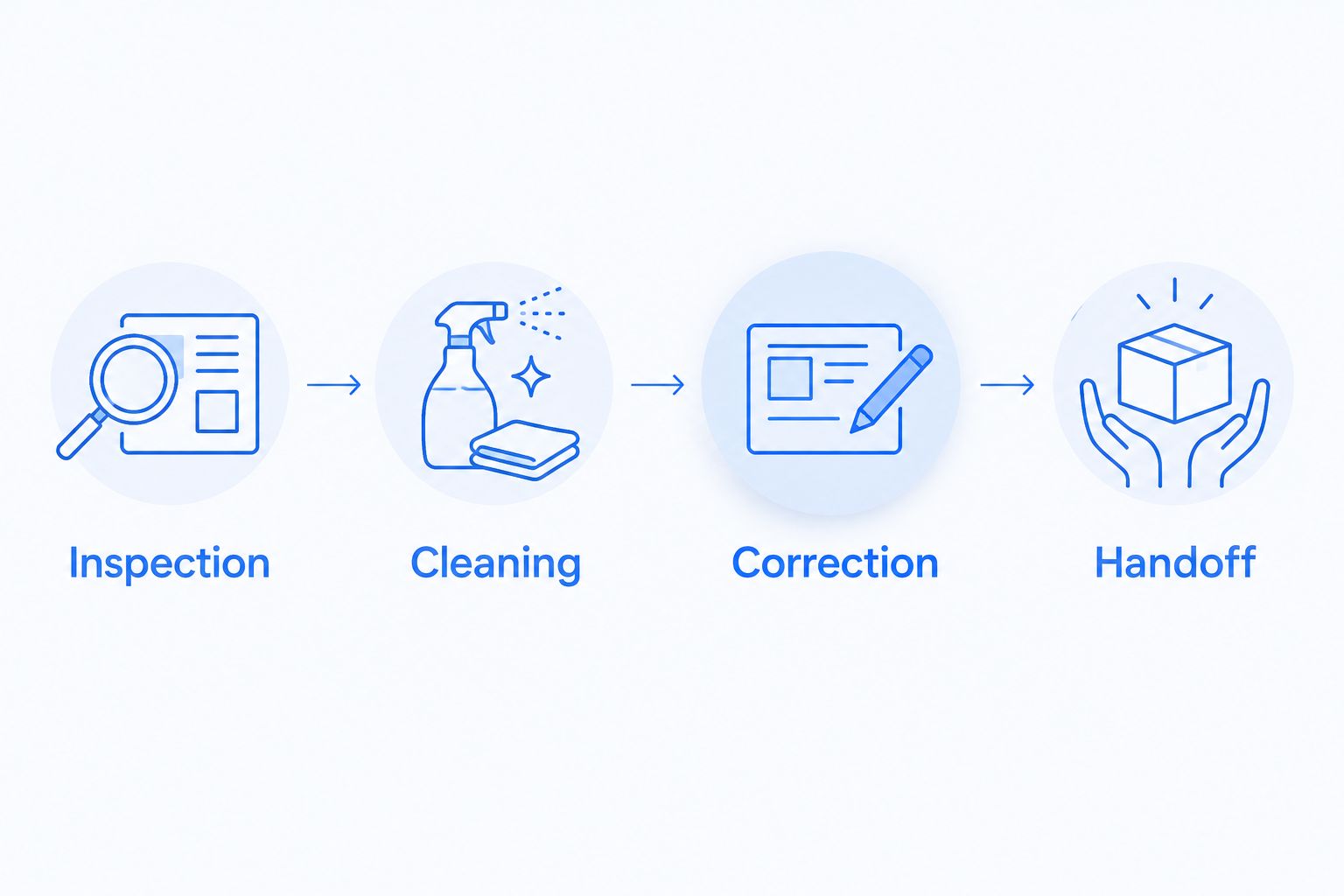
A useful handoff note reads like a condition report, not a sales description. Include the affected panel, the observed issue, the work performed, and any unresolved question. Avoid describing paint as perfect or guaranteed to accept film.
Prepare exposed paint during a partial wrap
A partial wrap creates an adjacent workflow: some paint becomes a bonding surface while other paint remains exposed. Those areas need different finishing decisions.
- Mark the wrap boundaries with the installer. Confirm the visible coverage and any edge-return areas before applying protection elsewhere.
- Prepare all bonding areas to the film requirements. Keep wax, sealant, ceramic coating, and dressing away from those surfaces during preparation.
- Plan exposed-paint protection separately. Coordinate the product choice and application sequence so protection does not contaminate areas awaiting film.
Best for: Owners adding selected graphics or wrapping only part of a vehicle. The benefit is a clear plan for both finishes; the limitation is that product placement and sequencing need extra care.
Do not assume a coating intended for paint is suitable for the installed film. Discuss film-compatible care after installation, including any effect on a matte or satin appearance. Keep that decision separate from preparing the adhesive bonding surface.
Troubleshooting
The panel still feels rough after washing
Identify whether the roughness is bonded contamination or damaged paint. Use a suitable decontamination method only after that assessment; repeated polishing is not the default answer. Reinspect before returning to the correction plan.
The paint looks glossy but still has residue
Gloss is not evidence of a clean bonding surface. Disclose the polishing and finishing products used, then follow the installer's compatible cleaning procedure. Do not improvise a stronger solvent or mixture.
Clear coat or repaired paint starts lifting
Stop preparation in that area and have the paint assessed. Additional polishing cannot stabilize lifting paint, and adhesive film is not a repair. The installer and refinisher need to resolve the surface concern before work continues.
Water or dirt reappears near an edge
Pause the handoff and address the source. Seams, handles, and trim can retain moisture or debris after washing. Let the installer determine whether additional cleaning, drying, or access is needed before film application.
A ceramic coating was applied before the wrap appointment
Tell the installer before delivery. Share the product information and application history, then agree on a compatible preparation method. Do not assume ordinary washing or a single panel wipe removes the coating.
Customize your workflow
For a daily driver, focus the discussion on sound paint and necessary correction. For a performance or show vehicle, document appearance expectations as carefully as the preparation requirements. Neither goal justifies polishing unstable paint.
Royal Touch Mobile Detailing LLC offers mobile paint correction and detailing throughout North Carolina and parts of Virginia and South Carolina. Coordinate the detailing location and wrap installation separately; offering paint correction does not establish wrap installation as part of the appointment.
If your 2026 project includes protection after installation, read about ceramic coating on a vehicle wrap. Treat coating compatibility as a separate decision, not a reason to coat paint immediately before wrapping it.
Discuss Your Paint Preparation
Share your vehicle's paint history and the wrap installer's preparation requirements.
FAQ
Do I need paint correction before a vehicle wrap?
Paint correction before a vehicle wrap is needed only when the paint condition and installation requirements justify it. Sound paint can need cleaning and decontamination without additional polishing; damaged or unstable paint needs a different assessment.
Will a vehicle wrap hide deep scratches?
A vehicle wrap does not repair deep scratches, and surface defects can remain visible through film. Have the installer assess the defect before deciding whether correction or paint repair is appropriate.
Should I ceramic coat my car before wrapping it?
Do not add ceramic coating to paint that is about to receive adhesive wrap film. Disclose any existing coating and agree on preparation with the installer before the appointment.
Can I wrap a car with peeling clear coat?
Peeling clear coat needs assessment and repair before wrapping. Film cannot stabilize failing paint, and applying or removing adhesive material can disturb an unsound finish.
How long should I wait to wrap freshly repainted panels?
Follow the refinisher's and film manufacturer's requirements for the specific paint system. There is no single waiting period suitable for every repair, coating system, and curing condition.
Can I drive the car after paint correction and before wrapping?
Driving introduces another opportunity for dirt and moisture to reach the prepared surface. Coordinate transport with the installer and expect a final inspection and cleaning before application.
Does Royal Touch Mobile Detailing LLC offer paint correction?
Royal Touch Mobile Detailing LLC offers mobile paint correction as well as detailing, ceramic coating, and window tint services. Share the wrap installer's preparation requirements when discussing the detailing scope.
One last thing
The final photograph is not the final readiness test. A polished panel can look excellent while retaining residue, and a panel with minor remaining swirls can still be suitable for the intended installation. Ask what the surface needs for the film, not how much polishing can be added.
Before your 2026 appointment, put one instruction in the preparation record: no protective finishing product on the wrap bonding areas. That small coordination step keeps the detailing goal aligned with the installation goal.