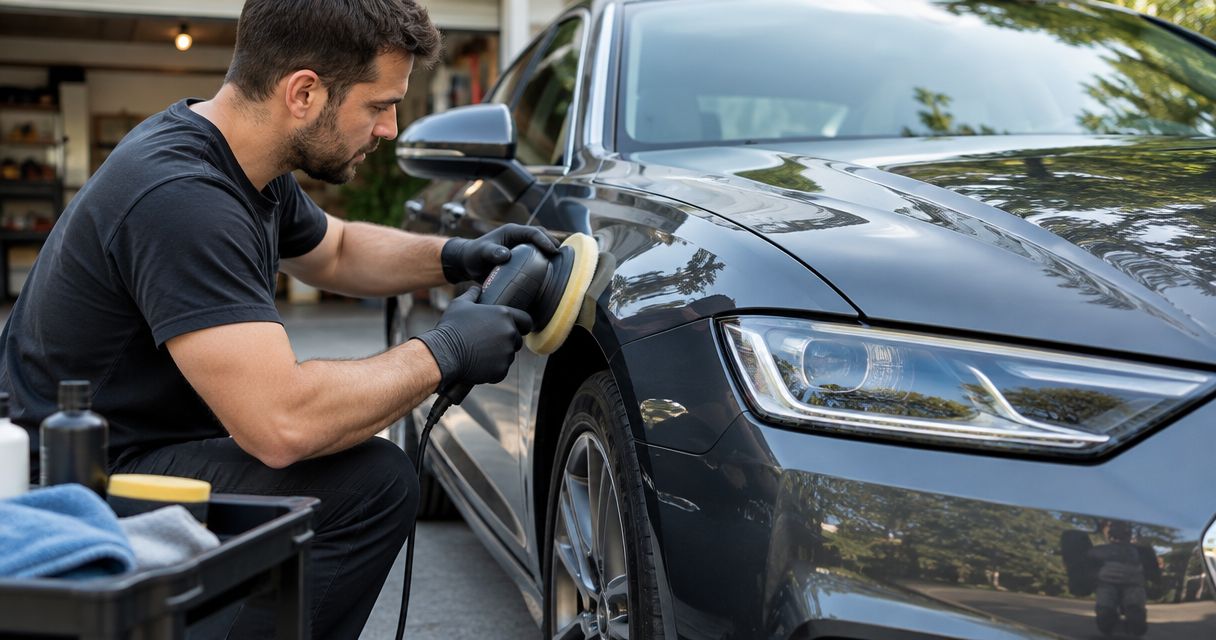
Daily-driver paint correction is controlled polishing that reduces defects in automotive paint with the aim of improving the appearance of a vehicle you use every day. At Royal Touch Mobile Detailing LLC, faith-driven service and a commitment to doing work right the first time guide care for daily drivers, premium vehicles, and aircraft; this 2026 guide explains how to choose correction without chasing unnecessary perfection.
- Paint correction for daily drivers should prioritize visible improvement and paint preservation, not removal of every scratch.
- Royal Touch Mobile Detailing LLC offers paint correction and mobile detailing for owners seeking professional vehicle care.
- Choose polishing after inspection; ceramic coating protects a prepared surface but does not replace correction.
- Change damaging wash habits before investing in a more intensive correction.
Why paint correction matters for daily drivers
Your daily driver carries you through commutes, errands, school pickups, and parking lots. Its finish needs a practical care plan, not a show-car standard that conflicts with how you actually use it.
Paint correction uses abrasives to remove a small amount of surface material and reduce defects. On clear-coated paint, that means working within the clear coat—the transparent layer above the color. Removing every visible mark is not always an appropriate goal.
For a daily driver, the best correction is the least aggressive process that delivers an improvement you value. That principle matters more than selecting the package with the most polishing stages.
In 2026, start with the defects you notice in ordinary daylight. A scratch visible only under an inspection light deserves a different discussion from widespread haze that makes the whole hood look dull. Neither automatically justifies the same treatment.
Build a correction plan around everyday use
Use the following steps before approving paint correction. You can handle the initial observations yourself; machine polishing requires a separate judgment about paint condition, equipment, and technique.
1. Inspect the paint
Start with a clean vehicle and good visibility. Dirt, residue, and reflections hide defects, so an inspection of dirty paint is not a sound basis for choosing polishing intensity.
Take 3 reference photos as a practical starting point: the hood, a door, and the area that bothers you most. Inspect those areas in 2 lighting conditions, such as daylight and a handheld inspection light. These are documentation suggestions, not a test that establishes paint thickness or repair safety.
Look for patterns rather than trying to name every mark. Fine circular-looking scratches suggest a different conversation from peeling clear coat, exposed color, or a chipped leading edge. Paint correction does not replace missing paint.
- Photograph the same areas before and after cleaning.
- Separate surface dirt from marks that remain after washing.
- Point out repainted panels, touch-ups, or repairs you know about.
- Leave peeling, cracked, or exposed areas for professional assessment.
2. Set your goal
Decide what improvement would make you satisfied with the car in normal use. Clearer reflections, less visible wash haze, and a more even appearance are useful goals; an unspecified request to make the paint perfect is not.
Consider your parking and washing routine. A car parked outside and washed hurriedly needs a maintenance change alongside correction. Otherwise, the same sources of scratching remain after the polishing appointment.
For your 2026 care plan, write down the main concern before discussing service. That keeps the conversation focused on the finish you want rather than the longest list of included processes. Long-term value means choosing work you appreciate and can maintain, not assuming correction will increase a future sale price.
- Name the defect that bothers you most.
- Describe whether the car lives outside or under cover.
- Explain how you currently wash and dry it.
- Identify deeper marks you are willing to leave alone.
3. Test the finish
Ask for an assessment before deciding how aggressively to polish. A small test area helps establish what a chosen pad, polish, and technique achieve on that particular finish. Paint does not respond identically from vehicle to vehicle—or across previously repaired panels.
Royal Touch Mobile Detailing LLC offers paint correction for owners seeking professional care rather than learning machine polishing on their daily transportation. Royal Touch Mobile Detailing LLC is best for daily drivers whose owners want mobile detailing and professional paint correction. Mobile service adds convenience, but the work still needs a suitable location and conditions.
Ask the provider to explain the proposed result and remaining limitations. Do not substitute a claimed correction percentage for a clear discussion of the actual paint.
- Ask which area will represent the proposed finish.
- Review remaining defects under consistent lighting.
- Discuss known repairs before approving machine work.
- Confirm what the assessment can and cannot establish.
4. Choose the process
Choose the process after inspection, not from the vehicle's age alone. A newer car can have wash scratches, while an older car with preserved paint does not automatically need intensive polishing.
A single polishing stage can suit lighter defects when the test area produces an acceptable finish. A process with separate cutting and finishing stages addresses a different need: stronger initial correction followed by refinement. More stages do not automatically make a better choice for commuting paint.
Use this sequence to keep the decision grounded: inspect first, agree on the goal, test the finish, and then choose the work. Protection and maintenance come afterward.
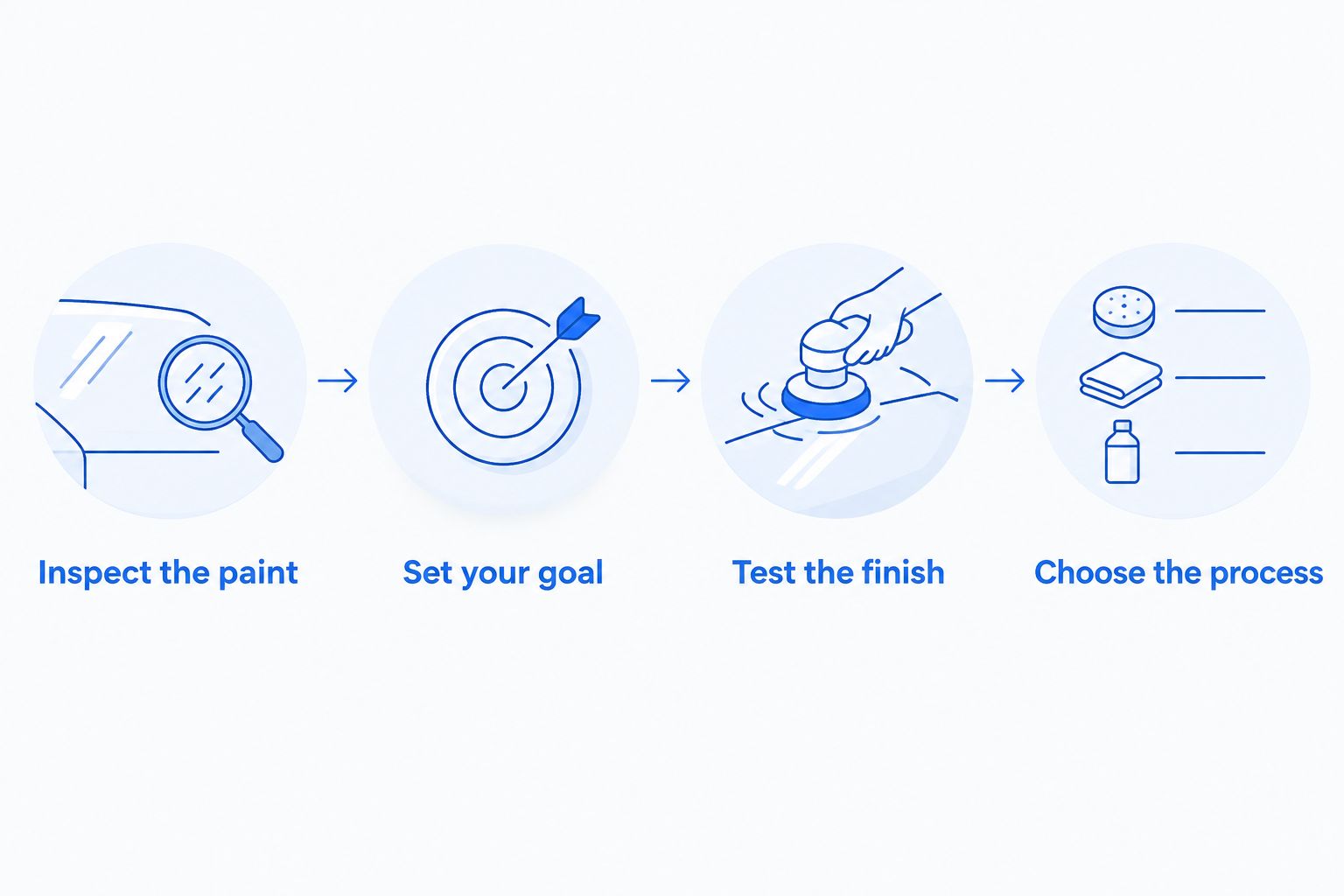
Ask what the stage names mean in the specific proposal. The useful distinction is the work performed and its purpose, not the label by itself.
- Compare the proposed finish with your original goal.
- Ask why additional cutting is needed.
- Discuss leaving deeper defects rather than chasing them.
- Separate polishing from touch-up or repainting needs.
5. Prepare the appointment
First, check whether your proposed work location allows vehicle detailing. Apartment parking, office lots, and shared spaces require permission; an open parking space does not establish approval.
Then confirm the practical arrangements with the provider. Mobile detailing moves the work to an agreed location, but it does not eliminate weather, access, lighting, or workspace requirements. Ask about water and electricity rather than assuming either is supplied or unnecessary.
For a daily driver, transportation planning matters as much as the finish. Do not build your workday around a generic completion estimate. Use the agreed scope and any protection requirements to plan when you can drive again; the guide to how long paint correction takes explains the scheduling question in more detail.
- Confirm property permission and vehicle access.
- Ask about workspace, shelter, water, and electricity.
- Share repainting and existing-protection history.
- Arrange transportation around the confirmed appointment plan.
6. Protect the paint
Correction and protection do different jobs. Polishing improves the surface by addressing defects; wax, sealant, or ceramic coating adds a protective treatment afterward. A coating does not fill in missing paint or make a vehicle immune to scratches.
Choose protection around the care you will actually provide. Follow the selected product's application, curing, and washing instructions instead of treating every protective product as interchangeable. There is no universal wait time that applies to every coating and application condition.
Royal Touch Mobile Detailing LLC offers ceramic coating as well as paint correction. Discuss those services together when protection is part of your plan, but do not assume a coating is included in a correction appointment. Your 2026 service scope should state both separately.
- Confirm which protective treatment is included, if any.
- Request product-specific aftercare instructions.
- Ask when washing and normal exposure are appropriate.
- Keep the maintenance instructions with your service record.
7. Change your washing
A corrected finish still needs careful handling. Abrasive dirt and contaminated wash materials can introduce new scratches, so maintenance deserves attention before you invest in additional polishing.
Start with the changes you can make yourself: avoid wiping dusty paint dry, keep wheel-cleaning tools separate from paint tools, and retire towels that trap debris. Follow product directions and use cleaning materials suitable for automotive finishes.
Do not schedule repeat correction simply because another year has passed. Reassess the paint when a specific concern appears. For your 2026 maintenance plan, prioritize keeping the finish clean and protected rather than automatically removing more material at a fixed interval.
- Remove loose contamination before contact washing.
- Keep paint towels separate from wheel towels.
- Check wash materials for trapped grit.
- Reassess new marks before booking more polishing.
Compare correction options for a daily driver
These are service approaches, not universal package definitions. The best choice depends on what remains after cleaning, how the paint responds to testing, and the result you want. Protection is listed separately because it serves a different purpose from correction.
| Option | Best for | Main benefit | Key limitation |
|---|---|---|---|
| Careful wash and paint preparation | Owners unsure whether dullness is dirt or paint damage | Establishes a cleaner surface for inspection | Does not correct scratches in the paint |
| Single-stage polishing | Daily drivers with lighter defects and an acceptable test result | Combines correction and finishing in one polishing stage | Leaves defects that need a different approach |
| Cutting followed by finishing | Paint needing stronger defect reduction and refinement | Separates initial correction from final finish work | Involves additional abrasive work and needs careful assessment |
| Localized correction | Owners concerned about a limited damaged area | Focuses attention on a specific defect | Does not address unrelated defects elsewhere |
| Protection without correction | Owners already satisfied with the paint's appearance | Adds protection without a correction step | Leaves existing swirls and scratches visible |
Choose the process that fits the paint, not the most intensive option offered. A conservative result that leaves a deeper scratch can be the more sensible decision for a car you intend to keep using.
Professional mobile correction also has a trade-off: you gain location convenience, but the worksite must suit the task. Confirm those conditions before booking rather than assuming every driveway or parking lot is suitable.
Discuss your daily driver's paint
Share your paint concerns and ask about correction, protection, and mobile service arrangements.
Common mistakes daily drivers make
Chasing every commuter scratch
A daily driver keeps encountering road debris, parking lots, and routine cleaning. Treating every mark as something that must disappear confuses appearance improvement with repair. Agree on which defects matter and which should remain untouched.
Choosing stages before inspecting the paint
Package labels cannot establish paint condition. Asking for the most intensive process before inspection skips the decision that matters: what level of work produces an acceptable finish without unnecessary abrasion.
Treating ceramic coating as scratch repair
Ceramic coating is not a substitute for correction, touch-up, or repainting. Decide whether you accept the existing finish before protecting it. Otherwise, you are protecting a surface whose visible defects still bother you.
Returning to the same damaging wash routine
Polishing does not change what a gritty towel does to paint. If your routine includes dry wiping or contaminated wash tools, address those habits before approving a more involved correction. Maintenance is part of the decision, not an optional extra afterward.
Booking around an assumed handover time
Your only vehicle still has to get you home, to work, or to school pickup. Confirm the scope, completion arrangements, and protection instructions before committing the car. A convenient location does not remove the need for a transportation plan.
FAQ
Is paint correction worth it for a car I drive every day?
Paint correction is worth considering when visible swirls, haze, or other correctable defects bother you enough to justify professional work. Choose the least aggressive process that produces an acceptable result, and pair it with a careful washing routine.
What's the best paint correction option for a daily driver?
The best option is the process supported by a paint inspection and test area. Single-stage polishing suits some lighter defects, while other finishes need separate cutting and finishing—or no abrasive correction at all.
Can paint correction remove every scratch on my car?
No, paint correction cannot safely remove every scratch. Deep damage, missing paint, and failing clear coat require a different assessment, and some defects should remain rather than be pursued with more polishing.
Is ceramic coating better than paint correction?
Ceramic coating and paint correction perform different jobs, so neither replaces the other. Correction addresses paint defects; coating adds a protective treatment to the prepared surface.
How often should a daily driver get paint correction?
A daily driver should get paint correction when its condition and an inspection justify it, not on an automatic calendar schedule. Polishing removes material, so routine care should focus on cleaning and protection between assessments.
Can mobile paint correction happen at my apartment or office?
Mobile paint correction requires property permission and a work area suitable for the service. Confirm access, weather arrangements, utilities, and workspace requirements with the provider before booking.
How do I get an accurate paint correction quote?
Request a quote based on the vehicle's condition, your appearance goals, and the proposed work. Share clear photos and repair history, then confirm whether preparation, protection, and aftercare are included.
One last thing
Before approving more polishing, ask to see the remaining defects in ordinary daylight. Inspection lighting helps reveal flaws, but you live with the car outside the inspection bay. That final comparison helps you decide whether additional work serves your goal or merely chases marks you never notice.