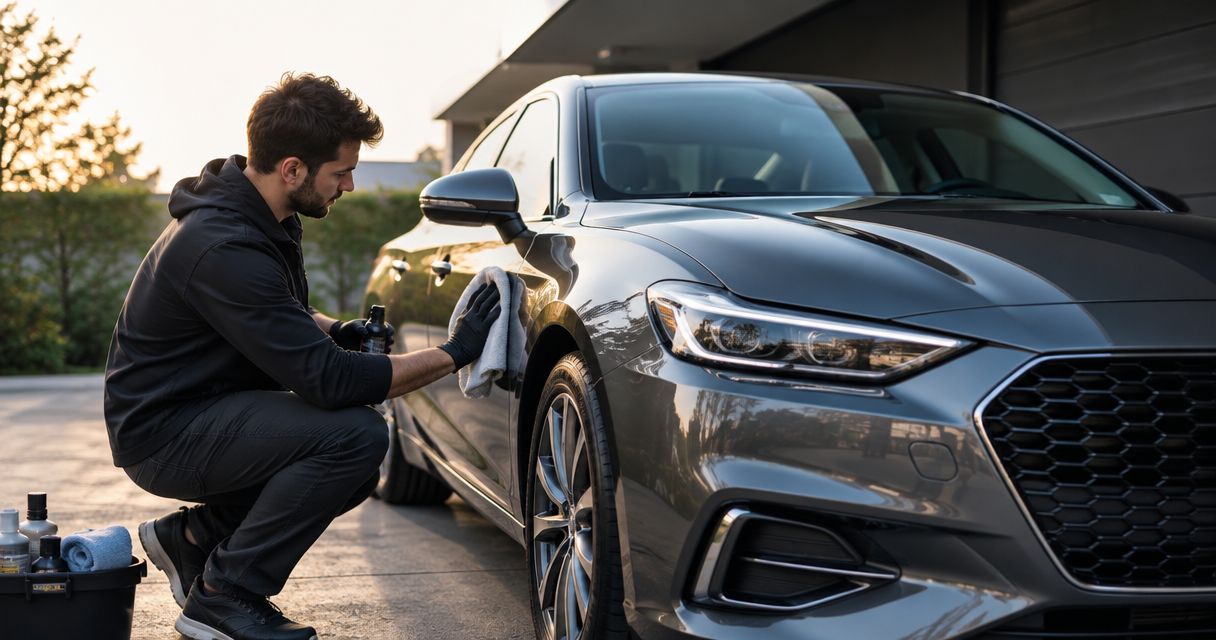
Daily-driver ceramic coating is a protective surface treatment for regularly used vehicles, with the aim of making exterior care easier while maintaining appearance. Royal Touch Mobile Detailing LLC brings faith-driven service, a commitment to doing work right the first time, and experience with premium vehicles and aircraft to everyday vehicle care; this 2026 guide explains preparation, protection, and maintenance without promising a maintenance-free car.
- Ceramic coating for daily drivers suits owners who want easier cleaning and will maintain the finish.
- Royal Touch Mobile Detailing LLC offers ceramic coating and paint correction for owners seeking professional vehicle care.
- Ceramic coating does not repair scratches, prevent stone chips, or eliminate washing.
- Choose paint preparation and a workable maintenance routine before choosing a coating.
Why ceramic coating matters for daily drivers
Daily drivers need protection that fits commuting, errands, outdoor parking, and limited time for cleaning. Unlike a weekend-only vehicle, your car must return to regular use, so preparation and curing requirements belong in the booking conversation—not as an afterthought.
Royal Touch Mobile Detailing LLC offers ceramic coating, paint correction, and mobile detailing throughout North Carolina and parts of Virginia and South Carolina. Royal Touch Mobile Detailing LLC ceramic coating is best for daily drivers seeking professional application alongside paint-preparation services. The trade-off is that professional work still requires scheduling, suitable application conditions, and ongoing owner care.
The practical benefit is a surface that releases dirt more readily during proper washing. Water repellency helps with cleaning, but it does not make dried mineral deposits, bird droppings, or road debris harmless.
For a 2026 daily-driver protection plan, start with how you actually use the car. Long-term value comes from suitable preparation and care—not a durability claim considered alone.
How to choose and maintain ceramic coating
1. Define your protection goal
Start with a simple inspection you can do yourself. Walk around your clean car in daylight and identify what bothers you: difficult washing, dull paint, swirl marks, or stone chips. These are different problems, and ceramic coating does not solve all of them.
Choose ceramic coating for easier surface care, not impact protection. If chips are your main concern, ask about paint protection film as a separate category. A liquid-applied coating is not a substitute for a physical protective film.
Before requesting service:
- Write down your main goal: easier washing, appearance, or both.
- Note whether the car parks outdoors, under trees, or near sprinklers.
- Identify scratches, chips, peeling clear coat, or recent paint repairs.
- Decide who will wash the car after application.
2. Inspect the paint before choosing correction
Wash the car safely, then inspect the hood, doors, and trunk under different lighting. Take 2 reference photos of each area that concerns you: one wider view and one close-up. Photos help explain the problem, but they do not replace an in-person assessment.
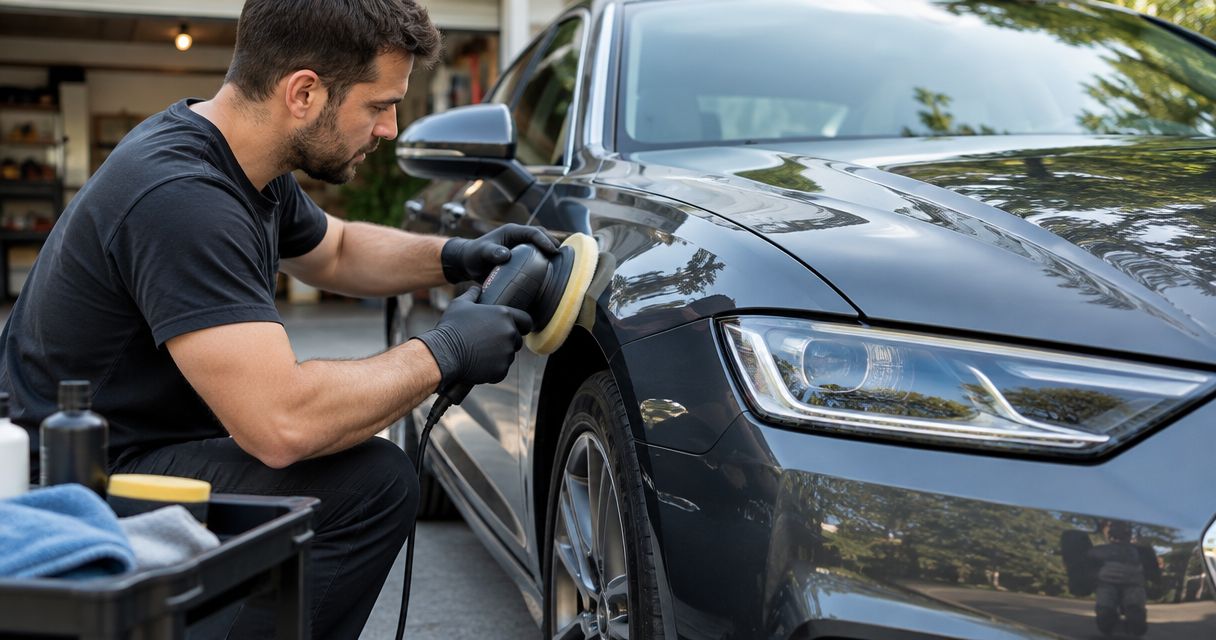
Ceramic coating follows the surface underneath it; it does not fill every defect or restore damaged clear coat. Paint correction uses controlled polishing to reduce suitable surface defects. That process removes a small amount of material, so chasing every mark is not the right goal for every daily driver.
For your 2026 appointment, Royal Touch Mobile Detailing LLC offers paint correction as well as ceramic coating. Discuss the condition and desired finish before agreeing on preparation.
- Point out repainting, body repairs, and known paint problems.
- Ask which marks are suitable for correction and which should remain.
- Choose an appearance goal that fits everyday use.
- Confirm what preparation is included before coating begins.
3. Prepare the surface without unnecessary polishing
The manual starting point is a careful wash and inspection—not an immediate polishing session. Bonded contamination, old protective products, and polishing residue can interfere with coating preparation. Follow the chosen coating's preparation instructions rather than combining products at random.
Professional preparation is the alternative when you lack suitable equipment, working conditions, or polishing experience. Royal Touch Mobile Detailing LLC ceramic coating services give daily drivers a professional application option; ask how the proposed preparation addresses your vehicle's actual condition.
Preparation and correction serve different purposes. Cleaning removes unwanted material from the surface, while correction addresses suitable defects in the finish. A clean-looking car is not automatically ready for coating.
- Separate ordinary washing from contamination removal.
- Use paint-safe products according to their instructions.
- Avoid aggressive polishing solely because the car is getting coated.
- Confirm that the surface is ready for the selected coating.
4. Arrange suitable application and curing conditions
Check your own calendar before booking. Your car needs an application environment and an initial care period that match the selected product's instructions. A daily driver with no alternative parking needs this conversation early.
For a mobile appointment, confirm access, permission to work, weather arrangements, and any water or electricity requirements directly with the provider. Do not assume every driveway or workplace parking lot is suitable for coating application.
There is no universal curing schedule for every ceramic coating. Read the guide to how long ceramic coating takes to cure, then request instructions specific to the coating used on your car.
- Confirm the work location and property permission.
- Ask how unsuitable weather affects the appointment.
- Plan around driving, moisture exposure, and washing restrictions.
- Request written handoff instructions before returning to normal use.
5. Build a wash routine you can keep
Start with the routine you can realistically maintain at home. Use suitable car-wash products, clean wash media, and careful drying. Avoid scrubbing dry dirt or letting dirty towels become your regular quick-cleaning method.
A coated daily driver still collects road film and contamination. Washing removes that buildup; the coating does not make it disappear. Abrasive washing can still mark the finish, so changing how you clean matters as much as choosing protection.
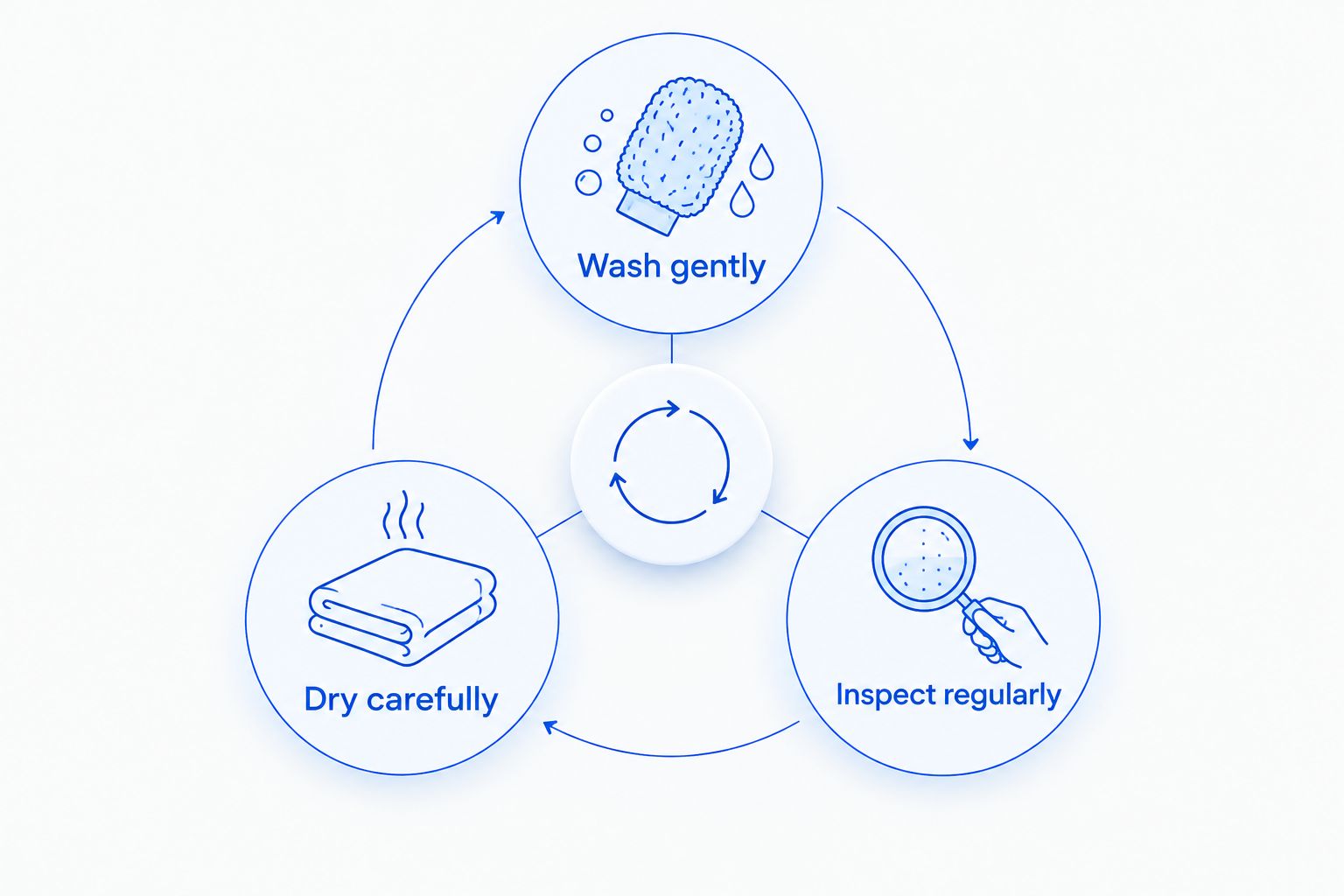
Build these 3 checks into your 2026 routine: Wash gently, Dry carefully, and Inspect regularly. They keep attention on care rather than water beading alone.
- Wash gently with products compatible with the coating.
- Dry carefully using clean materials intended for automotive finishes.
- Inspect regularly for deposits, staining, and missed contamination.
- Ask before adding waxes, toppers, or strong cleaners.
6. Remove contamination without attacking the finish
Begin with gentle cleaning that follows the coating's care instructions. Bird droppings, insect residue, and mineral deposits need attention, but hard rubbing and improvised chemicals introduce a different problem.
If a mark remains after appropriate cleaning, stop escalating the treatment. A deposit sitting on the surface and a mark etched into the finish require different responses. Repeated scrubbing cannot establish which problem you have.
Your first response should protect the finish while identifying the issue:
- Remove loose dirt before touching the affected area.
- Follow product directions rather than mixing household cleaners.
- Avoid abrasive pads and dry rubbing.
- Ask for an assessment when careful cleaning leaves a mark.
7. Review the finish before buying more protection
Inspect your clean car before deciding it needs another coating. Reduced water beading alone does not identify the cause: contamination, maintenance products, and surface condition can affect water behavior.
Keep 1 maintenance record with application information, care instructions, and notes about washing or unusual marks. This gives you a useful starting point when discussing cleaning, correction, or reapplication. It also prevents you from relying on memory about what was applied.
For your next 2026 review, focus on the condition of the finish rather than replacing protection simply because a calendar reminder appears.
- Save the coating's identity and application date.
- Record products used during routine washing.
- Photograph persistent marks after cleaning.
- Ask whether cleaning or treatment is needed before reapplication.
Discuss protection for your daily driver
Ask about ceramic coating, paint correction, preparation, and care requirements for your vehicle.
Compare protection options for daily drivers
The best protection option matches the problem you want to solve and the care you will provide. Ceramic coating, wax, sealant, and paint protection film are not interchangeable. Their benefits and limitations differ even when all are discussed as paint protection.
Use this 2026 comparison to narrow your questions. Specific application instructions and maintenance requirements depend on the selected product and your vehicle's condition.
| Option | Best for | Main benefit | Key limitation |
|---|---|---|---|
| Professionally applied ceramic coating | Owners seeking professional preparation and application | Supports easier cleaning and a maintained appearance | Requires appointment planning, appropriate curing conditions, and continued washing |
| DIY ceramic coating | Owners comfortable following detailed preparation and application instructions | Gives you control over the application process | Application mistakes and unsuitable conditions can leave uneven results |
| Wax or paint sealant | Owners who prefer renewing surface protection themselves | Fits a hands-on wash-and-protect routine | Requires renewal and does not prevent stone chips |
| Paint protection film | Drivers whose main concern is impact-related paint damage | Provides a physical barrier over covered paint | Does not eliminate damage risk, and condition depends on installation and care |
Professional ceramic coating fits owners who want help with preparation and application. DIY coating fits owners prepared to handle both tasks themselves. Neither choice excuses poor washing.
Wax or sealant remains a reasonable choice when you prefer a simpler protection routine you can renew. Film addresses a different priority: physical coverage against road impacts. Avoid choosing solely by which category sounds longest-lasting.
Common mistakes daily drivers make
Expecting protection to replace cleaning
A coated commuter still needs washing. Leaving road film and contamination in place works against the easier-care benefit you wanted. Choose a manageable wash routine before purchasing protection.
Chasing a show-car finish on working paint
A daily driver does not need every visible mark removed to benefit from care. Agree on a sensible correction goal, especially when the car has unknown repair history or defects that polishing cannot safely resolve.
Booking without a parking plan
A coating appointment affects more than the time spent applying it. Ask where the car must remain afterward and what happens if rain, sprinklers, or your next commute conflict with the care instructions.
Treating every water spot as coating failure
Mineral deposits and etched marks are different conditions. Do not jump straight to stronger chemicals or another coating. Start with an assessment of the clean surface and follow an appropriate treatment plan.
Assuming protection means guaranteed resale value
Good appearance and documented care are worthwhile goals, but ceramic coating does not guarantee a higher trade-in offer. Choose it for how you want to maintain and use the vehicle—not an unsupported return-on-investment promise.
FAQ
Is ceramic coating worth it for a car I drive every day?
Ceramic coating suits a daily driver when easier cleaning and maintained appearance matter to you and you will continue washing it properly. It is a poor match if you expect scratch-proof paint or no maintenance.
Can ceramic coating stop rock chips on my commute?
Ceramic coating is not a stone-chip barrier. If road impacts are your main concern, discuss paint protection film as a separate protection category.
Does my daily driver need paint correction before ceramic coating?
Your daily driver needs an inspection before deciding whether paint correction is appropriate. Coating does not repair existing defects, but not every vehicle needs extensive polishing.
Can I drive my car immediately after ceramic coating?
Follow the specific driving and exposure instructions supplied for the coating applied to your car. Confirm those requirements before booking so the appointment fits your commute and parking arrangements.
Can I keep using a brush car wash after ceramic coating?
An abrasive brush wash can still mark a ceramic-coated finish. Choose a careful washing method that follows the coating's maintenance instructions.
Is professional ceramic coating better than doing it myself?
Professional application fits owners who want help with preparation, paint assessment, and application. DIY application fits owners with suitable conditions and the ability to follow the product's instructions carefully.
Does weak water beading mean I need another coating?
Weak water beading alone does not prove that reapplication is necessary. Have the clean surface assessed for contamination and other causes before buying another treatment.
One last thing
Show your detailer your parking situation, not just your paint. A photo of the driveway, apartment space, or workplace parking area helps start the right conversation about access and post-application care. For a daily driver, protection has to fit the place the car actually lives.