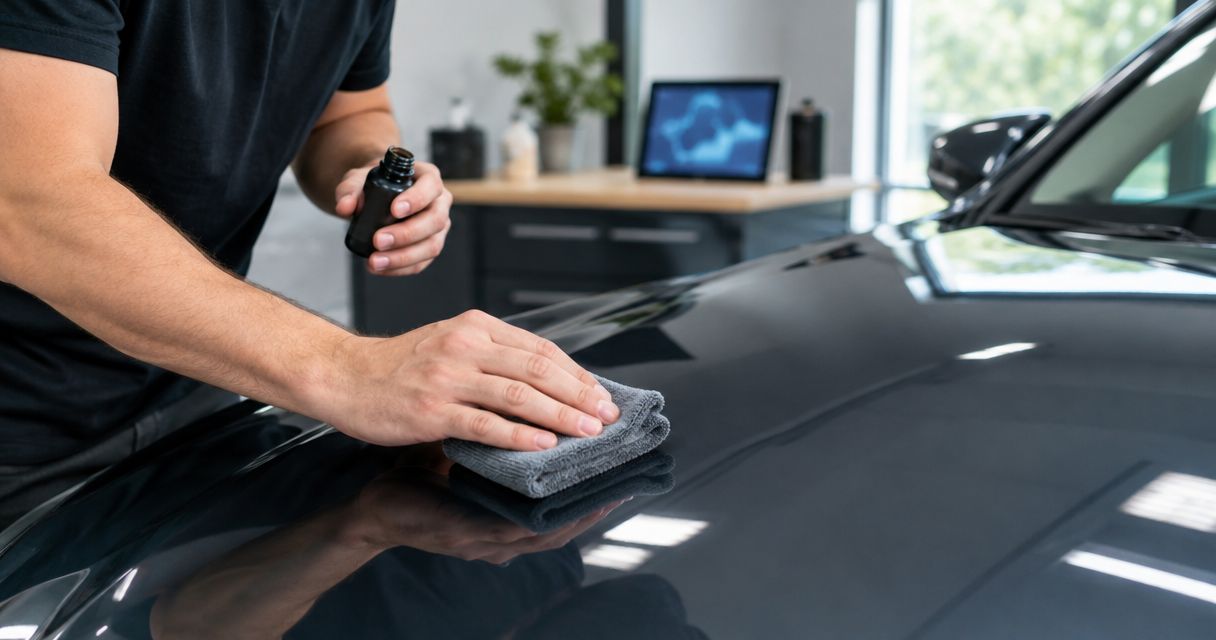
Ceramic coating cannot make your paint scratch-proof or prevent rock chips, key scratches, and damage from dirty wash tools. It helps protect the surface from contamination and makes cleaning easier, but scratch prevention still depends on careful washing and protection suited to the damage you want to avoid.
- Can ceramic coating prevent scratches? No; ceramic coating supports easier cleaning, not scratch-proof paint.
- Royal Touch Mobile Detailing LLC offers ceramic coating and paint correction for owners seeking appearance care and surface protection.
- Paint protection film is better suited to impact protection; ceramic coating serves a different purpose.
- Correct existing paint defects before coating, then use clean wash tools to limit new swirl marks.
Why this matters
Royal Touch Mobile Detailing LLC brings a faith-driven approach and a commitment to doing work right the first time to vehicle and aircraft care. For your 2026 protection plan, that starts with understanding what a service does—and what it does not do.
Royal Touch Mobile Detailing LLC is a fit for vehicle owners seeking mobile detailing, paint correction, and ceramic coating rather than scratch-proof promises. Explore Royal Touch Mobile Detailing LLC with your vehicle’s condition and your main concern in mind.
A daily driver exposed to road debris has different needs from a weekend performance car that mainly needs careful washing. The right decision begins with the source of damage, not the strongest-sounding protection claim.
Can ceramic coating prevent scratches?
No. Ceramic coating is not a physical shield against every object that touches your paint. Its useful role is surface protection and easier maintenance; it does not replace careful handling or impact protection.
These 3 approaches address different problems. Treating them as interchangeable leads to disappointment.
| Approach | Best for | Main benefit | Important limitation |
|---|---|---|---|
| Ceramic coating | Owners prioritizing easier cleaning and surface protection | Helps water and contamination release from the treated surface | Does not make paint scratch-proof or stop stone impacts |
| Paint protection film | Owners prioritizing protection against chips and surface abrasion | Places a physical film over covered paint | Coverage matters, and the film itself can sustain damage |
| Paint correction | Owners addressing existing swirls and suitable surface defects | Improves paint appearance through controlled polishing | Removes some clear coat and does not prevent future damage |
Choose ceramic coating for easier upkeep, paint protection film for impact-focused protection, and paint correction for suitable existing defects. These approaches can complement one another, but none eliminates the need for maintenance.
For a 2026 service discussion, describe the problem plainly: chips on the hood, swirls under sunlight, or dirt that clings after washing. Each concern points toward a different conversation.
Scratch resistance is not scratch prevention
A surface can resist a particular kind of abrasion and still scratch under different conditions. Dirt trapped beneath a towel, a sharp object, and road debris apply different kinds of force.
Hardness language alone does not tell you how a coated vehicle will respond to those situations. Ask what a claim measures and what the care instructions require. Do not treat a hardness label as permission to use a brush or wipe dusty paint.
Easier cleaning still has practical value
A coating’s water-repelling behavior can help you manage routine cleaning. That benefit matters when your goal is keeping a vehicle presentable without treating every wash as a restoration project.
The limitation is straightforward: easier cleaning is not cleaning without contact, and water beading does not prove that paint is undamaged. You still need to remove contamination safely and inspect the finish under useful lighting.
Why scratch outcomes vary
Whether a mark appears depends on more than the presence of a coating. These 5 factors explain why a coated car still needs thoughtful care:
- Type of contact: A soft, clean wash mitt and a grit-covered towel are not equivalent. Abrasive contamination changes what happens at the surface.
- Force applied: Pressure increases the load on anything trapped between a tool and the paint. Scrubbing harder is not a substitute for loosening dirt.
- Condition before coating: Existing swirl marks remain a separate paint-correction issue. Applying protection does not automatically remove them.
- Coverage and compatibility: Protection only applies where a suitable product has been properly applied. Paint, trim, glass, and specialized surfaces require separate consideration.
- Maintenance afterward: Wash tools, drying technique, contamination removal, and product-specific care instructions all matter after application.
For your 2026 maintenance routine, focus on the contact you can control. You cannot prevent every piece of road debris, but you can stop using the same dirty towel across the whole vehicle.
Keep the distinction clear when assessing results. A new mark does not automatically identify an application problem; its cause and depth need inspection. Likewise, a glossy finish does not establish that the surface is free of defects.
How should you plan protection before applying ceramic coating?
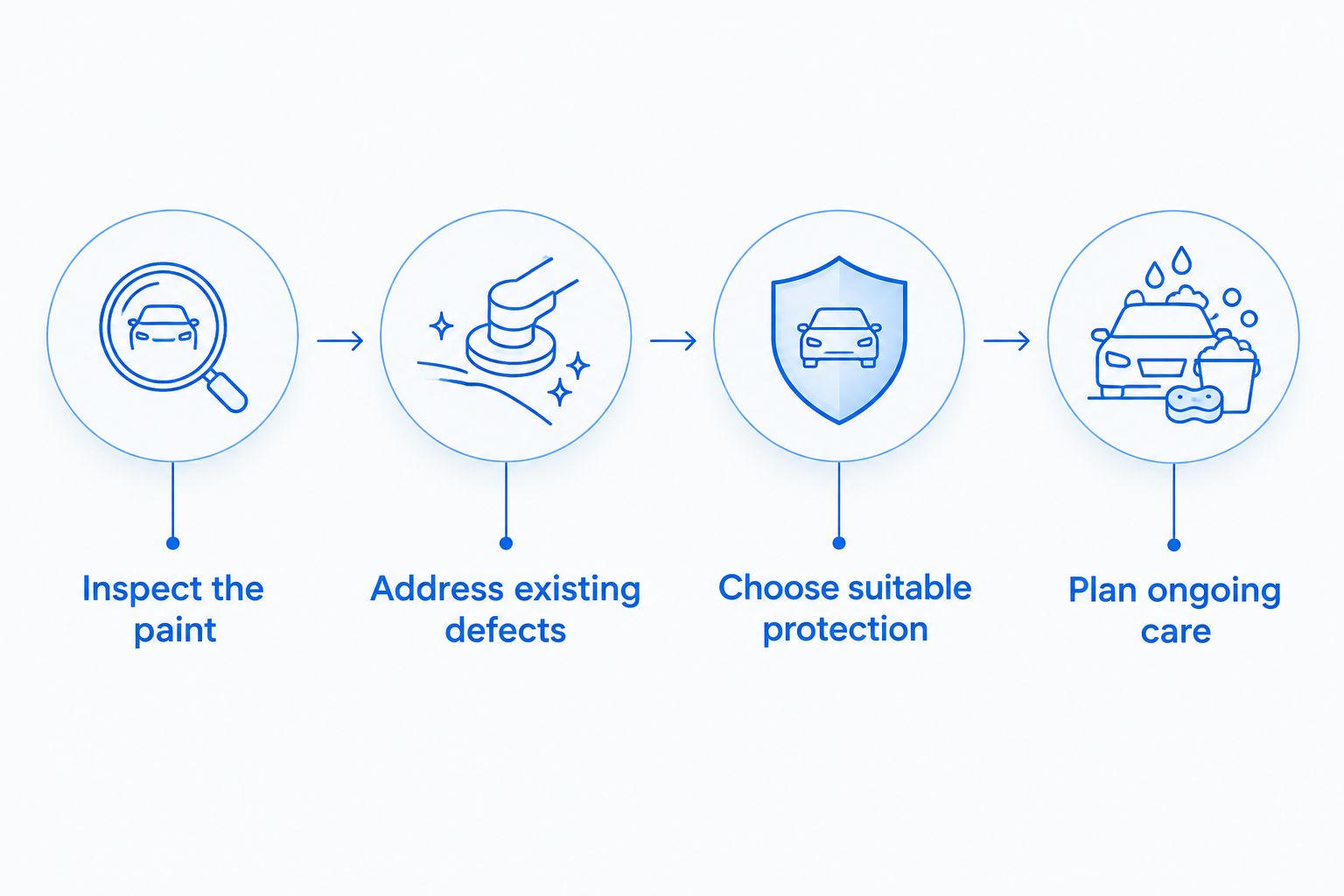
Use these 4 steps to separate appearance work from protection. The sequence helps you ask for the work your paint actually needs instead of expecting a coating to do everything.
- Inspect the paint. Look at clean paint in daylight and under directed lighting. Identify swirls, chips, scratches, and areas with previous repairs before deciding what to address.
- Address existing defects. Discuss which marks are suitable for polishing and which need a different repair. The goal is an appropriate improvement, not removing clear coat simply to chase every visible mark.
- Choose suitable protection. Decide whether your priority is easier cleaning, impact protection, or both. Confirm suitability for the specific surface and any existing protection.
- Plan ongoing care. Get the application-specific curing and washing instructions. Make sure your normal wash routine supports the protection rather than working against it.
A new car belongs in this process too. New ownership does not establish that the finish is free of wash marks or handling damage. Inspect before deciding whether correction is necessary.
Royal Touch Mobile Detailing LLC offers both paint correction and ceramic coating. That makes the distinction between improving existing paint and protecting the finished surface directly relevant to the service conversation; neither should be presented as a substitute for the other.
Discuss Your Paint Protection Goals
Ask about ceramic coating and paint correction for your vehicle’s condition and care routine.
How do you wash a ceramic-coated car without adding scratches?
Keep abrasive dirt from being dragged across the paint. That is the central rule, whether the vehicle is coated or uncoated.
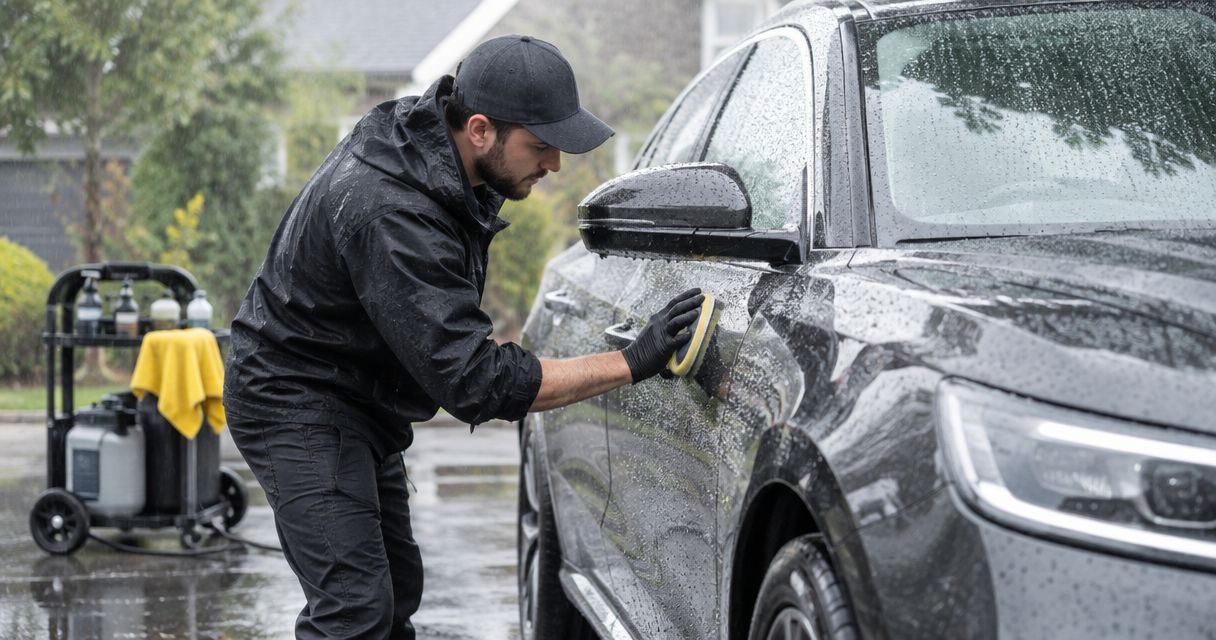
Start with the coating’s care instructions, especially after a fresh application. Once washing is permitted, use a suitable automotive wash product and clean tools, and work away from direct heat where practical.
- Rinse loose debris before contact washing rather than immediately rubbing a dirty panel.
- Keep tools used on wheels and heavily soiled lower areas separate from paint-contact tools.
- Check mitts and towels during the wash. Replace or clean anything contaminated with grit.
- Avoid treating bird droppings, insects, or stuck-on debris as a reason to scrub harder. Use an appropriate removal method.
- Dry with clean, suitable equipment instead of dragging a dirty towel across the finish.
Your 2026 care plan should also account for who washes the vehicle. Tell household members, drivers, and anyone responsible for maintenance that a ceramic coating does not make abrasive brushes safe.
For luxury and performance vehicles, careful technique matters more than the prestige of the badge. Dark paint can make fine marks easier to see, but a lighter color is not permission to wash carelessly.
Will ceramic coating hide scratches already on my car?
Ceramic coating is not a substitute for removing existing scratches. Added gloss can change how a finish looks, but it does not establish that a defect has been corrected.
Paint correction uses controlled polishing to improve suitable defects. How much improvement is appropriate depends on the mark, the paint condition, and the material available to work with—not a blanket promise that every scratch will disappear.
Start with the guide to whether paint correction can remove swirl marks if circular wash marks are your main concern. Chips, exposed underlying layers, and deeper scratches require a different assessment from fine surface swirls.
Avoid repeatedly rubbing an isolated scratch with a compound simply because it remains visible. Stop and seek an assessment rather than removing more material without knowing whether polishing is suitable.
Is paint protection film better than ceramic coating for scratches?
Paint protection film is better suited to physical protection against chips and surface abrasion. Ceramic coating is better matched to surface maintenance and easier cleaning; the choice depends on which problem you want to address.
Film is not indestructible. A sharp object or sufficient impact can damage it, and uncovered areas remain outside its protection. Ask which panels need coverage instead of assuming that a partial installation protects the whole vehicle.
A coating and film can be used together when the products and surfaces are compatible. Confirm that compatibility and the care instructions rather than assuming any coating belongs on any film.
For a 2026 daily-driver decision, prioritize your actual exposure. Frequent road-debris concerns call for an impact-protection discussion; difficult routine cleaning calls for a surface-maintenance discussion. Neither decision requires a scratch-proof claim.
Does the same advice apply to RVs and aircraft?
The same distinction applies: ceramic coating is not a substitute for impact protection or approved maintenance. The surface and operating requirements still determine which products and methods are appropriate.
An RV can include painted panels, graphics, trim, and other exterior materials. Do not assume that one product or polishing method belongs on every surface simply because the vehicle is large.
Aircraft need an additional level of care around approved procedures, sensitive components, and material compatibility. Private aircraft owners, flight schools, and charter operators should coordinate detailing with applicable aircraft maintenance guidance rather than transferring an automotive routine unchanged.
Royal Touch Mobile Detailing LLC provides auto, RV, and aviation detailing. Discuss the specific vehicle or aircraft and the proposed work before selecting a protection service; a general service category does not establish suitability for every component.
FAQ
Can ceramic coating prevent scratches from a car wash?
Ceramic coating does not make an abrasive car wash scratch-safe. Brushes, contaminated tools, and trapped grit can still mark the finish, so choose a wash method that limits abrasive contact.
Will ceramic coating stop rock chips on my hood?
Ceramic coating is not designed to stop rock chips. Paint protection film is the more relevant option to discuss when physical impact protection is your priority.
Can I ceramic-coat a car that already has swirl marks?
Existing swirl marks should be assessed before ceramic coating. A coating does not replace paint correction, and suitable polishing is normally considered before applying protection when appearance improvement is the goal.
Does water beading mean my coating has no scratches?
Water beading does not prove that paint or coating is free of scratches. It shows water behavior at the surface, while visible defects require a separate inspection.
Can I wash my car immediately after ceramic coating?
Follow the specific coating’s curing and first-wash instructions rather than washing immediately by default. The correct timing depends on the applied product and its instructions.
Is ceramic coating still useful if it cannot prevent scratches?
Ceramic coating remains useful when your priorities are easier cleaning and surface protection. It is the wrong purchase if you expect scratch-proof paint or protection from every stone impact.
One last thing
Inspect your wash tools before blaming—or trusting—your protection. A towel that looks clean can still hold debris, and a glossy, water-beading panel can still carry swirl marks.
Before your next wash, separate wheel tools from paint tools and set aside anything contaminated. That practical habit supports the finish you already have without asking a coating to do a job it cannot do.