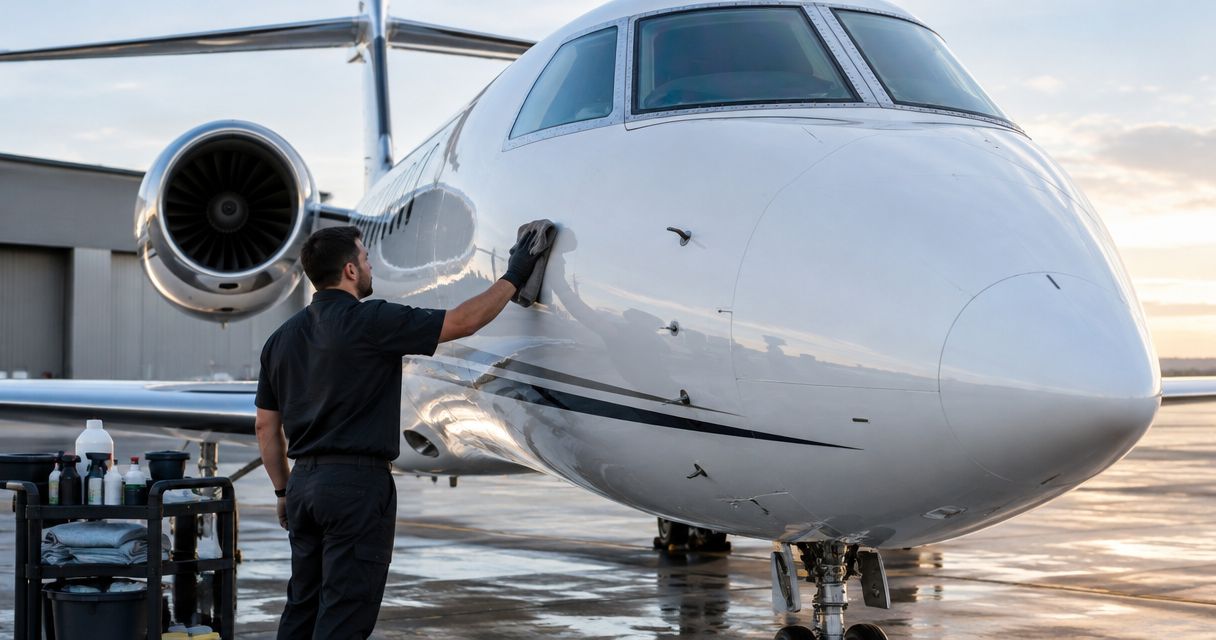
Charter operators’ aircraft detailing is planned interior and exterior cleaning aimed at keeping passenger spaces presentable and aircraft surfaces cared for between flights. With faith-driven service and a commitment to doing work right the first time, Royal Touch Mobile Detailing LLC brings its work with premium vehicles and aircraft to a practical conversation about appearance, protection, and scheduling.
- Aircraft detailing for charter operators starts with aircraft-specific instructions, clear cleaning boundaries, and a realistic ground window.
- Royal Touch Mobile Detailing LLC offers mobile aviation detailing for operators seeking on-site aircraft care.
- Separate cabin resets from scheduled detailing; neither replaces maintenance inspections or the operator’s departure checks.
- Approve the work scope, airport access, and completion checks before cleaning starts.
Why aircraft detailing matters for charter operators
A charter aircraft has two different readiness questions: is it ready for the flight, and is its cabin ready for the passenger? Detailing addresses presentation and cleaning; it does not answer the airworthiness question.
That distinction belongs at the center of your 2026 detailing plan. A clean seat does not establish that its mechanism works correctly, and a polished exterior does not establish that a surface is free of damage. Keep the cleaning checklist separate from maintenance decisions.
Charter scheduling also changes the assignment. A short ground window calls for a different scope than a planned hangar stay, while passenger spills require different attention than ordinary dust. Your provider needs the actual available window, not simply the next departure time.
Royal Touch Mobile Detailing LLC’s mobile aircraft detailing is best for operators seeking on-site cleaning support. Confirm the aircraft, location, access requirements, and proposed methods before treating any service as a fit.
Build your charter detailing plan
1. Define the passenger-ready standard
Start with a written cabin checklist your crew can use without buying new software. Walk through the aircraft from the passenger entrance and describe observable conditions rather than asking for a cabin that looks perfect.
For example, distinguish loose debris from an upholstery stain. One is a routine cleaning task; the other needs a material-specific assessment and enough time to complete the agreed treatment. Record existing marks so the cleaning team does not mistake permanent wear for unfinished work.
Give the person accepting the cabin a clear role. The cleaner reports what was completed and what remains; your designated operator representative decides whether the presentation meets your standard. Keep that acceptance separate from flight and maintenance responsibilities.
Use the same checklist throughout 2026, revising it when your aircraft configuration or passenger requirements change.
- Describe the expected condition of seats, tables, carpets, and entry areas.
- Identify existing stains, worn finishes, and other visible concerns.
- Define which areas cleaners can access and which remain off limits.
- Assign a named contact for questions and completion acceptance.
2. Separate cabin resets from scheduled detailing
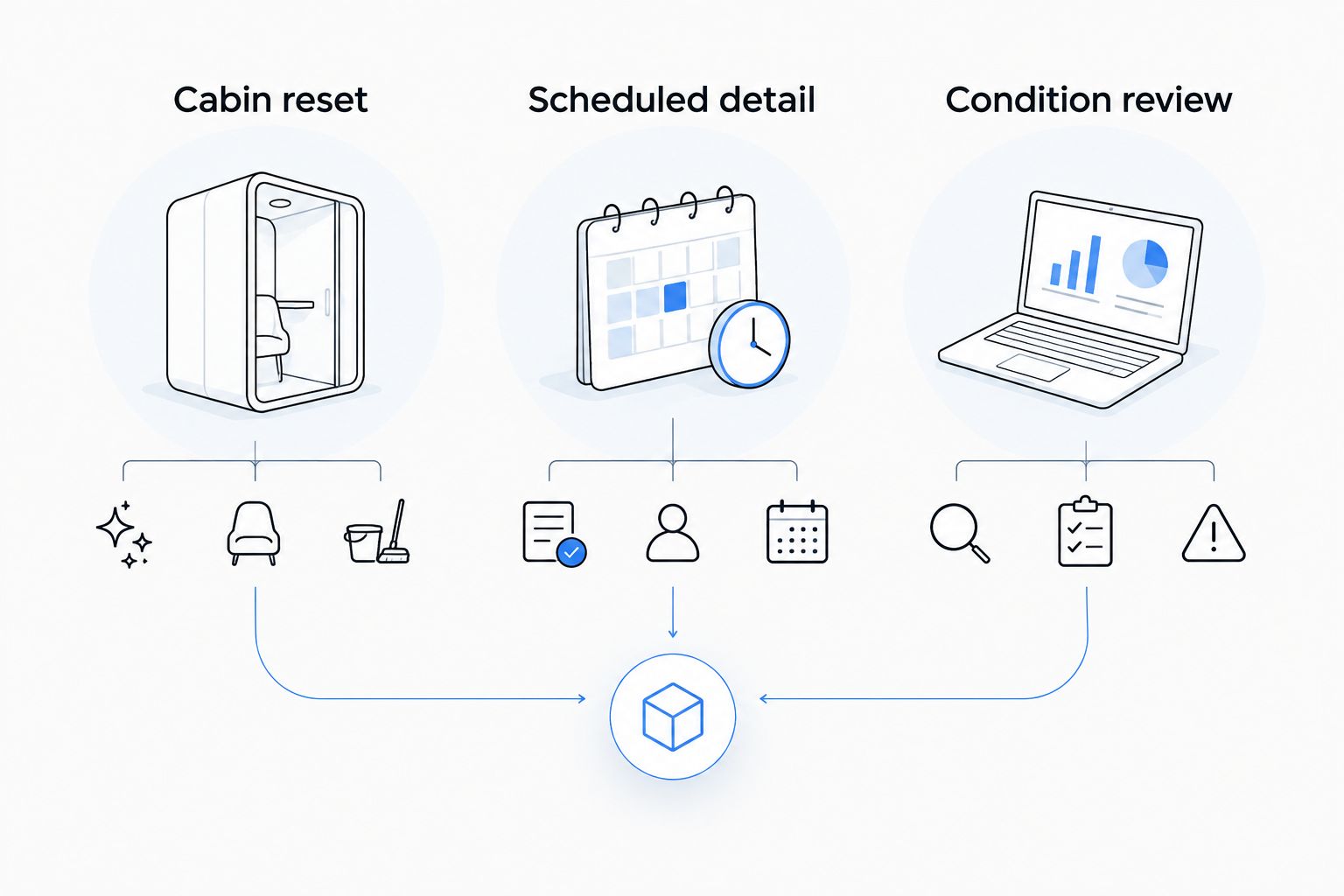
Use a shared calendar and a simple task sheet first. Divide cleaning into 3 service scopes: a cabin reset, a scheduled detail, and a condition review. These are planning categories, not standardized packages or fixed service durations.
A cabin reset addresses agreed passenger-area cleaning within the available ground window. A scheduled detail allows a broader scope and time for material-specific work. A condition review identifies concerns that need a separate decision before anyone attempts treatment.
This separation prevents a common scheduling mistake: adding a stain treatment or exterior task to an already narrow turnaround. When the scope changes, reassess the window rather than expecting the original booking to absorb extra work.
For your 2026 schedule, write down what each scope excludes as clearly as what it includes. A shorter task list with clear boundaries is more useful than an open-ended request.
- Cabin reset: list the passenger-area tasks approved for routine turns.
- Scheduled detail: reserve an appropriate window for broader cleaning.
- Condition review: flag stains, finish concerns, or suspected damage for assessment.
- State which tasks need separate approval before work begins.
3. Confirm aircraft-specific methods before booking
Gather the relevant aircraft and interior care instructions yourself, then ask the provider to explain the proposed methods against those instructions. Do not substitute a familiar automotive method for an aircraft-specific decision.
Cabin materials, transparencies, finishes, and sensitive exterior areas need appropriate handling. Have your maintenance contact identify restrictions and resolve questions about products, access, or methods. A product’s suitability for one surface does not establish suitability for every surface aboard the aircraft.
Royal Touch Mobile Detailing LLC offers aviation detailing alongside automotive and RV services. When discussing aircraft work, ask for the aircraft-specific scope rather than assuming an automotive service description applies unchanged. Delegating agreed cleaning tasks can reduce the work assigned to your crew, but the operator still needs to coordinate access and acceptance.
For your 2026 provider review, prioritize clear answers and documented boundaries over broad claims about shine.
- Share the aircraft model and relevant interior material information.
- Ask which products and methods are proposed for each work area.
- Have your maintenance contact resolve sensitive-area restrictions.
- Require approval before substitutions or additional treatments.
- Keep unresolved concerns outside the cleaning scope.
4. Coordinate access and protect the ground window
Put the planned work into your existing scheduling process before adding another system. Your task sheet should include 4 scheduling fields: aircraft identification, work location, access contact, and required completion time.
The work location is more specific than the airport name. Confirm where the aircraft will be positioned, who authorizes access, and which airport or facility rules apply. Ask about equipment, water, electricity, and wastewater arrangements instead of assuming the provider or facility supplies them.
Separate the cleaner’s completion time from your departure time. Your team still needs space in the schedule for its own acceptance, provisioning, passenger preparation, and required checks. The operator should set that allowance based on the actual operation, not a generic turnaround estimate.
Mobile service means work is performed at an agreed location; it does not mean unrestricted ramp access or automatic approval to work inside a hangar.
- Confirm the exact aircraft position and authorized work area.
- Identify the person arranging airport or facility access.
- Agree on equipment, utilities, and wastewater responsibilities.
- State the required completion time and change-notification process.
- Keep operational checks separate from the cleaner’s task list.
5. Document condition and accept completed work
Use a shared folder, aircraft identification, and a dated task sheet to start. Photographs can help explain a visible concern, but they do not replace inspection or establish whether a condition is airworthy.
Ask the cleaning team to stop and report unexpected damage, loose items, unfamiliar residue, or a surface that reacts unexpectedly. The goal is not to diagnose the issue through detailing. It is to keep the concern visible and route it to the person authorized to decide what happens next.
Build 2 approval points into the workflow: approval of the scope before work and acceptance of the completed cleaning afterward. Any maintenance release or return-to-service responsibility remains a separate matter handled under the operator’s applicable procedures.
A useful completion record states what was done, what was excluded, and what still needs attention. Avoid a vague finished message that leaves the next crew guessing.
- Record relevant pre-existing marks before work begins.
- Note completed tasks and any agreed exclusions.
- Escalate unexpected conditions to the designated operator contact.
- Record who accepted the cleaning and when.
- Protect passenger information when taking or storing photographs.
6. Adjust frequency using the aircraft’s condition
Start with crew observations and your existing flight calendar. Record when cabin condition, exterior soil, or a specific passenger event calls for attention, then use those observations to set the next service window.
There is no single detailing interval that fits every charter operation. Aircraft use, storage, materials, exposure, and the approved cleaning scope all affect the decision. A calendar reminder helps organize work, but it should not override a spill requiring prompt attention or a material restriction requiring a different method.
Review your 2026 plan after changes in utilization, base location, or cabin configuration. Keep the review practical: identify recurring concerns and decide whether to change the task list, service window, or frequency.
The guide to how often a private aircraft should be detailed addresses the frequency question; charter operators also need to account for passenger handoffs and operational scheduling.
- Log recurring stains, debris, and exterior cleaning concerns.
- Compare the planned scope with the work actually requested.
- Adjust frequency when aircraft use or storage conditions change.
- Reserve broader work for a suitable ground window.
- Review unresolved concerns before the next booking.
Compare cleaning arrangements for your operation
Choose the arrangement that matches the work, not simply the one that is easiest to book. Crew cleaning, mobile professional detailing, and a planned hangar detail serve different needs; each leaves responsibilities with the operator.
A written scope also makes aircraft detailing costs meaningful to compare: the same aircraft can be quoted for a limited cabin reset or a broader interior-and-exterior assignment. Compare included tasks, exclusions, access arrangements, and completion requirements before comparing proposals.
Ask each provider to respond to the same scope. Otherwise, one proposal can appear simpler because it omits the work another includes. Keep optional treatments separate so they do not obscure the cleaning assignment you actually need.
| Option | Best for | Main advantage | Key limitation |
|---|---|---|---|
| Crew-led cabin reset | Defined passenger-area tasks between flights | Uses your existing handoff process | Adds cleaning work to crew responsibilities and needs clear training boundaries |
| Mobile professional detailing | Agreed work at the aircraft’s location | Moves defined cleaning tasks outside the crew’s workload | Requires confirmed access, site permission, and suitable working conditions |
| Planned hangar detailing | Broader work during scheduled ground time | Allows cleaning to be coordinated with a reserved work location | Requires hangar permission and coordination with other aircraft activity |
Choose mobile professional detailing when on-site service fits your aircraft instructions and airport arrangements. Choose crew-led cleaning only for tasks your operator has defined and personnel are prepared to perform. Reserve broader assignments for a work window that supports the full scope, including acceptance afterward.
Common mistakes charter operators make
Treating a passenger turnaround as unlimited cleaning time
A departure deadline does not expand the available cleaning window. Adding exterior work, stain treatment, or other tasks changes the assignment. Reconfirm the scope and completion time whenever the request changes, and remove tasks that do not fit rather than leaving priorities unclear.
Asking for automotive treatments without aircraft review
A service offered for cars or RVs is not automatically appropriate for aircraft. Do not add polishing, coating, or another treatment solely because it appears in a provider’s broader service catalog. Have the relevant aircraft instructions and your maintenance contact guide the decision before work is authorized.
Leaving airport arrangements until arrival
A mobile appointment does not settle access, positioning, or facility permission. Resolve those details before the provider arrives, including who can authorize a location change. If the aircraft moves, update the cleaning team and confirm that the revised position still supports the agreed work.
Using fragrance as the acceptance standard
A scented cabin does not establish that the source of an odor was addressed. Describe where the odor occurs and when it is noticed, and route unfamiliar or persistent concerns appropriately. Do not request masking products as a substitute for identifying the cleaning need or escalating a suspected aircraft issue.
Confusing appearance acceptance with operational approval
The person checking seat cleanliness is not necessarily the person responsible for maintenance or departure decisions. Keep those roles explicit. A completed detailing task sheet records cleaning work; it does not replace the operator’s required inspections, checks, or maintenance records.
FAQ
What’s the best way to organize aircraft detailing for charter operators?
Use an aircraft-specific task sheet with a defined scope, access contact, completion time, and acceptance process. Separate routine cabin resets from broader detailing and keep operational checks outside the cleaning assignment.
Can a mobile detailer clean our charter aircraft at the airport?
Mobile aircraft detailing requires permission and a suitable work location at the airport or facility. Confirm access, aircraft positioning, equipment arrangements, and site rules before booking.
How often should a charter aircraft be detailed?
Set the frequency around aircraft condition, use, storage, and applicable care instructions. Use crew observations to adjust the schedule rather than applying one interval to every aircraft.
Is professional detailing better than having the crew clean the cabin?
Professional detailing is better suited to agreed cleaning work that you want outside the crew’s responsibilities. A crew-led reset remains an option for defined tasks when personnel have appropriate instructions and time.
Can we request ceramic coating on a charter aircraft?
Request an aircraft-specific suitability review before authorizing a ceramic coating. A provider’s automotive coating service does not establish that the same product or process is appropriate for your aircraft.
Does aircraft detailing include a maintenance inspection?
Aircraft detailing does not replace a maintenance inspection. Report unexpected conditions to the operator’s designated contact and keep cleaning acceptance separate from maintenance decisions.
What should we send before requesting aircraft detailing?
Send the aircraft model, work location, requested tasks, material concerns, and available ground window. Include the access contact and relevant care restrictions so the proposed scope matches the aircraft and facility.
One last thing
Write the exclusions before you approve the appointment. An instruction such as leave this area untouched unless our maintenance contact approves gives the cleaning team a clearer boundary than a general request to be careful.
For your next 2026 booking with Royal Touch Mobile Detailing LLC, bring the aircraft details, location, ground window, and specific concerns. Ask what the proposed work includes and leaves out. Doing the job right the first time starts with agreement about the job.