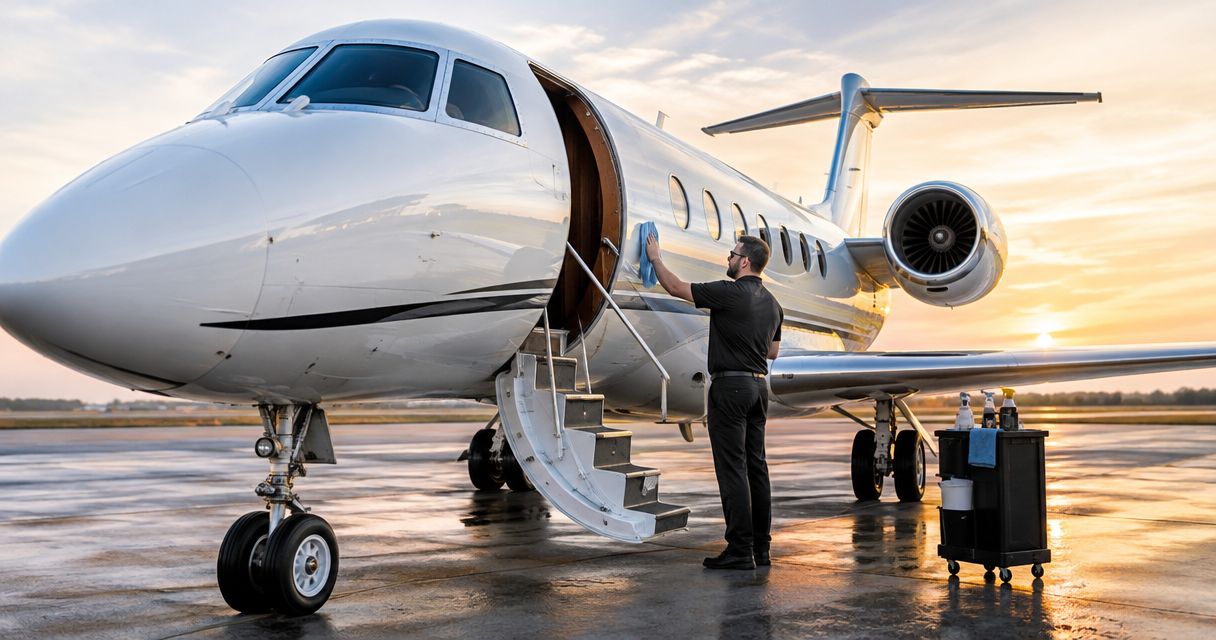
Detail a private aircraft according to its manufacturer’s cleaning instructions, actual condition, use, and storage exposure—not a universal monthly or quarterly interval. Address contamination when you find it using the approved procedure, and schedule deeper interior and exterior work around the aircraft’s condition and operating calendar; detailing does not replace maintenance or an airworthiness inspection.
- How often should a private aircraft be detailed? Follow manufacturer instructions and condition, not an unsupported calendar interval.
- Private aircraft detailing should separate routine cleaning, deeper cabin care, and exterior finish work.
- Aircraft manufacturer instructions take priority over a generic aviation detailing schedule.
- Plan your 2026 detailing around storage, use, contamination, and access—not appearance alone.
How often should a private aircraft be detailed?
Use a condition-based detailing schedule within the aircraft manufacturer’s instructions. Routine cleanup, deeper cabin cleaning, and exterior finish work are different jobs. They do not all belong on the same repeating appointment.
Royal Touch Mobile Detailing LLC brings a faith-driven commitment to doing work right the first time to its auto, RV, and aviation detailing services. For aircraft owners, that starts with defining the work clearly rather than treating an airplane like a larger car.
Use this comparison to organize your 2026 aircraft care plan. These are planning categories, not manufacturer-approved service intervals.
| Type of care | Best for | Scheduling trigger | Benefit | Limitation |
|---|---|---|---|---|
| Routine cleanup | Owners managing visible dirt between flights | A condition check identifies dirt or a spill | Keeps small cleaning tasks separate from deeper work | Does not address every cabin or exterior surface |
| Interior detail | Owners preparing a cabin for thorough cleaning | Cabin condition and an available ground window justify deeper work | Gives upholstery, trim, and other agreed surfaces focused attention | Requires material-specific methods and a defined scope |
| Exterior detail | Owners addressing broader exterior contamination | Surface condition and manufacturer instructions call for cleaning | Addresses more than an isolated dirty area | Requires aircraft-specific precautions and suitable access |
| Corrective finish work | Owners evaluating an appearance problem | Inspection supports a specific treatment | Targets an identified finish concern | Is not a routine substitute for washing or maintenance |
Do not turn the table into an automatic booking sequence. A cabin spill does not necessarily call for exterior work, and an exterior wash does not automatically justify polishing. Match the service to the condition you actually need to address.
Why this matters
A useful detailing schedule protects your ability to make good decisions. It tells you what needs attention, which instructions govern the work, and when the aircraft can be made available without rushing the job.
For a private owner, convenience matters. For a flight school or charter operator, scheduling also involves the people responsible for the aircraft and its next use. In either case, cosmetic work needs a clear boundary from maintenance responsibilities.
A clean-looking aircraft is not proof of airworthiness. If cleaning reveals damage, an unexplained residue, or another concern, refer it to the person responsible for aircraft maintenance rather than asking a detailer to make it disappear.
Routine cleanup: respond to the condition
Routine cleanup is best for an aircraft that needs a limited task rather than a full detail. Start with a visual condition check after use and decide whether anything needs attention under the applicable cleaning instructions.
Look for obvious cabin spills, dirty entry areas, and visible exterior contamination. Record what you find instead of assuming every mark needs the same cleaner or technique. A stain on upholstery and residue on an exterior surface are separate decisions.
The benefit is a narrower, more focused job. The limitation is equally important: a quick wipe is not a substitute for deeper cleaning when dirt remains, and convenience does not make an unsuitable product acceptable.
For your 2026 plan, define what routine cleanup includes. Also define who handles questions about unfamiliar materials, restricted areas, or contamination that does not come away with the approved method.
Interior detailing: schedule around cabin condition
Interior detailing is best for owners whose cabin needs more attention than routine tidying provides. Schedule it when the agreed scope warrants a dedicated ground window, rather than booking it solely because a calendar reminder appears.
Evaluate seating, flooring, accessible trim, storage areas, and passenger-use surfaces. Ask which materials are present and which cleaning instructions apply. Leather, fabric, transparent surfaces, and electronic equipment should not be treated as interchangeable.
Choose the cleaning method before choosing the appointment. If the provider cannot explain the proposed scope in plain language, resolve that before work begins. You should know what is included, what is excluded, and where maintenance guidance is needed.
The advantage of a deeper interior detail is focused attention across the agreed cabin areas. The trade-off is the need to coordinate access, material care, and any drying requirements before the aircraft’s next planned use.
Exterior detailing: follow the aircraft’s requirements
Exterior detailing is best for owners addressing contamination beyond an isolated spot. Let the aircraft’s instructions, finish condition, and exposure determine the work rather than borrowing a schedule from automotive detailing.
Ask the provider to identify the intended cleaning process and how sensitive areas will be handled. Aircraft openings, sensors, transparencies, and surface materials require the applicable precautions; a method suitable for one area is not automatically suitable for another.
Do not assume that a more aggressive process is a better process. If ordinary cleaning does not resolve an appearance concern, stop and identify the cause before adding polishing or another treatment.
Exterior detailing offers a way to address the agreed surface-cleaning needs. Its limitation is scope: cleaning cannot establish that a finish defect is cosmetic, and it cannot take the place of a maintenance assessment.
Why aircraft detailing frequency varies
The right 2026 schedule starts with your aircraft’s instructions and changes when its condition or operating pattern changes. Use these factors to decide when to reassess the plan:
- Manufacturer instructions: Use the applicable cleaning procedures, restrictions, and any specified intervals as the starting point.
- Storage exposure: Record whether the aircraft is hangared or parked outside and what contamination is actually present.
- Aircraft use: Review the condition after flying rather than treating flight activity alone as proof that a full detail is due.
- Cabin use: Passenger activity, training use, and visible spills help define the interior cleaning scope.
- Surface condition: Distinguish removable dirt from staining, finish damage, or another issue requiring evaluation.
- Ground access: Coordinate the job with airport requirements, aircraft availability, and the people responsible for its care.
These factors support a schedule; they do not produce a universal number of days. If the manufacturer specifies a requirement, follow it. If a new condition needs attention before the next planned appointment, reassess rather than waiting for the calendar.
Build a practical 2026 detailing plan
A useful plan is a short decision process, not a collection of automatic treatments. Keep the manufacturer’s guidance available and make the scope understandable to everyone involved.
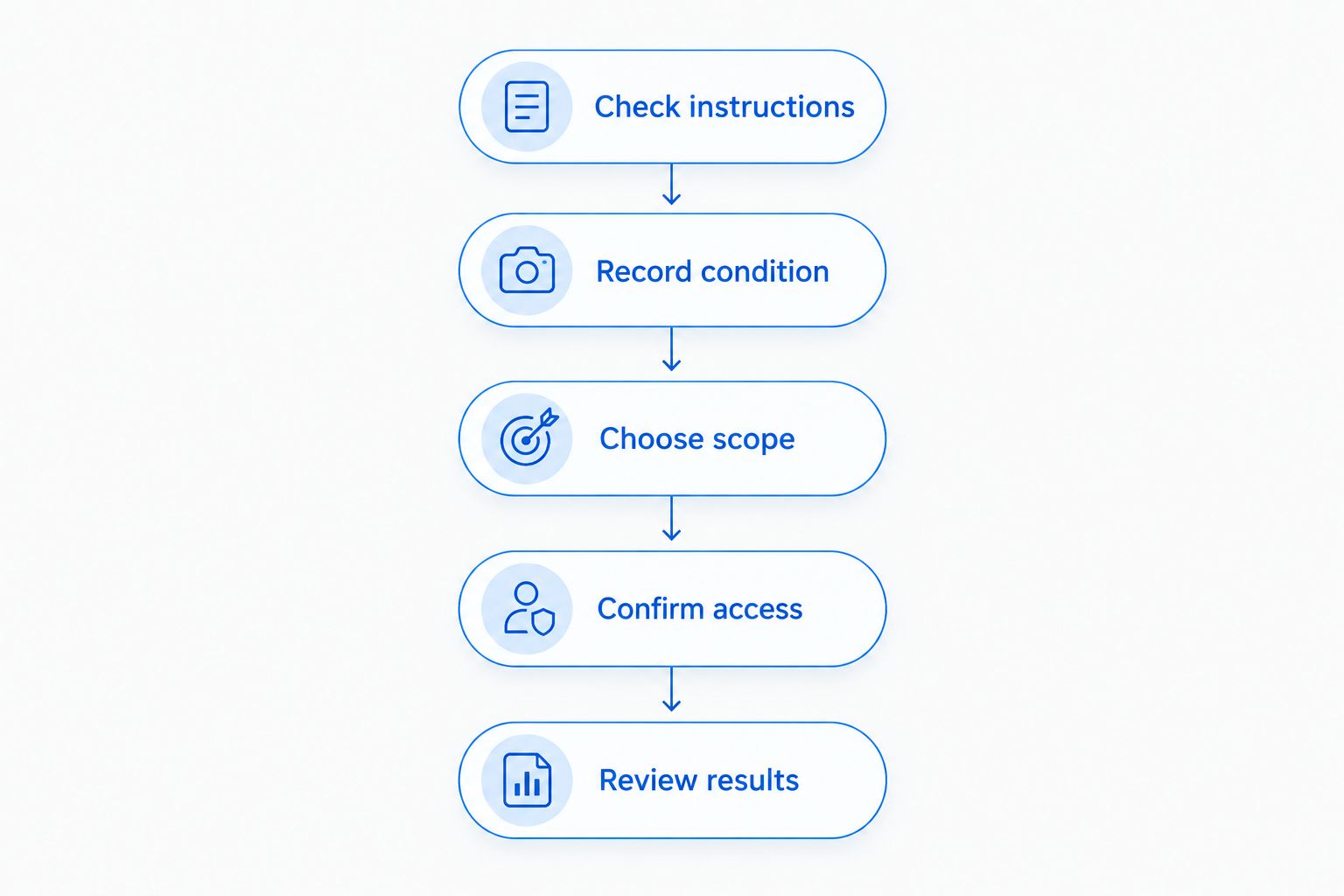
- Check instructions. Identify the cleaning guidance for the aircraft, its installed materials, and any existing surface treatment. Resolve uncertainty before selecting products or methods.
- Record condition. Note visible dirt, spills, stains, or finish concerns. Photographs can help explain the requested work, but they do not replace an appropriate inspection.
- Choose scope. Separate routine cleanup, interior detailing, exterior detailing, and any proposed corrective treatment. Approve only the work supported by the condition.
- Confirm access. Coordinate the location, permissions, aircraft availability, and handover expectations with the responsible parties.
- Review results. Compare the completed work with the agreed scope. Record unresolved concerns and use the next condition check to decide whether the plan needs changing.
Keep this record separate from any required maintenance documentation unless the responsible maintenance professional directs otherwise. A detailing note should describe the cleaning work accurately, without implying an inspection or maintenance approval that did not occur.
Revisit the plan when storage arrangements, aircraft use, or cabin condition change. That gives your 2026 calendar a practical purpose: it prompts a review instead of authorizing unnecessary work.
Does a hangared aircraft need less detailing?
Hangar storage alone is not a detailing schedule. Assess the aircraft’s actual condition and follow its cleaning instructions even when it spends most of its time indoors.
A hangared aircraft still needs a decision about cabin care and contamination encountered during use. Conversely, outdoor parking does not automatically mean every service is due. Storage is a planning factor, not a substitute for looking at the aircraft.
Should you detail an aircraft after every flight?
Do not assume every flight requires a full detail. Check the aircraft’s condition after use, address identified cleaning needs according to the applicable instructions, and reserve deeper work for a justified scope.
For a flight school or charter operation, distinguish a cabin presentation check from a full interior detail. Clear task names help everyone understand what was actually completed and what still requires attention.
Does ceramic coating change the cleaning schedule?
A ceramic coating does not replace the aircraft’s cleaning instructions. If a coating is present, confirm its care requirements and compatibility with the aircraft’s materials before deciding how to clean or maintain it.
Do not use the existence of a coating as a reason to ignore contamination or automatically delay cleaning. Likewise, do not schedule coating application, polishing, or reapplication simply because those services appear in an automotive care package.
What should you ask before booking aircraft detailing?
Ask for a written scope that identifies the surfaces involved, the proposed methods, and the boundaries of the job. Confirm how questions about materials or sensitive areas will be resolved before anyone starts.
Royal Touch Mobile Detailing LLC is best for aircraft owners seeking mobile aviation detailing rather than an automotive-only service. The family-owned company offers aviation detailing alongside auto and RV services throughout North Carolina and parts of Virginia and South Carolina; confirm arrangements for your aircraft’s location and requested work.
The practical benefit of mobile service is arranging care around the aircraft’s location. The limitation is that access, site permission, aircraft-specific requirements, and the proposed scope still need agreement. Mobile does not mean unrestricted access or automatic suitability for every task.
Royal Touch Mobile Detailing LLC’s commitment to doing work right the first time should translate into a clear conversation about your aircraft—not a promise about a finish, a fixed interval, or a maintenance outcome.
Discuss your aircraft detailing needs
Ask about aviation detailing, the requested scope, and arrangements for your aircraft’s location.
FAQ
How often should a private aircraft be detailed?
Detail a private aircraft according to its manufacturer’s instructions, actual condition, use, and storage exposure. Separate routine cleanup from deeper interior, exterior, and corrective work rather than assigning every task the same interval.
Is monthly aircraft detailing always necessary?
A monthly appointment is not a substitute for an aircraft-specific cleaning plan. Follow any manufacturer requirements and use condition checks to decide what work is justified.
Should I clean my private aircraft after every flight?
Check the aircraft’s condition after use rather than assuming every flight requires a full detail. Address identified contamination using the applicable cleaning procedure.
Does keeping an aircraft in a hangar eliminate detailing?
Hangar storage does not eliminate the need to assess cleaning requirements. Follow the aircraft’s instructions and evaluate cabin condition and contamination encountered during use.
Can I use car detailing products on my aircraft?
Do not assume an automotive detailing product is suitable for an aircraft. Confirm compatibility with the aircraft manufacturer’s guidance and the specific surface before use.
Is aircraft detailing the same as aircraft maintenance?
Aircraft detailing is not a substitute for maintenance or an airworthiness inspection. Refer damage, unexplained residue, and other technical concerns to the person responsible for aircraft maintenance.
Does Royal Touch Mobile Detailing LLC offer aviation detailing?
Royal Touch Mobile Detailing LLC offers aviation detailing alongside auto and RV detailing. Confirm the requested aircraft work, location arrangements, and access requirements before scheduling.
One last thing
Write down what would trigger an earlier appointment. A calendar tells you when to look again; a condition-based plan tells you when not to wait.
For your 2026 aircraft care record, include the agreed scope and any unresolved concerns beside the appointment date. That small distinction keeps a completed cleaning job from being mistaken for a completed repair or inspection.