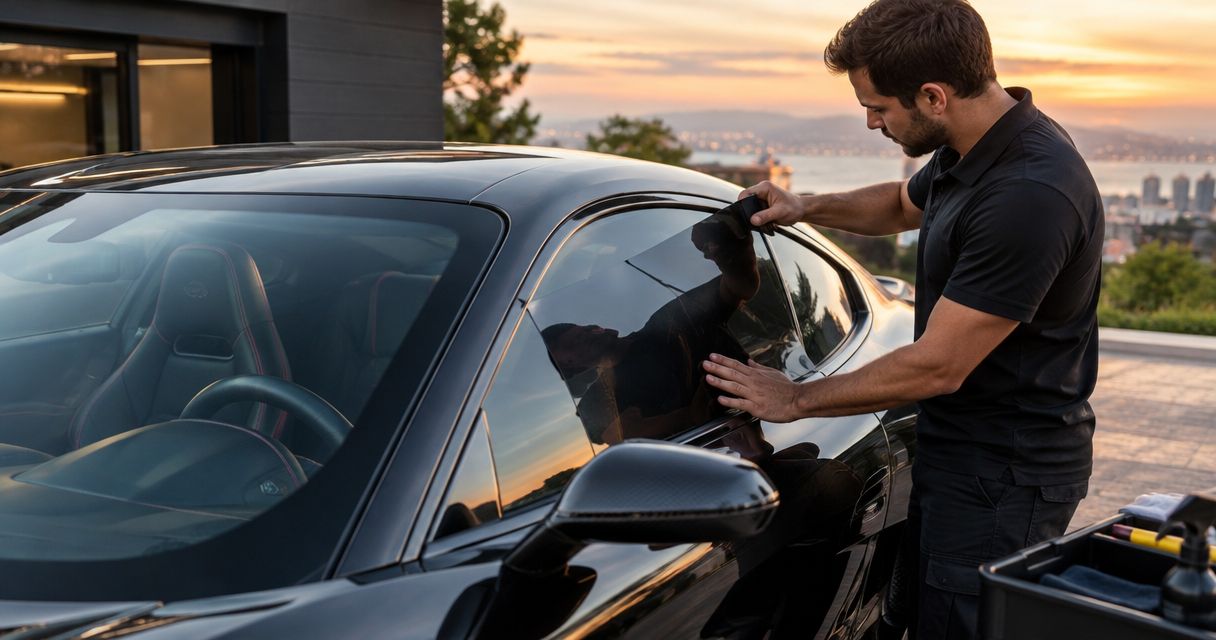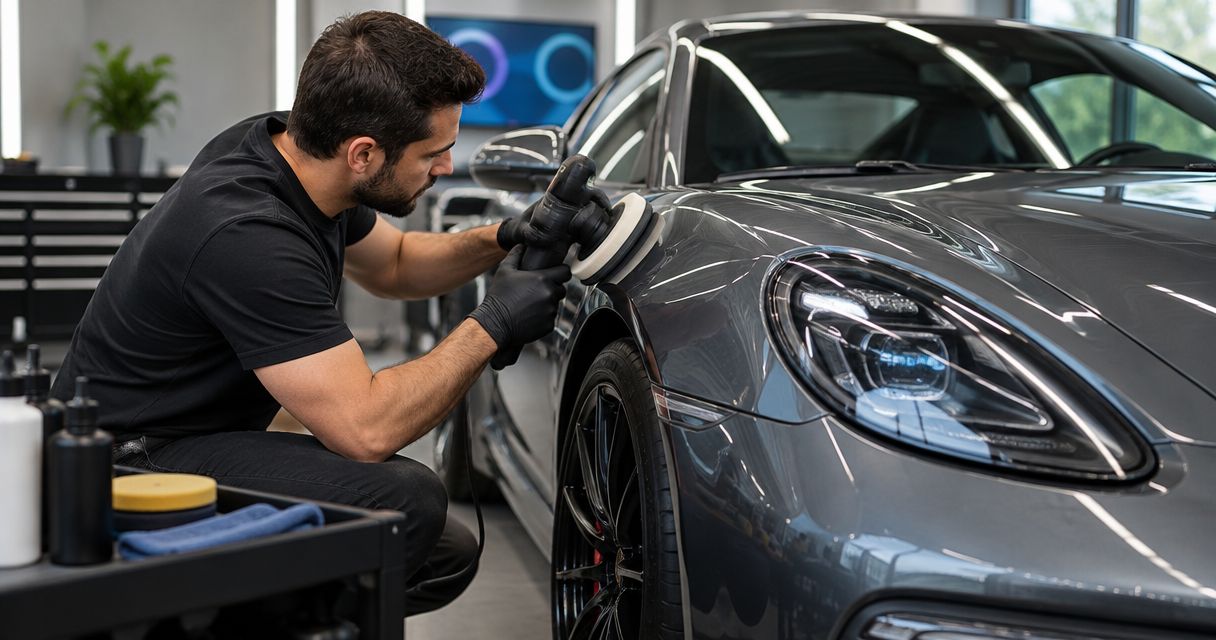
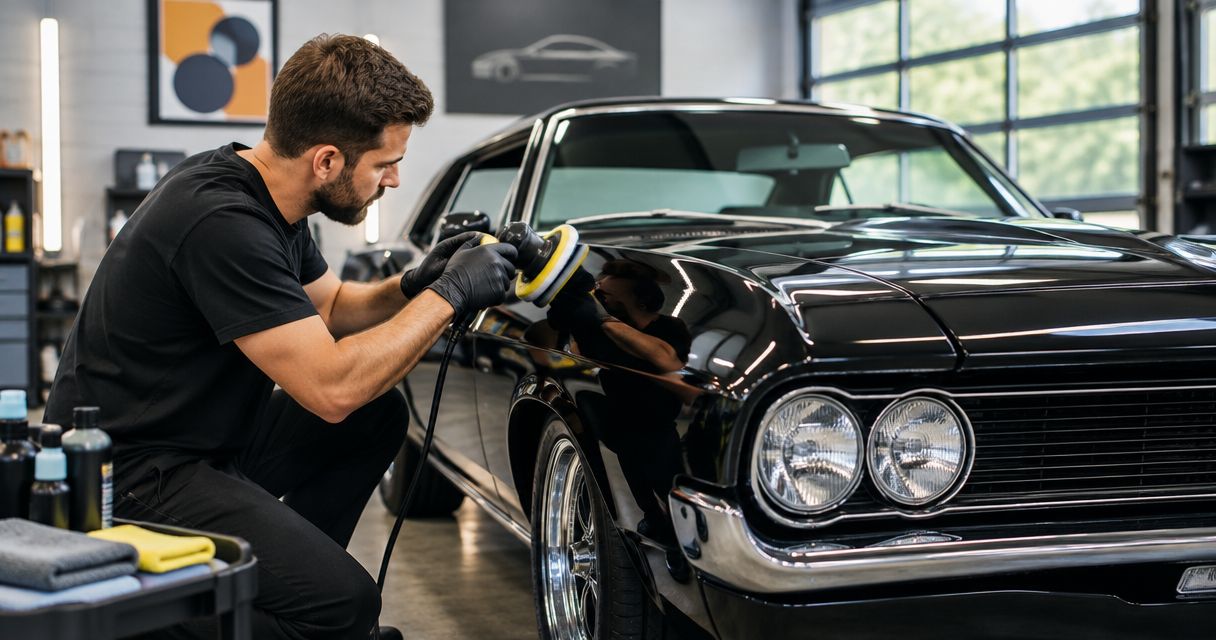
Best overall: inspection-led mobile paint correction. Best for regularly driven show cars: single-stage polishing. Best for widespread paint defects: multi-stage correction. Royal Touch Mobile Detailing LLC brings a faith-driven commitment to doing work right the first time, with services spanning premium vehicles and aircraft. For paint correction for car show vehicles, start with your paint’s condition—not the biggest package.
- Royal Touch Mobile Detailing LLC offers mobile paint correction for car show vehicles in North Carolina and parts of Virginia and South Carolina.
- Single-stage polishing suits regularly driven show cars when a test area demonstrates an acceptable finish.
- Multi-stage correction separates defect removal from finishing; deeper damage still requires limits.
- Preservation-focused polishing prioritizes remaining paint over chasing every visible mark.
Why this matters for your show car
A weekend show car still has a life between events. Washing, road use, storage, and previous polishing all belong in the decision about how much correction to request.
Royal Touch Mobile Detailing LLC is best suited to owners seeking mobile paint correction alongside detailing and protection services. The family-owned company serves customers throughout North Carolina and parts of Virginia and South Carolina. Start with Royal Touch Mobile Detailing LLC to discuss your vehicle, location, and goals.
For the 2026 show season, separate appearance goals from repair needs. Polishing improves suitable surface defects by removing a small amount of paint; it does not replace missing paint or repair failing clear coat. A good-looking result should not depend on treating every scratch as removable.
What makes the best paint correction for show vehicles?
Use these criteria before choosing a service approach:
- Paint condition: Identify swirls, haze, isolated scratches, chips, and peeling areas separately. They do not call for the same treatment.
- Paint history: Disclose repainting, previous correction, touch-ups, and existing protection. Unknown history calls for caution, not assumptions.
- Test-area results: Ask to see what a representative section looks like before approving broader correction.
- Finish quality: Look for clarity and an even appearance, not just fewer scratches under one light.
- Paint preservation: Set limits around fragile areas, edges, and defects that would require excessive removal.
- Practical aftercare: Choose a finish you can maintain with your actual washing, driving, and storage routine.
A stage count describes a process, not a guaranteed result. A 1-step polish uses one polishing stage; a 2-step process typically separates heavier correction from finer finishing. Neither label tells you how your particular paint will respond.
Paint correction options at a glance
These are service approaches to discuss, not named packages or a claim that every approach suits every vehicle. The ranking puts a sensible starting point first, then separates the choices by paint condition.
| Rank and approach | Best for | Standout feature | Key limitation |
|---|---|---|---|
| 1. Inspection-led mobile correction | Owners needing a condition-based starting point | Connects correction scope with vehicle use and mobile access | Requires agreement on workspace, scope, and realistic limits |
| 2. Single-stage polishing | Regularly driven show cars with lighter defects | Uses one polishing stage to improve clarity | Does not address every deeper defect |
| 3. Multi-stage correction | Cars with widespread defects needing separate finishing | Separates stronger correction from finish refinement | More abrasive work is not appropriate for every finish |
| 4. Preservation-focused finishing | Original, delicate, or uncertain paint | Prioritizes remaining paint and restrained improvement | Leaves some visible defects in place |
1. Inspection-led mobile correction: best for a first assessment
Inspection-led mobile correction is the best starting point when you know the look you want but not the process your paint needs. It means agreeing on the vehicle’s condition, desired improvement, and working conditions before choosing the polishing scope.
Royal Touch Mobile Detailing LLC offers mobile detailing, paint correction, and ceramic coating. Ask how those services fit your specific show car; do not assume that a particular polishing sequence, inspection method, or coating is included without discussing it.
Inspection-led mobile correction pros:
- Lets you explain which defects matter most before approving work.
- Keeps mobile convenience part of the decision.
- Creates room to discuss correction and subsequent protection together.
Inspection-led mobile correction cons:
- Mobile work still needs a suitable, agreed working area.
- Photos alone do not establish scratch depth or paint condition.
Best for: Owners arranging paint correction for the first time, especially when the vehicle also needs broader detailing attention.
For your 2026 appointment, share the event date and describe how the car is used between shows. Ask whether access, weather exposure, lighting, or existing damage affects the proposed work. Mobile service should fit the job; convenience is not a substitute for suitable conditions.
Verdict: Buy inspection-led service when the scope and limitations are clear.
2. Single-stage polishing: best for regularly driven show cars
Single-stage polishing uses one polishing stage to improve the finish. It is a practical option when lighter swirls or haze—not severe damage—are the main concern and the test area produces the appearance you want.
The goal is balanced improvement. A car that goes to shows and also handles regular driving does not automatically need an intensive correction process every time its finish loses clarity.
Single-stage polishing pros:
- Provides a focused approach for lighter surface defects.
- Lets the test area establish a realistic finish target.
- Avoids adding a heavier correction stage when it is unnecessary.
Single-stage polishing cons:
- Deeper scratches can remain visible.
- Some paints need separate finishing after stronger correction.
Best for: Daily drivers and weekend cruisers whose owners want a cleaner-looking finish without chasing every isolated mark.
Ask to view the test section from different angles. If the overall finish looks clear but a few deeper lines remain, decide whether those lines genuinely justify more removal. The paint correction stages guide explains the distinction between stage counts.
For a 2026 show calendar that includes regular road use, choose a repeatable maintenance routine rather than treating intensive polishing as routine upkeep.
Verdict: Buy single-stage polishing when the demonstrated finish meets your goal.
3. Multi-stage correction: best for widespread paint defects
Multi-stage correction separates stronger defect removal from finer finishing. A 2-step process commonly combines a cutting stage with a polishing stage, allowing each stage to serve a different purpose.
This approach belongs in the conversation when widespread swirls, haze, or previous polishing marks remain after a milder test. It is not an automatic upgrade for every luxury or performance vehicle.
Multi-stage correction pros:
- Separates defect removal from finish refinement.
- Gives difficult finishes a dedicated finishing stage.
- Addresses broader appearance problems when the paint supports correction.
Multi-stage correction cons:
- Additional abrasive work removes more paint.
- Chips, clear-coat failure, and scratches through the finish remain repair issues.
Best for: Show-car owners with widespread correctable defects and an agreed reason for stronger polishing.
Ask which defects the stronger stage is intended to address and what should remain afterward. Request a clear stopping point rather than an open-ended instruction to remove everything. A deep scratch that remains after sensible correction is not evidence that the job needs another aggressive pass.
For 2026 show preparation, plan the correction around the complete job, including inspection and any chosen protection. Do not set the polishing scope solely around an approaching event.
Verdict: Hold until a test area and paint assessment justify the additional work.
4. Preservation-focused finishing: best for delicate paint
Preservation-focused finishing puts remaining paint ahead of maximum defect removal. It is the right discussion for original finishes, uncertain paint history, sensitive edges, and vehicles with areas that warrant restraint.
This is not permission to polish unstable paint. Peeling, cracking, or other failure needs assessment before abrasive work proceeds, and some areas should be left alone.
Preservation-focused finishing pros:
- Makes paint preservation an explicit priority.
- Allows selective improvement instead of uniform aggressive correction.
- Accepts remaining defects as part of a deliberate decision.
Preservation-focused finishing cons:
- Visible swirls and scratches can remain.
- Uneven paint history can limit a uniform result.
Best for: Owners who value original material or need a cautious approach to an uncertain finish.
Tell the detailer about repairs even when they look good. A repainted panel, a touched-up edge, and an original panel should not automatically receive identical treatment. If you do not know the history, say so rather than presenting a guess as fact.
Verdict: Buy a preservation-first assessment; skip aggressive correction without a clear justification.
Match the approach to the paint—not the badge
A premium badge does not establish paint hardness, condition, or remaining material. Neither does the car’s age. Start with the visible problem, then ask what improvement is appropriate.
- Light swirls: Discuss single-stage polishing and review a test section.
- Widespread defects: Discuss whether separate cutting and finishing are justified.
- Delicate paint: Prioritize preservation and agree on defects to leave.
- Paint failure: Seek repair assessment instead of requesting more polishing.
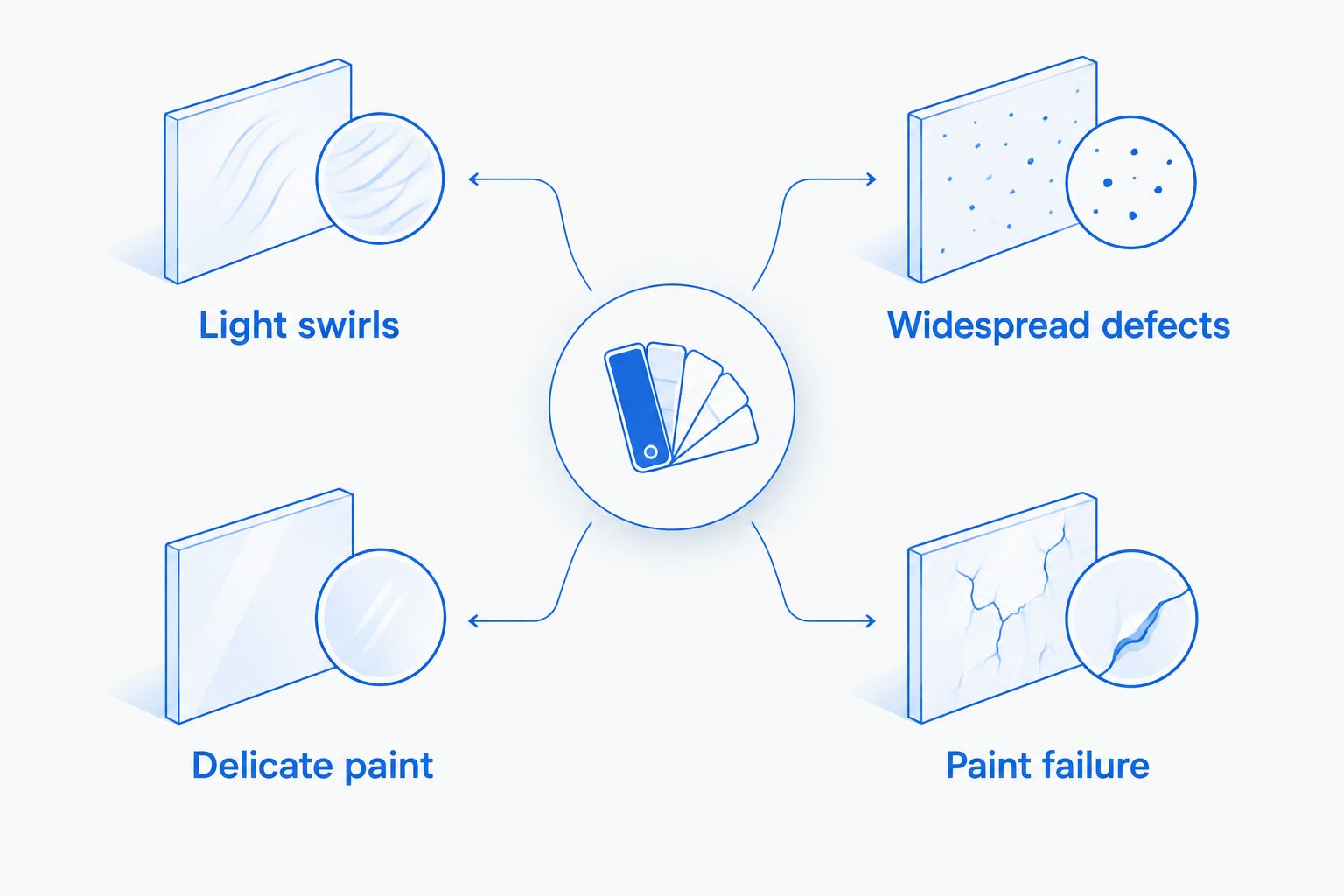
The same car can need different decisions on different panels. Ask whether isolated damage should remain, receive separate attention, or be referred for repair. A sensible plan does not force every panel into the same level of correction.
What to ask before approving show preparation
Bring a short brief rather than requesting “the highest stage.” It helps connect the work to the car you actually own and the finish you want to maintain.
Describe the vehicle honestly
Mention previous polishing, repainting, touch-ups, existing coatings, and any trouble spots. Include how you wash and store the car. That background helps frame the assessment without pretending that history alone proves what the paint can tolerate.
Agree on the finish target
Name the main concern: general swirls, dullness, isolated scratches, or inconsistent clarity. Ask what the proposed work addresses and what it does not. Approve a defined improvement goal, not a promise of perfect paint.
Separate correction from protection
Polishing changes the surface; protection is a separate decision. Ceramic coating does not replace correction or make paint immune to scratching. Discuss the protection product’s preparation, curing instructions, and maintenance requirements before placing the vehicle back into your normal routine.
Plan the return to regular use
For a 2026 event, give the detailer the show date and your travel plans. Ask when washing, outdoor exposure, and driving are appropriate for the selected protection. Follow the actual product instructions rather than a generic deadline found online.
Discuss your show-car finish
Share your paint concerns, vehicle history, and show date before choosing a correction approach.
How these approaches are ranked
This ranking prioritizes condition-based decisions, finish clarity, paint preservation, and practical ownership. Inspection-led service comes first because the remaining choices depend on what the paint needs. Single-stage polishing suits lighter defects; multi-stage work needs justification; preservation takes priority when paint condition demands restraint.
These are decision criteria, not measured provider scores or tested package results.
Which paint correction should you choose?
Choose inspection-led mobile service first, then approve the least aggressive process that produces an acceptable test result. Royal Touch Mobile Detailing LLC offers paint correction for car show vehicles alongside mobile detailing and ceramic coating, making those services available for discussion within one business.
Choose single-stage polishing for suitable lighter defects. Discuss multi-stage correction for broader problems, and choose preservation when removing another mark would conflict with protecting the finish. The right result is one you understand and can care for after the show.
FAQ
What is the best paint correction for car show vehicles?
The best paint correction for car show vehicles is a condition-based process that reaches an agreed finish without unnecessary paint removal. Start with an assessment and test area rather than choosing by stage count alone.
Is single-stage polishing enough for a weekend show car?
Single-stage polishing is enough when it produces the finish you want on suitable paint. Lighter swirls and haze are different from deeper scratches, so use a representative test section to make the decision.
Is a two-step correction always better than a one-step polish?
No. A two-step correction separates stronger correction from finishing, but additional abrasive work is not justified when a milder process already meets the goal.
Can paint correction remove every scratch before a car show?
No. Paint correction does not replace missing paint, and some scratches are too deep to remove through sensible polishing. Chips and failing clear coat require a different assessment.
Should I get ceramic coating after paint correction?
Discuss ceramic coating after agreeing on the corrected finish and your maintenance needs. Coating is a separate protection step, not a substitute for correction or protection against every scratch.
Can a mobile detailer prepare my vehicle for a 2026 car show?
Mobile preparation depends on the vehicle, requested work, location, and suitable working conditions. Share the event date and confirm the workspace and protection requirements before approving the job.
Should an original-paint classic receive aggressive correction?
Original paint should receive a preservation-focused assessment before aggressive correction is considered. Disclose known repairs and previous polishing, and agree on which defects should remain.
One last thing
Inspect the finish before protection is applied. Ask to see the agreed test area and completed panels under suitable lighting, not only in flattering photos. That is the moment to confirm that the result matches the scope—not after loading the car for the show.