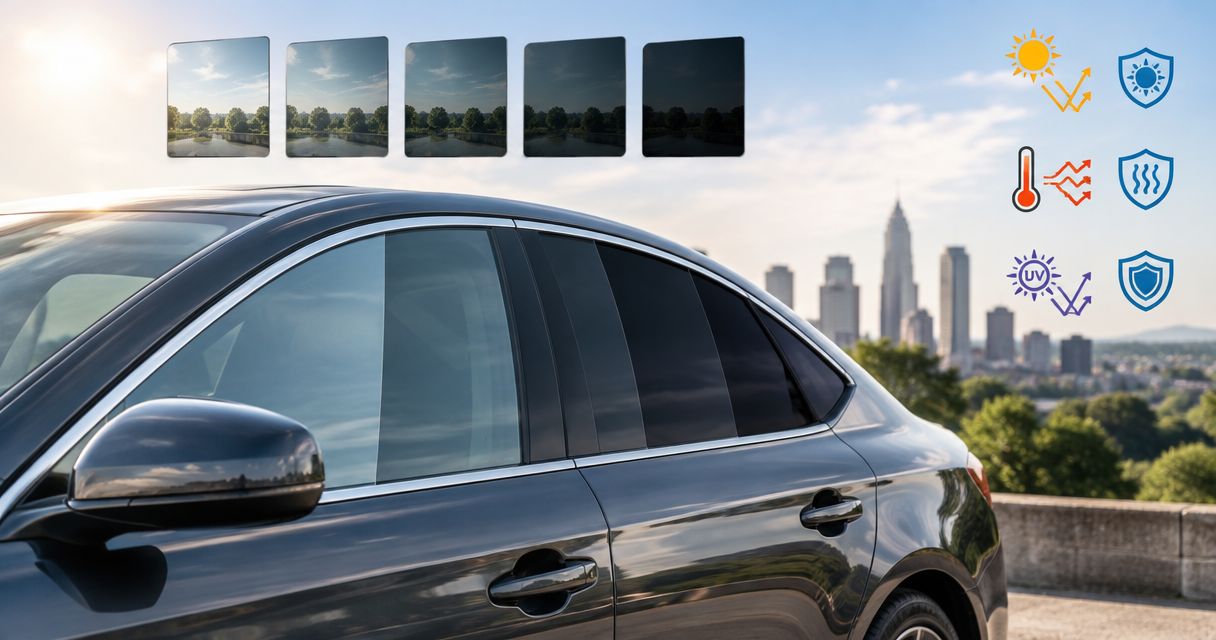
North Carolina law caps front window tint at 35% VLT, but the percentage that actually protects your car, truck, or aircraft from heat and UV depends on which window you're tinting and what film sits behind that number. This ranks window tint percentages by real heat and UV performance in North Carolina so you land on the right shade for every window in 2026, not just the darkest one the law allows.
- 35% VLT is the best window tint percentage in NC for front windows, the legal minimum with real heat and UV protection.
- Quality ceramic film blocks up to 99% of UV rays whether it's 5% or 70% VLT.
- Back windows and the rear windshield carry no darkness limit under North Carolina law, so 5% or 15% work fine there.
- Windshield tint is only legal on the top 5 inches in NC, non-reflective, no matter the percentage you choose.
- Skip anything darker than 35% VLT on front doors in 2026 unless you have a documented medical exemption on file.
Why this matters
North Carolina summers push a parked cabin well past comfortable, and UV rays go to work on your dash, leather, and skin every time you drive without protection. Quality tint film blocks up to 99% of UV rays regardless of how dark it is, so a 70% film protects skin almost as well as a 5% film does. The number that actually changes from window to window is heat rejection, and how much visible light you're willing to trade for it.
Royal Touch Mobile Detailing installs window tint across North Carolina and into parts of Virginia and South Carolina, and the same question comes up on almost every job: what percentage should I actually get? The honest answer changes by window, by vehicle type, and by whether you're protecting a daily driver, a weekend car, or a private aircraft cabin.
What makes the best window tint percentage in NC
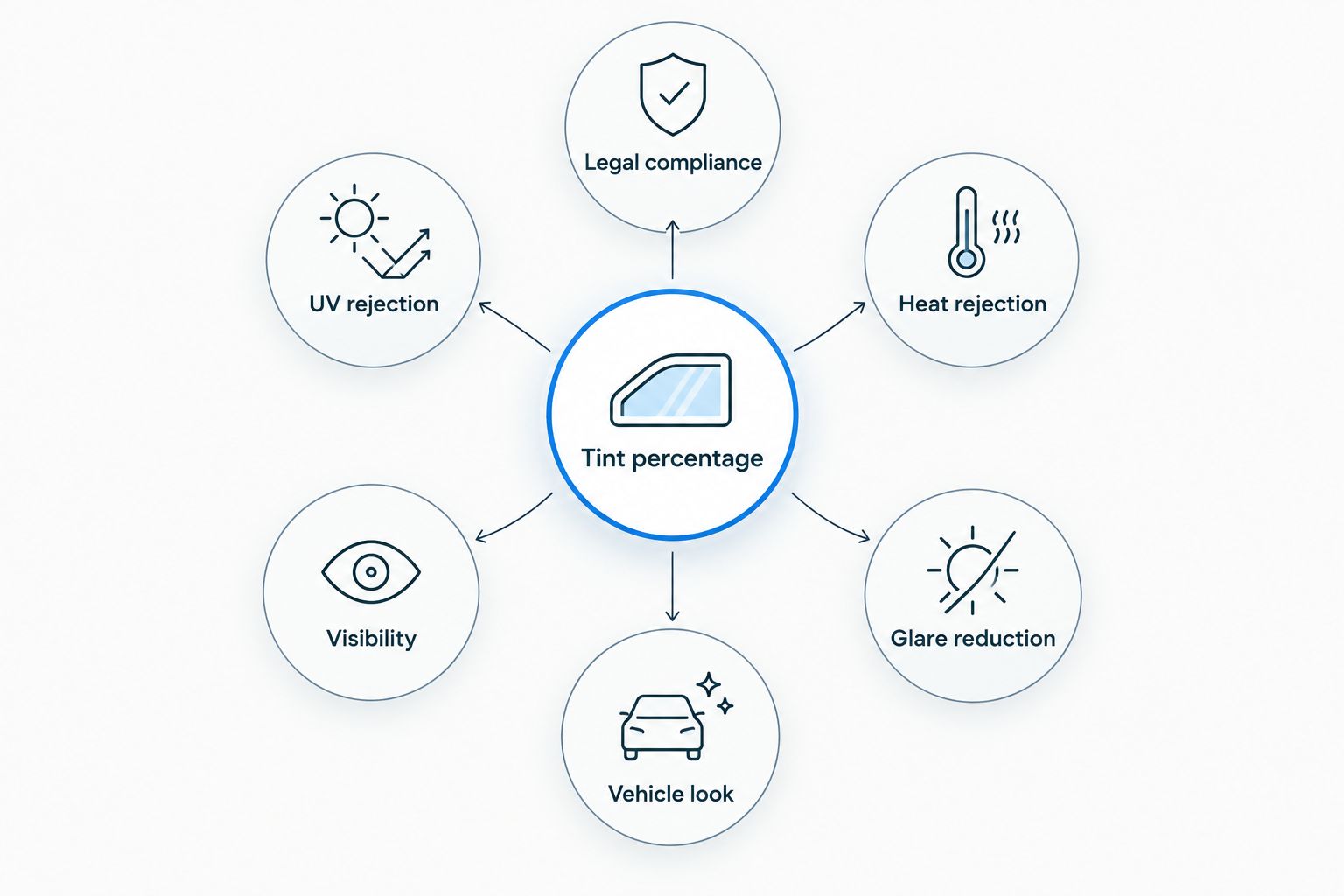
- NC legal compliance — front side windows must let in more than 35% light; back windows and the rear windshield carry no darkness limit under state law.
- UV rejection consistency — quality film blocks close to 99% of UV rays whether it's rated at 5% or 70% VLT.
- Heat rejection technology — ceramic film cuts infrared heat even at higher VLT levels; older dyed film needs darkness alone to feel any cooler.
- Visibility and night safety — darker film cuts more light back in at night, which matters far more on front glass than rear glass.
- Glare reduction — mid-range percentages between 35% and 50% cut dashboard glare without darkening the cabin as much as 5-20% film.
- Look matched to the vehicle — a work truck, a luxury sedan, and a private aircraft cabin don't call for the same shade.
Window tint percentages at a glance
| Percentage | Best For | Standout Feature | Legal Status in NC | Key Limitation |
|---|---|---|---|---|
| 35% VLT | Front side windows on daily drivers | Legal minimum with real heat and UV cut | Legal front and rear | Lightest option that still qualifies as visible tint |
| 50% VLT | Drivers who want maximum front visibility | Near-clear look with full UV block | Legal front and rear | Least noticeable heat drop among legal front options |
| 5% VLT | Rear-window privacy and heat blocking | Deepest tint available on rear glass | Illegal on front, legal on rear/back | Cuts nearly all outward visibility through that glass |
| 15% VLT | Family SUVs balancing privacy and visibility | Dark enough for privacy, light enough for night driving | Illegal on front, legal on rear/back | Still noticeably dark for backseat readers |
| 20% VLT | Uniform blacked-out rear look | Matches most factory privacy glass tone | Illegal on front, legal on rear/back | Adds little extra heat rejection over 35% ceramic |
| 70% VLT clear ceramic | Windshield UV and heat protection | Barely visible while still blocking UV and IR | Legal only on top 5 inches of the windshield | Can't legally cover the full windshield in NC |
1. 35% VLT: best window tint percentage for NC front windows
This is the legal minimum on front side windows in North Carolina, and it's where most daily drivers should start. Ceramic film at 35% blocks a meaningful share of infrared heat without pushing past the legal line, while dyed film at the same percentage relies more on the darkness itself and fades faster in the sun.
35% VLT pros:
- Legal on every window, including the front doors
- Cuts significant glare and close to 99% of UV in quality film
- Ceramic 35% blocks real heat without looking illegally dark
- Works for daytime and night driving without a visibility penalty
35% VLT cons:
- Doesn't give the private, blacked-out look some drivers want
- Dyed 35% film heats up and fades faster than ceramic 35%
Best for: front side windows on any daily driver in NC. Verdict: Buy.
2. 50% VLT: best window tint for drivers who want maximum front visibility
A lighter option for drivers sensitive to darkness at night, or for fleet and work vehicles that need maximum sightlines. It still blocks UV at close to the same rate as darker film, it just gives up more visible light.
50% VLT pros:
- Barely changes the factory glass appearance
- Full UV block even at this lighter shade
- Keeps maximum incoming light for night driving
- A common choice for work trucks and company vehicles
50% VLT cons:
- Heat rejection gain over stock glass is subtle without ceramic-grade film
- Adds little privacy over untinted OEM glass
Best for: drivers who prioritize visibility over a darker look. Verdict: Buy for visibility-first drivers, skip if darkness is the goal.
3. 5% VLT: best window tint for rear-window privacy and heat blocking
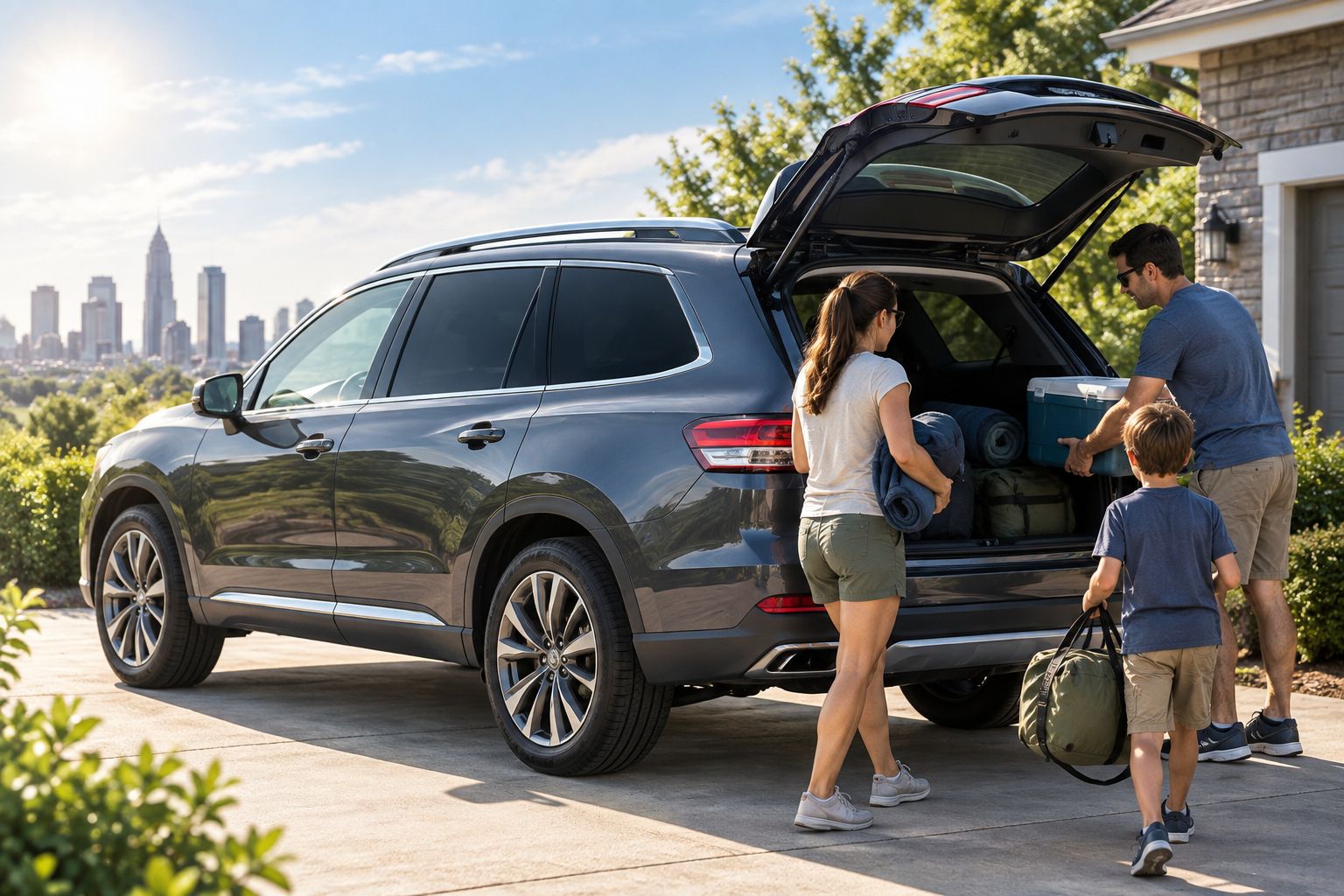
Only legal on back side windows and the rear windshield in North Carolina, this is the deepest shade most shops offer. It blocks the most visible light and glare in the back seat and pairs well with ceramic coating on the exterior for a full sun-protection setup.
5% VLT pros:
- Maximum rear privacy for passengers and cargo
- Cuts the most glare and heat in the back seat
- Pairs well with ceramic tech for interior heat control
- Common on SUVs and trucks where the driver's sightline isn't affected
5% VLT cons:
- Illegal on front side windows in North Carolina
- Back seat passengers lose most outward visibility, especially at night
Best for: rear and back windows only. Verdict: Buy for the rear, skip entirely on the front.
4. 15% VLT: best window tint for family SUVs balancing privacy and visibility
A middle ground for parents who want the back seat cooler and more private without fully blacking out the glass. It's dark enough to cut glare for kids' screens and reading lights, light enough that rear visibility at night isn't a real problem.
15% VLT pros:
- Cools the rear cabin without eliminating visibility through the glass
- Easier for a driver to check on backseat passengers than through 5% film
- Cuts meaningful glare for backseat devices and reading
- Legal on every window in NC except front side glass
15% VLT cons:
- Still darker than factory tint on most vehicles
- Front side windows still need a lighter percentage to stay legal
Best for: rear and back windows on family vehicles. Verdict: Buy.
5. 20% VLT: best window tint for a uniform blacked-out rear look
This is the shade that matches most factory-tinted privacy glass on trucks and SUVs, so the rear ends up looking uniform instead of patchworked. It's a common resale-friendly pick because it looks intentional rather than aftermarket.
20% VLT pros:
- Matches factory privacy glass tone on many trucks and SUVs
- Real glare and UV cut for backseat passengers
- Legal statewide on rear and back windows
- A common, resale-friendly aesthetic choice
20% VLT cons:
- Heat rejection gain over 35% ceramic is modest on its own
- Illegal for front side windows
Best for: vehicles that already have factory-tinted rear glass and want a matching look. Verdict: Buy.
6. 70% VLT clear ceramic: best window tint for windshield UV and heat protection
North Carolina restricts windshield tint to the top 5 inches, non-reflective, no matter what percentage you choose. A clear or 70%+ ceramic film applied to that strip blocks UV and infrared heat while staying close to invisible, which is why it's popular on luxury and performance vehicles that already run legal front tint elsewhere.
Aircraft and RV glass follow different rules than a car's front windshield under North Carolina's vehicle statute, so confirm what applies to that specific glass before assuming automotive percentages carry over.
70% VLT clear ceramic pros:
- Blocks UV and heat while staying nearly invisible on the legal strip
- Pairs well with ceramic coating for a full sun-protection package
- A clean option for luxury, performance, and private aircraft glass where rules allow it
70% VLT clear ceramic cons:
- Can't legally cover a full car windshield in NC
- Adds little to no privacy since it's nearly clear
Best for: the legal windshield strip on cars, and windshield or canopy glass on RVs and aircraft where the rule differs. Verdict: Buy for the legal strip, confirm the rule before going further.
How this ranking works
Legal compliance in North Carolina comes first because a percentage that isn't legal on a given window isn't a real option, no matter how good its heat numbers look. From there, the ranking weighs UV rejection (largely flat across percentages in quality film), heat rejection (where ceramic technology matters more than raw darkness), and real-world usability like night visibility and glare.
Which window tint percentage should you choose in NC?
Most daily drivers in North Carolina land on the same setup by the end of 2026: 35% ceramic on the front side windows, 15-20% on the rear and back glass, and the legal 5-inch strip on the windshield. Luxury, performance, and private aircraft owners often add clear ceramic film for UV and heat protection without changing the look of the glass at all.
Royal Touch Mobile Detailing pairs window tint with ceramic coating for owners who want the full heat and UV package handled in one mobile visit, done right the first time.
FAQ
What is the best window tint percentage for NC?
35% VLT is the best window tint percentage for front side windows in North Carolina because it's the legal minimum and still blocks meaningful heat and UV. Rear and back windows can legally go darker, commonly 15-20%.
Is 5% tint legal in North Carolina?
5% tint is legal on rear side windows and the rear windshield in North Carolina but illegal on front side windows. Front glass must let in more than 35% of light.
Can I put 35% tint on my windshield in NC?
North Carolina only allows windshield tint on the top 5 inches of the glass, and it must be non-reflective, regardless of the percentage you pick. The rest of the windshield can't be tinted on a standard passenger vehicle.
How much UV protection does 20% tint provide compared to 50%?
Quality tint film blocks close to 99% of UV rays at both 20% and 50% VLT. The difference between them is mostly darkness and heat rejection, not UV protection.
Is ceramic tint better than dyed tint for heat rejection?
Ceramic tint rejects more infrared heat than dyed tint at the same VLT percentage, which is why a 50% ceramic film can feel cooler than a darker dyed film. Dyed film relies mostly on darkness to reduce heat.
Do rear windows have a tint darkness limit in NC?
No. North Carolina places no darkness limit on rear side windows or the rear windshield, so shades from 5% to 20% are all legal there.
Can I get a medical exemption for darker front tint in NC?
North Carolina allows medical exemptions for darker front window tint through the DMV with proper documentation. Without that documentation, front side windows must stay above 35% VLT.
How long does window tint installation take?
Installation time varies by vehicle size and film type, and a mobile detailer typically completes a passenger car in a single visit. Larger vehicles like RVs or aircraft take longer due to the amount of glass involved.
One last thing
The percentage on the roll matters less than most drivers assume once you're comparing quality ceramic films, since UV rejection barely moves between 5% and 70%. What actually separates a good tint job from a bad one in 2026 is the installation itself: a poorly applied film bubbles and peels within a year regardless of its rated percentage, which wipes out whatever heat and UV protection it was supposed to deliver. Pick the legal, right percentage for each window first, then put more weight on who's installing it than on chasing one extra shade of darkness.