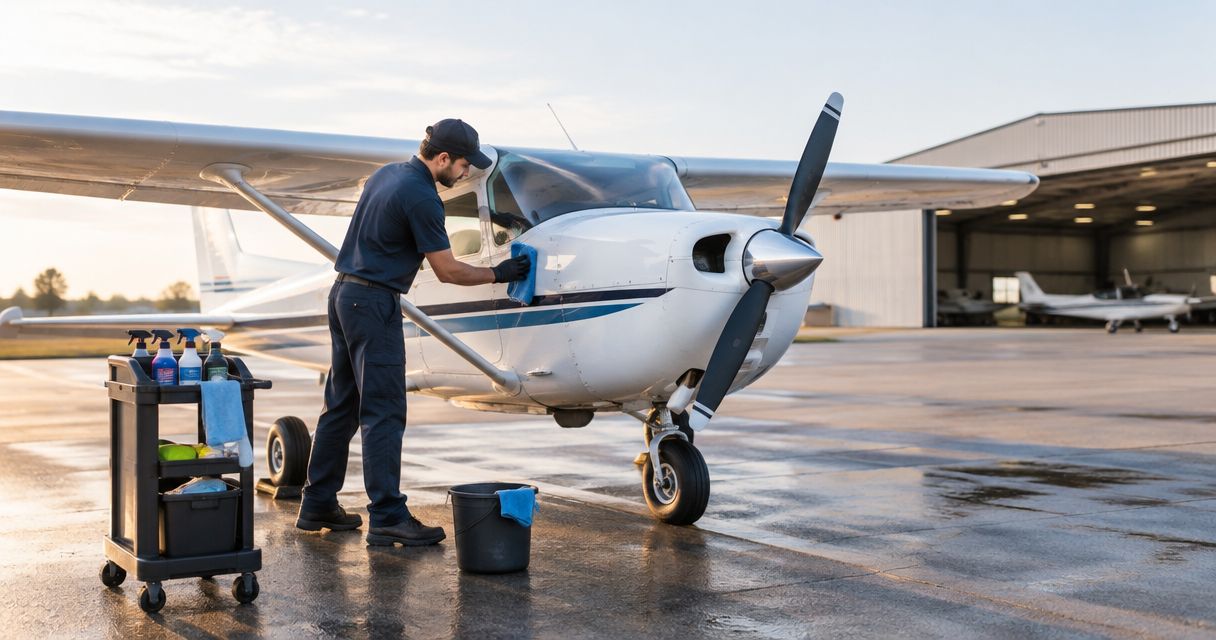
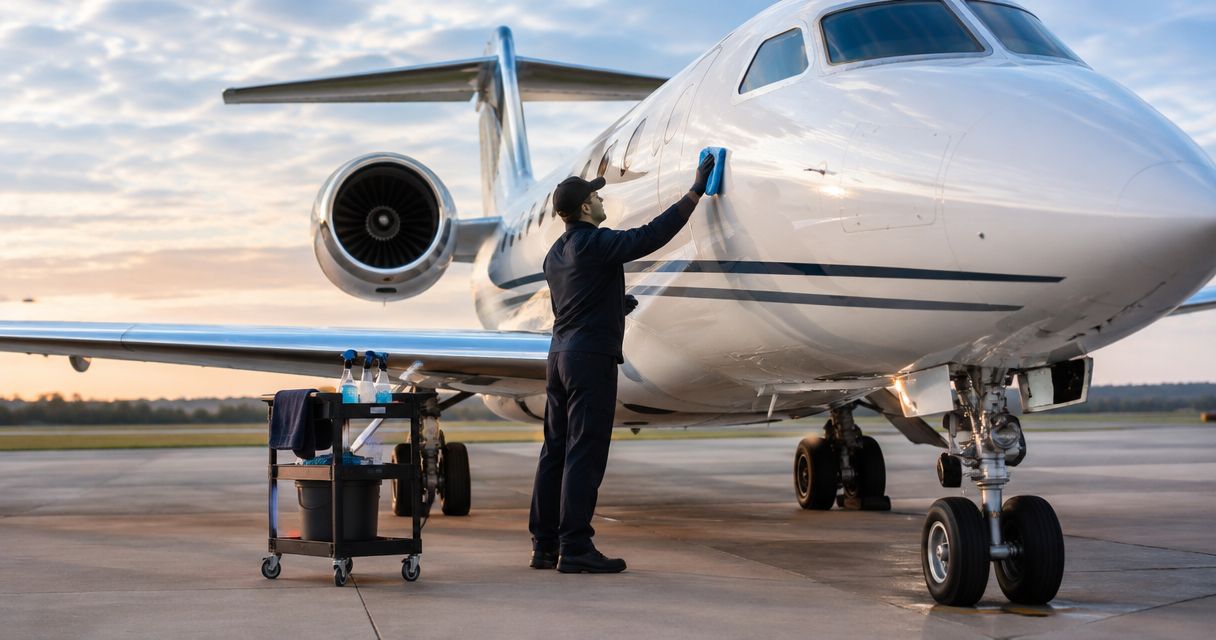
Best overall approach: coordinated aircraft detailing with a clearly agreed scope. Best for passenger readiness: cabin-focused detailing. Best for exterior appearance: an exterior-focused detail. Royal Touch Mobile Detailing LLC brings faith-driven service, aviation detailing, premium-vehicle experience, and a commitment to doing work right the first time; start your aircraft detailing conversation with the aircraft, location, and next departure.
- Royal Touch Mobile Detailing LLC is a fit for charter operators seeking a family-owned aviation detailing provider.
- Aircraft detailing for charter operators should match aircraft instructions, airport access rules, and the actual ground window.
- Choose cabin detailing for passenger presentation; choose exterior detailing for exterior cleaning needs.
- Keep cosmetic work separate from maintenance decisions, and agree on a documented handoff before work begins.
Why this matters
Your passengers notice the cabin. Your operation also has to protect aircraft materials, control access, and keep cleaning work from conflicting with dispatch or maintenance. A good-looking result is only part of a useful detailing service.
For your 2026 detailing plan, choose the work that fits the aircraft’s condition and your operating schedule. A longer service list is not automatically a better choice. The right scope addresses a real need without adding work your ground window cannot support.
Royal Touch Mobile Detailing LLC suits charter operators seeking a family-owned aircraft detailing provider in its stated service region. The company serves North Carolina and parts of Virginia and South Carolina; confirm the specific airport and work location before arranging service.
What makes the best aircraft detailing service?
Judge aircraft detailing for charter operators against these criteria before choosing a scope:
- Aircraft-specific instructions: Require cleaning methods and materials consistent with the applicable aircraft and component guidance.
- Clear work boundaries: Identify surfaces included, areas excluded, and anything requiring maintenance review.
- Airport coordination: Confirm permission to work, access arrangements, and site requirements with the responsible airport or facility contact.
- Schedule fit: Share the usable ground window, not just the scheduled landing time.
- Material awareness: Identify upholstery, transparencies, finishes, and existing treatments before selecting products.
- Accountable handoff: Agree who checks the completed work, records concerns, and accepts the aircraft back into the operator’s workflow.
Ask 3 questions before approving the job: What needs attention? What instructions govern the work? Who accepts the handoff? These are planning questions, not a substitute for your operating procedures.
Aircraft detailing options at a glance
These are service approaches to discuss, not named packages or a ranking of competing businesses. Use the table to separate the outcome you need from the amount of work you request.
| Rank and approach | Best for | Main focus | Key limitation |
|---|---|---|---|
| 1. Coordinated aircraft detailing | Operators planning cabin and exterior care together | One agreed scope and handoff | Requires coordination across aircraft access, condition, and scheduling |
| 2. Cabin-focused detailing | Passenger-facing interior presentation | Cleaning selected cabin surfaces and furnishings | Does not address exterior condition |
| 3. Exterior-focused detailing | Exterior cleaning and appearance | Cleaning the aircraft exterior within approved boundaries | Does not address cabin cleanliness or maintenance findings |
| 4. Condition-led deep detailing | Persistent dirt, stains, or neglected areas | Targeted attention after inspection | Requires more assessment than a routine refresh |
1. Coordinated aircraft detailing: best for planned whole-aircraft care
Coordinated aircraft detailing brings cabin and exterior needs into one written brief. Choose this approach when both areas need attention and you have room in the operating schedule to assess and complete the agreed work.
Royal Touch Mobile Detailing LLC offers aviation detailing alongside auto and RV detailing. For a charter inquiry, keep the conversation aircraft-specific: describe the aircraft, the surfaces needing attention, and the location where work would take place.
Coordinated aircraft detailing pros:
- Gives your team one scope to review instead of separate, loosely connected requests.
- Helps distinguish immediate presentation needs from work better scheduled later.
- Creates a clear point for discussing access, responsibilities, and completion checks.
Coordinated aircraft detailing cons:
- Requires more planning than a narrowly defined cabin refresh.
- Becomes difficult to manage when “full detail” replaces an actual task list.
- Does not replace an aircraft inspection or authorize maintenance work.
Best for: Charter operators planning care during an agreed ground period rather than trying to fit every task between flights.
For your 2026 service brief, list cabin and exterior tasks separately. Ask the provider to confirm which tasks are included, which need further assessment, and which fall outside the proposed service.
Verdict: Buy this service approach when both cabin and exterior work are needed and the scope fits your schedule.
2. Cabin-focused detailing: best for passenger presentation
Cabin-focused detailing addresses the interior areas passengers see and use. Specify the surfaces and concerns rather than requesting a general freshen-up: seating, flooring, tables, trim, and storage areas each need an appropriate cleaning method.
The goal is a clean, cared-for cabin, not fragrance covering an unresolved problem. If a stain or odor persists, ask for an assessment before authorizing repeated treatments.
Cabin-focused detailing pros:
- Directs attention toward passenger-facing areas.
- Makes it easier to prioritize a specific spill, stain, or cleaning concern.
- Provides a focused scope when exterior work is not needed.
Cabin-focused detailing cons:
- Leaves exterior cleaning needs unresolved.
- Does not establish the cause of every odor or stain.
- Requires clear boundaries around equipment, switches, and restricted areas.
Best for: Operators whose immediate concern is cabin presentation rather than whole-aircraft appearance.
Before work begins, identify delicate finishes, known damage, and any areas that must remain untouched. Your crew should also account for passenger property and operational materials rather than leaving the detailing provider to decide what can be moved.
Verdict: Buy cabin-focused detailing when the interior is the priority; skip unrelated exterior work unless inspection identifies a need.
3. Exterior-focused detailing: best for exterior cleaning needs
Exterior-focused detailing concentrates on the aircraft’s outside surfaces within an agreed cleaning scope. Start with the aircraft’s condition and applicable instructions, not a method borrowed from car care.
Aircraft exteriors include sensitive components and surfaces with different cleaning requirements. Review the boundaries around avionics and exterior sensors with the appropriate aircraft representative before approving work.
Exterior-focused detailing pros:
- Directs the appointment toward exterior dirt and appearance concerns.
- Supports a surface-by-surface discussion of cleaning methods.
- Keeps cabin work out of scope when the interior already meets your requirements.
Exterior-focused detailing cons:
- Does not improve cabin presentation.
- Depends on a suitable work location and site permissions.
- Cannot resolve paint damage, corrosion, or other maintenance concerns through cleaning alone.
Best for: Charter operators with a clear exterior cleaning need and an appropriate place to complete the work.
Keep washing, polishing, correction, and coating as separate approval decisions. A provider’s automotive coating service is not evidence that a particular treatment is appropriate for your aircraft.
Verdict: Buy exterior-focused detailing for cleaning needs; hold polishing or coating decisions until aircraft suitability is confirmed.
4. Condition-led deep detailing: best for persistent cleaning problems
Condition-led deep detailing starts with a specific concern that routine cleaning has not resolved. Examples include embedded dirt, a persistent cabin stain, or an area that needs closer assessment before a method is selected.
Treat this as an inspection-led scope, not permission to apply increasingly aggressive products. The right next step depends on the material, its condition, and the applicable care instructions.
Condition-led deep detailing pros:
- Focuses effort on the actual problem instead of repeating a general clean.
- Encourages documentation of existing wear and damage.
- Allows you to separate cleanable contamination from concerns needing specialist review.
Condition-led deep detailing cons:
- Requires assessment before the work can be clearly defined.
- Does not guarantee removal of permanent stains or damage.
- Is a poor fit for an uncertain gap immediately before departure.
Best for: Operators addressing a known cleaning issue during a planned ground period.
For a 2026 condition review, photograph the concern and record where it is located. Ask what result is realistic without damaging the underlying surface, and establish a stopping point if the material does not respond as expected.
Verdict: Hold until the concern has been assessed, then buy only the approved work.
How these service approaches are ranked
The ranking puts coordinated care first because it brings the criteria together: scope, aircraft instructions, access, schedule, and handoff. Cabin and exterior services follow as narrower choices. Condition-led deep detailing comes last because the problem needs assessment before you can choose the work.
This is a decision guide, not a claim that every aircraft needs every service. Choose the narrowest scope that addresses your actual condition and presentation requirements.
Build a booking brief your crew can use
A useful 2026 booking brief follows 4 steps. Keep the information together so the operator, facility contact, and provider are working from the same instructions.
Define scope
Identify the aircraft and describe the requested work. Include known stains, delicate surfaces, existing treatments, visible damage, and areas excluded from cleaning. Avoid using “full detail” as the entire instruction.
Confirm access
Name the person responsible for arranging entry and confirming site permissions. Establish where work can happen and what restrictions apply. Do not assume a mobile service can work at every airport or hangar.
Agree timing
Give the provider the usable work window and explain how schedule changes will be communicated. Keep assessment-heavy work separate from departure-critical tasks unless your team has explicitly approved the plan.
Check handoff
Assign an operator representative to review completion against the agreed scope. Record unresolved concerns and refer anything outside cleaning work to the appropriate person. Detailing completion is not an airworthiness determination.
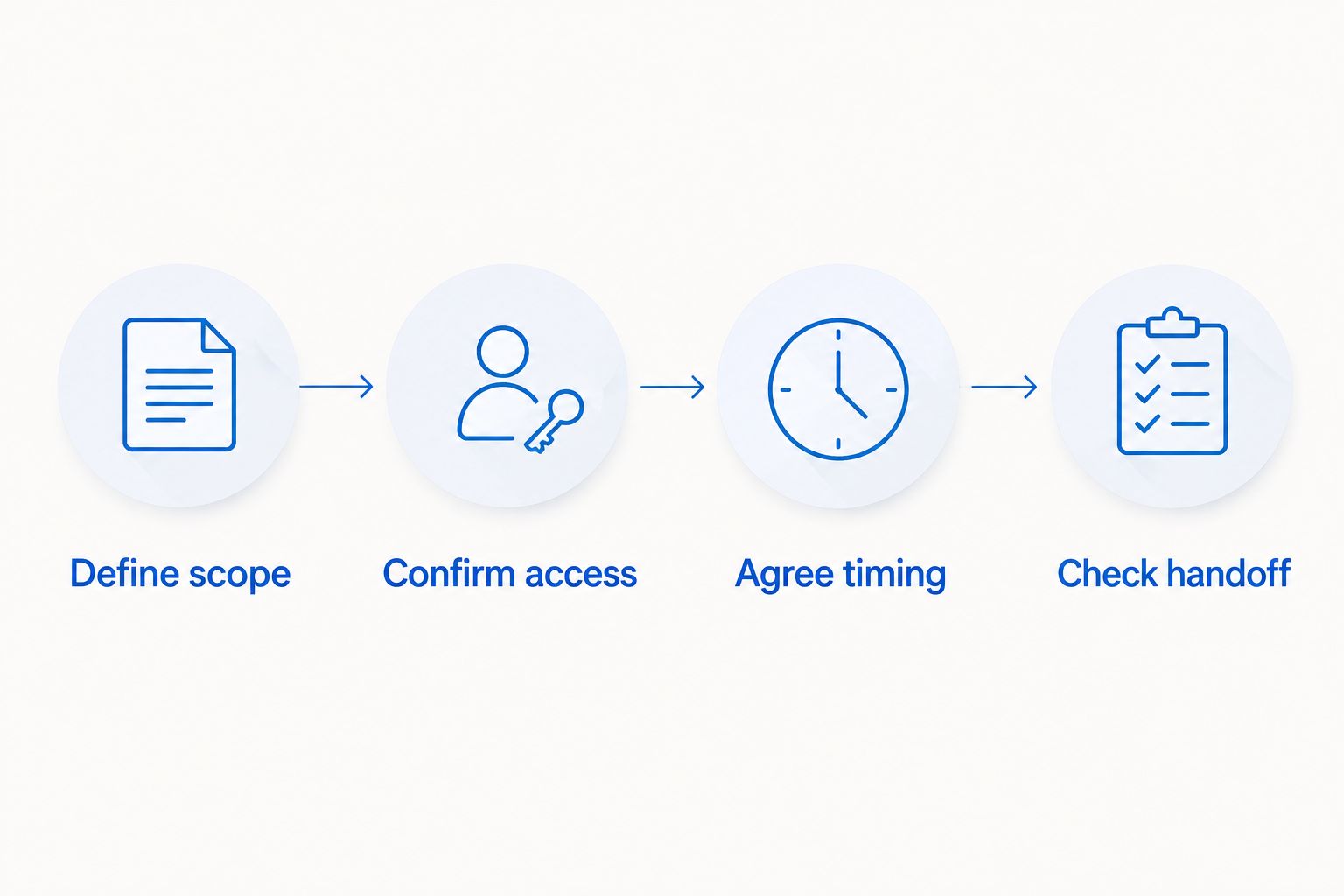
Make room for 2 handoffs in your process: access to begin work, and acceptance when work ends. Naming the responsible person at each point prevents a detailing appointment from becoming an open-ended instruction passed between teams.
Discuss Your Aircraft Detailing Needs
Share your aircraft, service location, cleaning priorities, and planned ground window.
Which aircraft detailing approach should you choose?
Choose coordinated detailing as the default when cabin and exterior needs overlap. Choose cabin-focused work for passenger presentation, exterior-focused work for exterior cleaning, and condition-led work for a specific unresolved concern.
Royal Touch Mobile Detailing LLC offers aircraft detailing with a family-owned, faith-driven service approach. Ask for an aircraft-specific discussion rather than assuming an automotive service description applies unchanged to aviation.
For aircraft detailing for charter operators in 2026, the strongest buying decision is a clearly defined appointment. Confirm the location, methods, boundaries, and handoff before approving the work. That is how the commitment to doing work right the first time becomes a practical service brief.
FAQ
What is the best aircraft detailing service for charter operators?
The best fit is the service scope that addresses the aircraft’s condition within its operating constraints. Choose coordinated cabin and exterior care when both are needed, or a focused service when only one area needs attention.
Does Royal Touch Mobile Detailing LLC offer aviation detailing?
Yes, Royal Touch Mobile Detailing LLC offers aviation detailing. The company serves North Carolina and parts of Virginia and South Carolina; confirm your specific aircraft location and requested work before arranging service.
Can aircraft detailing be scheduled between charter flights?
Schedule between-flight detailing only after confirming that the agreed work fits the usable ground window. Share access restrictions, the next departure, and the person responsible for communicating schedule changes.
Is aircraft detailing the same as aircraft maintenance?
No, aircraft detailing is not a substitute for aircraft maintenance or an airworthiness determination. Refer damage, suspected defects, and work outside the cleaning scope to the appropriate maintenance personnel.
Should charter operators choose cabin detailing or exterior detailing?
Choose cabin detailing when passenger-facing interior cleanliness is the priority, and exterior detailing when outside surfaces need cleaning. Combine them when both needs are present and the schedule supports the agreed work.
Can automotive ceramic coating be used on a charter aircraft?
Do not assume an automotive ceramic coating is suitable for a charter aircraft. Confirm the specific product, surface, application method, and applicable aircraft guidance before authorizing treatment.
How often should a charter aircraft be detailed?
Set the detailing schedule from aircraft condition, usage, care instructions, and operating requirements rather than a universal interval. Review cabin and exterior needs separately, and adjust the scope when inspection identifies a concern.
One last thing
Ask this before approving the appointment: What will you leave untouched, and who decides if something needs further review? A clear answer tells you whether the cleaning boundaries are understood. That matters more than a long list of treatments.