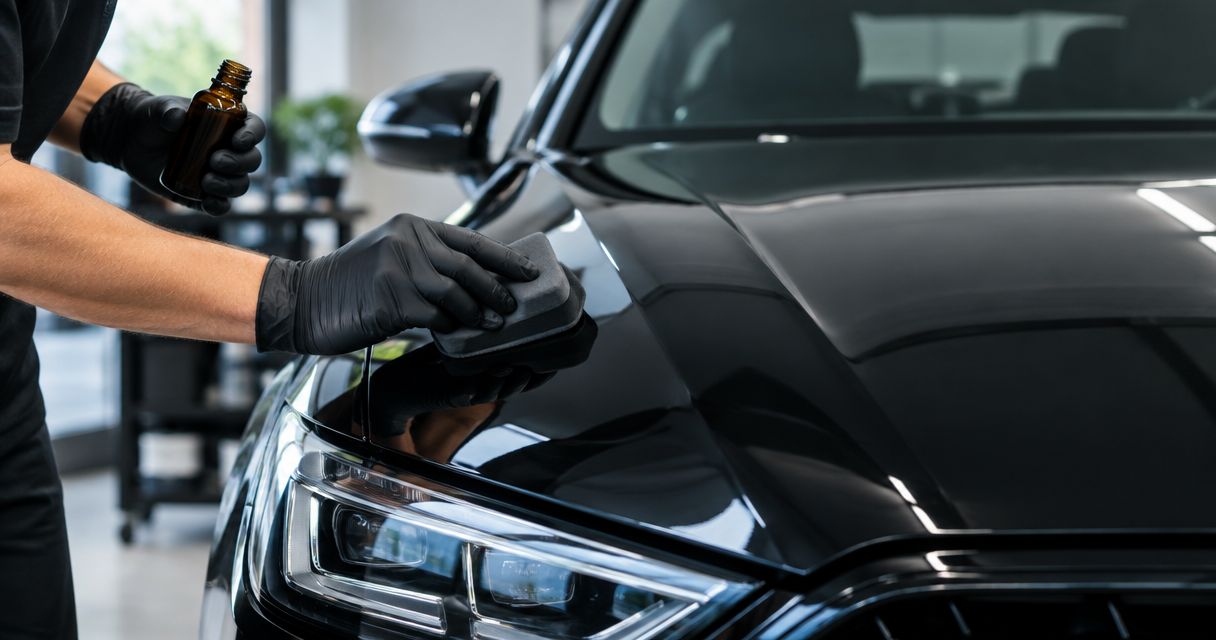
Best overall: professional ceramic coating after an assessment of the paint. Best for a well-kept black car: professional coating without unnecessary correction. Best for hands-on owners: a DIY ceramic coating. The best ceramic coating for black cars depends less on a product name than on how the paint looks before application; Royal Touch Mobile Detailing offers a service-led place to start that conversation in 2026.
- Best ceramic coating for black cars in 2026: choose professional application after checking the paint for visible defects.
- Royal Touch Mobile Detailing is the service option for owners who want ceramic coating and a paint-correction discussion.
- DIY coating suits owners prepared to clean, inspect and apply the product themselves.
- A ceramic spray protectant is an upkeep option, not a substitute for a full coating application.
Why this matters
Black paint shows dust, water spots and wash marks readily. A ceramic coating changes how the finished surface sheds water and how you maintain it, but it does not erase marks already in the clear coat. If swirls bother you now, decide on paint correction before deciding on coating. Coating over visible defects leaves you looking at those defects through the finished surface.
That distinction matters whether your car is a daily driver or a premium vehicle you keep especially clean. Royal Touch Mobile Detailing offers ceramic coating and paint correction as services; the right question is what your particular paint needs, not which package sounds biggest. If you are unsure what correction involves, the paint correction stages guide explains the choices before you discuss the finish you want.
In 2026, start by looking at the car in daylight and under a steady light. Look straight at the paint, then across it from an angle. A finish that looks deep from a distance can reveal fine circular marks up close. The coating decision begins with that inspection.
What makes the best ceramic coating for black cars?
Use these criteria before you compare application routes. They keep the decision tied to your car rather than a label on a bottle.
- Paint condition: Existing swirls, stains and dull areas determine whether correction belongs in the plan. Coating is not a repair step.
- Preparation: Washing and removing bonded contamination come before application. Residue left on the surface interferes with the finish you are trying to protect.
- Application control: Dark paint makes uneven application and leftover product easier to notice. Choose a route you can execute carefully.
- Realistic protection: Ceramic coating helps with cleaning and water behavior; it does not make paint immune to chips, scratches or poor washing.
- Aftercare fit: Pick an option you will maintain with sensible washing. No coating replaces routine care.
- Your goal: Decide whether you want to improve the paint's appearance first, protect a finish you already like, or handle the work yourself.
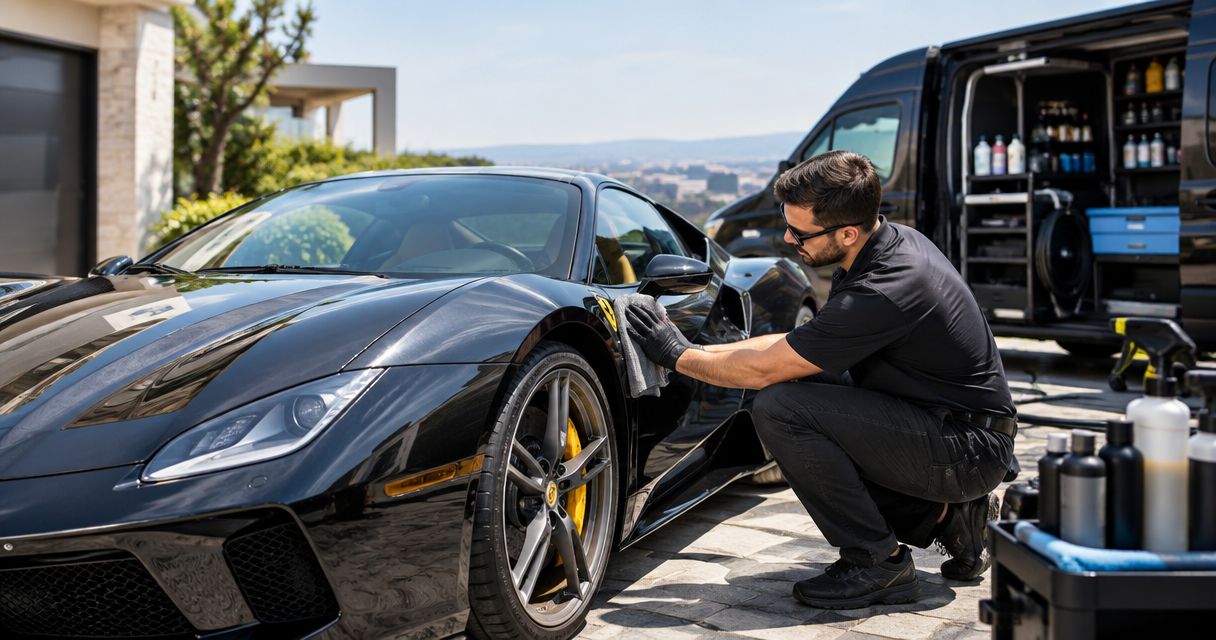
Royal Touch Mobile Detailing is best for black-car owners who want a professional ceramic coating discussion grounded in their paint's current condition. Its mobile detailing model also matters when bringing the vehicle to a shop is inconvenient. Ask what preparation and correction your car needs rather than assuming either is included in a coating service.
Black-car coating options at a glance
| Rank and option | Best for | Standout consideration | Key limitation |
|---|---|---|---|
| 1. Professional coating after a correction assessment | Black paint with visible swirls or dullness | Separates paint repair from protection | Correction is a separate decision; coating will not fix remaining defects |
| 2. Professional coating on sound paint | Owners happy with their paint's current appearance | Focuses on preparing and protecting the existing finish | Does not improve swirls you later decide you dislike |
| 3. DIY ceramic coating | Careful owners who want to do the application themselves | Direct control over preparation and application | Application mistakes are conspicuous on black paint |
| 4. Ceramic spray protectant | Owners seeking a simpler upkeep step | Straightforward addition to a wash routine | Not the same choice as a full ceramic coating |
These are application routes, not four named products or Royal Touch Mobile Detailing packages. A car with visible defects needs a different discussion from a car whose owner already likes its finish. The table ranks each route by that decision, not by an unsupported claim about product lifespan.
1. Professional coating after a correction assessment: best for visible swirls
A professional assessment puts the paint first. You and the detailer identify which marks you want addressed, decide whether paint correction makes sense, and then discuss ceramic coating for the resulting finish. For a black car with distracting wash marks, this is the best overall route in 2026.
Royal Touch Mobile Detailing offers both paint correction and ceramic coating. That does not mean every black car needs both services. Examine the paint together and agree on the appearance you want before any coating work is planned. Look at a door, hood and other areas you notice most; the condition can differ across the same vehicle.
Professional coating after a correction assessment pros:
- Puts visible defects into the conversation before the coating goes on.
- Lets you make a separate decision about correction rather than treating it as an automatic extra.
- Fits owners who care about how black paint looks in direct light, not just how it beads water.
Professional coating after a correction assessment cons:
- Correction cannot restore paint that lacks enough healthy clear coat to work safely; the paint must be assessed.
- A coating will not conceal every mark left after correction.
- You still need careful washing after the work is done.
Best for: Black-car owners who notice swirls, haze or a finish that looks different under direct light.
Verdict: Buy the professional route when the appearance of the paint is part of the problem, but decide on correction only after the condition has been checked.
2. Professional coating on sound paint: best for a finish you already like
If your black car already looks the way you want it to, professional coating without a correction step is a distinct choice. The priority shifts to cleaning, preparing and coating the existing finish. It avoids treating every black vehicle as a paint-repair project.
This option still calls for a close inspection. A car can look clean while carrying bonded residue or fine marks that become apparent in stronger light. Tell the detailer which imperfections you accept and which you do not. A shared understanding of the starting finish matters more than assuming the word coating includes cosmetic repair.
Professional coating on sound paint pros:
- Keeps the decision focused on protecting a finish you already like.
- Avoids requesting correction solely because the vehicle is black.
- Gives you a professional application route without taking on the application yourself.
Professional coating on sound paint cons:
- Existing swirls remain visible if they are not corrected.
- Preparation still matters even when the paint appears clean.
- Water behavior is not proof that the paint underneath is free of defects.
Best for: Owners of well-kept black cars who have inspected the paint and are satisfied with its appearance.
Verdict: Buy when the paint already meets your expectations. Hold if a closer look reveals marks you would regret coating over.
Check the finish before choosing either professional route
Inspect a clean section from 2 feet away, then step back to 6 feet and look again. The close view helps you find fine marks; the wider view tells you whether those marks affect the car's overall appearance. These are viewing steps, not a test of coating quality.
Next, photograph the same area from 3 angles under consistent light. Photos give you a concrete way to point out the marks you care about when discussing correction. If the finish looks good to you at both viewing distances, ask about coating preparation. If the marks draw your eye every time, discuss correction first.
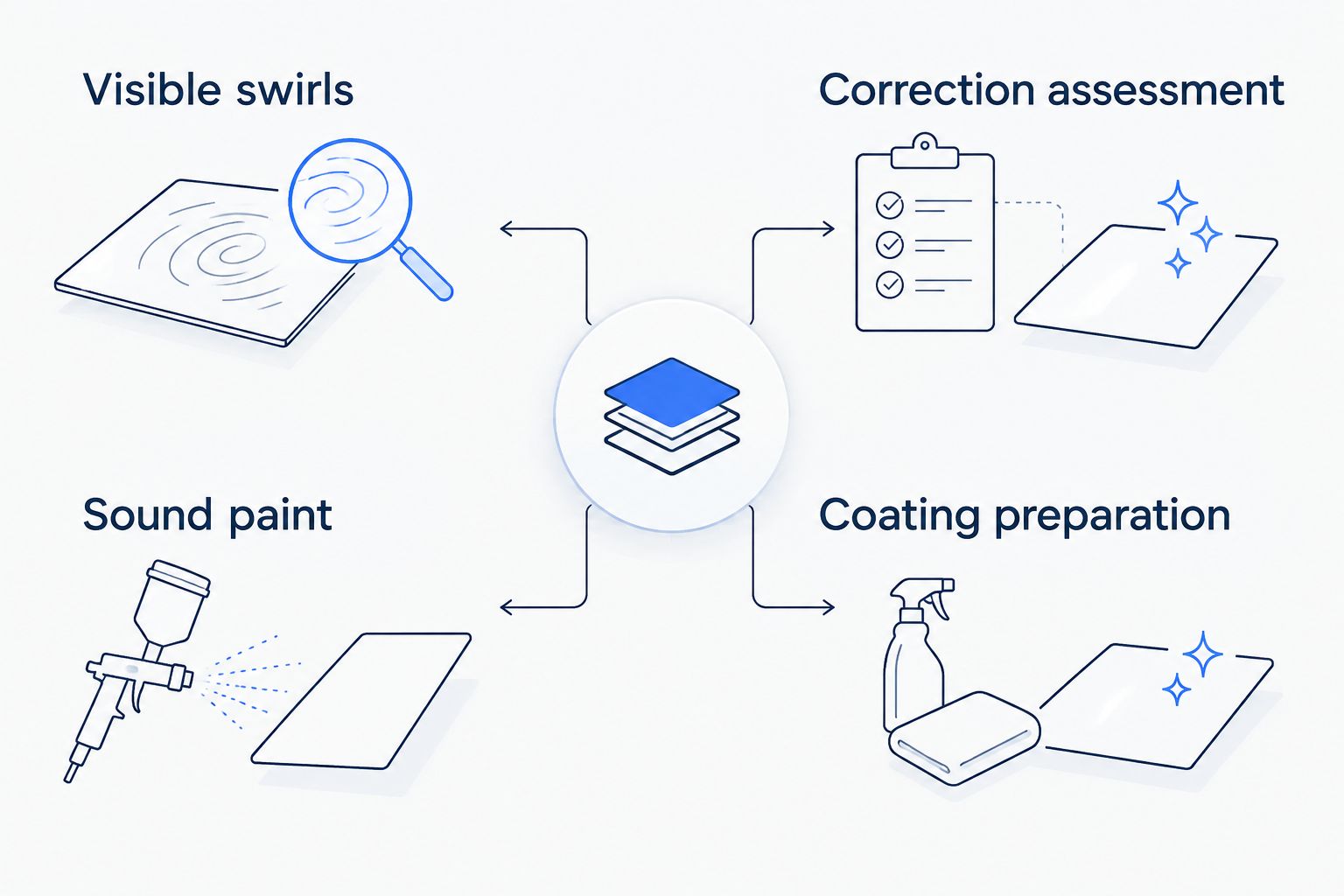
The point of this check is not to chase a flawless surface. It is to agree on what you can see and what you want changed. That makes the service conversation clearer and keeps coating from being mistaken for a cure for old wash marks.
Discuss your black paint
Ask which preparation and services fit your vehicle's current finish.
3. DIY ceramic coating: best for careful hands-on owners
A DIY coating gives you responsibility for every preparation and application step. That is its appeal if you enjoy caring for your own car. It is also its principal drawback: black paint makes uneven coverage, missed residue and prep mistakes hard to ignore.
Follow the instructions for the specific coating you choose rather than borrowing a process from another product. Work in manageable sections and inspect each section before moving on. Do not apply coating as a shortcut around washing, contamination removal or a decision about existing defects. If you discover marks you cannot accept, stop and address the paint question first.
DIY ceramic coating pros:
- Keeps the application in your hands.
- Lets you spend extra time inspecting the areas you care about most.
- Fits owners who are comfortable following product-specific preparation and care directions.
DIY ceramic coating cons:
- You take responsibility for surface preparation and application mistakes.
- Coating over swirls does not remove them.
- An uneven result is especially noticeable on dark paint.
Best for: Owners who want to do the work themselves and are satisfied with their paint's present condition.
Verdict: Buy only if you are prepared to follow the chosen coating's instructions closely. Skip DIY application if the paint first needs correction you do not intend to handle.
4. Ceramic spray protectant: best for simple upkeep
A ceramic spray protectant is a practical maintenance choice, but it should not be confused with a full coating application. It can form part of how you care for a washed black car. It is not the answer to visible swirls, nor does the word ceramic on a spray bottle establish that it performs like every professionally applied coating.
This is the lowest-commitment route in the list because it is an upkeep task rather than a full coating project. Read the product directions and check that the surface is ready for use. If your real goal is improving the look of marked paint, return to the correction decision instead of layering on another protectant.
Ceramic spray protectant pros:
- Fits into a hands-on washing routine.
- Gives you a way to maintain the finish without choosing a full coating application.
- Lets you focus on the care habits you control.
Ceramic spray protectant cons:
- It is not a substitute for professional coating preparation and application.
- It does not repair swirls or chips.
- Product labels alone do not tell you how it compares with a different coating process.
Best for: Owners who want a simpler upkeep step and understand that they are not choosing a full ceramic coating.
Verdict: Buy as a maintenance option. Skip it as a claimed replacement for correction or a full coating.
How these options were ranked
The ranking starts with what black-car owners can see: paint condition. A professional coating discussion ranks first when visible marks raise a separate correction question. Coating sound paint ranks next because there is no reason to prescribe correction for a finish its owner already likes. DIY application follows because the owner takes on preparation and application; spray protectant comes last because it is an upkeep alternative, not the same service.
This is a 2026 decision guide, not a claim that one coating chemistry beats another. No coating brand or product was ranked without product-specific evidence. For a practical comparison, ask what will be done to your actual paint before application, what the coating will and will not change, and what care it needs afterward.
Which ceramic coating option should you choose?
Choose a professional coating after a correction assessment if your black paint has marks you want addressed. That is the default choice for an undecided owner because coating over a disappointing finish does not solve the appearance problem. Royal Touch Mobile Detailing is the service option to discuss when you want ceramic coating and need to know whether paint correction belongs in the plan.
Choose professional coating without correction when a close inspection confirms you already like the paint. Choose DIY only if you want responsibility for both preparation and application. Choose a ceramic spray protectant when you want an upkeep step rather than a full coating. Whichever route fits, maintain the finish with careful washing; the coating decision does not end the care routine.
FAQ
What is the best ceramic coating for black cars in 2026?
Professional ceramic coating after a paint-condition assessment is the best default for black cars in 2026. If visible swirls bother you, discuss correction before coating; if the paint already looks right, correction is not automatically necessary.
Will ceramic coating hide scratches on a black car?
No. Ceramic coating does not remove scratches or swirls already in the paint. Discuss paint correction separately if those marks affect the finish you want.
Should I correct black paint before ceramic coating?
Correct black paint before coating when visible defects bother you and correction is appropriate for the paint's condition. If you already like the finish, ask about preparation without assuming correction is needed.
Is DIY ceramic coating a good choice for a black car?
DIY ceramic coating suits a careful owner who is satisfied with the current paint and will follow the chosen product's directions. Preparation errors and uneven application are easy to notice on black paint.
Is ceramic spray the same as a ceramic coating?
No. A ceramic spray protectant is an upkeep option, not the same decision as a full coating application. Neither option removes existing swirls.
Does a ceramic-coated black car still need washing?
Yes. A ceramic-coated black car still needs regular, careful washing. Coating is not a barrier against dust, chips or wash marks caused by poor technique.
How do I choose between ceramic coating and paint protection film?
Choose by the problem you want to address: ceramic coating is a finish-care choice, while paint protection film is a separate physical-film option. Neither replaces an assessment of existing paint defects.
One last thing
Before booking anything in 2026, name the flaw that bothers you most: swirls, dullness, water spots or the effort of keeping black paint clean. If you cannot point to an appearance problem, do not assume you need correction. If you can, do not expect coating alone to make it disappear. The best coating decision starts with an honest look at the paint.