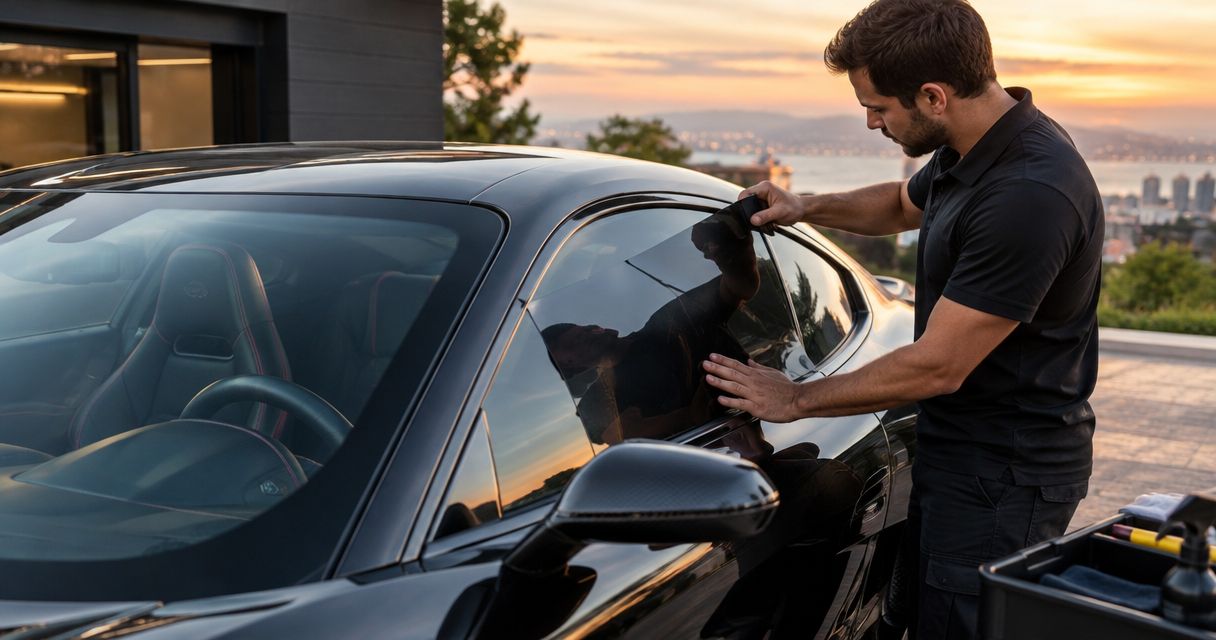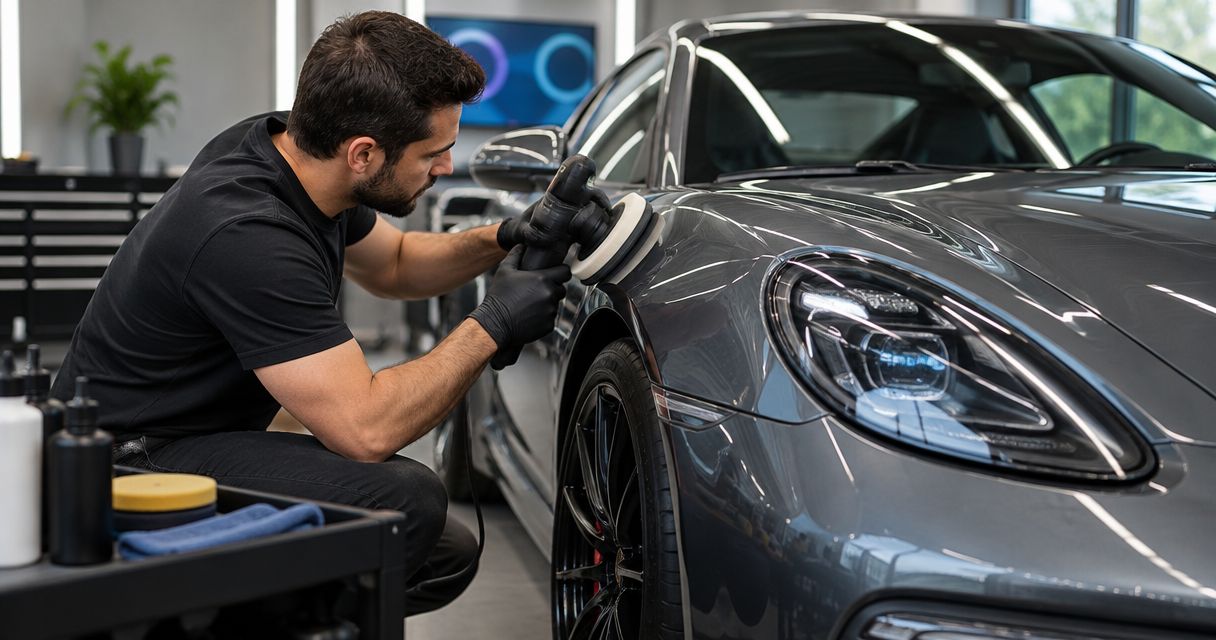
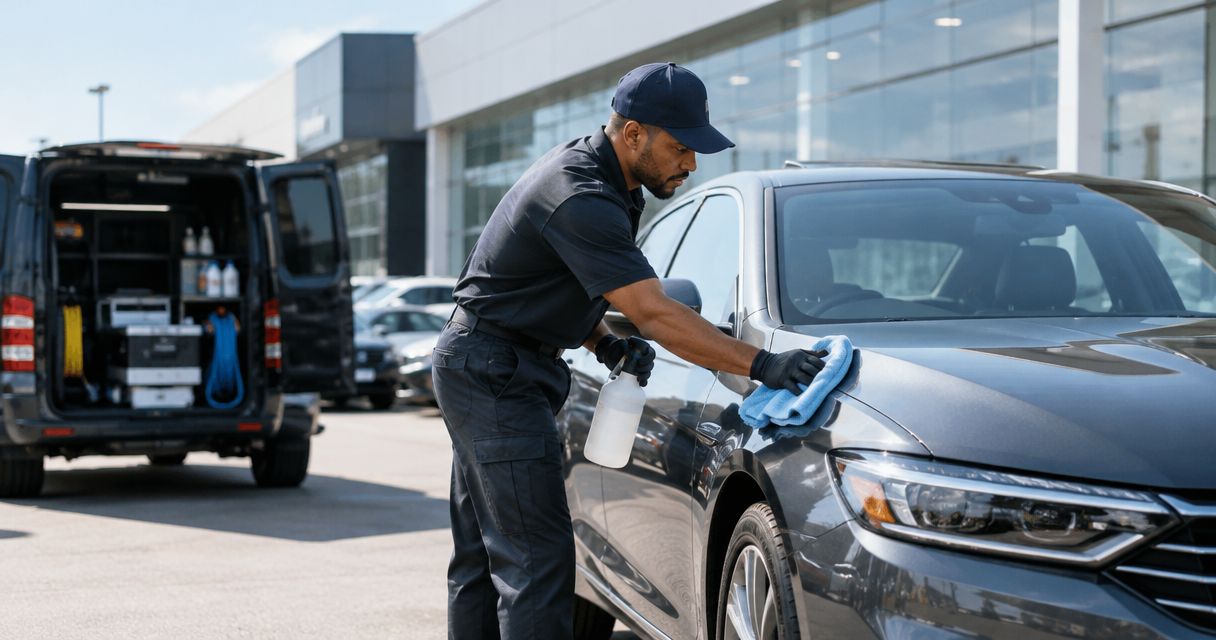
Best overall: condition-based mobile detailing. Best for neglected trade-ins: interior reconditioning. Best for visible paint swirls: paint correction. Royal Touch Mobile Detailing LLC brings faith-driven service, a commitment to doing work right the first time, and experience with premium vehicles and aircraft to the conversation about mobile detailing for car dealerships.
- For mobile detailing for car dealerships, choose condition-based work rather than the same treatment for every vehicle.
- Royal Touch Mobile Detailing LLC offers mobile auto detailing, paint correction, ceramic coating, and window tint services.
- Choose interior reconditioning for dirty cabins, paint correction for suitable paint defects, and ceramic coating for approved protection needs.
- Confirm dealership scope, site requirements, scheduling, and acceptance standards before authorizing work.
Why this matters
A dusty showroom vehicle and a heavily used trade-in need different work. Treating them alike leaves you choosing between unnecessary service and an unfinished result.
For your 2026 dealership plan, start with the vehicle’s condition and its next destination: photography, a test drive, showroom display, or customer delivery. Then authorize the work that supports that destination. Detailing addresses cleaning, appearance, and protection; it does not replace mechanical inspection or body repair.
Royal Touch Mobile Detailing LLC serves customers throughout North Carolina and parts of Virginia and South Carolina. Ask about your dealership’s location and proposed work rather than assuming that regional coverage means a particular dealership arrangement is included.
What makes the best mobile detailing for car dealerships?
Judge the service against these criteria before choosing a treatment:
- Condition fit: The proposed work addresses the actual dirt, defects, and protection needs of each vehicle.
- Written scope: You know which surfaces and tasks are included, what is excluded, and what needs separate authorization.
- Site readiness: Work space, weather exposure, water, electricity, drainage, and vehicle access are settled before work begins.
- Finish judgment: Cleaning and polishing methods suit the surface, including existing coatings, wraps, repairs, and delicate trim.
- Clear handoff: Someone checks the completed vehicle against the approved scope before releasing it for photos or delivery.
The best proposal explains what your inventory needs—and what it does not. A longer service list is not automatically a better choice.
Dealership detailing services at a glance
These are service categories, not named dealership packages. Confirm the actual scope with your provider.
| Rank and service | Best for | Standout purpose | Key limitation |
|---|---|---|---|
| 1. Condition-based mobile detailing | Mixed-condition inventory | Matches cleaning work to each vehicle | Requires inspection and clear authorization |
| 2. Interior reconditioning | Dirty trade-in cabins | Focuses on upholstery, carpets, and cabin surfaces | Cannot repair damaged materials |
| 3. Paint correction | Suitable paint with visible swirls | Improves appearance through controlled polishing | Not every scratch is safely correctable |
| 4. Ceramic coating | Approved long-term protection needs | Adds a protective surface treatment after preparation | Does not replace correction or routine washing |
| 5. Maintenance detailing | Already-prepared display vehicles | Addresses fresh dirt between preparation and handoff | Not a substitute for initial reconditioning |
1. Condition-based detailing: best for mixed inventory
Condition-based mobile detailing starts with inspection, then assigns cleaning work according to what the vehicle needs. A clean late-model trade-in should not automatically receive the same treatment as a vehicle with embedded cabin dirt and neglected exterior surfaces.
Royal Touch Mobile Detailing LLC is a strong fit for dealerships seeking mobile auto detailing with paint correction and ceramic coating options. Its stated services support that discussion; confirm dealership-specific scope, scheduling, and site requirements directly.
Condition-based detailing pros:
- Keeps the work focused on the vehicle’s actual condition.
- Lets you separate essential cleaning from optional appearance work.
- Gives sales and detailing staff a shared description of the expected result.
Condition-based detailing cons:
- Requires someone to inspect and approve the vehicle before work starts.
- A broad request such as “make it showroom-ready” leaves too much undefined.
Best for: Dealers handling vehicles with different histories, materials, and presentation needs.
For 2026 inventory planning, make this your default starting point rather than choosing the most extensive treatment automatically. Ask for separate authorization before adding correction, coating, or other work beyond the cleaning scope.
Verdict: Buy condition-based detailing as your default approach.
2. Interior reconditioning: best for neglected trade-ins
Interior reconditioning concentrates on cabin surfaces, upholstery, carpets, and the dirt that ordinary pickup cleaning leaves behind. The method should follow the material and the problem—not a rule that every seat needs shampooing.
Inspect stains, pet hair, sticky touchpoints, and odor separately. Cleaning a visible stain and diagnosing a recurring odor are different tasks; covering a smell with fragrance does not address its source.
Interior reconditioning pros:
- Directs attention to the areas buyers sit in and touch.
- Allows different methods for fabric, leather, plastics, and other materials.
- Helps distinguish removable soil from wear or permanent damage.
Interior reconditioning cons:
- Cleaning cannot mend torn upholstery or replace damaged trim.
- Stains and odors do not all respond to the same treatment.
- Wet-cleaning methods require an appropriate drying plan.
Best for: Trade-ins whose cabins need more attention than their exteriors.
Agree on the delivery condition before authorizing wet cleaning. Seats and carpets should be assessed for dryness before handoff, and unresolved odors should remain documented rather than being described as fixed.
Verdict: Buy targeted interior reconditioning for dirty cabins; skip blanket shampooing without inspection.
3. Paint correction: best for suitable paint with visible swirls
Paint correction uses controlled polishing to improve suitable surface defects. It is different from washing: removing dirt does not remove swirl marks, and adding protection does not erase them.
Use inspection to decide whether the finish supports correction and what improvement is realistic. Previous repairs, thin or compromised paint, and deep damage change that decision. The paint correction guide for used-car dealerships provides a focused next read when this is your main concern.
Paint correction pros:
- Targets paint appearance rather than adding more cleaning work.
- Supports selective attention to vehicles with visible finish defects.
- Establishes the finish condition before an optional coating application.
Paint correction cons:
- Polishing removes a small amount of material from the finish.
- Deep scratches and failed paint can require repair rather than detailing.
- Chasing every defect can be inappropriate for the paint’s condition.
Best for: Vehicles with suitable paint and visible swirls that detract from presentation.
For your 2026 approval process, describe the desired improvement without demanding a flawless result. Ask which defects should remain untouched and which need a body-shop assessment.
Verdict: Buy selective correction after inspection; skip aggressive polishing to chase every scratch.
4. Ceramic coating: best for approved protection needs
Ceramic coating is a surface-protection treatment, not a shortcut around cleaning and preparation. Paint defects that remain before application do not disappear because a coating is added.
Consider coating when protection is part of the agreed vehicle plan, particularly when the buyer understands the maintenance requirements. Royal Touch Mobile Detailing LLC offers ceramic coating alongside mobile auto detailing and paint correction; ask which preparation and aftercare apply to the proposed work.
Ceramic coating pros:
- Adds protection to appropriately prepared surfaces.
- Creates a clear opportunity to explain ongoing vehicle care.
- Lets you separate protection work from appearance correction.
Ceramic coating cons:
- Does not make paint scratch-proof.
- Does not replace washing or remove existing defects.
- Application conditions and product-specific aftercare affect scheduling.
Best for: Vehicles with an approved protection plan and an owner prepared to maintain the finish.
Do not attach an assumed lifespan or immediate washing instruction to every coating. Request the instructions for the actual treatment, then include them in the vehicle handoff.
Verdict: Hold until protection, preparation, and aftercare are explicitly approved.
5. Maintenance detailing: best for prepared display vehicles
Maintenance detailing addresses fresh dirt on a vehicle that has already received its initial preparation. Think fingerprints, dust, fresh road soil, and cabin debris—not unresolved stains or paint damage.
Choose the method according to the contamination. A vehicle that looks only lightly dusty still needs an approach that avoids dragging abrasive particles across the finish.
Maintenance detailing pros:
- Keeps attention on the vehicle’s current presentation needs.
- Separates routine upkeep from deeper reconditioning.
- Supports a final check before photography or customer collection.
Maintenance detailing cons:
- Does not resolve problems left over from initial preparation.
- Repeated wiping with dirty materials can mark paint.
- A rigid calendar ignores differences in storage, weather, and use.
Best for: Already-prepared showroom vehicles, demonstrators, and inventory awaiting handoff.
Build your 2026 maintenance schedule around condition checks. A car parked indoors and a demonstrator returning from road use should not receive identical instructions by default.
Verdict: Buy condition-led upkeep; skip using maintenance work to disguise unfinished preparation.
How these services are ranked
The ranking puts broad inventory usefulness first, followed by treatments for specific problems. Condition-based detailing leads because it establishes the scope; interior work and correction address identified defects, while coating and maintenance serve different protection and upkeep needs.
The criteria are condition fit, written scope, site readiness, finish judgment, and a clear handoff. This is a service-selection guide, not a measured performance comparison between providers.
Set up a dealership handoff in 4 steps
A useful work order follows the vehicle from inspection to release. Use these 4 steps to keep requests, approvals, and finished work connected.
Inspect
Record the vehicle identifier, intended next use, and existing damage. Capture 3 views—exterior, cabin, and close-up defects—as a starting checklist, adding photographs wherever the condition needs explanation.
Approve
Write down the cleaning scope and separate optional treatments. Name the person who can authorize additional work so a technician is not left interpreting a salesperson’s informal request.
Prepare
Confirm the work area, access, keys, weather plan, and utility requirements. Ask about water and electricity instead of assuming every mobile setup operates the same way.
Release
Check the vehicle against the approved scope and record anything unresolved. Use 2 signoffs: one when the work is accepted and another when the vehicle is released for photos, display, or delivery.
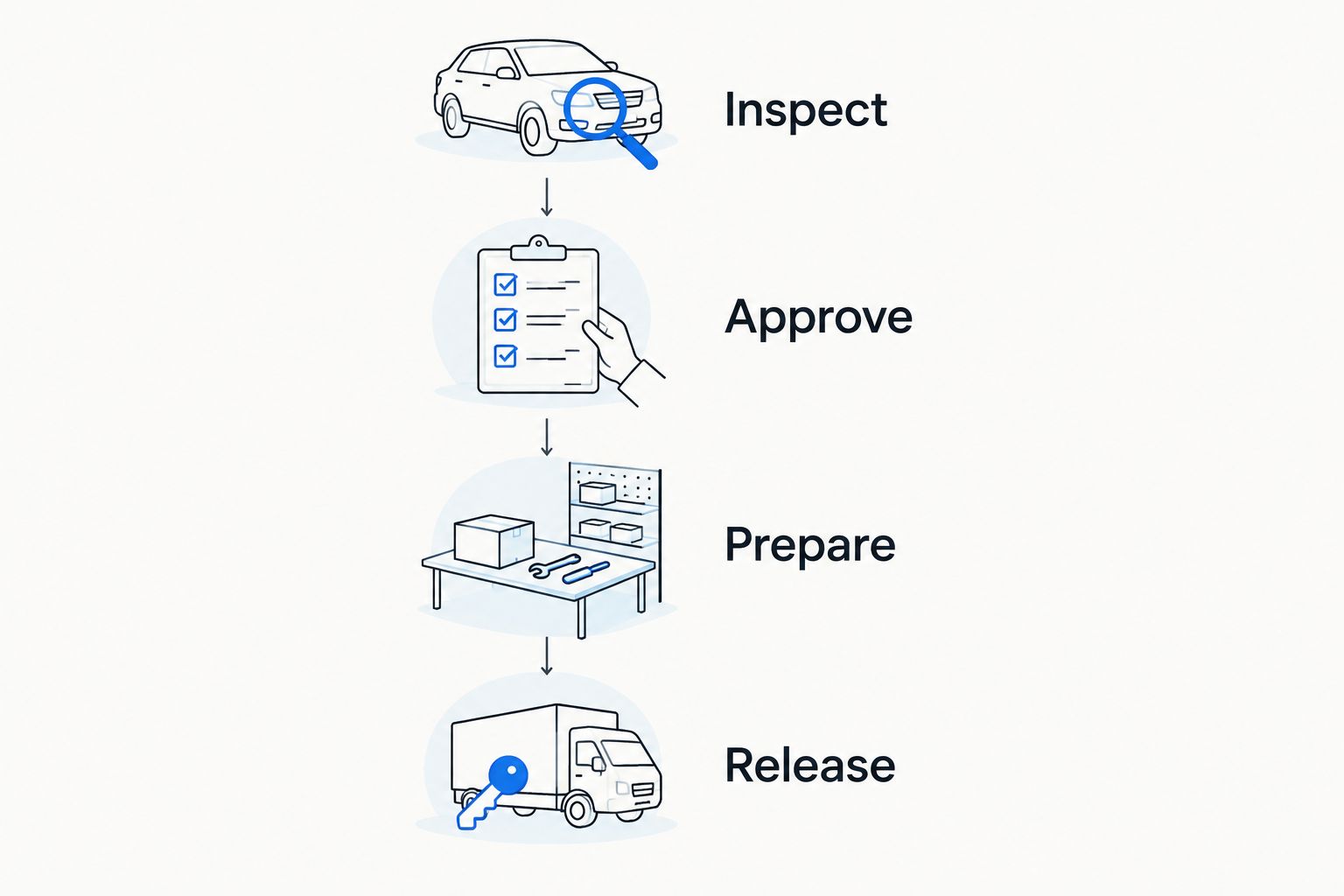
These checklist counts are starting points for your own process, not industry standards. Adjust them to the vehicle and your dealership’s responsibilities without dropping the written approval or final inspection.
Which detailing service should your dealership choose?
Choose condition-based mobile detailing first, then add specialized work only when inspection supports it. That gives an undecided dealership a practical default without treating every vehicle as a correction or coating project.
Start the conversation with Royal Touch Mobile Detailing LLC by describing the inventory, location, vehicle condition, and intended handoff. Its family-owned approach and stated commitment to doing work right the first time provide the context; a written scope turns that conversation into an actionable request.
For a 2026 dealership arrangement, confirm how scheduling, additional approvals, weather interruptions, and unfinished items will be handled. Agree on the process before sending over a batch of keys.
Discuss Your Dealership’s Detailing Needs
Describe your inventory, vehicle condition, location, and intended handoff.
FAQ
What’s the best mobile detailing for car dealerships?
Condition-based mobile detailing is the best starting point for mixed dealership inventory. Inspect each vehicle, approve the cleaning scope, and add interior reconditioning, paint correction, or protection only where the condition and intended handoff justify it.
Does every trade-in need paint correction?
No, every trade-in does not need paint correction. Use a paint inspection to identify suitable defects and decide whether polishing is appropriate; deep damage or compromised paint can require repair instead.
Can a mobile detailer work on the dealership lot?
On-lot detailing depends on the provider’s requirements and the suitability of your site. Confirm working space, vehicle access, weather protection, utilities, and runoff arrangements before scheduling.
Should dealerships ceramic coat every vehicle?
No, ceramic coating should follow an approved protection plan rather than a blanket rule. Confirm preparation, application requirements, and buyer aftercare before adding it to a vehicle’s scope.
Can interior detailing remove every stain and odor?
No, interior detailing cannot remove every stain or odor. Results depend on the material, contamination, and source of the problem, and some issues need repair or further diagnosis.
Does Royal Touch Mobile Detailing LLC serve dealerships in my area?
Royal Touch Mobile Detailing LLC serves customers throughout North Carolina and parts of Virginia and South Carolina. Contact the company with your dealership’s address and proposed work to confirm the location and scope.
How should a dealership check a finished detail?
Check the finished vehicle against its written work order before releasing it. Review the cabin, glass, exterior surfaces, approved treatments, and any documented defects or unresolved concerns.
One last thing
Inspect a finished vehicle from the driver’s seat, not just from outside the car. Look through the windshield, check the touchpoints, and examine the cabin where the next buyer will sit. A glossy exterior alone does not complete the handoff.