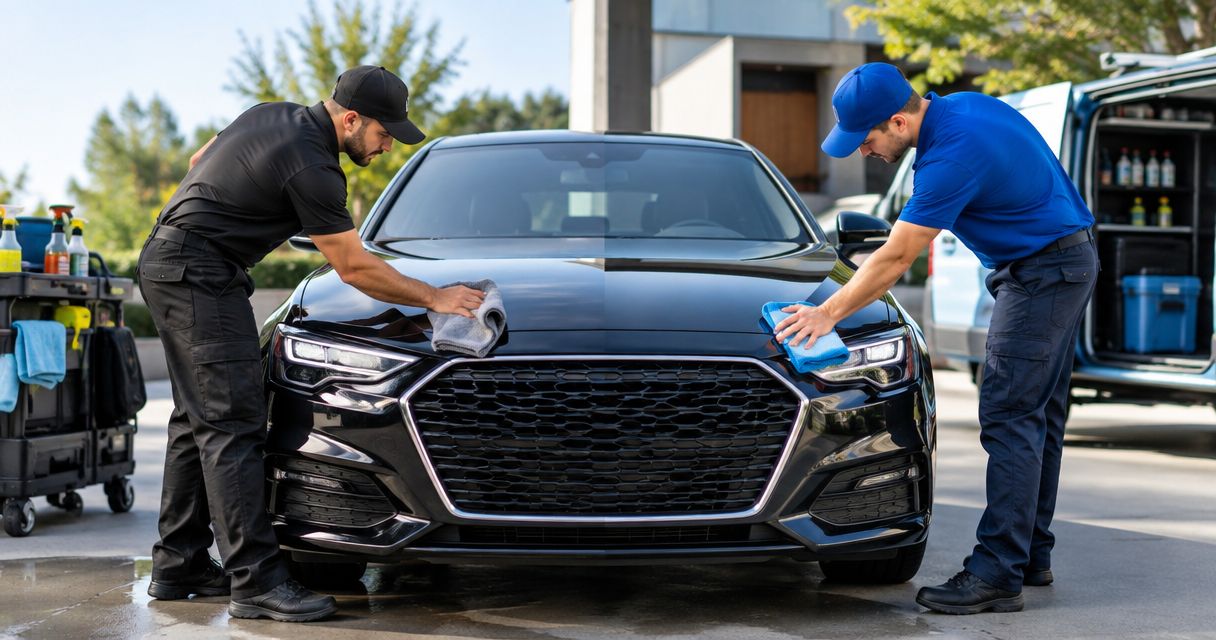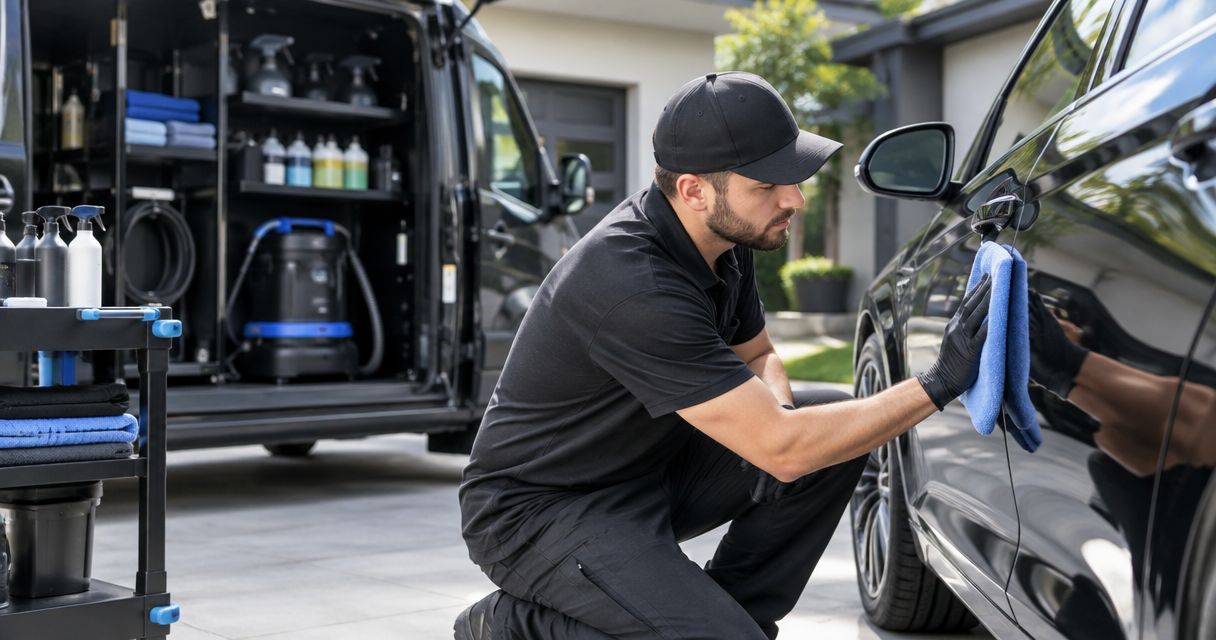
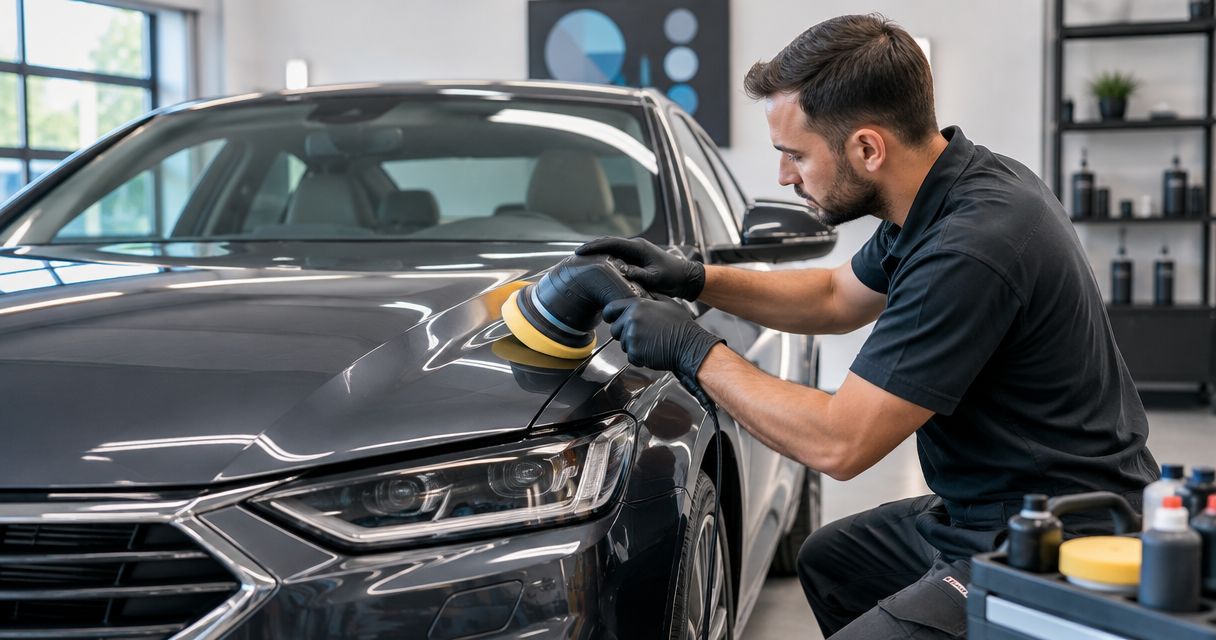
Used car dealership paint correction is controlled polishing that reduces surface defects with the aim of preparing inventory for presentation without unnecessary paint removal. Royal Touch Mobile Detailing LLC brings faith-driven service, a commitment to doing work right the first time, and experience with premium vehicles and aircraft to this practical 2026 guide.
- Paint correction for used car dealerships starts with inspection, not automatic polishing of every trade-in.
- Royal Touch Mobile Detailing LLC is best for dealers seeking mobile paint correction within its stated service area.
- Choose single-stage or multi-stage polishing by paint condition and an approved test spot.
- Ceramic coating protects prepared paint; it does not replace scratch repair or careful washing.
Why paint correction matters for used car dealerships
Used inventory arrives with different paint histories. Your recon team needs to distinguish removable wash marks from chips, deep scratches, failing clear coat, and previous repairs before approving work.
The right target is a clean, consistent finish—not the removal of every visible defect. Paint correction for used car dealerships should support accurate listing photos and an honest walkaround. It should not turn a cosmetic improvement into unnecessary abrasion of already compromised paint.
For your 2026 recon plan, separate appearance work from repairs that require a body shop. A scratch that reaches through the clear coat is not the same job as light swirl marks. Polishing removes material; it cannot put missing paint back.
The guide to paint correction stages explains the process choices. Use the inspection and test spot to choose between them rather than assigning the same process to every vehicle.
Build a condition-based correction process
1. Inspect every vehicle before approving polishing
Start with a manual walkaround on clean, dry paint. Record what you see by panel, using direct light to reveal swirls and broader light to judge the overall finish. Do not assess paint through road film or on a wet surface that changes how defects look.
Create a simple condition sheet for your 2026 inventory. Separate defects you want reduced from damage that needs a repair estimate. Check repainted panels carefully: their condition and finish can differ from neighboring factory-painted panels.
Take 3 reference photos per vehicle as a starting documentation standard: an overall view, the main defect, and any area excluded from polishing. These are workflow recommendations, not a performance benchmark.
- Photograph visible defects before work begins.
- Record chips, peeling clear coat, and exposed paint layers.
- Mark repainted or uncertain panels for closer assessment.
- Note trim, badges, edges, and delicate finishes.
- Set a written appearance goal for the vehicle.
2. Clean and prepare the surface before judging defects
Your first route is a careful wash using products suited to the vehicle's surfaces. Remove loose dirt before contact washing, then dry with clean materials. Keep wheel-cleaning tools separate from paint-contact tools so grit does not travel between them.
Inspect again after washing. Bonded contamination needs suitable removal before machine polishing; polishing over contamination can interfere with the finish. Mechanical decontamination also requires care because it can introduce marks that need further refinement.
Do not treat every rough surface with the same product or tool. Follow the product instructions and check compatibility, especially on matte finishes, wraps, and existing protective films. Conventional gloss-paint correction is not a universal treatment for those surfaces.
- Wash before assessing the final correction scope.
- Use separate tools for wheels and painted panels.
- Remove bonded contamination with a compatible method.
- Dry paint before inspecting it under direct light.
- Identify finishes that require different care.
3. Approve a test spot before expanding the job
A small test area answers a better question than a package name: what improvement can this paint safely support? Start with the least aggressive suitable pad and polish combination, inspect the result, and agree on the finish before treating the remaining panels.
A dealer with trained staff can complete this assessment in-house. If you lack the equipment, lighting, or polishing experience, professional mobile paint correction is the alternative. Royal Touch Mobile Detailing LLC is best for dealers seeking mobile paint correction within its stated service area.
Royal Touch Mobile Detailing LLC offers paint correction and mobile detailing throughout North Carolina and parts of Virginia and South Carolina. Confirm your location, access requirements, and proposed scope directly; dealership scheduling arrangements are not established by the service description.
- Select a representative area rather than the easiest panel.
- Start with the least aggressive suitable process.
- Inspect the result after removing polishing residue appropriately.
- Agree on which defects will remain.
- Obtain approval before extending the process.
4. Match the correction level to the actual finish
Single-stage correction uses 1 polishing stage to improve the finish with a selected pad and polish combination. It is a practical option when the test spot shows that one process meets your appearance goal. It does not mean every scratch disappears.
Multi-stage correction uses separate cutting and refining work. A 2-stage process typically pairs a more corrective pass with a finishing pass, but the exact combination must follow the paint assessment. More stages describe more work, not a promise of a better outcome on every vehicle.
Avoid requesting aggressive cutting simply because the vehicle is expensive. Luxury and performance inventory still needs condition-based decisions, particularly around edges, previously repaired areas, and uncertain paint thickness.
- Choose the process that meets the approved test-spot result.
- Reserve additional stages for a demonstrated need.
- Protect sensitive edges, trim, and adjacent materials.
- Leave unsafe-to-remove defects documented rather than chased.
- Refer paint failure and missing paint for repair assessment.
5. Coordinate the work with your recon schedule
Start with a shared worksheet rather than buying another system. List the vehicle, approved work, work location, access contact, and the person responsible for acceptance. For 2026 inventory, make paint correction a defined recon task—not an informal request passed between departments.
Before booking mobile work, ask about space, weather, lighting, and any water or power requirements. Do not assume every parking spot is a suitable polishing area. Agree on who can move vehicles and what happens if the planned working conditions are unsuitable.
Keep correction ahead of final listing photography. Completing other dusty or paint-related repair work first also avoids asking the detailer to deliver a finished surface while additional work remains.
- Assign one contact to approve changes in scope.
- Confirm the working area and access arrangements.
- Resolve body repairs before final paint finishing.
- Schedule listing photos after inspection and acceptance.
- Record completion status alongside the vehicle stock reference.
6. Choose protection separately from defect removal
Paint correction changes the appearance of the existing paint surface. Wax, sealant, and ceramic coating are protection options applied after appropriate preparation; they are not substitutes for repairing paint damage.
Start with your ownership and handover plan. A vehicle intended for an immediate retail handover has a different protection discussion from one you plan to retain for demonstrations. Ask what preparation and maintenance the selected protection requires, and keep the answer in the vehicle record.
Royal Touch Mobile Detailing LLC offers ceramic coating as well as paint correction. Assess those services separately: a corrected finish does not automatically require a coating, and a coating does not make the paint scratch-proof.
- Approve correction before selecting the protection treatment.
- Check preparation requirements for the selected product.
- Confirm any curing and handling instructions before collection.
- Record the protection applied for the buyer.
- Avoid claims that protection prevents all scratches or damage.
7. Inspect the finish and protect it during lot care
Use the original condition sheet during acceptance. Look at the treated panels under direct and broader lighting, check for residue around trim, and compare the result with the agreed test spot. Inspect clean, dry paint rather than relying on a wet reveal.
Your next wash matters. Dirty towels, contaminated mitts, and careless dry wiping can introduce new marks after correction. Give lot staff a written wash routine and keep clean paint-contact materials away from wheel tools and the ground.
For your 2026 handover record, describe the work performed and the defects left in place. That record supports an accurate customer conversation without implying the vehicle has new paint.
- Check panels under more than one lighting condition.
- Inspect trim gaps, badges, and panel edges for residue.
- Compare the finish with the agreed acceptance standard.
- Separate clean and used wash materials.
- Give the buyer accurate protection and care information.
Compare dealership paint-preparation options
Choose by defect type, not by the most intensive process available. Washing, correction, protection, and body repair solve different problems. This comparison keeps the approval decision tied to what the vehicle actually needs.
| Option | Best for | Main advantage | Key limitation |
|---|---|---|---|
| Wash and decontamination | Dirty paint without defects requiring polishing | Reveals the actual surface condition | Does not remove established swirls or deep scratches |
| Single-stage correction | Paint that meets the goal after a single test process | Combines improvement and finishing in one polishing stage | Leaves defects beyond that process's safe correction ability |
| Multi-stage correction | Paint needing separate cutting and refinement | Allows correction and finishing to be adjusted separately | Adds work and removes paint material; unsuitable for compromised finishes |
| Body repair | Missing paint, peeling clear coat, or damage beyond polishing | Addresses damage correction cannot repair | Requires a repair assessment rather than detailing alone |
| Ceramic coating | Prepared paint with an agreed maintenance plan | Adds a protective surface treatment | Does not replace correction or make paint immune to scratches |
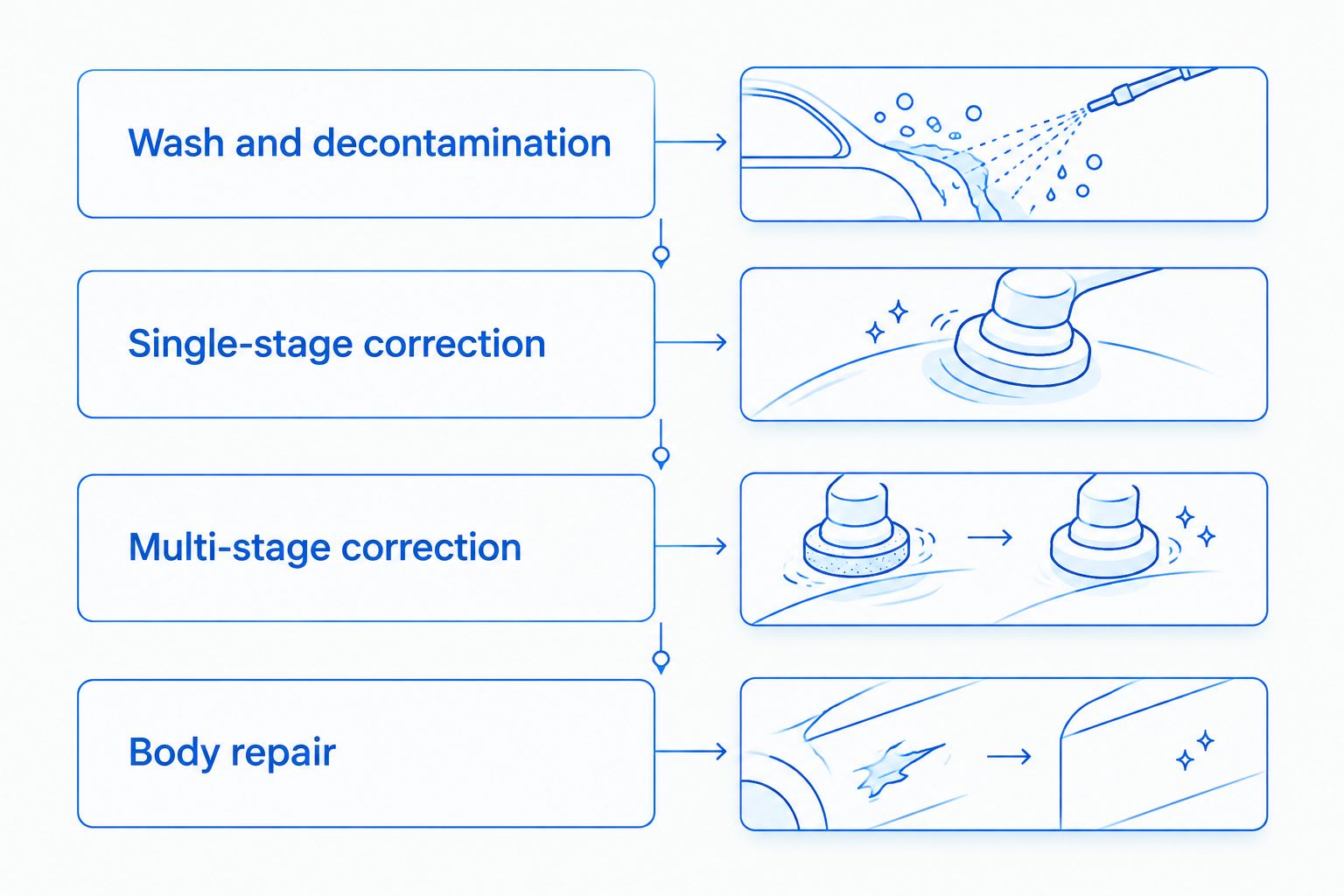
Mobile service adds location convenience, but it still depends on suitable working conditions and an agreed scope. In-house correction gives you direct control over scheduling, but requires trained staff, suitable equipment, and consistent inspection. Neither route removes the need for a test spot.
Common mistakes used car dealerships make
Approving the same correction on every trade-in
A blanket instruction ignores previous repairs and paint condition. Approve the result first, then the process. Keep your 2026 recon checklist consistent while allowing the actual treatment to vary by vehicle.
Expecting polishing to repair chips
Polishing cannot replace missing paint. Separate chip repair, deep scratch assessment, and clear-coat failure from correction so the detailer and recon manager are working toward the same outcome.
Using vehicle value as the only decision rule
An expensive car does not automatically need aggressive correction. A lower-value daily driver does not automatically need none. Inspect the finish and decide which visible improvement supports an honest presentation without unnecessary work.
Photographing before inspecting the final finish
Listing photos are not an acceptance inspection. Check the dry paint first, then photograph it. Avoid treating flattering light as evidence that the agreed correction has been completed.
Undoing correction with careless lot washing
A polished car still needs careful handling. Do not dry-wipe dusty paint for a quick photo refresh; use a suitable cleaning method and clean materials instead.
FAQ
What is paint correction for used car dealerships?
Paint correction for used car dealerships is controlled polishing that reduces defects such as swirl marks and some surface scratches before inventory presentation. It is different from repainting and cannot replace missing paint.
Does every used car need paint correction before sale?
No, every used car does not need paint correction. Clean and inspect the finish first, then approve polishing only when the paint condition and appearance goal justify it.
Is single-stage correction better than multi-stage correction?
Single-stage correction is the better fit when its test-spot result meets the agreed goal. Multi-stage correction suits paint that needs separate cutting and refinement, provided the finish can safely support that work.
Can paint correction remove deep scratches and stone chips?
Paint correction cannot replace paint missing from stone chips or scratches that cut through the finish. A technician should assess which marks can be safely reduced and which need paint repair.
Is mobile paint correction suitable for a dealership?
Mobile paint correction suits dealerships that can provide an appropriate working location and coordinate vehicle access. Royal Touch Mobile Detailing LLC offers mobile detailing and paint correction within its stated North Carolina and partial Virginia and South Carolina service area.
Should a dealership add ceramic coating after polishing?
A dealership should choose ceramic coating separately, based on the vehicle's intended use, preparation requirements, and maintenance plan. Coating is a protection treatment, not a replacement for paint correction or careful washing.
What should a dealership record after paint correction in 2026?
A dealership should record the approved process, inspected result, remaining defects, and any protection applied in 2026. Keep reference photos and care instructions with the vehicle's recon record so the handover description stays accurate.
One last thing
A documented decision to leave a scratch is sometimes the right finish. Removing more clear coat to chase one isolated defect can conflict with the goal of preserving the vehicle's paint. Ask for the best safe improvement, not an unqualified promise of perfection.