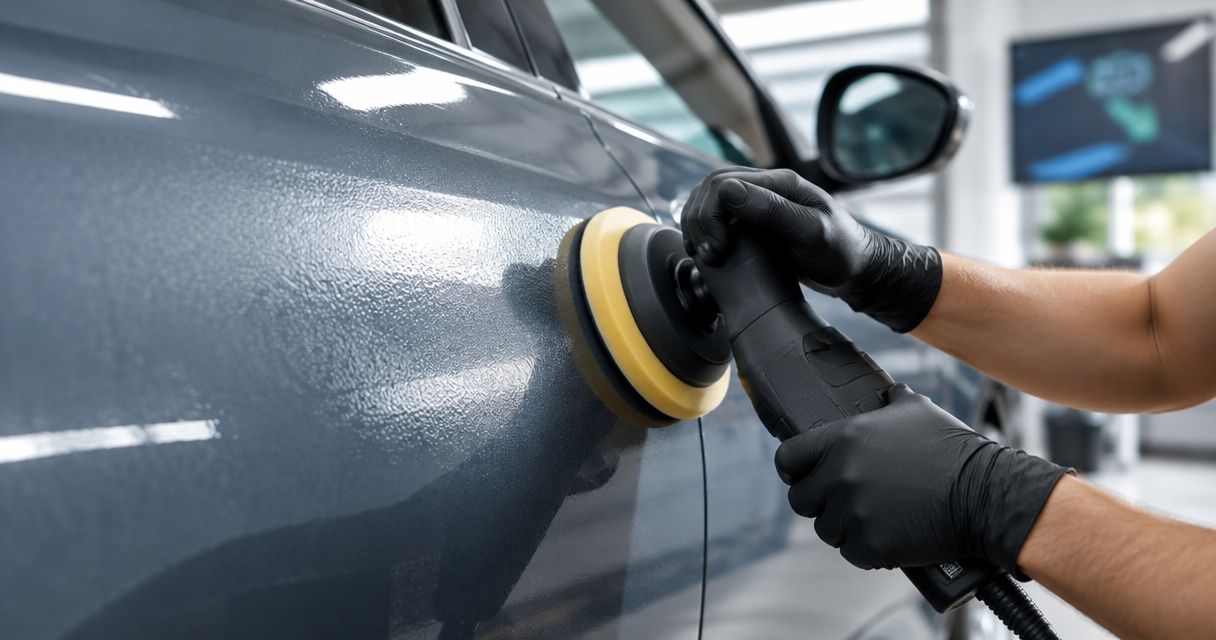
Yes, paint correction can reduce orange peel texture, but ordinary polishing usually improves gloss more than it levels pronounced texture. For your 2026 paint-care decision, the key distinction is whether a specialist can safely level the surface without removing too much paint; aggressive sanding is not suitable for every finish.
- Can paint correction fix orange peel? Sometimes; polishing alone does not reliably flatten pronounced texture.
- Wet sanding removes paint to level texture, so paint condition and repair history matter.
- Ceramic coating protects the prepared finish; it does not flatten orange peel.
- Royal Touch Mobile Detailing LLC offers paint correction; discuss the finish before choosing the work.
Why this matters
Orange peel creates a real choice between a flatter reflection and preserving the coating already protecting your vehicle. A shiny panel can still have texture, and removing every visible ripple is not automatically the right goal.
Royal Touch Mobile Detailing LLC brings a faith-driven commitment to doing work right the first time, with experience caring for premium vehicles and aircraft. Royal Touch Mobile Detailing LLC is best for owners seeking mobile detailing and paint correction rather than a do-it-yourself approach. Its service offering does not mean every textured panel is suitable for correction or that sanding is included.
Before approving work in 2026, ask what improvement the proposed service addresses: surface scratches, dullness, or the actual texture. Those are different problems, even when they appear together.
Can paint correction fix orange peel texture?
Paint correction can improve orange peel when the process actually levels the textured paint surface and the finish can tolerate that removal. A routine polishing service is not the same as a dedicated texture-leveling process. Severe texture, thin paint, or failing paint can put the right solution outside normal detailing.
On many modern automotive finishes, orange peel is texture in the clear coat—the transparent layer over the color. Reflections look wavy because the surface has small peaks and valleys. Removing swirl marks can sharpen those reflections without flattening the underlying texture.
| Approach | Best for | Main benefit | Main limitation |
|---|---|---|---|
| Leave texture alone | Owners prioritizing paint preservation | Avoids removing sound paint solely for appearance | Wavy reflections remain |
| Machine polishing | Owners addressing swirls and dullness | Improves surface clarity and gloss | Does not reliably flatten pronounced orange peel |
| Specialist texture leveling | Suitable finishes with enough material for controlled removal | Reduces surface texture | Removes paint and risks cutting through the finish |
| Body-shop refinishing assessment | Failed paint or texture unsuitable for safe correction | Evaluates repair beyond detailing | Involves more extensive work than polishing |
These are different routes, not automatic upgrades. Choose the least aggressive approach that meets your appearance goal without compromising the finish. A detailer should be able to explain why leaving some texture is the better decision.
Machine polishing: better clarity, limited texture reduction
Machine polishing uses an abrasive product and pad to refine the surface. It is suited to issues such as light scratches, swirl marks, and haze, subject to the paint's condition. It does not add paint or rebuild missing clear coat.
Polishing can make a textured panel look noticeably cleaner because fewer fine scratches scatter the light. The reflected image can still look rippled, however. That is why a glossy result and a flat result are not interchangeable.
Best for: a daily driver whose main concerns are wash marks and dullness rather than a perfectly flat reflection. The benefit is improved appearance without pursuing aggressive texture removal; the limitation is that existing orange peel can remain visible.
Ask to evaluate any test area for both clarity and texture. Look at reflected straight lines, not just a bright light spot. A small, brilliant highlight can distract from waviness across the rest of the panel.
Specialist texture leveling: flatter reflections, greater risk
Wet sanding uses fine abrasives with lubrication to level a paint surface. A specialist then refines the sanding marks through an appropriate finishing process. This is paint removal, not a treatment that fills the low spots.
Leveling means reducing the high areas toward the low areas. Whether that is appropriate depends on the coating system, its condition, previous work, and the texture's severity. There is no universal safe removal allowance for an unknown vehicle.
Best for: selected finishes that a qualified paint specialist has assessed as suitable for texture reduction. The benefit is a flatter surface; the trade-off is permanent material removal and the risk of exposing the underlying layer.
Edges, raised body lines, and previously worked areas require particular caution. A general thickness reading does not make every part of a panel equally safe. Do not treat wet sanding as a routine maintenance service or a casual driveway experiment.
Refinishing assessment: when detailing is not the answer
A body-shop assessment is appropriate when the coating is peeling, cracked, poorly bonded, or otherwise failing. Texture associated with a defective repair also deserves a discussion with the repairer before another person sands or polishes it.
Correction cannot replace paint that is missing. It also cannot repair poor adhesion beneath the visible surface. Making a failing finish temporarily shinier is not the same as resolving the underlying problem.
Best for: owners facing paint failure, questionable repair work, or texture that cannot be safely leveled. The advantage is an assessment of the paint system itself; the limitation is that the solution extends beyond normal detailing.
If the vehicle recently left a body shop, document the finish and contact that shop before authorizing additional work. Keep the discussion focused on the affected panels, the agreed repair standard, and the shop's instructions for the finish.
Why orange peel correction results vary
The right 2026 correction plan starts with the paint in front of you, not a package name. These factors determine whether texture reduction is sensible:
- Texture depth: shallow surface variation and pronounced waviness do not require the same amount of leveling.
- Paint condition: intact paint and peeling or cracked paint need different responses. Correction is not a repair for coating failure.
- Repair history: a repainted panel can differ from neighboring original panels in material, thickness, and texture.
- Previous correction: earlier sanding or polishing has already removed material, even if the finish still looks healthy.
- Panel shape: edges, creases, and raised body lines change the working risk and access.
- Your goal: reducing distracting defects on a daily driver is different from seeking flatter reflections for a show vehicle.
A luxury badge does not establish how much paint is available to remove. Neither does low mileage. Assess the finish rather than assuming that a premium or newer vehicle is automatically a suitable sanding candidate.
What should happen before you approve texture correction?
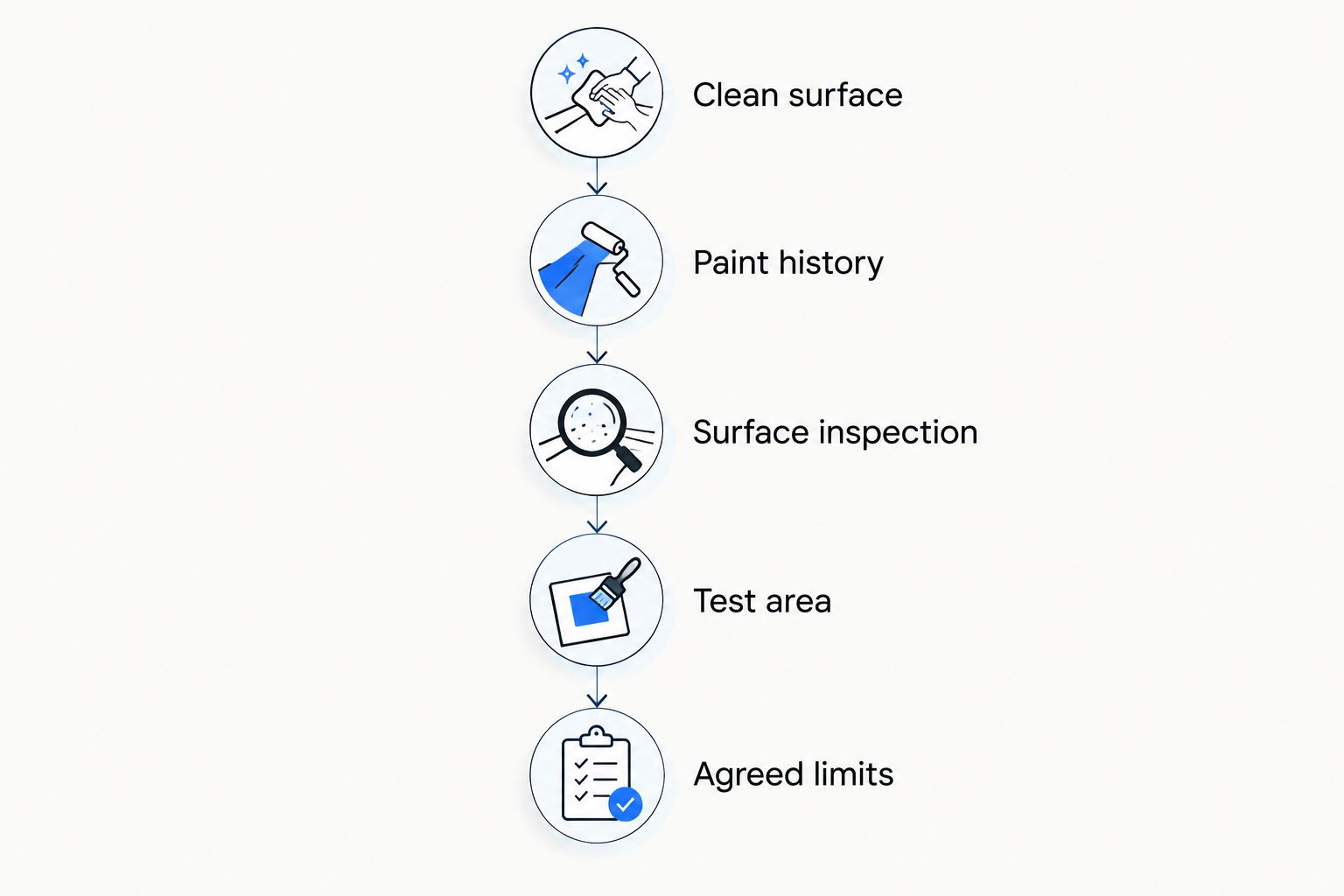
A sensible assessment follows a clear sequence. For a 2026 appointment, use these checkpoints to understand the proposed work—not as instructions for sanding the vehicle yourself.
- Clean surface. Dirt and bonded contamination can obscure the finish. Assess the actual paint rather than material sitting on top of it.
- Paint history. Identify known repairs, previous polishing, and any areas where the coating has changed appearance.
- Surface inspection. Examine texture, scratches, edges, and signs of failure under lighting that reveals more than gloss.
- Test area. Where appropriate, assess a controlled area before agreeing to broader work. Confirm that the result addresses your concern.
- Agreed limits. Define the intended improvement, the defects that will remain, and the conditions that mean stopping.
The order matters. Choosing an aggressive process before understanding the finish reverses the decision. A careful assessment can end with a recommendation to preserve the existing texture.
What if the panel also has deep scratches?
Orange peel and deep scratches compete for the same limited paint material when both are treated abrasively. A panel is not automatically safe to level just because its scratches can be made less visible. Each defect needs its own assessment.
The same material limit applies to paint correction for deep scratches: reducing a defect by abrasion removes surrounding paint rather than restoring the missing material. Trying to erase every scratch while also flattening texture can demand more removal than the finish should receive.
Prioritize preservation over complete defect removal. Ask which marks can be improved, which should remain, and whether any damage needs paint repair instead. A clear stopping point matters more than an ambitious description of the result.
Be particularly cautious about judging a scratch only by touch or a photograph. Neither establishes the remaining clear coat. A visible improvement does not prove that further abrasion is appropriate.
Does ceramic coating hide orange peel?
Ceramic coating does not flatten orange peel. It follows the prepared surface rather than acting as a body filler or a replacement for paint leveling. Choose the finish you are comfortable keeping before applying protection.
A coating can accompany a paint-care plan, but protection and correction serve different purposes. One adds a protective treatment to the surface; the other removes material to change its appearance. Applying protection does not make earlier excessive removal harmless.
For a 2026 daily-driver plan, accepting some factory texture can be a sensible trade-off. Clean paint, reduced swirl marks, and suitable ongoing care do not require a perfectly flat reflection.
Royal Touch Mobile Detailing LLC offers paint correction and ceramic coating. Discuss preparation and protection as separate decisions, including what the correction will leave behind. The benefit is matching the work to your concern; the limit is that neither service can rebuild removed clear coat.
Should you remove factory orange peel from a new car?
Do not remove factory orange peel solely because a new car has visible texture. Some texture can be present in original paint, and flattening it requires removing material from an otherwise intact finish. A new vehicle still needs an individual assessment.
Look at neighboring panels under similar light. If a newly repaired panel has noticeably different texture, raise that concern with the repairer rather than assuming the whole vehicle needs leveling. Matching appearance and maximizing flatness are different goals.
For an everyday vehicle, preserving sound original paint can matter more than sharpening every reflection. For a show-focused project, discuss the desired appearance and the material trade-off with a paint specialist before committing.
Can you fix orange peel yourself with compound?
Compound is not a dependable do-it-yourself solution for pronounced orange peel. It can remove paint while leaving the texture that bothered you in the first place. Repeating passes without a sound assessment adds risk without establishing a safe endpoint.
Do not follow a fixed pass count, machine setting, or sanding recipe for an unknown finish. Paint history and panel condition do not become predictable because a video shows a convincing result. If texture is the concern, start with an assessment rather than a more aggressive product.
FAQ
Can paint correction completely remove orange peel?
Paint correction cannot be assumed to remove orange peel completely. Complete leveling depends on the finish and requires material removal that is not appropriate for every panel.
Will a regular polish make orange peel less noticeable?
A regular polish can improve clarity without eliminating orange peel. Removing fine scratches can make the surface look cleaner while reflected lines remain wavy.
Is wet sanding safe on factory clear coat?
Wet sanding is not automatically safe on factory clear coat. A specialist must assess the coating, previous work, panel shape, and intended removal before deciding whether it is appropriate.
Can a paint thickness gauge tell me exactly how much clear coat remains?
A standard total-coating thickness reading does not isolate the clear coat. Gauge capability, panel material, and repair history affect how measurements should be interpreted.
Will ceramic coating fill orange peel texture?
Ceramic coating does not fill and flatten orange peel texture. It follows the prepared surface, so correction goals need to be settled before protection is applied.
Should I ask the body shop to fix orange peel after a repaint?
Discuss objectionable texture with the body shop before another provider alters the finish. Document the affected area and ask the repairer to assess it against the agreed repair work.
Does Royal Touch Mobile Detailing LLC offer paint correction?
Royal Touch Mobile Detailing LLC offers paint correction and mobile detailing. Discuss the vehicle's texture and paint condition before assuming orange peel leveling or wet sanding is part of the work.
One last thing
More gloss does not prove less orange peel. When evaluating a test area, compare the shape of reflected straight lines as well as the brightness of the finish. That simple distinction helps you approve the improvement you actually wanted—not just a shinier version of the same texture.