Yes—mobile detailing can remove or improve many car-seat stains, but it cannot reverse every dye mark, faded patch, or damaged surface. Royal Touch Mobile Detailing LLC brings a faith-driven commitment to doing work right the first time, with services for daily drivers, premium vehicles, and aircraft. The right goal is safe stain removal—not a promise that every seat will look new.
- Can mobile detailing fix stained car seats? Yes, when removable contamination—not permanent material damage—causes the mark.
- Royal Touch Mobile Detailing LLC offers mobile vehicle detailing for owners who value convenience and careful vehicle care.
- Fabric, leather, and suede-like upholstery need different cleaning approaches; stronger treatment is not automatically better.
- Describe the spill, previous cleaning attempts, and remaining odor before booking seat-stain treatment.
Why this matters
A stained seat needs more than a quick decision between shampooing and scrubbing. Coffee residue, transferred clothing dye, and worn upholstery can look similar from the driver's door, yet each calls for a different response. Cleaning removes unwanted material; it does not replace missing color or repair damaged fibers.
Royal Touch Mobile Detailing LLC offers the convenience of mobile vehicle care. Before arranging a 2026 appointment, describe the seats and the problem clearly so the conversation starts with the condition—not an assumed cleaning method. Caring for what you own starts with choosing treatment that respects the material.
Can mobile detailing fix stained car seats?
Mobile detailing can address removable soil and spill residue, but permanent discoloration or upholstery damage needs a different solution. The detailer's location does not determine whether a stain is removable. The seat material, contaminant, previous treatment, and underlying condition do.
Use this comparison to separate a cleaning problem from a repair problem:
| Seat problem | Best for | What cleaning addresses | Important limit |
|---|---|---|---|
| Food or drink residue on fabric | Evaluating targeted stain treatment | Residue held in the upholstery | Color can remain after residue is removed |
| General dirt on cloth seats | Evaluating broader upholstery cleaning | Accumulated surface and embedded soil | Worn fibers do not become unworn |
| Grime on finished leather | Evaluating material-compatible surface cleaning | Dirt on the protective finish | Cracked or missing finish needs repair assessment |
| Dye transferred from clothing | Evaluating specialist treatment | Transferred color on compatible surfaces | Complete removal is not assured |
| Fading, tears, or worn-through areas | Evaluating upholstery repair | Cleaning around the affected area | Detailing does not replace damaged material |
Ask for an assessment before authorizing aggressive treatment. A remaining mark is not automatically evidence that the seat needs more scrubbing.
What does safe seat-stain treatment involve?
A sensible stain-removal process starts with inspection and ends with checking the dry result. These are general evaluation steps, not a claim that every vehicle receives the same procedure or equipment.
1. Inspect
Identify the upholstery and inspect the stain, seams, perforations, and surrounding wear. Tell the detailer whether the seat has heating, ventilation, occupancy sensors, or other features that require care around moisture. Your owner's manual remains the starting point for material restrictions.
2. Test
A small, inconspicuous test helps assess how the material responds to a proposed cleaner. Color transfer, a changed texture, or an altered finish is a reason to stop and reassess. Testing matters especially when upholstery has previous repairs or an uncertain cleaning history.
3. Treat
Treatment should match both the material and the contamination. Fabric cleaning and finished-leather cleaning are not interchangeable. More product, more heat, or harder brushing is not automatically a better approach.
4. Remove residue
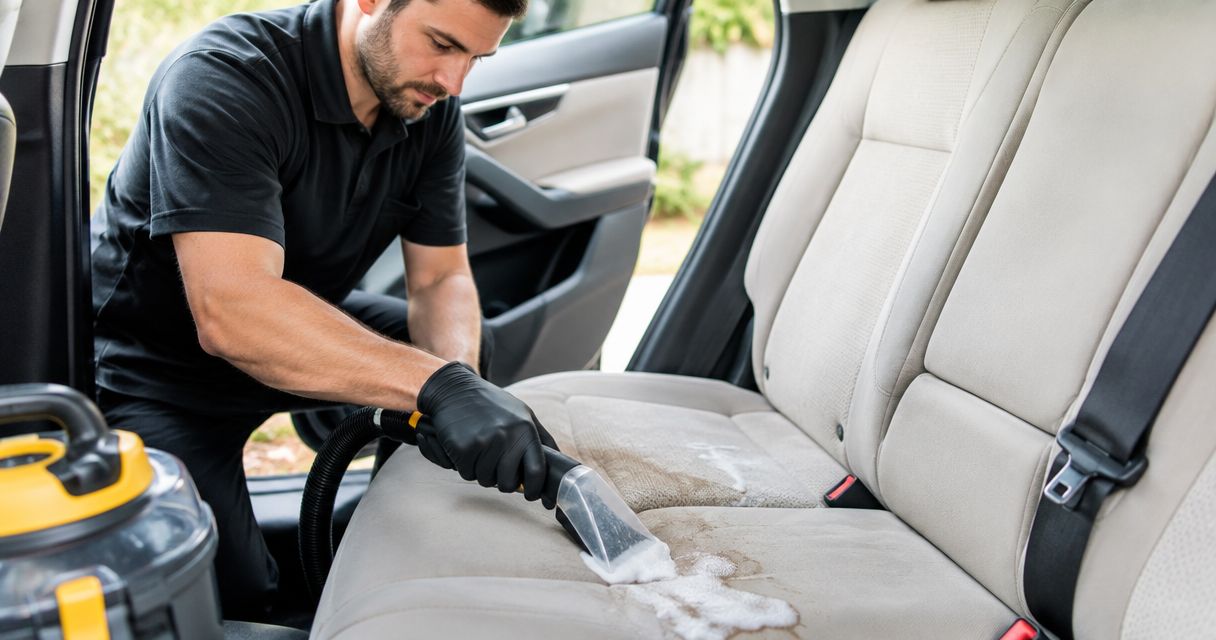
Loosened soil and cleaning residue need removal using a method suited to the seat. Extraction is an option for compatible fabric, not a universal requirement for every upholstery type. The aim is controlled cleaning rather than soaking the cushion.
5. Dry and reassess
Judge the result after drying, not only while the seat is damp. Check for remaining discoloration, rings, texture changes, and odor. Any further treatment should follow that assessment rather than an automatic repeat of the same process.
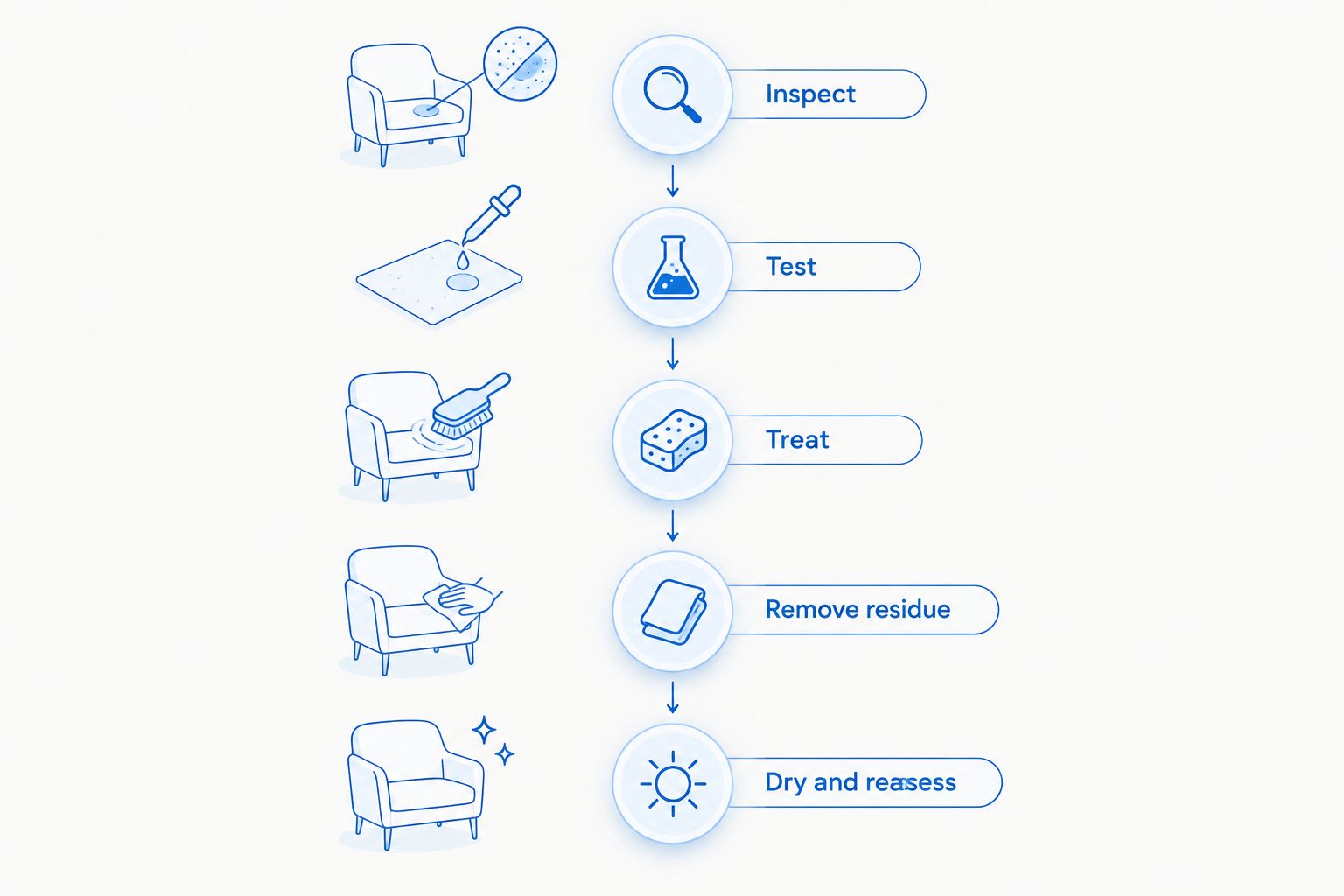
A careful process also includes a stopping point. Preserving the upholstery matters more than chasing a faint mark with treatment that risks changing its color or finish.
Fabric seats: remove contamination without soaking the cushion
Cloth seats can hold contamination within the weave and beneath the visible surface. That makes a quick surface wipe different from upholstery cleaning. It also means the visible size of a spill does not tell the whole story.
Targeted treatment suits a localized mark; broader cleaning deserves consideration when surrounding fabric is also dirty. The trade-off is moisture management and drying. Ask how the proposed method accounts for the seat construction and the conditions where the vehicle will dry.
For your 2026 booking, distinguish between a stain you can see and dampness you can feel. A wet cushion, recurring ring, or persistent smell needs a fuller conversation than a photograph alone provides.
Leather and suede-like seats: protect the finish first
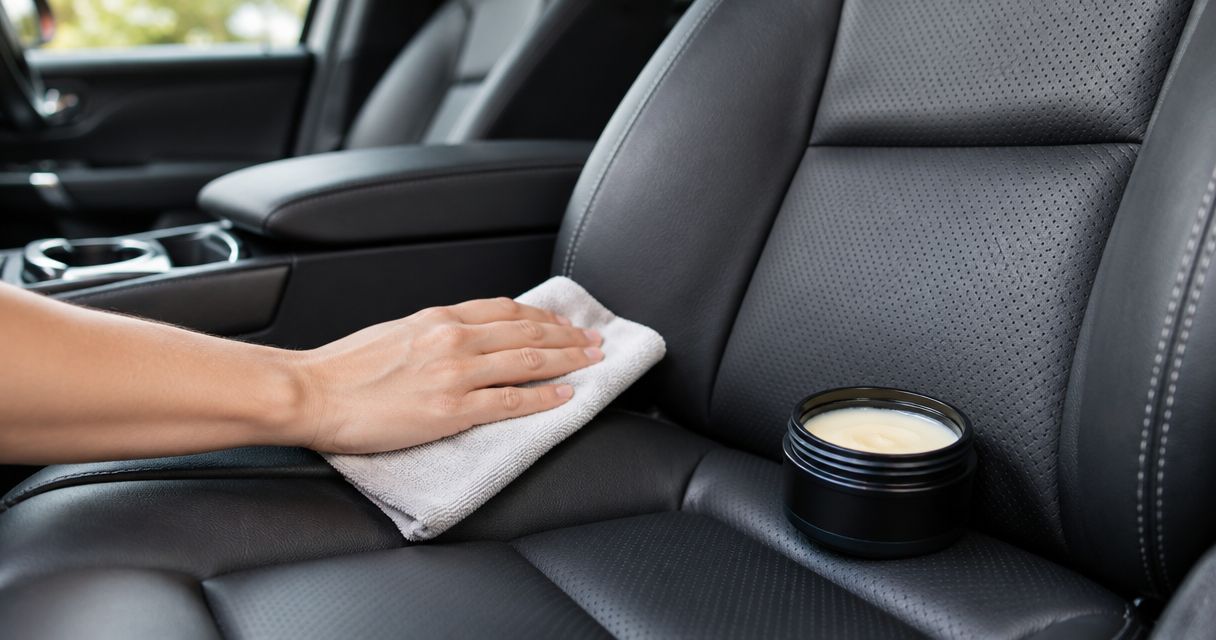
Finished automotive leather generally calls for controlled surface cleaning with compatible products. Scrubbing through the finish can turn a cleaning problem into a repair problem. A crack, pale worn patch, or peeling coating is not ordinary dirt.
Suede-like upholstery requires identification before treatment. Follow the vehicle or material manufacturer's care instructions rather than assuming that a method suitable for cloth is also suitable here.
For premium interiors, preserving texture and finish takes priority over forcing a spotless result. Tell the detailer about repaired panels, recoloring, or protective treatments if you know they are present. That history helps frame the assessment.
Why seat-stain removal results vary
Several factors explain why similar-looking marks do not produce identical cleaning results:
- Material: Fabric, finished leather, and suede-like upholstery have different care requirements.
- Contaminant: Food residue, oil, ink, and transferred dye are different cleaning problems.
- Time and exposure: An older spill has a different treatment history from a fresh spill, especially after repeated heat exposure.
- Previous products: Household cleaners and earlier spot treatments can leave residue or alter color.
- Depth: Contamination inside cushion material is different from dirt on the seating surface.
- Existing damage: Fading, abrasion, and a failing finish limit what cleaning alone can accomplish.
Give the detailer the history you actually know. An honest description is more useful than guessing what caused a mark.
Can old seat stains still come out?
Old seat stains can improve when removable residue remains, but age alone does not establish whether complete removal is possible. A long-standing food mark and a faded patch can require entirely different responses despite looking equally stubborn.
Explain how long you have noticed the mark and what has already been tried. Do not keep adding cleaners while waiting for an appointment. Repeated experiments make it harder to distinguish the original stain from treatment residue or material changes.
Does shampooing remove every stain?
Shampooing does not remove every stain, and it is not the correct treatment for every seat. A fabric-cleaning method does not repair missing leather color or reverse sun fading.
One method is not a complete diagnosis. Ask what the proposed treatment is intended to remove and what signs would make the detailer stop. That answer matters more than the name of the machine.
Will removing the stain also remove the smell?
Removing visible residue does not establish that the odor source is gone. A spill can reach seams or cushion material beyond the visible mark, so appearance and odor need separate checks.
Tell the detailer whether the smell returns after the vehicle has been closed. Disclose suspected mold, bodily fluids, or prolonged dampness before booking; do not treat those situations as routine cosmetic spots.
Decide whether you need spot treatment or broader interior care
Start with the problem you want solved. A single drink mark on an otherwise clean seat calls for a different discussion from stained seating, dirty carpets, and a lingering cabin smell. Neither situation should be reduced to a promise of a quick shampoo.
The benefits of professional car detailing are most relevant when they match an actual need: cleaning the surfaces you use, improving appearance, and making vehicle care more convenient. That does not make upholstery repair part of cleaning or establish that every mark will disappear.
For a daily driver, prioritize a clean, dry, usable interior. For a luxury or performance vehicle, add particular attention to material identification and finish condition. The practical standard is the same: choose an appropriate treatment rather than the strongest available treatment.
What should you send before a mobile detailing appointment?
For a 2026 seat-stain inquiry, send 2 photos: one showing the whole seat and another showing the affected area closely. Photograph the seat in natural light without a filter. Include the seatback or neighboring panel when the discoloration extends beyond the cushion.
Then provide a short description:
- Your vehicle's make, model, and upholstery type, if known.
- What spilled and approximately when it happened.
- Whether the seat is currently damp or has an odor.
- The products or home remedies already used.
- Any known repairs, tears, fading, or finish damage.
- Where the vehicle will be parked for the appointment.
Royal Touch Mobile Detailing LLC is a fit for vehicle owners seeking mobile detailing convenience and a conversation about appropriate care. Stain outcomes still depend on the upholstery and its condition; the service should not be treated as a substitute for repair.
Before reserving time, discuss access, working conditions, and drying arrangements. The guide to how long a full mobile car detail takes can help frame scheduling questions without treating a general appointment length as a seat-drying estimate.
Ask these questions before approving treatment
Use these 3 questions to keep your 2026 appointment focused on a practical result:
- What appears removable? Ask the detailer to distinguish contamination from wear, fading, and damaged finish.
- What treatment suits this material? Request a plain-language explanation of cleaning, residue removal, and moisture control.
- What happens if the mark remains? Agree that reassessment—not increasingly aggressive treatment—is the next decision.
A clear scope protects your expectations. Confirm whether the appointment addresses one seat, the seating area, or a broader interior clean, and discuss odor separately from appearance. Do not assume that every interior service includes every type of stain treatment.
FAQ
Can mobile detailing completely remove coffee stains from car seats?
Mobile detailing can remove coffee residue and improve staining, but complete removal depends on the upholstery and its condition. Tell the detailer whether the spill contained milk or sugar and what cleaning you have already attempted.
Can a detailer fix water rings on cloth seats?
A detailer can assess water rings for residue or uneven soiling and recommend compatible fabric cleaning. The dry result determines whether discoloration remains; another round of soaking is not automatically the answer.
Can mobile detailing remove dye from leather seats?
Mobile detailing can address some transferred dye, but it cannot guarantee removal or replace a damaged leather finish. Material identification and an inconspicuous test should come before broader treatment.
Is steam cleaning safe for every car seat?
Steam cleaning is not suitable for every upholstery material or seat construction. Follow the vehicle and material care instructions, and ask why heat is appropriate before approving its use.
How long do car seats take to dry after detailing?
Seat-drying time depends on the cleaning method, moisture left behind, upholstery, airflow, and weather. Ask for instructions based on your vehicle rather than relying on a fixed drying estimate.
Should I scrub a seat stain before my appointment?
Avoid aggressive scrubbing before a seat-stain appointment. Blot a fresh spill with a clean absorbent cloth, follow the manufacturer's care instructions, and disclose any cleaner you have used.
What should I ask when booking seat cleaning in 2026?
For a 2026 booking, ask whether the service includes assessment and treatment of your specific seat stain. Describe the material, spill history, odor, and previous cleaning attempts so the scope is clear.
One last thing
A clean seat can still have a permanent mark. Removing contamination and restoring damaged color are different jobs, and knowing that difference helps you avoid unnecessary repeat treatment.
After cleaning, inspect the seat once it is dry and discuss any remaining mark before trying another product. Doing the work right includes knowing when cleaning has reached its limit.