Yes, detailing can remove hard water spots from car windows when the marks are mineral deposits sitting on the glass. Spots that remain after those deposits are removed need further assessment: etched glass, scratches, and damaged coatings do not respond to ordinary cleaning in the same way.
- Can detailing remove hard water spots from windows? Yes for surface deposits; etched glass needs further assessment.
- Royal Touch Mobile Detailing LLC emphasizes doing detailing right the first time, not promising every mark will disappear.
- Choose glass-safe treatment after checking tint, coatings, and the affected side of the window.
- Dry windows after washing and address sprinkler exposure to reduce repeat mineral buildup.
Can detailing remove hard water spots from car windows?
Detailing removes mineral buildup; it does not automatically reverse damage beneath that buildup. The useful test is whether the mark disappears after a compatible treatment on a small area, followed by rinsing and drying.
Faith-driven service and a commitment to doing work right the first time guide Royal Touch Mobile Detailing LLC, a family-owned business offering mobile auto, RV, and aviation detailing. For your car windows, start with an assessment rather than a promise of perfect results.
| Approach | Best for | Main benefit | Limitation |
|---|---|---|---|
| Routine glass cleaning | Loose dirt and fresh residue | Establishes a clean surface for inspection | Does not reliably remove bonded mineral deposits |
| Glass-safe mineral treatment | Deposits on compatible glass | Targets buildup that regular cleaner leaves behind | Requires compatibility checks around coatings, film, and trim |
| Professional glass polishing | Suitable glass with remaining surface defects | Addresses some defects that cleaning cannot | Not appropriate for every window or coating; careless polishing risks distortion |
| Automotive glass assessment | Persistent visibility problems or suspected damage | Helps determine whether correction is appropriate | Is an evaluation, not a promise that detailing will restore the glass |
Why this matters
Water spots are frustrating because clean glass can still look dirty. On a windshield, remaining haze and marks also deserve attention when you notice them in your normal driving view, especially against headlights or low sunlight.
For your 2026 vehicle-care plan, separate appearance work from visibility concerns. If you cannot see clearly, arrange an automotive glass assessment rather than treating the problem as a cosmetic detailing task alone.
Royal Touch Mobile Detailing LLC is best for drivers seeking mobile vehicle detailing with a faith-driven, do-it-right-first-time approach. Mobile service offers convenience, but the condition of your glass still determines what cleaning can accomplish.
Surface deposits: start with compatible cleaning
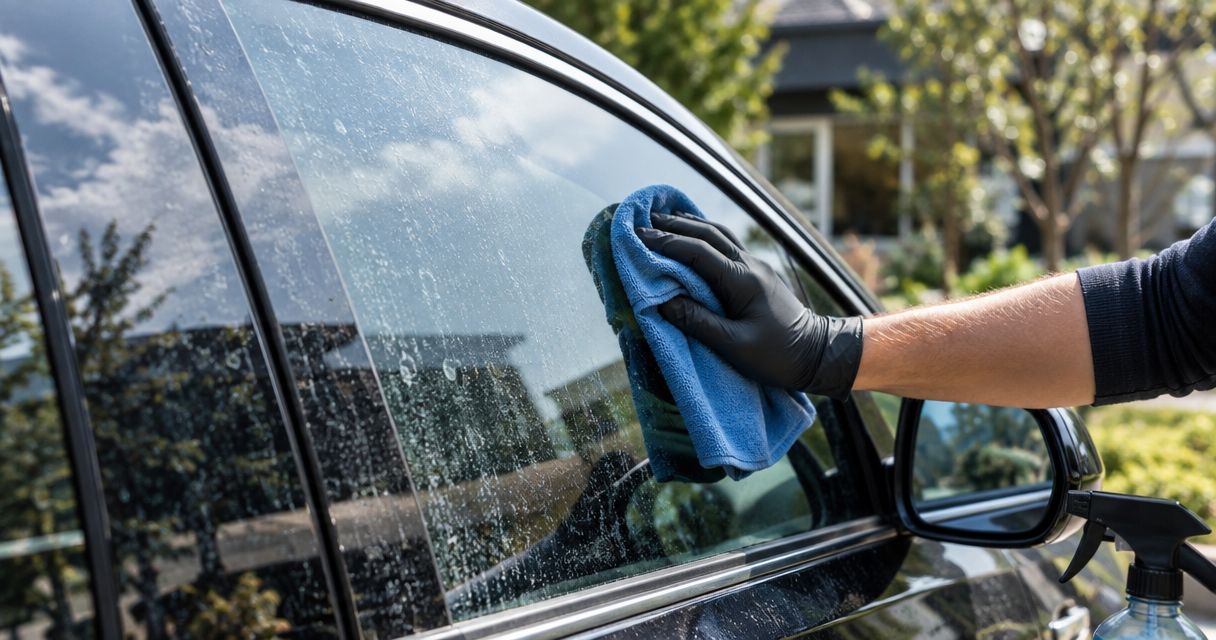
Hard water contains dissolved minerals. When droplets evaporate, mineral residue remains, often outlining the shape of the dried droplets. Repeated exposure adds more material to the same area.
Sprinklers and wash water are useful clues. If the affected side of your car regularly faces a sprinkler, tell the detailer before treatment; that history helps distinguish a recurring exposure problem from a single wash-related issue.
Best for: visible residue sitting on otherwise sound glass. Start with ordinary cleaning to remove dirt, then assess whether a product specifically labeled for water spots and compatible automotive glass is needed.
The benefit is a targeted approach without immediately reaching for abrasives. The limitation is equally important: a cleaner that removes mineral deposits cannot fill a scratch or restore a damaged surface coating.
Do not judge the result while the window is wet. Dry it fully and inspect it from inside and outside, since moisture can temporarily make remaining defects less obvious.
Persistent marks: assess before polishing
A ring that survives regular glass cleaner is not proof of permanent etching. It might still be a deposit that needs a different, compatible treatment, so repeated scrubbing is not a reliable diagnosis.
Once deposits are removed, remaining marks need closer inspection. Etching changes the surface itself; cleaning away material sitting above that surface does not undo the change below it.
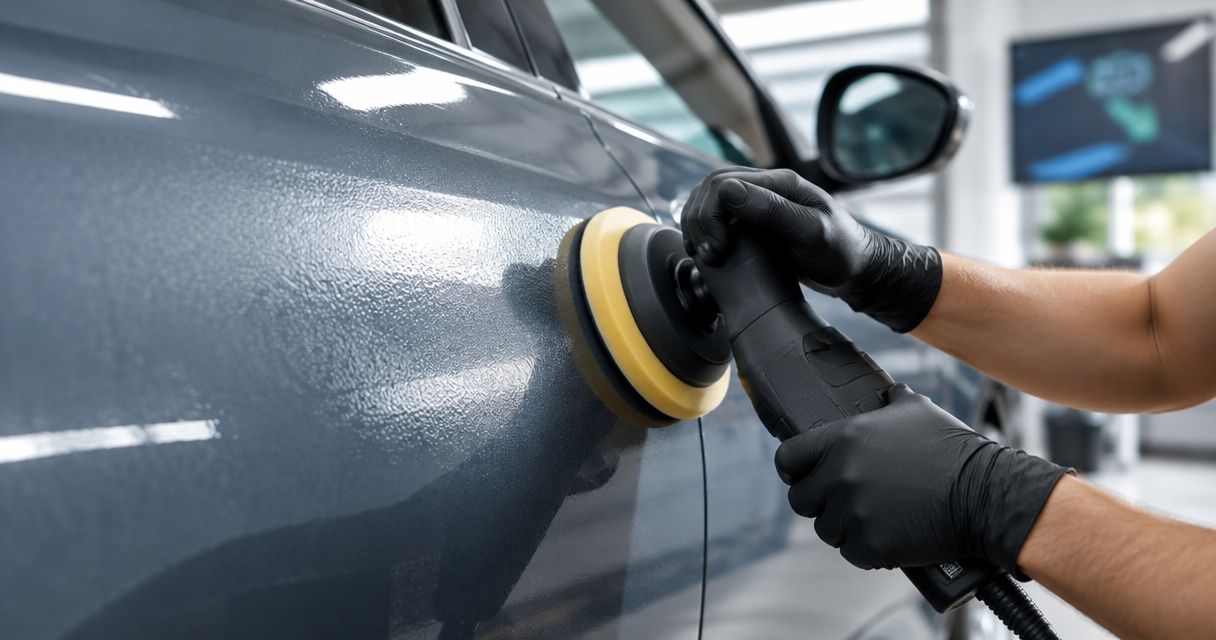
Best for: professional assessment when compatible cleaning leaves visible defects. Glass polishing is a separate corrective process, not simply a stronger version of window cleaning. It requires suitable materials and control of the work area.
Polishing also has limits. Removing material unevenly can create optical distortion, and polishing is not suitable for every coated or treated surface. A windshield with persistent distortion, damage, or impaired visibility belongs with an automotive glass specialist.
Ask what improvement is realistic before authorizing correction. For a 2026 detailing appointment, a clear explanation of the remaining marks is more useful than a promise that every spot will disappear.
How should a detailer approach water-spotted windows?
A careful process starts by identifying the surface and ends with a dry inspection. You should understand the proposed treatment before chemicals or polishing equipment touch the glass.
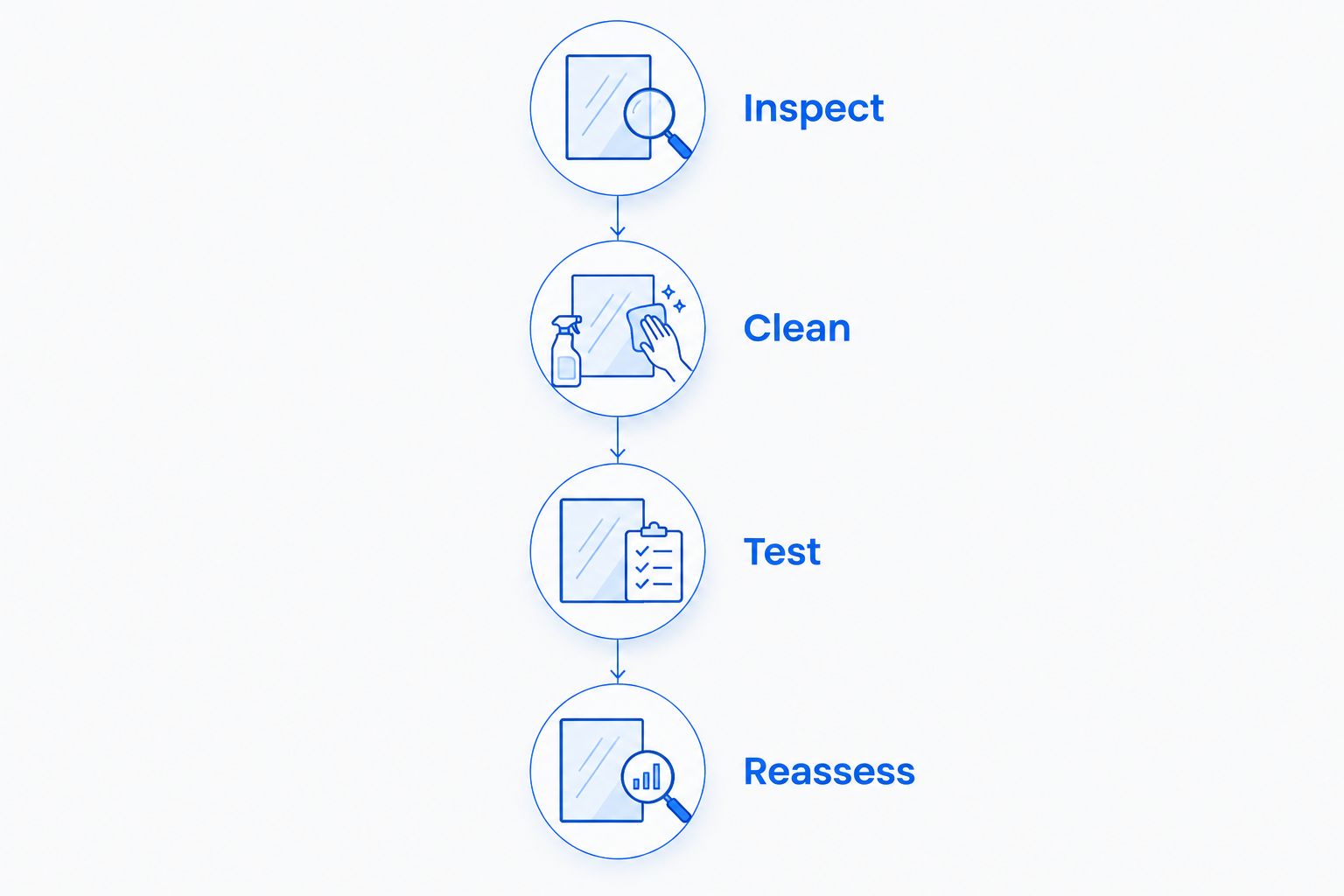
- Inspect. Identify the affected side, check for film or coatings, and note scratches, chips, or existing haze. Describe previous treatments and whether the spots return after washing or parking.
- Clean. Remove loose dirt with products and tools appropriate for the window. This prevents ordinary grime from confusing the inspection and avoids scrubbing dirty glass aggressively.
- Test. Treat a small, inconspicuous area with a compatible method, following the product instructions. Check surrounding materials as well as the glass itself.
- Reassess. Rinse or remove the treatment as directed, dry the area, and inspect the result. Continue only when the test supports the method; discuss remaining defects separately.
This sequence gives you a decision point before the whole window is treated. A successful test supports continuing that particular process, but it does not establish that every mark elsewhere has the same cause.
Why water-spot removal results vary
The right method depends on the window in front of you, not just how severe the spots look in a photograph. These factors belong in the conversation before work begins:
- Surface deposits versus damage. Material on the glass calls for cleaning; changes to the glass surface require a different assessment.
- Repeated exposure. Recurring sprinkler spray or mineral-bearing wash water can leave additional deposits after earlier spots are removed.
- Tint and coatings. Film, surface treatments, and protective coatings affect which cleaners and tools are compatible.
- Previous cleaning attempts. Abrasive pads, scraping, or unsuitable chemicals can introduce damage that resembles or accompanies the original problem.
- Location of the marks. An exterior mineral deposit, interior film, and a defect within a window assembly are different problems.
- Visibility after treatment. A cleaner-looking window is not the same as an undistorted driving view; inspect both before accepting the result.
Photographs help document the affected area, but they do not replace inspection. Include a wider view showing which window is involved and explain what you notice from the driver's seat.
Is water-spot removal safe for tinted windows?
Water-spot removal requires separate checks for the exterior glass and the interior tint film. Many aftermarket films sit on the inside, but you should confirm the actual installation instead of assuming both sides tolerate the same cleaner.
Use the film manufacturer's care instructions on the film surface. Do not apply an exterior mineral remover to interior tint unless the instructions explicitly permit that use, and keep incompatible products away from film edges.
The same caution applies to coated glass. A product described as safe for bare glass is not automatically suitable for every coating, seal, or nearby trim material. Tell the detailer what was installed and provide any care information you received.
For luxury and performance vehicles, this information belongs in your service request even when the spotting looks minor. Protecting existing treatments is part of choosing the right cleaning method, not an optional extra.
Can you remove hard water spots yourself?
You can start with a gentle wash and a compatible automotive glass cleaner, then inspect the dry window. If the spots remain, check the instructions for a purpose-made water-spot remover before deciding whether to proceed.
Stop when you cannot confirm surface compatibility. A household cleaner, abrasive sponge, or improvised acid mixture is not a substitute for knowing what is on the glass and what the treatment affects.
Work on cool glass out of direct sunlight when the product instructions require it. Follow the stated application, removal, and protective-equipment directions; allowing a chemical to dry is not a way to make it work harder.
For your 2026 cleaning kit, prioritize clear labeling and compatibility over claims of maximum strength. If a careful test does not improve the mark, seek an assessment instead of increasing pressure or repeating an unsuitable treatment.
What should you ask before booking mobile detailing?
Describe the problem as water spotting rather than assuming it is included in routine window cleaning. Ask whether the appointment includes an assessment, mineral-deposit treatment, or only general glass cleaning.
Useful questions include:
- Which windows and which sides need treatment?
- How will existing tint or coatings affect the method?
- Will a small test area establish the expected result?
- What happens if deposits come off but visible marks remain?
- What workspace conditions are needed for the proposed treatment?
Royal Touch Mobile Detailing LLC offers mobile vehicle detailing, ceramic coating, paint correction, and window tint services. Discuss the affected glass and any existing treatments when requesting service; a general service description does not establish the condition of your particular window.
When arranging mobile detailing in 2026, mention apartment, office, or parking restrictions before confirming the location. Convenience works best when the work area suits the task and everyone understands the scope beforehand.
Discuss Your Window Concerns
Describe the spots, affected windows, and any existing tint or glass coating.
How do you keep hard water spots from returning?
Remove the exposure where possible, and dry the glass after washing. Moving out of a sprinkler's path addresses the source; repeatedly removing deposits without changing that exposure leaves the same problem waiting to return.
Use clean drying materials and follow the care instructions for existing tint or coatings. Check the edges of mirrors and trim for water that runs back onto newly dried glass, and inspect the windows after everything has dried.
A glass-compatible protective treatment can be part of maintenance, but water beading does not mean minerals cannot remain after droplets evaporate. Protection does not replace cleaning, drying, or compatible aftercare.
Make prevention part of your 2026 routine rather than waiting for the windows to look heavily spotted. After a wash or sprinkler exposure, a dry inspection tells you more than judging the glass while it still looks clear and wet.
FAQ
Can detailing remove hard water spots from windows completely?
Detailing can remove surface mineral deposits completely when the treatment is appropriate for the glass. Etching, scratches, or damaged coatings can remain after the deposits are gone, so complete restoration is not a result to assume.
Why won't regular glass cleaner remove the rings on my car windows?
Regular glass cleaner does not reliably remove bonded mineral buildup. Remaining rings need a compatible mineral-treatment test before anyone concludes that the glass is etched.
Can I use vinegar on tinted car windows?
Do not use vinegar on tint unless the film manufacturer's care instructions permit it. Confirm which side carries the film and use a cleaner approved for that surface.
Will polishing remove water spots from my windshield?
Professional glass polishing can address some remaining surface defects, but it is not suitable for every windshield or condition. Have persistent marks assessed first because improper polishing can create optical distortion.
Does ceramic coating stop water spots on glass?
A protective coating does not make glass immune to mineral deposits. Use only a treatment intended for that glass application, and continue the recommended cleaning and drying routine.
Are cloudy marks inside the window the same as hard water spots?
Cloudy interior marks are not automatically hard water spots. Interior residue, film problems, and defects within a window assembly need different assessments, so identify the affected surface before treatment.
Should I replace a window if detailing doesn't remove the spots?
A failed cleaning attempt does not automatically mean the window needs replacement. Arrange an automotive glass assessment when marks persist, especially if they affect visibility or appear alongside damage or distortion.
One last thing
The most useful inspection happens after the glass dries. Ask to view the treated area from your normal driving position, not only from outside the car where reflections can hide remaining marks.
Do not approve more aggressive treatment just because the window looks clearer when wet. A dry test area, a clear explanation, and an honest stopping point protect your vehicle better than chasing every mark without understanding it.