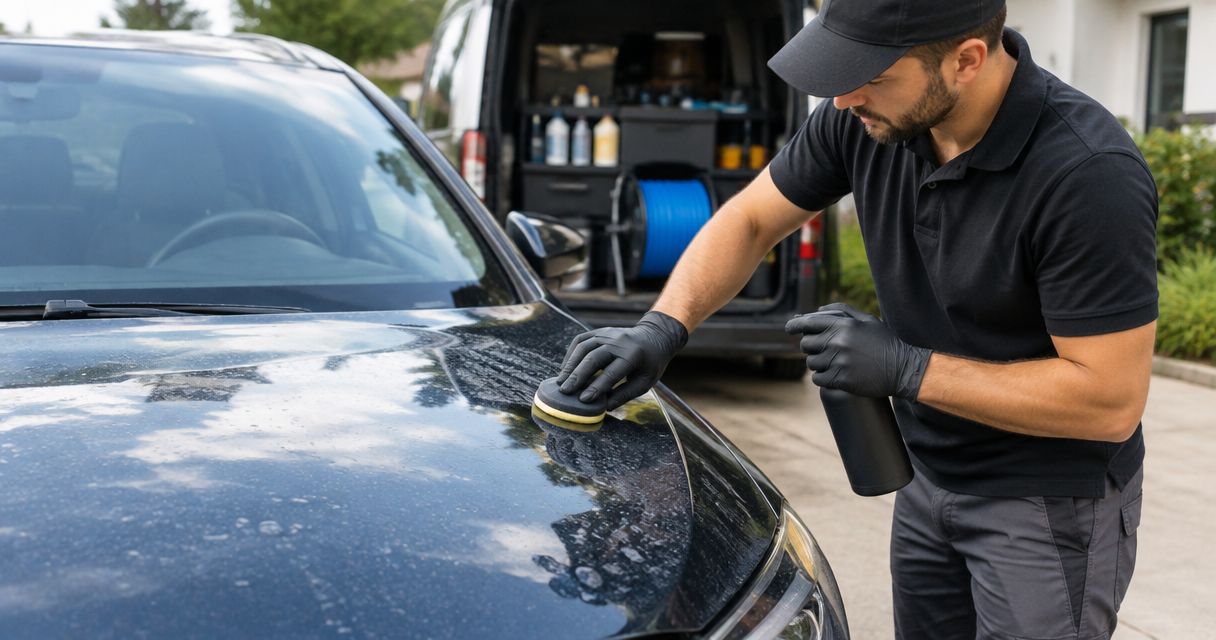
Yes—mobile detailers can remove hard water deposits from paint, but marks etched into the finish need a different approach. Surface minerals call for careful cleaning; shallow etching can require paint correction, while deeper damage can remain. For your 2026 vehicle-care plans, the right next move is an inspection and a small test area—not stronger scrubbing.
- Can mobile detailers fix hard water spots on paint? Yes, but mineral deposits and etched paint need different treatments.
- Royal Touch Mobile Detailing LLC offers mobile detailing and paint correction for owners seeking vehicle care at their location.
- Remove surface deposits before deciding whether polishing is necessary; cleaning does not repair etched clear coat.
- Ceramic coating does not make paint immune to water spots. Drying and careful washing still matter.
Faith-driven service and a commitment to doing the work right the first time guide Royal Touch Mobile Detailing LLC. The family-owned company offers auto, RV, and aviation detailing, along with paint correction and ceramic coating. For daily drivers, premium vehicles, and aircraft alike, choosing a treatment starts with understanding the finish—not assuming every spot needs polishing.
Can mobile detailers fix hard water spots on paint?
Mobile detailing can address water spots when the treatment matches the damage and the working conditions allow safe application. Being mobile does not change the difference between residue sitting on paint and damage within the finish.
The practical comparison for 2026 is not mobile service versus a building. It is cleaning versus correction versus a repair that falls outside detailing.
| Approach | Best for | Main benefit | Limitation |
|---|---|---|---|
| Careful washing | Loose contamination around water spots | Cleans the panel before assessment | Does not reliably remove bonded minerals or etching |
| Paint-compatible mineral remover | Mineral deposits on the surface | Targets residue without immediately polishing paint | Requires material compatibility and controlled application |
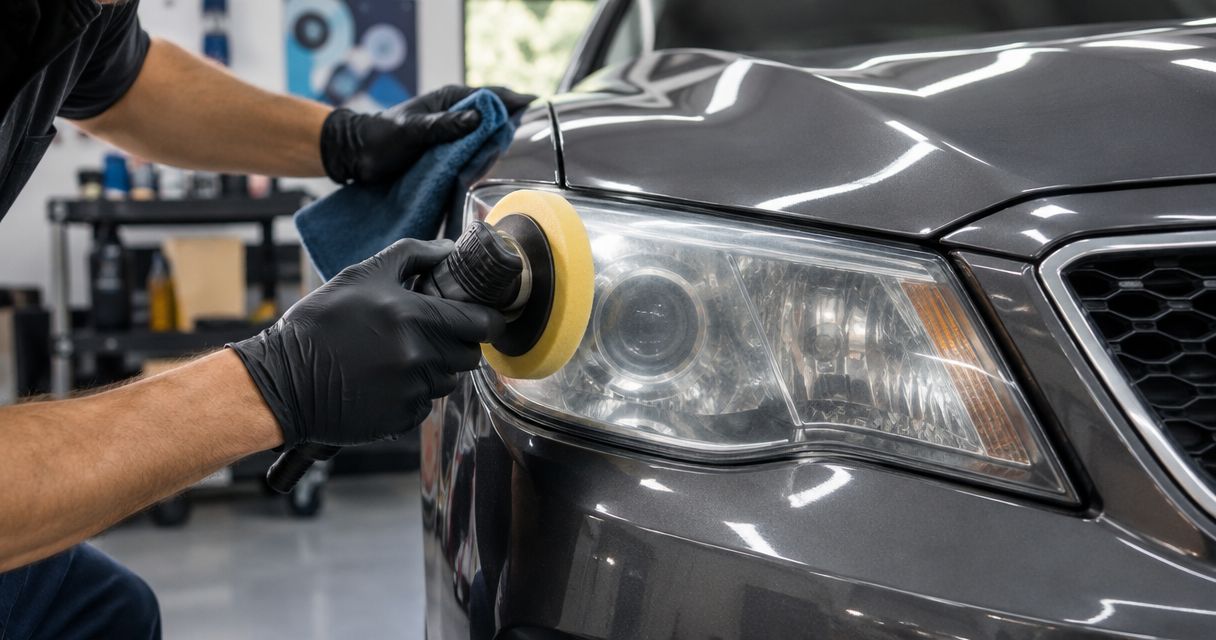
| Paint correction | Etching that can be safely reduced by polishing | Improves defects in the finish | Removes some finish material and cannot safely erase every mark |
| Refinish assessment | Damage beyond safe correction | Establishes whether paint repair is necessary | Falls outside ordinary detailing |
A responsible assessment separates these situations before choosing a chemical or polishing pad. Ask what remains after cleaning and what the proposed treatment is intended to change.
Why this matters
Water spots can look alike even when they need different care. A pale ring might be mineral residue, an etched outline, or residue covering an etched mark. Appearance alone does not establish how far the damage extends.
That distinction protects your paint and your expectations. Repeated scrubbing can add scratches, while unnecessary polishing removes finish material without solving the source of the spotting.
For a daily driver, the priority is a clean, maintainable finish. For a luxury or performance vehicle, preserving the existing finish matters just as much as removing a visible blemish. Neither goal calls for chasing every mark at any cost.
Surface deposits: remove the minerals before polishing
Hard water contains dissolved minerals. When droplets evaporate, those minerals can remain as spots or rings on the surface. A normal wash removes loose dirt, but bonded mineral deposits can need a product formulated for that contamination.
Chemical cleaning is the first treatment to assess when deposits remain after washing. That does not mean any household acid or general-purpose cleaner belongs on automotive paint.
The detailer needs to check the product's instructions against the affected materials, including paint, trim, glass, and any existing protection. A product intended for one surface is not automatically appropriate for the neighboring surface.
After treatment and drying, the panel needs another inspection. If the deposit disappears but an outline remains, the remaining mark needs a fresh assessment rather than repeated applications by habit.
Etched marks: assess whether paint correction is appropriate
Etching is damage to the finish rather than material resting on it. Removing the minerals does not fill or rebuild that damage. Polishing works by refining the surrounding surface, which is why the condition of the finish matters.
A test area helps establish whether a conservative correction improves the mark. The aim is a better finish with sensible preservation—not the most aggressive process available.
If you are arranging correction in 2026, ask how the detailer will distinguish removable deposits from etched defects. Understanding how long paint correction takes to complete starts with the condition being corrected, not just the vehicle's size.
Repainted panels, thin areas, sharp edges, and an uncertain repair history deserve particular caution. A visible mark is not permission to keep removing clear coat until it disappears.
Deep damage: know when detailing should stop
Some etched marks remain after safe cleaning and polishing. Continuing to compound or sand a compromised finish can trade a small blemish for a larger repair.
The appropriate next step is an assessment by a qualified paint-repair professional when the damage exceeds safe correction. A detailer should explain that boundary clearly rather than describe every water spot as removable.
You can also choose to accept a remaining cosmetic defect. On a vehicle with limited finish material left, preserving the paint can be the more sensible decision than pursuing a flawless reflection.
What should happen during a water-spot assessment?
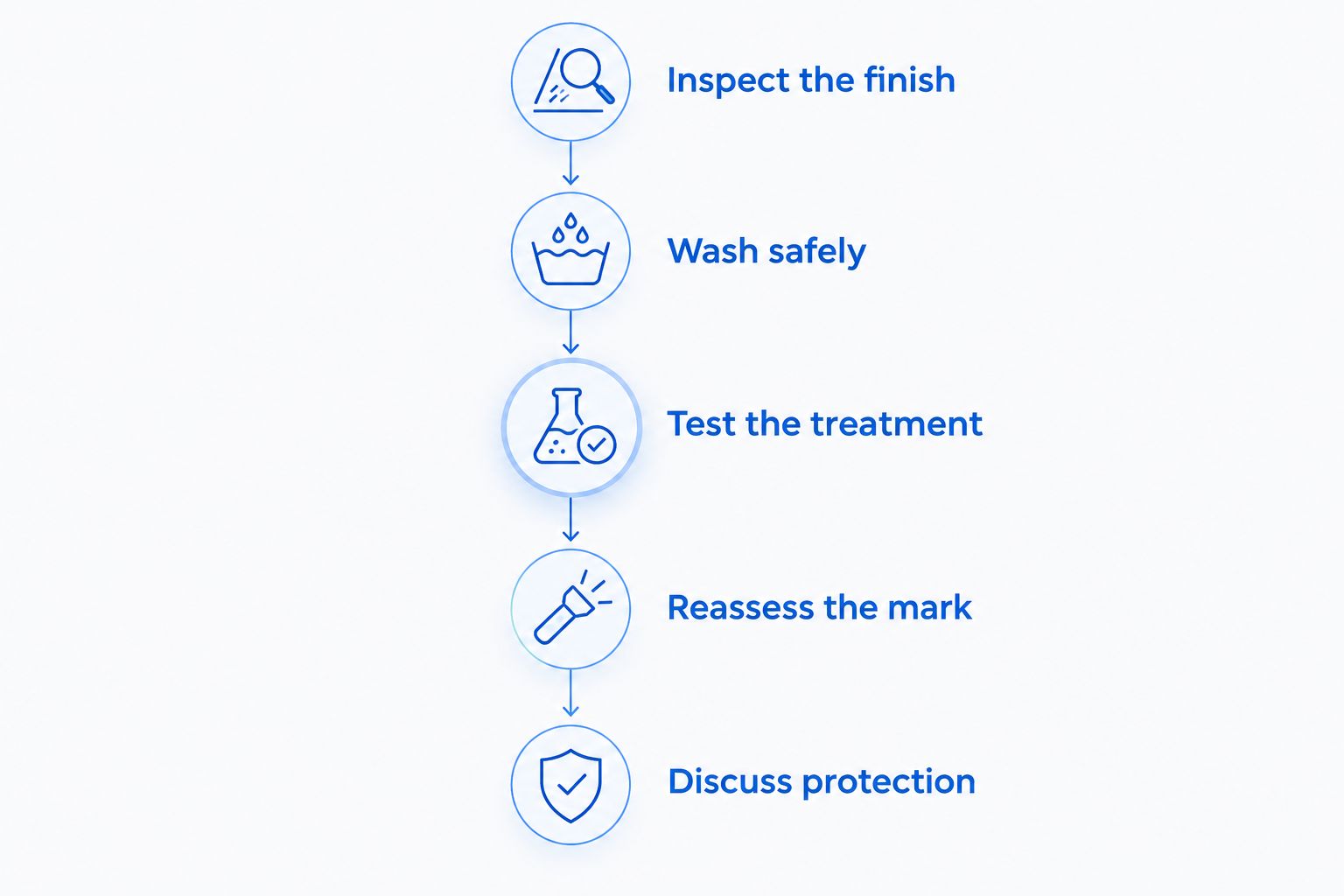
A sound assessment follows a sequence. Each stage answers a question before the next stage introduces a stronger treatment.
- Inspect the finish. Identify the affected panels, visible damage, existing protection, and any known repaint history. Tell the detailer whether the spots followed sprinkler exposure, washing, or another event.
- Wash safely. Remove loose dirt before rubbing or applying a treatment. Inspect the clean, dry panel under suitable lighting.
- Test the treatment. Use a small area to assess a compatible mineral-removal method. Follow the product's application and rinsing instructions.
- Reassess the mark. Determine whether minerals remain, whether an etched outline is visible, and whether further correction is justified.
- Discuss protection. After treatment, address the existing wax, sealant, or coating according to its care requirements. Agree on maintenance that fits how you use and park the vehicle.
This sequence separates cleaning from correction. It also gives you a clear point to discuss a remaining defect before authorizing more abrasive work.
Why water-spot removal results vary
Two panels with similar-looking spots do not necessarily have the same treatment needs. These factors determine the approach:
- Deposit or etching: Surface contamination and damaged paint require different work. Both can occur in the same spot.
- Finish condition: Previous polishing, repainting, and existing damage affect the safe correction options.
- Existing protection: Wax, sealant, ceramic coating, and protective film have different care requirements. Identify the surface before choosing a cleaner.
- Working conditions: A hot panel, direct sunlight, or products drying during application can interfere with safe treatment.
- Affected materials: Painted panels, glass, plastic trim, and aircraft surfaces should not be treated as interchangeable.
Give the detailer what you know, including previous treatments that did not work. A useful history can prevent unnecessary repetition, but a photograph still does not replace inspecting the surface.
What can you safely do before the appointment?
For a 2026 water-spot appointment, photograph the affected panels before applying anything else. Include a wider view and a close view so the detailer can understand the location and pattern. Note any known coating, recent repaint, or previous polishing.
If you wash the vehicle, work on a cool surface and dry it rather than leaving rinse water to evaporate. Avoid dry rubbing, abrasive household pads, and improvised chemical mixtures.
The key distinction in removing hard water spots is separating mineral deposits from damage beneath them; a cleaning method cannot rebuild etched clear coat. Stop experimenting when a mark persists instead of treating persistence as a reason to scrub harder.
Tell the detailer exactly what you applied. Product history matters because the next treatment must account for the surface as it exists now, not as it looked before the first attempt.
Can the work happen in your driveway or parking area?
Mobile treatment needs permission to work, safe access, and conditions that suit the products and equipment being used. Confirm those details before booking rather than assuming any open parking space will work.
Ask about shade or shelter, water and electricity requirements, and any property restrictions. A cool panel and controlled application matter more than the convenience of a particular parking spot. Polishing also needs suitable lighting to assess the finish.
For 2026 appointments, ask what happens if the weather prevents safe treatment. That conversation should establish the plan without promising that every job can proceed outdoors under any conditions.
Royal Touch Mobile Detailing LLC is a fit for owners seeking mobile detailing and paint correction. Its service range also includes RV and aviation detailing, but a car-paint treatment should never be assumed suitable for every RV finish or aircraft component.
Will ceramic coating stop water spots from returning?
Ceramic coating does not make paint water-spot-proof. Water can still dry on a coated surface and leave minerals behind, so parking habits, washing, and drying remain part of caring for the finish.
A coating is not a repair for existing etched marks either. Discuss the paint's condition before adding protection; otherwise, visible defects can remain beneath the newly applied coating.
For your 2026 maintenance plan, focus on the source of repeated exposure. If a sprinkler wets the same side of the vehicle, changing the parking position addresses something another polishing session cannot.
After washing, follow the protection manufacturer's care instructions and dry the vehicle appropriately. If a coated vehicle develops spots, identify the coating and use compatible maintenance methods rather than assuming aggressive polishing is the first answer.
What should you ask before approving treatment?
Ask the detailer to describe the problem and the proposed scope in plain language. You need to understand what the appointment includes, what requires further approval, and what result the finish can safely support.
Useful questions include:
- Are these deposits, etched marks, or both?
- What will the test area establish?
- Does the treatment suit my existing coating or other protection?
- What remaining damage would make you stop correction?
- Will any affected protection need attention afterward?
A clear answer is more valuable than a promise that every spot will disappear. Royal Touch Mobile Detailing LLC offers both mobile detailing and paint correction; discuss which service fits the inspected finish rather than treating them as interchangeable.
FAQ
Can mobile detailers completely remove hard water spots from paint?
Mobile detailers can remove mineral deposits, but complete removal of etched marks depends on the finish and the depth of damage. A test area helps establish what can be improved safely without promising a flawless result.
How do I know whether a water spot is etched into my paint?
A mark that remains after appropriate mineral removal needs assessment for etching or another defect. Looking at an untreated spot alone does not reliably distinguish residue from damaged paint.
Will a normal car wash remove hard water spots?
A normal car wash removes loose contamination but does not reliably remove bonded mineral deposits or etched marks. Inspect the clean, dry panel before deciding on a spot treatment.
Should I use vinegar to remove water spots from my car?
Do not assume household vinegar is appropriate for your vehicle's paint, coating, trim, or other surfaces. Use a product intended for the affected material and follow its instructions, or ask a detailer to assess the spots.
Can paint correction fix etched water spots?
Paint correction can reduce etched water spots when enough suitable finish remains for safe polishing. Deep damage or compromised paint can limit improvement and require a paint-repair assessment.
Can ceramic-coated cars still get water spots?
Ceramic-coated cars can still get water spots because evaporating water can leave minerals on the surface. Compatible washing and drying remain necessary, and coating does not repair existing etching.
Can I book mobile treatment for water spots on an RV or aircraft?
Ask for an assessment specific to the RV or aircraft surface rather than assuming an automotive paint treatment applies. Identify the affected material, existing protection, and any relevant manufacturer care requirements before approving work.
One last thing
A smooth-feeling panel can still have an etched water mark. Touch alone does not establish whether the finish is undamaged, just as a visible ring does not prove polishing is necessary.
Before approving correction, ask to see the cleaned test area under suitable lighting. That small decision keeps the conversation focused on the actual finish—and on doing the right work, not simply doing more work.