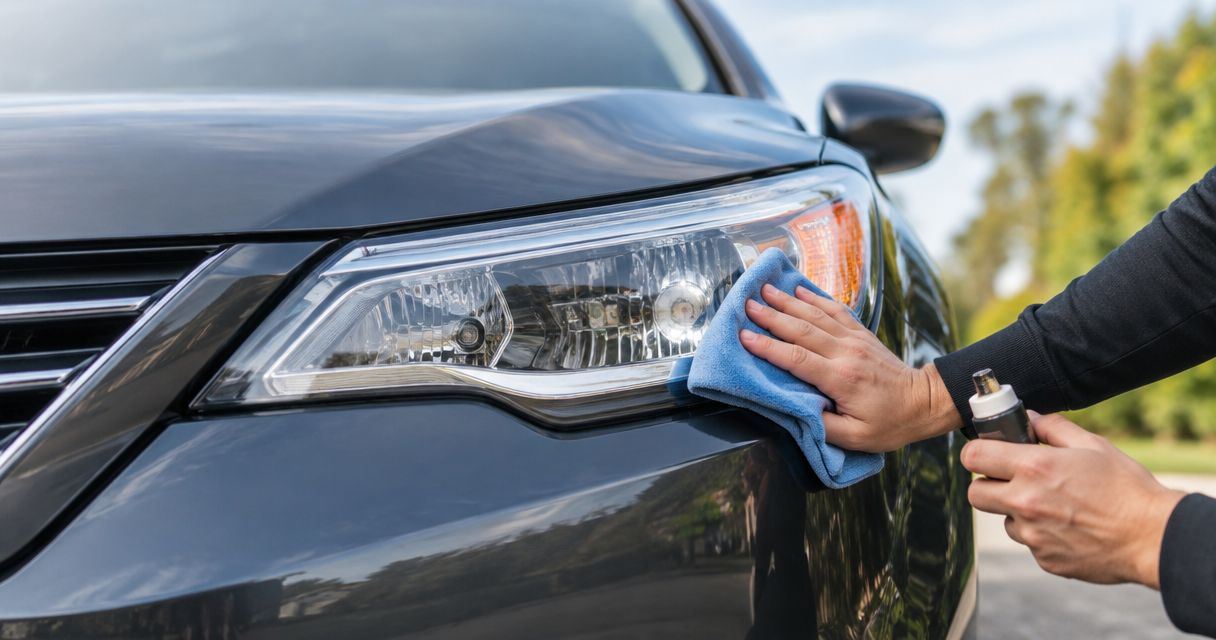
Headlight restoration lasts according to the lens’s condition, the protective finish applied afterward, and the sunlight and wear it receives—not a single reliable calendar interval. Removing yellowing without renewing suitable protection leaves the lens exposed to the conditions that damaged it. For your 2026 decision, judge the repair by its preparation, protection, and aftercare rather than an unsupported lifespan promise.
- How long does headlight restoration last? Lens condition, UV protection, and exposure determine durability.
- Choose headlight restoration for exterior oxidation, not cracks, internal moisture, or electrical faults.
- Royal Touch Mobile Detailing LLC offers mobile vehicle care; confirm the headlight work and protection included before booking.
- Clear-looking lenses still need appropriate protection and ongoing care.
How long does headlight restoration last?
The protective finish matters as much as the polishing. A lens that looks clear when the work ends still needs protection appropriate for its material. A shiny surface alone does not establish how long the result will hold.
Most modern plastic headlight lenses have a protective outer finish. Sunlight and weathering damage that finish over time, producing the familiar cloudy or yellow appearance. Restoration addresses damaged exterior material; the finishing system determines what protects the newly exposed surface.
Start with the guide to headlight restoration methods if you need help understanding the approaches. Then ask which method fits your lenses, rather than choosing solely from a before-and-after photograph.
| Approach | Best for | Main advantage | Main limitation |
|---|---|---|---|
| Polishing alone | Correcting superficial exterior haze | Improves the appearance of affected exterior material | Polishing by itself does not establish lasting UV protection |
| Restoration with lens-appropriate protection | Exterior oxidation on otherwise serviceable lenses | Addresses both surface damage and the protective finishing step | Results depend on preparation, product suitability, and exposure |
| Headlight assembly replacement | Damage restoration cannot correct | Addresses a failed or damaged assembly rather than only its surface | Requires correct fitment and assessment of the underlying problem |
These are different repairs, not interchangeable packages. Restoring the outside cannot fix every reason a headlight looks cloudy or performs poorly.
Why this matters
Royal Touch Mobile Detailing LLC’s faith-driven approach centers on doing work right the first time, with vehicle care that includes premium vehicles and aircraft. That same practical standard belongs in your headlight decision: understand the problem before selecting the treatment. Clear explanations matter more than a dramatic sales claim.
For daily drivers, headlight condition concerns more than appearance. Cloudy exterior material scatters light, while a failed bulb, incorrect aim, or internal fault calls for a different diagnosis. Do not treat restoration as a substitute for checking a lighting problem.
Luxury and performance vehicles deserve the same distinction. An attractive lens does not prove the assembly is functioning correctly, and an expensive vehicle does not make an unsuitable surface treatment appropriate. Start with condition and compatibility, not the badge on the hood.
Polishing alone: appearance without a complete protection plan
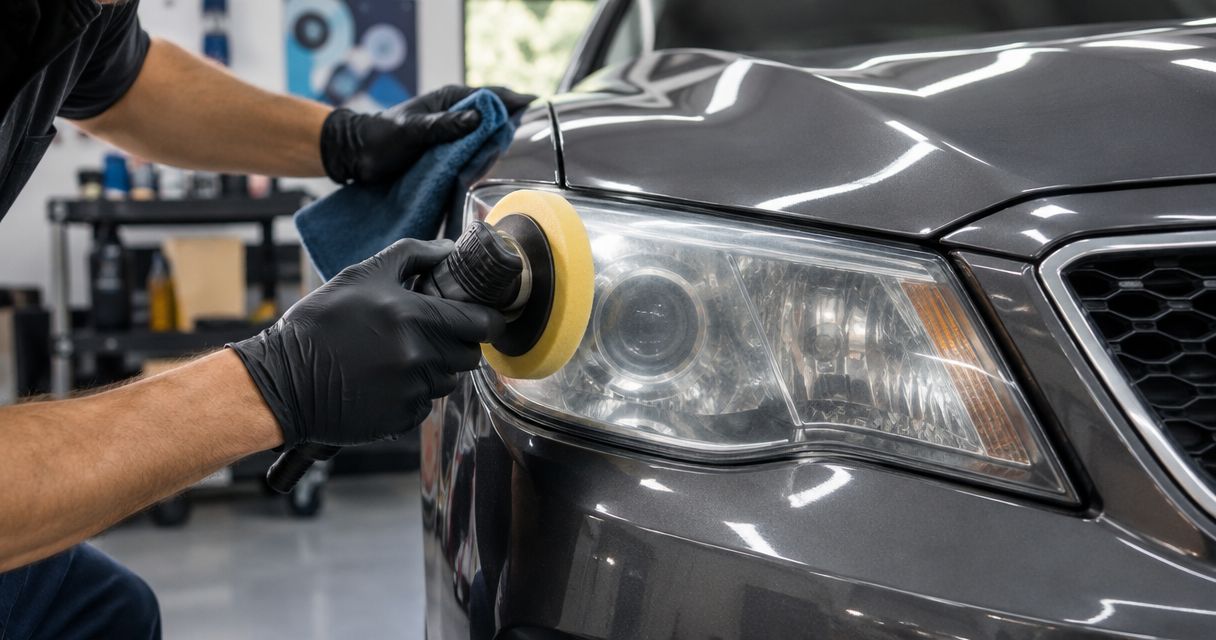
Polishing removes or refines affected exterior material so the lens looks clearer. It is a surface-correction step, not automatic proof that the lens has regained an appropriate protective finish.
The advantage is straightforward: suitable exterior defects can respond to correction. The limitation is just as important. If the process ends without appropriate protection, the exposed plastic remains vulnerable to weathering.
Best for: superficial exterior haze, provided the finishing plan addresses protection separately. Ask whether polishing is the whole service or one stage of a fuller restoration.
For a 2026 restoration quote, have the provider name the final protective product and explain its intended use. The word sealed does not tell you whether the material is suitable for a plastic headlight lens or what maintenance it needs.
Restoration with protection: assess the entire process
A protection-focused restoration addresses damaged exterior material and finishes the lens with a compatible protective system. Depending on the condition and product instructions, preparation can involve controlled sanding, polishing, cleaning, or a combination of those steps.
Do not assume every lens needs aggressive correction. The provider should choose the process after inspecting the surface, including any previous coating or repair. Removing more material is not a benefit by itself.
Best for: exterior oxidation where the lens and assembly remain suitable for restoration. The benefit is a repair that considers protection as well as clarity; the limitation is that it cannot resolve damage inside the assembly.
Ask for written aftercare instructions before the work begins. If the protective product has curing restrictions, those instructions should explain how to handle washing and exposure while it cures. Follow that product’s directions rather than a generic timetable.
Replacement: when surface restoration is the wrong repair
Cracks, damaged mounting points, internal deterioration, and recurring moisture require assessment beyond exterior polishing. Some problems involve seals or serviceable components; others require replacement. A qualified repair professional should identify the cause.
Best for: assemblies with damage that surface restoration cannot address. Replacement addresses the affected assembly, but choosing the correct part and checking installation remain necessary.
Do not repeatedly polish a lens because the first treatment failed to remove internal haze. That repeats the wrong intervention. Establish whether the defect is outside, inside, or within the lens material before authorizing more work.
Why headlight restoration longevity varies
Your parking habits and the finishing system both affect the result. These factors explain why matching another driver’s experience is not a dependable maintenance plan:
- Starting condition: Light exterior oxidation and heavily weathered, previously treated lenses present different preparation needs.
- Surface preparation: Contamination and remaining damaged material affect how the finishing system is applied to the lens.
- Protective finish: The product must suit the lens material and intended application; a general detailing label is not enough.
- Sun and weather exposure: Outdoor parking exposes lenses to sunlight and weather that covered storage reduces.
- Road wear: Grit, debris, and repeated abrasion affect the exposed surface, even when the lens receives appropriate care.
- Aftercare: Abrasive scrubbing and incompatible cleaning products can damage the surface or protective finish.
For your 2026 maintenance plan, record what was applied and keep its care instructions. That gives you a useful reference if the appearance changes, instead of leaving you to guess what the previous treatment involved.
How to assess a restoration before booking
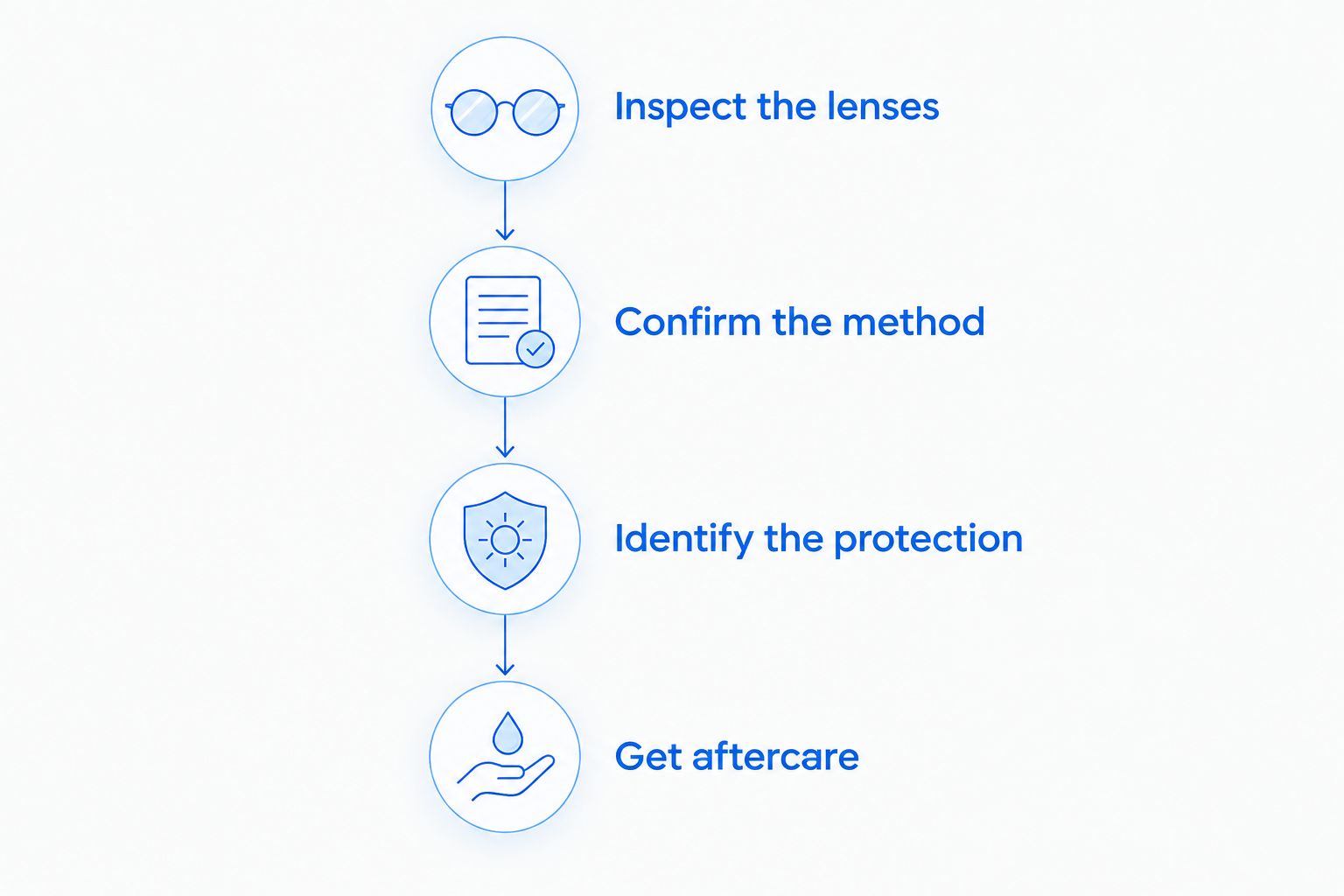
Use these 4 steps to separate a suitable repair from a cosmetic shortcut. You do not need specialist vocabulary; you need clear answers about the defect and the proposed finish.
- Inspect the lenses. Clean away ordinary dirt first, then look for exterior yellowing, cracks, persistent internal moisture, or an uneven existing finish. Ask for a diagnosis if you cannot distinguish them.
- Confirm the method. Have the provider explain what material will be corrected and why. Ask how nearby paint, trim, and other surfaces will be protected during the work.
- Identify the protection. Ask for the protective product’s name and whether its instructions cover plastic headlight lenses. Do not substitute a general claim about ceramic coating for that answer.
- Get aftercare. Request the actual curing and cleaning directions. Confirm which changes should prompt a return inspection and which problems need a repair shop instead.
Keep the answers with your vehicle’s maintenance records. A clear description of the work helps a future provider identify what is already on the lens and avoid treating an unknown finish as bare plastic.
Ask these 3 questions before approving the work
- Is this damage on the outside, or does the assembly need further inspection?
- What protects the lens after correction, and is it intended for this application?
- What care does that finish require, and what does any written warranty actually cover?
A warranty and an expected service life are not the same thing. Read the conditions instead of treating the warranty period as proof that every lens will stay unchanged throughout it.
Does ceramic coating make headlight restoration permanent?
Ceramic coating does not make headlight restoration permanent. The term describes a broad product category, not a universal approval for every plastic lens or a fixed durability result.
A coating intended for painted bodywork should not automatically be treated as a substitute for a headlight-specific protective system. Ask whether the exact product is suitable for the lens and whether it is the primary protection or an additional maintenance layer.
Keep the discussion specific in 2026: what is being applied, to which surface, after which preparation? Those answers are more useful than a coating name without application details.
Can I restore headlights myself?
DIY headlight restoration is an option when the damage is external and you can follow a suitable product’s complete instructions. Its limitation is the need to diagnose the defect correctly and perform the preparation and finishing steps without damaging nearby surfaces.
Do not mix methods from unrelated products or skip protection because the lens already looks clear. Follow the selected system’s directions, including masking, application conditions, and aftercare.
Stop if you find cracks, internal damage, or uncertainty about a previous finish. Best for: owners comfortable with careful surface work on a confirmed exterior problem. Professional assessment is the better next move when the defect is unclear.
How do I know when restored headlights need attention again?
Restored headlights need attention when clean lenses show renewed yellowing, haze, peeling, or an uneven protective finish. Inspect them after washing so road film does not get mistaken for failing restoration.
Compare both headlights, not just the one that first caught your attention. Different appearance between the 2 lenses is a reason to investigate their condition and repair history, not proof that they need the same treatment.
If night visibility changes, arrange a lighting-system check rather than assuming oxidation is responsible. Lens condition, bulb operation, and headlight aim are separate checks.
Care that supports the restored finish
Wash lenses using products and tools compatible with the applied protection. Rinse loose grit before wiping, avoid abrasive household pads, and follow the product instructions for any maintenance treatment. More scrubbing is not better care.
Covered parking reduces direct exposure when it is practical. It does not eliminate the need to inspect the finish or maintain clean lenses, especially on a vehicle driven regularly.
Build a simple 2026 record: restoration date, product applied, care instructions, and photographs taken after cleaning. Keep the lighting similar when taking later photographs so differences in glare do not confuse your comparison.
Avoid stacking unrelated protectants simply because each bottle mentions shine. If you want to add a maintenance product, confirm compatibility with the existing finish first.
Where mobile vehicle care fits
Royal Touch Mobile Detailing LLC is best for owners seeking mobile detailing for cars, RVs, and aircraft. Its services include ceramic coating, paint correction, and window tint, with a family-owned approach to vehicle care.
Mobile detailing offers convenience, but it does not replace mechanical diagnosis or make every surface treatment suitable for every vehicle. Ask Royal Touch Mobile Detailing LLC whether headlight assessment and restoration are included in the work you want before booking. Describe the lens condition rather than assuming a general detail includes correction and protection.
Discuss Your Vehicle’s Care
Ask about the work your vehicle needs and confirm the services included before booking.
FAQ
How long does headlight restoration last on a car parked outside?
Outdoor headlight restoration has no single dependable lifespan because sunlight, weather, preparation, and protection differ. Ask for an expectation tied to the actual finishing product and your parking conditions.
Will my headlights turn yellow again after restoration?
Headlights can yellow again after restoration as their protective finish weathers or becomes damaged. Appropriate protection and compatible care address the conditions that contribute to that deterioration.
Is professional headlight restoration permanent?
Professional headlight restoration is not permanent. It corrects suitable exterior damage, but the lens and protective finish still face sunlight, weather, and road wear.
Can toothpaste give me lasting headlight restoration?
Toothpaste is not a complete headlight restoration system. Even if abrasion changes the surface appearance, that does not establish suitable protection for the lens afterward.
Does a ceramic coating replace headlight UV protection?
A ceramic coating is not automatically a replacement for headlight UV protection. Confirm that the exact product is intended for the lens material and the proposed application.
Should I restore headlights that have moisture inside?
Internal moisture needs diagnosis before you choose exterior headlight restoration. Polishing the outside does not repair a leak, damaged seal, or another internal cause.
How soon can I wash headlights after restoration?
Wash restored headlights according to the applied protective product’s curing instructions. Get those directions from the provider because the correct waiting period depends on the finishing system.
One last thing
A clear-looking headlight and a protected headlight are not necessarily the same thing. Before approving restoration, ask what remains on the lens after the polishing is finished. That question gets to the part of the job a photograph cannot explain.