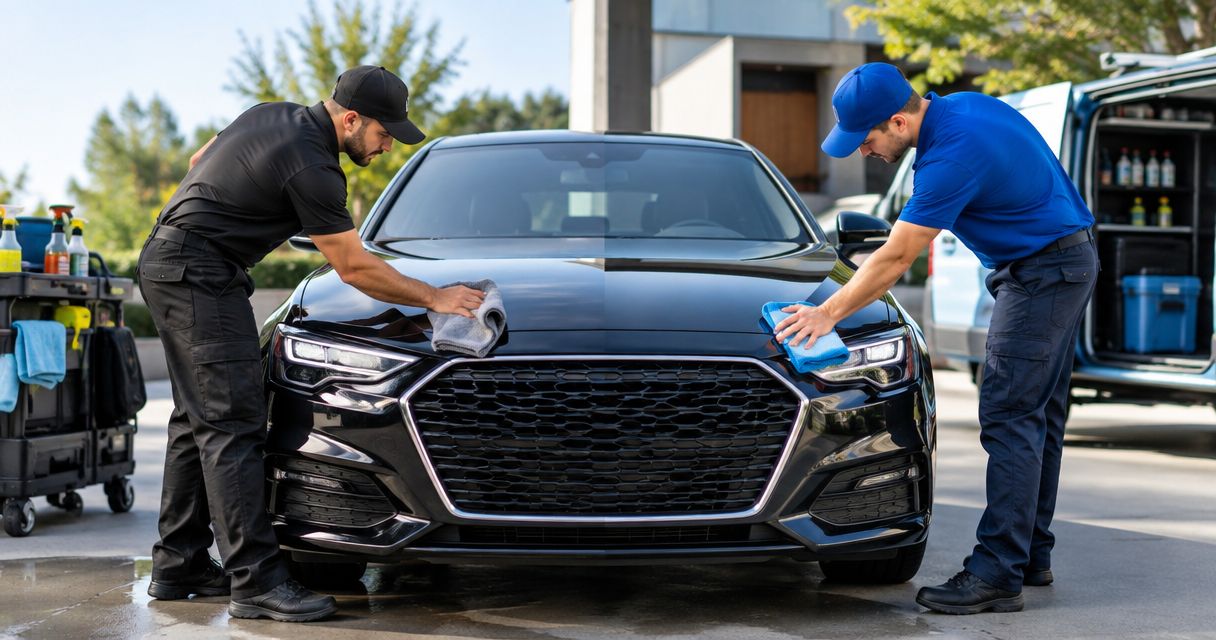
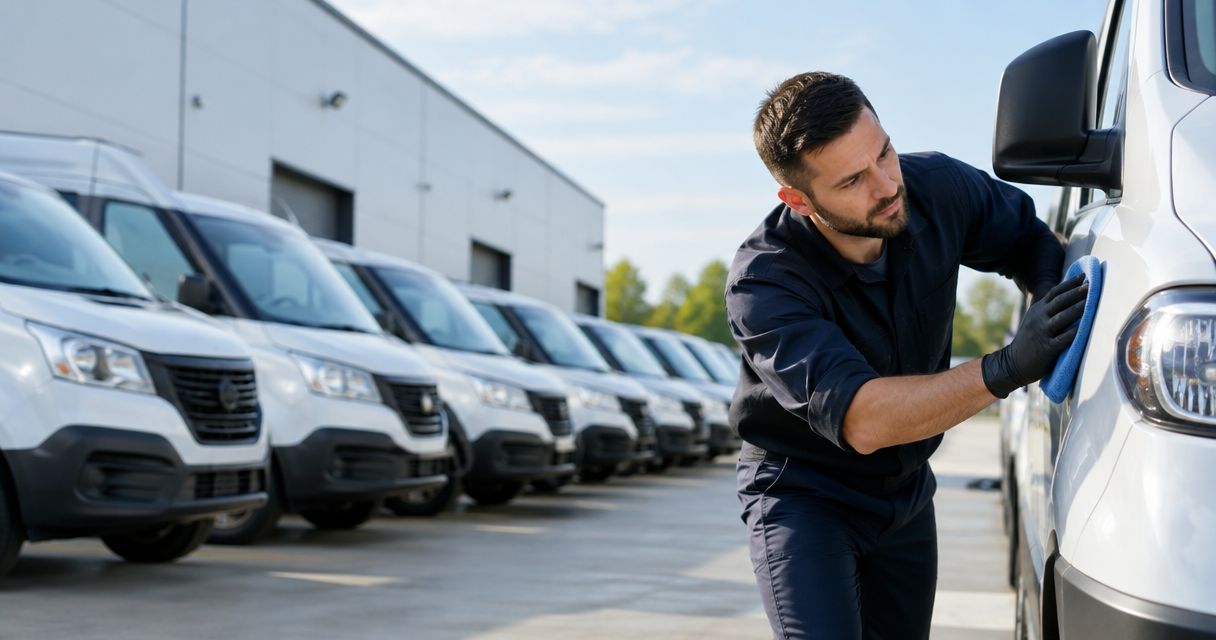
Fleet vehicle ceramic coating is a surface treatment applied to prepared vehicle paint with the aim of supporting exterior protection and easier routine cleaning across a working fleet. For your 2026 fleet plan, Royal Touch Mobile Detailing LLC brings a faith-driven commitment to doing work right the first time; this guide explains how to match coating, preparation, and maintenance to your vehicles without treating protection as a promise against damage.
- Royal Touch Mobile Detailing LLC is best for fleet owners seeking mobile ceramic coating service in North Carolina.
- Ceramic coating for fleet vehicles supports exterior care; it does not replace washing or prevent stone chips.
- Choose paint correction for existing finish defects and paint protection film where impact protection is the priority.
- Start with one pilot vehicle, document maintenance, and expand only after reviewing the actual workflow.
Why ceramic coating matters for fleet vehicles
Fleet care is a scheduling decision as much as an appearance decision. You need vehicles ready for their routes, a repeatable wash process, and protection that matches how each vehicle works.
A customer-facing passenger vehicle and a work truck do not need identical treatment. Their paint condition, road exposure, graphics, and expected time in service all affect the decision. Choose protection by vehicle use, not by fleet size alone.
Ceramic coating creates a bonded protective layer on a suitable, prepared surface. Its water-repelling behavior can help release dirt during cleaning, but traffic film, bird droppings, and other contamination still need removal. Coating is not permission to leave a vehicle dirty.
For a family-owned service business, a delivery operation, or a passenger transport fleet, consistent appearance also means consistent care instructions. A finish that receives careful preparation but abrasive washing afterward is a poor match for the investment.
Make your 2026 decision around controllable factors: preparation, downtime, wash technique, and inspection. Do not build the case around an assumed resale increase or a promised reduction in labor that you have not measured.
How to plan ceramic coating for your fleet
Start with records you can create yourself: vehicle photographs, wash notes, and dispatch schedules. Professional service becomes useful when preparation and application exceed your team's skills or available working time, not because every maintenance task requires a specialist.
The process below follows the order of the decisions. Assess the fleet before choosing protection, then arrange the work and assign responsibility for maintenance.
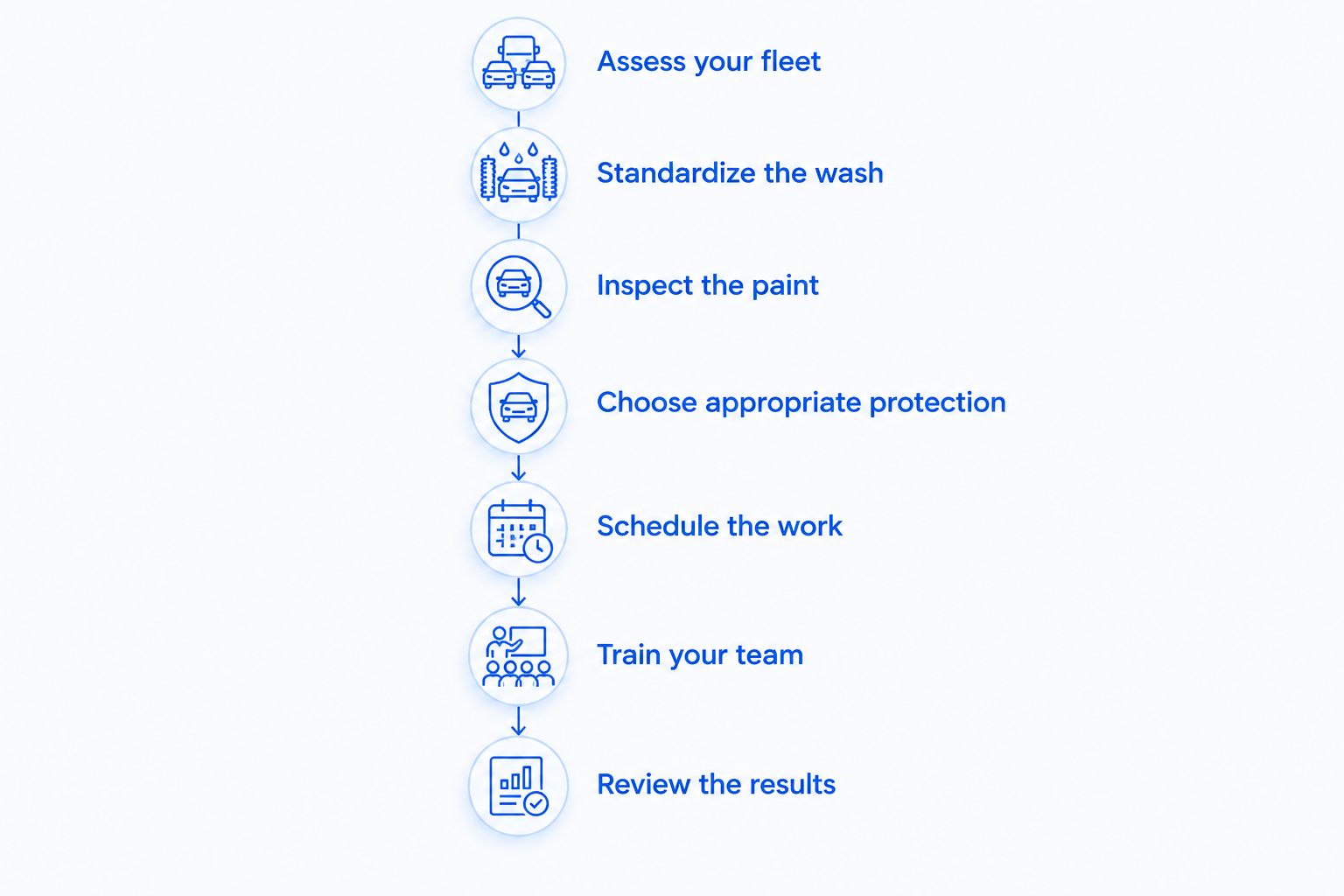
Assess your fleet
Create a simple vehicle register before requesting service. A spreadsheet and clear photographs are enough to identify which vehicles need attention first. Record the condition you can see rather than labeling every vehicle as needing the same package.
Start with 1 pilot vehicle that represents your normal work. A rarely used vehicle will not show how a coating fits the demands of your regular routes and cleaning routine.
Separate painted panels from vinyl graphics, unpainted trim, glass, and other surfaces. A paint coating is not automatically appropriate for every material on the vehicle. Ask for surface-specific guidance before including them in the scope.
- Record vehicle type, daily use, parking conditions, and intended retention period.
- Photograph scratches, stained areas, graphics, and damaged paint before service.
- Identify the person responsible for washing each vehicle.
- Choose a representative pilot vehicle with a known maintenance history.
Standardize the wash
Write down your current wash process before changing it. Record who washes the vehicles, which tools touch the paint, and how the vehicles are dried. This gives you a baseline for deciding whether your team can maintain a coated finish correctly.
Correct the wash process before coating the fleet. Dirty towels, contaminated wash tools, and aggressive contact can mark paint regardless of the protective treatment. A coating cannot compensate for poor handling.
Use separate tools for wheels and painted bodywork, and follow the cleaner's directions. For the pilot, observe 2 wash cycles as a practical workflow check, not as proof of coating durability. Note where staff need clearer instructions.
- Rinse loose dirt before making contact with painted panels.
- Keep wheel-cleaning tools separate from paint-cleaning tools.
- Follow product dilution and surface-use instructions.
- Use clean drying materials and replace contaminated towels.
- Record any wash method used by an outside cleaning provider.
Inspect the paint
Wash the vehicle, then inspect its finish in clear lighting. Look for existing scratches, dull areas, bonded contamination, and previous repairs. Photograph the findings so your team and the detailer agree on the starting condition.
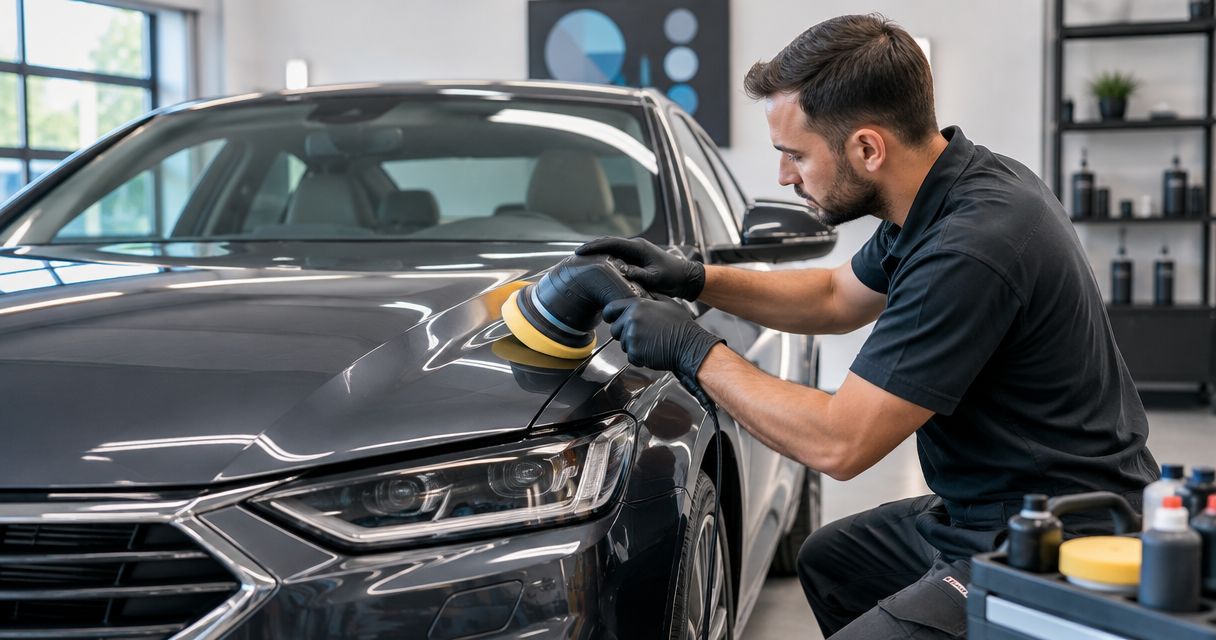
Paint correction addresses suitable finish defects through controlled polishing. Ceramic coating does not perform that repair. Applying coating over visible defects does not make those defects disappear.
Royal Touch Mobile Detailing LLC offers both paint correction and ceramic coating, giving fleet owners a way to discuss preparation and protection together. The limitation remains the vehicle's condition: damaged paint, exposed metal, and failing finishes require assessment beyond a coating application.
For more background, review the paint correction stages guide. Ask what preparation your vehicle needs rather than selecting a polishing stage from its name alone.
- Inspect clean paint before agreeing to the service scope.
- Separate removable contamination from scratches and paint failure.
- Ask which defects correction can address and which will remain.
- Confirm how repaired panels and vehicle graphics will be handled.
Choose appropriate protection
Define the problem you want to solve. Easier routine cleaning, improved appearance, and protection against stone impacts are different goals. They do not point to the same treatment.
Ceramic coating suits a fleet that will receive regular, careful cleaning. Paint protection film addresses physical impact exposure more directly than a liquid coating, although it also requires suitable installation and maintenance. Wax or sealant remains an option when your operation prefers a simpler, repeatable application routine.
For your 2026 selection, compare the complete process rather than the protection label. Preparation, access to maintenance, and vehicle turnover belong in the decision alongside the finish you want.
- Write down the primary goal for each vehicle group.
- Choose coating for a maintained finish, not scratch-proofing.
- Consider film where stone-chip exposure drives the decision.
- Keep a simpler protection routine for vehicles whose use does not justify extensive preparation.
Schedule the work
Use your dispatch calendar to identify a realistic service window. Begin with the pilot vehicle and keep other vehicles available for normal operations. Do not book the entire fleet before checking the application and aftercare requirements.
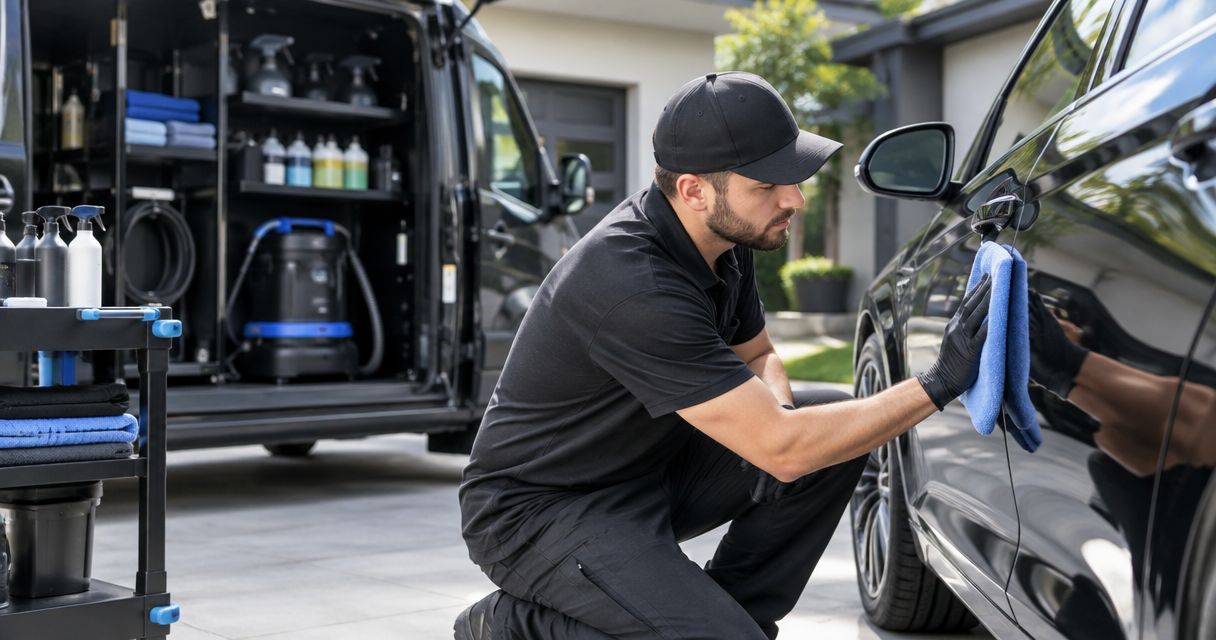
A mobile service moves vehicle care to an agreed location, but coating still needs suitable working conditions. Ask about shelter, access, preparation space, and the coating manufacturer's instructions for curing and initial washing.
Let the actual application instructions set the return-to-service plan. There is no universal waiting period that applies to every coating and environment. Confirm it before assigning the vehicle to a route.
- Share dispatch commitments and the proposed working location.
- Confirm space, weather protection, and access requirements.
- Obtain written instructions for curing and the first wash.
- Schedule vehicles in groups that your operation can release.
- Assign a contact who can approve changes to the preparation scope.
Train your team
Give drivers and cleaners a short care sheet they can use without technical knowledge. Start with the coating provider's instructions, then translate them into your own operating routine. Keep the same version with staff and any outside wash provider.
Create 3 checkpoints: before washing, during washing, and after drying. Before washing, identify heavy contamination; during washing, check tools and cleaners; after drying, inspect the finish and record anything unusual.
Promptly address bird droppings and similar contamination using the recommended method. Do not assume that aggressive scrubbing is safer because the vehicle is coated. Escalate anything the team cannot remove through approved routine cleaning.
- Name the approved cleaning products and tools in the care sheet.
- Explain how to handle fresh contamination without dry rubbing.
- Keep towels and wash tools clean between vehicles.
- Tell staff whom to contact about marks, stains, or damaged panels.
Review the results
Evaluate the pilot using the same records you created before service. Log cleaning time if that matters to your operation, photograph the finish consistently, and ask the cleaner whether the process is easy to follow.
Do not interpret water beading alone as a complete condition report. Dirt and surface contamination can change water behavior. Ask the provider to assess persistent changes rather than immediately assuming the coating needs replacement.
For your 2026 fleet review, expand only when the service and maintenance process fit your actual operation. A mixed approach is valid: some vehicles need coating, some need repair first, and others need only a disciplined wash-and-protect routine.
- Compare records from similar routes and cleaning conditions.
- Log maintenance difficulties alongside appearance improvements.
- Inspect the pilot before arranging the next service group.
- Update the care sheet when instructions change.
Compare protection options for fleet vehicles
The best option solves your fleet's main problem without adding maintenance you cannot support. This comparison separates cleaning support, appearance improvement, and impact protection. None of these options eliminates routine care.
| Option | Best for | Main advantage | Key limitation |
|---|---|---|---|
| Routine washing with wax or sealant | Fleets that prefer repeatable basic exterior care | Combines cleaning with a renewable protective treatment | Requires reapplication according to the product and operating conditions |
| Ceramic coating | Fleets committed to careful ongoing washing | Provides a bonded protective layer with water-repelling behavior | Does not prevent stone chips or remove existing scratches |
| Paint correction followed by coating | Vehicles with suitable finish defects and an appearance priority | Addresses correctable defects before adding protection | Requires condition assessment; not every defect can be safely removed |
| Paint protection film | Vehicles where impact exposure is the main concern | Adds a physical film over selected painted areas | Coverage, installation quality, and film care affect suitability |
| Royal Touch Mobile Detailing LLC ceramic coating service | North Carolina fleet owners seeking mobile preparation and coating | Offers mobile detailing, paint correction, and ceramic coating services | Confirm location coverage, working conditions, and fleet scheduling before booking |
Do not confuse a service provider with a protection material. The provider prepares and treats the vehicle; the selected treatment determines what kind of protection you are buying. Ask for both parts of the scope in writing.
Plan your fleet's exterior care
Discuss vehicle condition, mobile service coverage, and ceramic coating preparation.
Common mistakes fleet owners make
Treating every vehicle alike
A customer-facing car and a heavily worked truck have different priorities. Group vehicles by use, finish condition, and retention plans before deciding which ones warrant correction and coating.
Coating before fixing the wash process
Abrasive cleaning habits remain abrasive after application. Train the people who maintain the vehicles first, including outside cleaners, so preparation is not followed by avoidable finish damage.
Forgetting graphics and repaired panels
Fleet vehicles often carry branding or receive panel repairs. Identify those surfaces during inspection and confirm the appropriate treatment; do not assume paint instructions apply to vinyl or recently refinished panels.
Planning around unsupported savings
Do not assign a labor saving, service life, or resale benefit that you have not documented. Use the pilot's actual maintenance records to decide whether expanding the program makes operational sense.
Overlooking accident and repair follow-up
A replaced or refinished panel needs its own assessment. Tell the repair shop and detailer about existing protection, and follow the refinisher's instructions before arranging treatment for repaired paint.
FAQ
Is ceramic coating worth it for fleet vehicles?
Ceramic coating is a suitable choice for fleet vehicles when you can support careful washing and want a maintained protective finish. Assess a representative vehicle first rather than assuming the same treatment suits the entire fleet.
Does ceramic coating stop scratches and stone chips?
Ceramic coating does not make fleet vehicles scratch-proof or prevent stone chips. Consider paint protection film when physical impact protection is the main objective, and retain careful washing practices with either treatment.
Can you ceramic coat vehicles with company graphics?
Confirm compatibility before applying a coating to vehicle graphics. Vinyl, painted panels, trim, and glass need surface-specific assessment and instructions.
Do fleet vehicles need paint correction before coating?
Fleet vehicles need paint correction only when their condition and appearance goals justify it. Clean and inspect the finish first, then agree on which defects can be addressed and which will remain.
How soon can a coated fleet vehicle return to work?
Return-to-service timing depends on the selected coating, application conditions, and manufacturer instructions. Obtain the curing and initial-wash requirements before committing the vehicle to its next route.
Can Royal Touch Mobile Detailing LLC help with fleet ceramic coating?
Royal Touch Mobile Detailing LLC offers mobile detailing, paint correction, and ceramic coating throughout North Carolina and parts of Virginia and South Carolina. Confirm your location, fleet size, and working conditions when discussing service.
How should I evaluate a fleet coating program in 2026?
Evaluate a fleet coating program in 2026 using documented vehicle condition, wash practices, cleaning records, and scheduling requirements. Start with a representative pilot vehicle and expand only after reviewing the maintenance process.
One last thing
The person washing the vehicle belongs in the coating decision. Ask that person to review the care instructions before approving your 2026 fleet plan. If the instructions cannot fit the daily routine, change the routine or choose a different protection approach before treating the whole fleet.