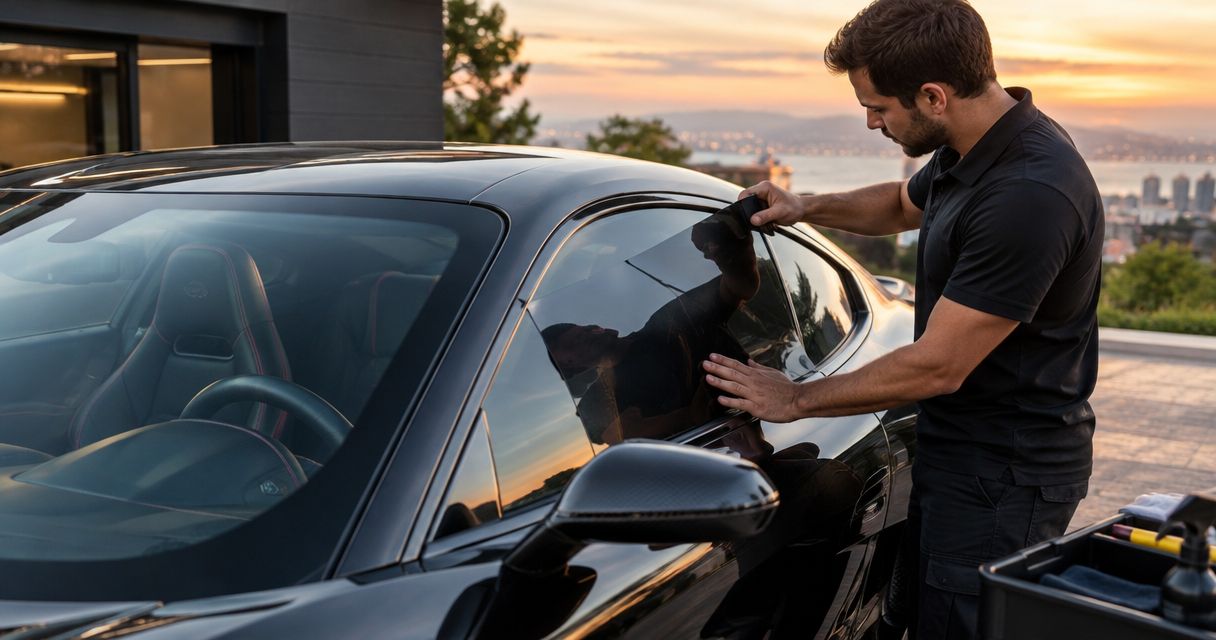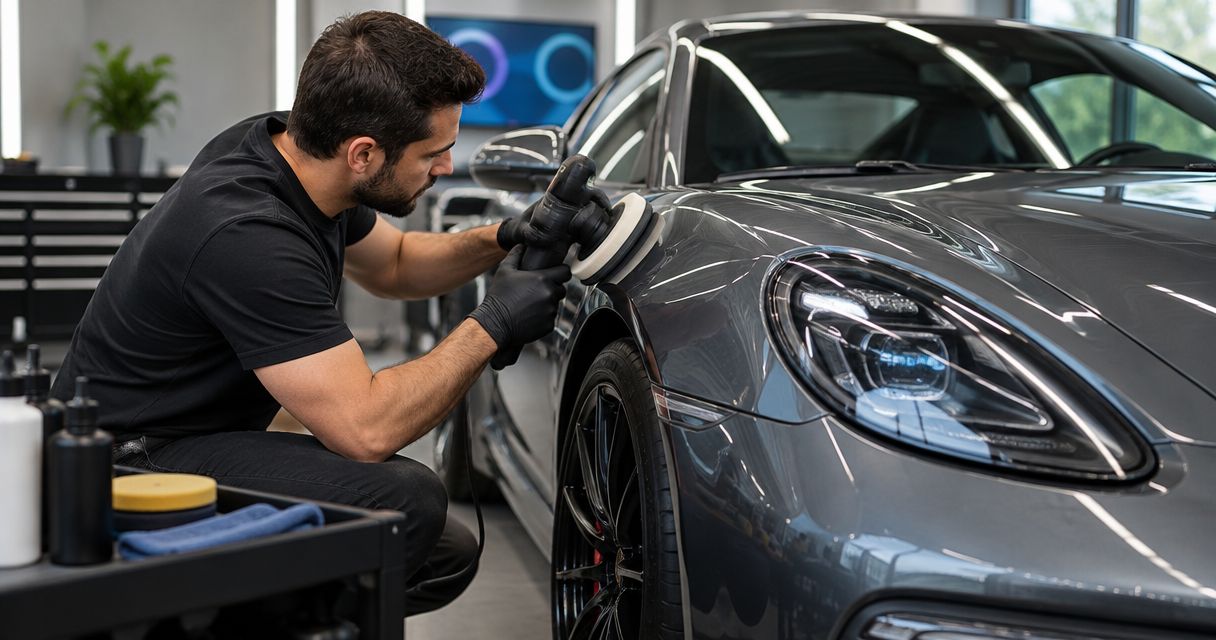
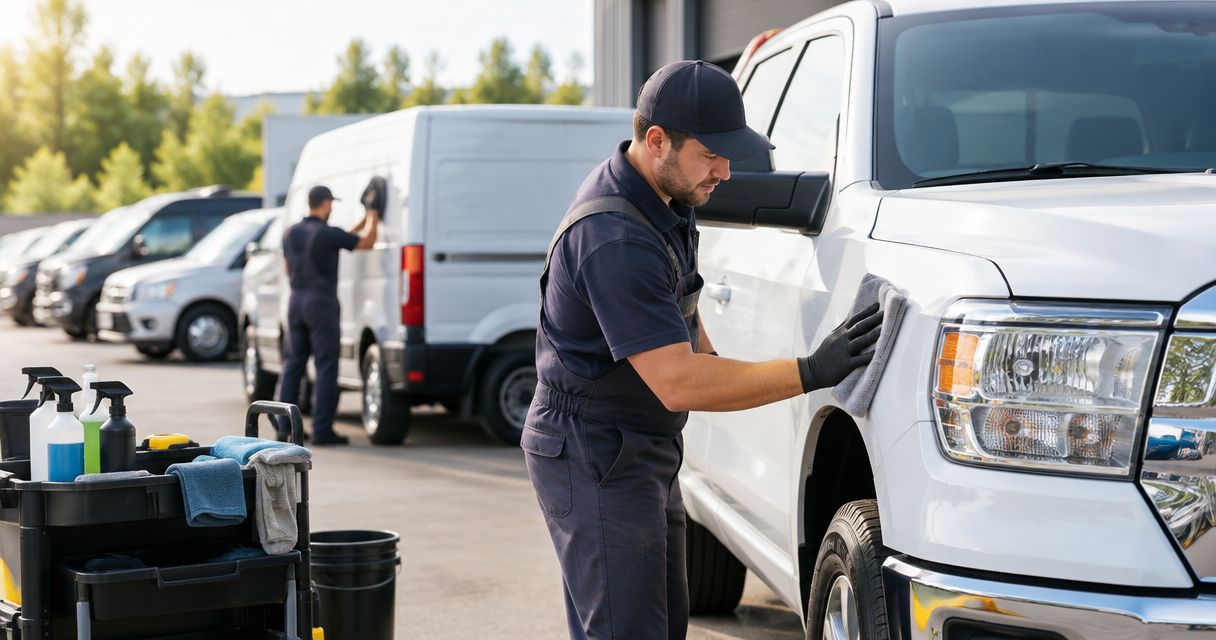
Royal Touch Mobile Detailing LLC brings a faith-driven commitment to doing work right the first time, with services spanning everyday vehicles, premium vehicles, RVs, and aircraft. For small business fleets, best overall: recurring interior-and-exterior maintenance; best for passenger-facing vehicles: interior-focused detailing; simplest starting scope: exterior maintenance.
- The best fleet detailing packages for small business match vehicle condition, passenger use, and dispatch needs.
- Choose recurring interior-and-exterior maintenance as the default for a mixed working fleet.
- Ask Royal Touch Mobile Detailing LLC about mobile detailing, paint correction, and ceramic coating as separate service needs.
- These rankings compare service scopes, not named packages or confirmed booking options.
Why this matters
A clean work vehicle represents your business before anyone opens the door. But clean paint does not fix a stained passenger seat, and deep interior cleaning does not address neglected exterior surfaces.
The right package starts with the problem you need solved. For your 2026 fleet plan, separate routine upkeep from restorative work rather than asking every vehicle to receive the same treatment.
Royal Touch Mobile Detailing LLC is a family-owned mobile detailing company serving North Carolina and parts of Virginia and South Carolina. Confirm your location, vehicle types, site requirements, and requested scope before arranging fleet work.
The options below are service scopes to request and compare, not branded packages. Each earns its place by serving a different business need.
What makes the best fleet detailing package?
Use these criteria before comparing package names:
- Condition fit: Routine cleaning belongs on maintained vehicles; accumulated stains or paint defects need separate assessment.
- Passenger priorities: A customer-facing cabin deserves a different scope from a work van used primarily for equipment.
- Dispatch fit: Agree on vehicle access and return-to-use requirements before putting detailing on the schedule.
- Written inclusions: Define the surfaces and tasks covered. “Full detail” is not a usable checklist by itself.
- Protection needs: Separate cleaning, paint correction, and ceramic coating so you understand each recommendation.
- Site suitability: Confirm parking, permission, water, electricity, and weather arrangements rather than assuming them.
Choose the scope that addresses the vehicle’s actual condition, not the package with the longest task list. A shorter, relevant checklist is more useful than a broad description that leaves the important work unclear.
Fleet detailing packages at a glance
| Rank and service scope | Best for | Standout purpose | Key limitation |
|---|---|---|---|
| 1. Recurring interior-and-exterior maintenance | Mixed fleets already in manageable condition | Keeps cabin and exterior care together | Does not replace restorative work |
| 2. Interior-focused detailing | Passenger-facing vehicles | Prioritizes the spaces customers and drivers use | Leaves exterior needs outside the main scope |
| 3. Exterior maintenance | Vehicles whose cabins are already maintained | Concentrates on exterior presentation | Does not address cabin stains or odors |
| 4. Restorative reset detailing | Neglected vehicles or driver handovers | Establishes a cleaner starting condition | Needs condition-specific assessment |
| 5. Paint preparation and ceramic coating | Long-term retained vehicles | Separates paint preparation from added protection | Does not replace regular washing or cabin care |
1. Recurring maintenance: best for mixed working fleets
An interior-and-exterior maintenance scope combines routine cabin cleaning with exterior care. Request a written list covering the cabin surfaces, glass, paint, wheels, and other areas your business needs maintained.
This is the strongest default for a fleet without a major backlog of stains, debris, or paint problems. It keeps routine care together instead of treating the inside and outside as unrelated jobs.
Recurring maintenance pros:
- Addresses both driver surroundings and exterior presentation.
- Gives you a repeatable checklist for each visit.
- Helps distinguish ordinary upkeep from work needing separate approval.
Recurring maintenance cons:
- Does not substitute for stain treatment or paint correction.
- A uniform scope can overlook differences between vehicle assignments.
Best for: Businesses with a mix of daily-use vehicles that already receive basic care.
For your 2026 schedule, group vehicles by condition as well as type. A frequently cleaned sales car and a heavily used service van do not need identical instructions just because they share a parking lot.
Verdict: Buy this scope as the default when your fleet needs consistent upkeep, not a reset.
2. Interior-focused detailing: best for passenger-facing vehicles
An interior-focused scope puts seats, carpets, mats, glass, and cabin surfaces at the center of the job. Ask which cleaning methods are appropriate for the materials and which concerns need separate treatment.
This approach suits vehicles where customers spend time inside, including passenger transport and appointment-based business use. Start with the surfaces passengers see and touch, then address deeper cleaning needs.
Interior-focused detailing pros:
- Directs attention to the passenger environment.
- Lets you identify stains and debris before the appointment.
- Supports a clear handover standard between assigned drivers.
Interior-focused detailing cons:
- Does not resolve neglected exterior paint or wheels.
- Odors require assessment; cleaning alone is not a promised cure.
Best for: Passenger-facing vehicles with cabin concerns that outweigh exterior needs.
Give the detailer the source of a problem when you know it. A spilled drink, tracked-in dirt, and persistent smoke odor are different concerns; describing each one is more useful than requesting an unspecified deep clean.
Ask about drying and return-to-use requirements before assigning the vehicle its next trip. Verdict: Buy this scope when the cabin is the business priority.
3. Exterior maintenance: best for already-maintained cabins
An exterior maintenance scope focuses on cleaning outside surfaces while leaving extensive interior work out of the main brief. Specify whether your request includes wheels, exterior glass, and a suitable protective step rather than assuming those tasks are included.
This is the simplest starting scope when drivers already keep cabins presentable. It is not a substitute for interior inspections.
Exterior maintenance pros:
- Keeps the work focused on exterior presentation.
- Avoids requesting deep cabin cleaning where it is unnecessary.
- Creates a clear distinction between washing and paint restoration.
Exterior maintenance cons:
- Leaves interior stains, debris, and odors unresolved.
- Ordinary washing does not remove paint scratches or correct swirl marks.
Best for: Work vehicles with maintained interiors and visible exterior cleaning needs.
For wrapped or lettered vehicles, disclose the surface treatment before work begins. Ask for a cleaning approach appropriate to the film, graphics, and their condition.
Use exterior maintenance deliberately in your 2026 plan, not as an automatic substitute for complete vehicle care. Verdict: Buy this scope only when cabin upkeep is already covered.
4. Restorative reset: best for neglected vehicles and handovers
A restorative reset is a condition-led request for work beyond routine upkeep. It starts with inspection and a written agreement about accumulated dirt, stains, embedded contamination, and any separate paint concerns.
The purpose is to establish a practical starting condition before recurring maintenance begins. Do not assume every stain, odor, or defect is removable.
Restorative reset pros:
- Makes existing problems part of the initial discussion.
- Helps separate deeper cleaning from routine maintenance.
- Provides a useful checkpoint before reassignment or sale preparation.
Restorative reset cons:
- Requires a more detailed assessment than a maintenance request.
- Detailing cannot repair torn upholstery, damaged trim, or failed paint.
Best for: Newly acquired used vehicles, neglected units, and driver handovers needing deeper attention.
Photograph the concerns before requesting work. Mark damaged areas separately from dirty ones so the completion check does not confuse cleaning results with repairs that were never included.
For Royal Touch Mobile Detailing LLC, discuss detailing and paint correction as distinct needs rather than assuming restoration is a single standard package. Verdict: Buy the reset first when routine cleaning would leave the main problems untouched.
5. Paint preparation and coating: best for retained vehicles
A paint preparation and ceramic coating scope centers on exterior protection rather than recurring whole-vehicle cleaning. Ask whether the paint needs correction, what preparation is included, and what care instructions follow the coating application.
Ceramic coating does not make paint scratch-proof or remove the need to wash it. Paint correction addresses suitable surface defects; coating is a separate protective treatment.
Paint preparation and coating pros:
- Puts paint condition ahead of the coating decision.
- Gives long-term retained vehicles a protection-focused plan.
- Separates corrective work from routine washing.
Paint preparation and coating cons:
- Does not protect the interior or repair damaged paint.
- Requires aftercare and return-to-use planning.
Best for: Vehicles your business intends to retain and maintain, especially appearance-sensitive vehicles.
Royal Touch Mobile Detailing LLC offers paint correction and ceramic coating. Request an assessment rather than assuming every fleet vehicle needs both.
Before including coating in your 2026 plan, read the guide to ceramic coating for fleet vehicles and prepare questions about maintenance. Verdict: Hold until paint condition, preparation, and aftercare are agreed.
Build the fleet brief before requesting a quote
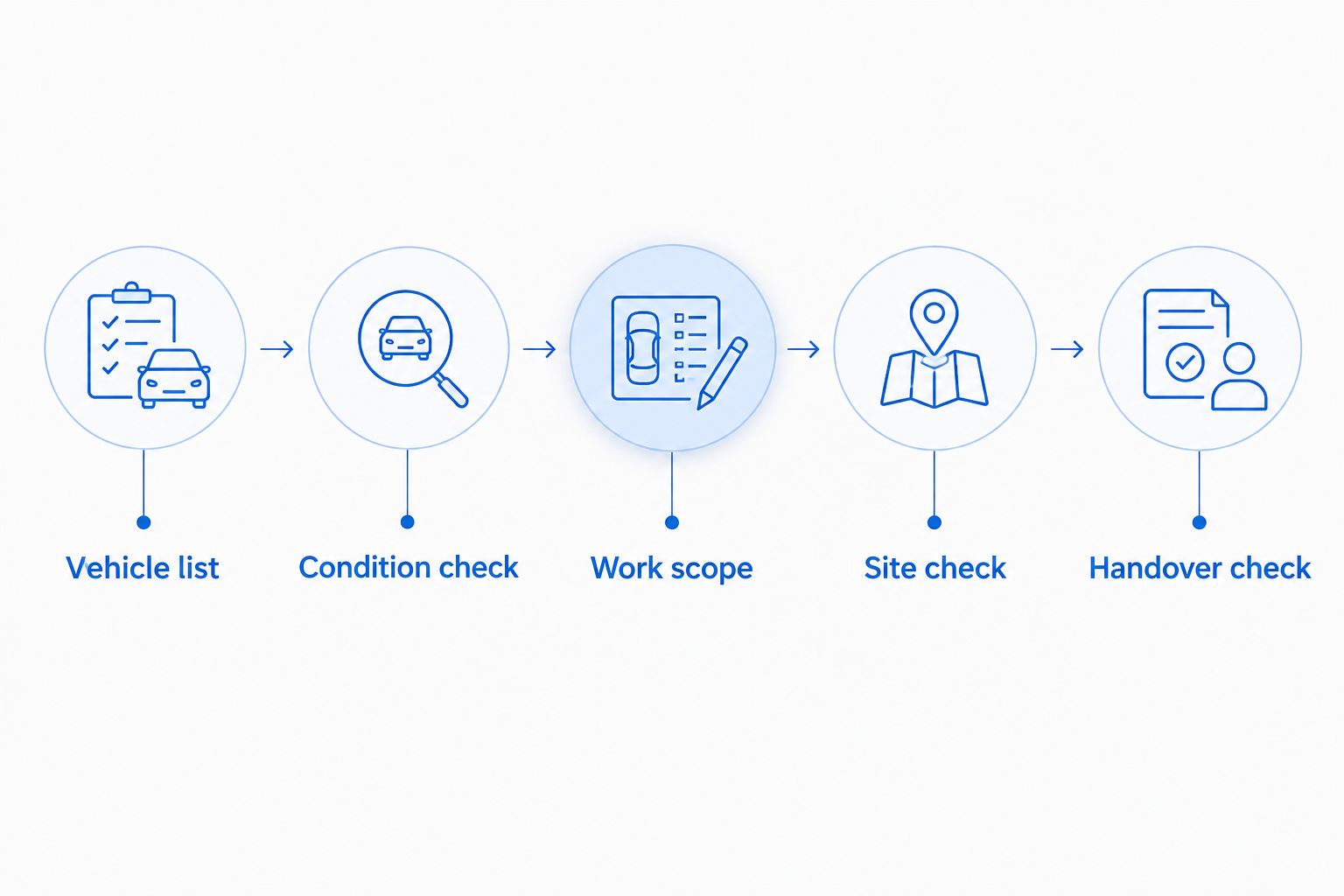
Your first request should explain the vehicles and the problem, not just ask for a fleet package. Use this sequence to make the discussion concrete:
- Vehicle list: Record each vehicle’s type, assigned use, surface materials, and known concerns.
- Condition check: Identify routine upkeep, deeper cleaning, damage, and paint concerns separately.
- Work scope: Write the required tasks and the work that needs additional approval.
- Site check: Confirm access, parking permission, utilities, drainage considerations, and weather arrangements.
- Handover check: Agree on completion review and vehicle-specific return-to-use instructions.
Keep the same checklist for acceptance that you used to request the work. Walk around the exterior and inspect the cabin against the agreed tasks, not an undefined expectation of looking new.
For your 2026 records, note recurring concerns by vehicle. That gives the next appointment a useful starting point without requiring a new explanation from memory.
Discuss your fleet detailing needs
Share your vehicle types, condition concerns, location, and requested service scope.
How the service scopes rank
Recurring maintenance ranks first because it addresses both cabin and exterior upkeep for maintained mixed fleets. The remaining options serve narrower needs: passenger spaces, exterior presentation, neglected condition, or paint protection.
This ranking compares purpose and limitations, not measured provider performance. No single scope wins for every vehicle, and these descriptions do not establish package inclusions.
Which fleet detailing package should you choose?
Choose recurring interior-and-exterior maintenance unless a specific condition calls for something else. Move neglected vehicles through assessment and reset work first; request cabin-focused care when passengers are the priority.
Royal Touch Mobile Detailing LLC is a fit for small business owners seeking mobile vehicle detailing in its stated service area. Bring a vehicle list and a clear brief, then confirm the work, site arrangements, and location coverage directly.
FAQ
What's the best fleet detailing package for a small business?
Recurring interior-and-exterior maintenance is the best default for a mixed fleet already in manageable condition. Choose a restorative reset first when accumulated dirt, stains, or paint concerns need separate assessment.
Should every vehicle in my fleet get the same detail?
No; match the detailing scope to each vehicle’s condition and use. A passenger-facing car and an equipment-carrying work van need different priorities, even when both receive recurring care.
Is exterior-only detailing enough for work vehicles?
Exterior-only detailing is enough only when cabin upkeep is already addressed. It does not resolve interior stains, debris, or odors, so inspect the cabin before choosing that scope.
Should I get fleet vehicles ceramic coated?
Consider ceramic coating for retained vehicles when exterior protection is a priority and ongoing maintenance is planned. Assess the paint first and confirm preparation and aftercare; coating does not make paint scratch-proof.
What should I tell a mobile detailer before booking fleet work?
Provide vehicle types, condition concerns, your location, and the requested tasks. Confirm site permission, utilities, access, weather arrangements, and return-to-use requirements before scheduling.
Can an automotive fleet package cover aircraft too?
Do not apply an automotive detailing checklist to aircraft without an aircraft-specific discussion. Aircraft materials, sensitive areas, and operating requirements need a separate scope coordinated with the owner or operator.
One last thing
Remove personal belongings and work equipment before the appointment, and agree who handles that task. A seat covered with tools or a cargo area packed with supplies prevents access to the surfaces you want cleaned.
That simple handoff belongs in your fleet checklist alongside the service scope. Doing the work right starts with making the vehicle ready for the work.