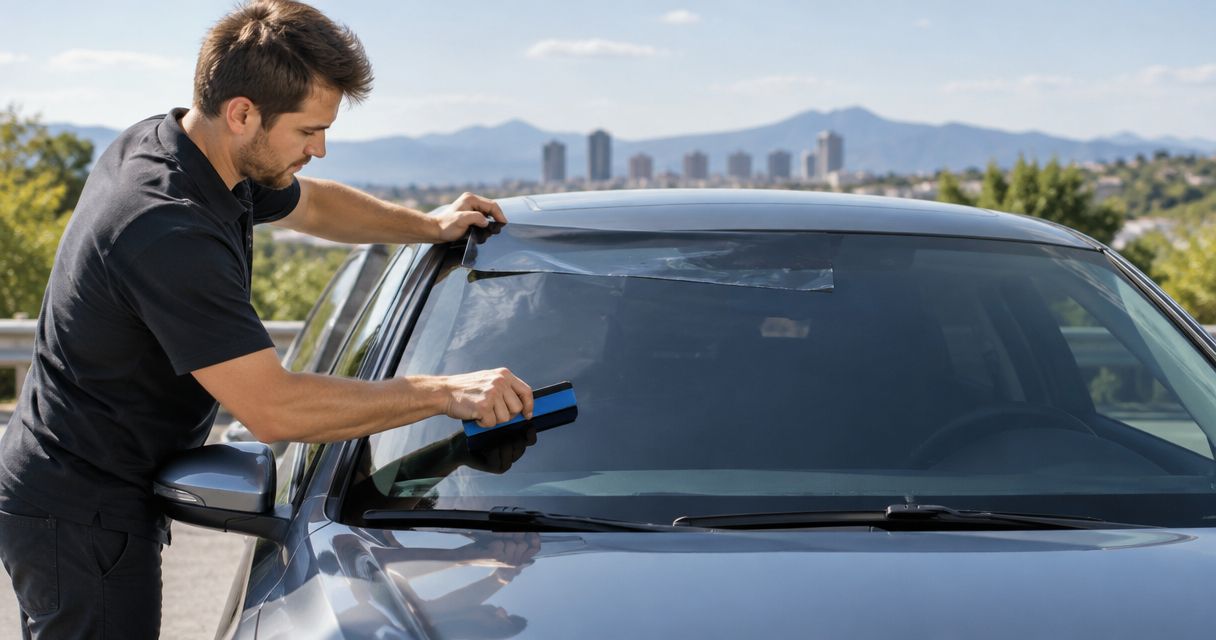
Yes—you can tint your windshield in NC in 2026, but ordinary aftermarket tint is limited to a nonreflective strip along the top, extending down to the AS-1 line or 5 inches below the top, whichever is longer. That does not authorize tint across the entire windshield, even when the film looks nearly clear. Medical exceptions require separate authorization and do not give you unrestricted permission to tint the glass.
- Can you tint your windshield in NC? Yes, within the legally permitted top strip.
- North Carolina permits the longer boundary: the AS-1 line or 5 inches below the windshield’s top.
- North Carolina’s 35% window-tint standard is not permission to tint the entire windshield.
- Choose nonreflective windshield-strip film; confirm any medical exception with NCDMV before installation.
Faith-driven service and a commitment to doing work right the first time guide Royal Touch Mobile Detailing LLC, whose vehicle-care experience includes premium vehicles and aircraft. For your daily driver or luxury car, a tint conversation should start with legal placement and clear visibility—not simply how dark the glass can look.
Can you legally tint your windshield in NC?
Yes, but the ordinary permission is for an upper windshield strip, not full-windshield film. North Carolina General Statutes §20-127 sets a separate windshield rule from the rules governing other vehicle windows.
For this 2026 guide, the legal reference is §20-127, covering vehicle-window visibility and tint restrictions. NCDMV administers the medical-exception process. Use those authorities—not a film advertisement or another vehicle’s appearance—to resolve questions about a particular installation.
| Windshield option | Legal starting point | Best for | Advantage | Limitation |
|---|---|---|---|---|
| Nonreflective upper strip | Must stay within the permitted upper boundary and meet applicable film restrictions | Drivers seeking overhead glare reduction | Adds shading at the top of the windshield | Does not shade the full viewing area |
| Full-windshield aftermarket film | Not authorized by the ordinary upper-strip rule | Only a situation covered by a confirmed applicable exception | Covers more glass | Light transmission alone does not make it legal |
| No added windshield film | Avoids the aftermarket windshield-film placement issue | Drivers prioritizing an unobstructed view | Leaves the windshield without added film | Adds no aftermarket shading |
The windshield restriction applies even when a shop offers a matching film for the rest of your vehicle. A legal side-window installation and a legal windshield installation are separate decisions.
Why this matters
A windshield is your main view of the road. A tint choice that looks comfortable in bright sunshine still has to work when you drive after dark, in rain, or toward headlights.
The practical mistake is treating all glass alike. You might hear a percentage that applies to side windows and assume the same number settles the windshield question. It does not: windshield placement comes first.
For your 2026 tint appointment, separate your goals before discussing film. Reducing overhead glare, changing the vehicle’s appearance, and seeking heat control are different requests, and none changes the legal boundary.
The upper windshield strip: AS-1 line or 5 inches
North Carolina permits the upper tint strip to extend to the AS-1 line or 5 inches below the top of the windshield, whichever measurement is longer. The rule is not simply “always stop at 5 inches,” and it is not permission to choose an arbitrary lower edge.
The AS-1 marking is typically found near an upper edge of the windshield. Ask the installer to locate the relevant marking and show you how it relates to the proposed film boundary before cutting or applying anything.
What if the AS-1 line is higher than 5 inches?
The statute uses the longer measurement. If the AS-1 boundary sits higher than the 5-inch boundary, the 5-inch measurement is the longer one.
That comparison concerns the permitted upper band only. It does not create permission for film elsewhere on the windshield.
What if you cannot find an AS-1 marking?
Do not guess where the line would be or copy the strip on another vehicle. Have the windshield and the applicable 5-inch limit checked before installation.
Replacement glass, existing shading, and hard-to-see markings make a casual glance a poor basis for a permanent installation. Ask for a clear explanation of the boundary on your actual windshield.
Full-windshield film: clarity is not legal permission
A nearly clear film is still aftermarket film. North Carolina’s ordinary windshield rule does not become a full-windshield allowance just because the product transmits a high proportion of visible light.
Terms such as ceramic, clear, premium, or heat-rejecting describe a product or its intended properties. They do not establish a legal exception. Before accepting a full-windshield recommendation, ask which specific legal provision authorizes that installation on your vehicle.
Keep factory glazing separate from aftermarket film, too. A windshield’s original shaded area is not proof that adding film across the remaining glass is permitted.
For a 2026 installation, make the proposed coverage explicit in the written scope. “Windshield tint” is too vague when one person means a top strip and another means the entire pane.
Medical exceptions: confirm the permit’s exact limits
North Carolina has a medical-exception process for qualifying people with light sensitivity. NCDMV—not the installer—determines authorization through that process.
A medical condition, a doctor’s recommendation, and an issued permit are not interchangeable. Before installing film outside ordinary limits, establish what authorization is required and what the issued permit actually allows.
Do not assume an exception permits any darkness, any coverage, or every vehicle you use. Follow the permit’s conditions and NCDMV instructions, including applicable documentation and display requirements.
This is especially important when you replace a vehicle or inherit an existing tint installation. Someone else’s paperwork is not a substitute for confirming the authorization that applies to you.
Why windshield-tint legality varies by installation
The basic law is statewide, but the details of your installation determine whether it fits the rule. These are the factors to settle before work begins:
- Film location: An upper strip and full-windshield coverage are legally different installations.
- Strip boundary: The AS-1 line and the 5-inch measurement determine the permitted upper area.
- Reflectivity: The permitted windshield strip must be nonreflective; darkness alone does not settle compliance.
- Film color: North Carolina’s tint restrictions prohibit red, yellow, and amber tinting materials.
- Medical authorization: A qualifying exception requires the applicable authorization and compliance with its conditions.
- Existing glass and film: Factory shading and previously applied film need to be identified before deciding what to add or remove.
None of these factors depends on whether you drive a daily commuter or a performance car. A premium film does not receive a separate legal allowance.
How to check a windshield-tint proposal before installation
Use this sequence when discussing windshield tint in 2026. It keeps the conversation focused on your actual glass and proposed coverage rather than a product name.
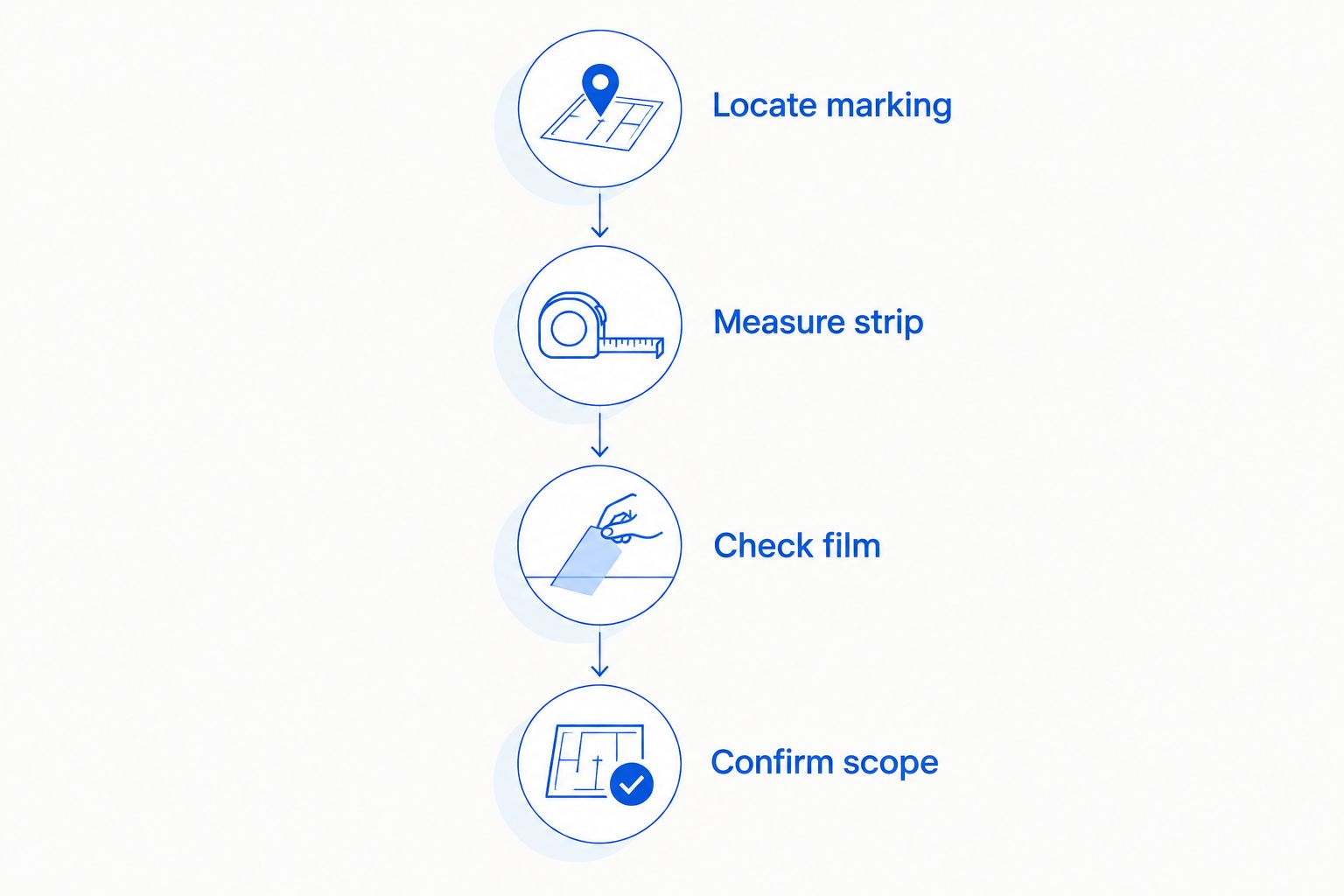
- Locate marking. Ask the installer to identify the AS-1 marking, if present, and distinguish factory shading from added film.
- Measure strip. Establish the permitted boundary using the AS-1 line or 5 inches below the top, whichever measurement is longer.
- Check film. Confirm the proposed windshield-strip material is nonreflective and meets the applicable color restrictions.
- Confirm scope. Put upper-strip coverage in the work description, or resolve any claimed exception before approving a different installation.
A clear explanation should connect each step to your windshield. You should know where the lower film edge will sit before the work starts, not discover the coverage when the vehicle is finished.
Ask what happens if existing film does not match the agreed scope. Removal and replacement are separate work from choosing new film, so clarify those tasks before approving the appointment.
Does the 35% tint rule apply to your windshield?
The 35% light-transmission rule is not permission to tint your entire windshield. North Carolina generally uses a minimum total light transmission of 35% for regulated non-windshield windows, subject to statutory exceptions.
Total light transmission concerns the glass-and-film combination, not just the number printed on a film sample. Existing glass already affects how much light passes through, so the film label alone does not establish the finished result.
North Carolina also generally limits light reflectance on regulated tinted windows to 20%. That separate standard does not replace the requirement for a nonreflective windshield strip.
When discussing a whole-vehicle job, have the installer explain the windshield and other windows separately. One percentage cannot describe every legal requirement across the vehicle.
Is ceramic windshield tint legal in NC?
Ceramic windshield tint must follow the same placement restrictions as other aftermarket windshield film. “Ceramic” is not a legal exemption.
If heat control is your main concern, ask for the film manufacturer’s published specifications and discuss where that film can legally be installed. Visible-light transmission, heat rejection, and ultraviolet protection describe different properties; a single darkness percentage does not answer all three questions.
Choose the legal coverage first, then evaluate the film. Reversing that order encourages you to select a product before establishing whether the proposed installation is allowed.
What should you ask a tint service before booking?
Royal Touch Mobile Detailing LLC is best for drivers seeking window tint alongside mobile vehicle care. The family-owned company offers window tint, detailing, paint correction, and ceramic coating; the right starting point is a clear discussion of your vehicle and priorities.
For windshield work, ask these questions before agreeing to a scope:
- Are we discussing an upper strip or the entire windshield?
- Where will the lower film edge sit on this glass?
- Which film properties are documented by the manufacturer?
- Is existing film part of the removal or preparation work?
- What care instructions apply after installation?
Convenience matters, but it does not replace a placement check. Ask Royal Touch Mobile Detailing LLC about window tint services and describe whether your concern is glare, appearance, or everyday comfort.
Discuss Your Window Tint Needs
Explain your vehicle, existing film, and goals before choosing a tint installation.
FAQ
Can you tint your windshield in NC in 2026?
Yes, North Carolina permits a nonreflective upper windshield strip extending to the AS-1 line or 5 inches below the top, whichever measurement is longer. Ordinary permission does not extend to the entire windshield.
Is 35% tint legal across an entire windshield in NC?
No, the 35% light-transmission standard is not authorization for full-windshield tint. The windshield has a separate upper-strip restriction.
Can I put nearly clear ceramic film on my whole windshield?
Nearly clear ceramic film is not automatically legal across the whole windshield in North Carolina. Confirm a specific applicable exception before authorizing coverage beyond the permitted upper strip.
Does the AS-1 line always override the 5-inch limit?
North Carolina uses the AS-1 line or 5 inches below the top of the windshield, whichever measurement is longer. Have the installer establish that boundary on your actual glass.
Can a medical condition let me use darker windshield tint?
North Carolina offers a medical-exception process through NCDMV for qualifying light sensitivity. Confirm the issued permit’s exact coverage and restrictions rather than assuming it allows unrestricted windshield tint.
Can I use reflective film for the upper windshield strip?
The permitted upper windshield strip must be nonreflective. Do not substitute a general window-reflectance limit for the windshield’s specific requirement.
Does Royal Touch Mobile Detailing LLC offer window tint services?
Royal Touch Mobile Detailing LLC offers window tint services alongside mobile vehicle detailing, paint correction, and ceramic coating. Discuss your vehicle and proposed tint coverage before choosing the work.
One last thing
A lighter-looking windshield is not automatically a legal windshield. Placement and authorization matter even when you can barely see the film.
Before approving a 2026 installation, ask the installer to point to the proposed lower edge on your actual windshield. That simple conversation separates a clearly understood upper strip from a full-windshield job you did not intend to request.