No—not until the waiting period specified by your tint installer has passed. Fresh window film needs time for its adhesive to bond, and moving the glass too soon can disturb the film at the window seals. For your 2026 installation, follow the instructions for your particular film and conditions rather than treating an online waiting-time estimate as permission.
- Can you roll your windows down after tinting? Wait until your installer's specified waiting period has passed.
- Fresh window tint needs undisturbed adhesive bonding; clear-looking glass does not confirm that curing is complete.
- Royal Touch Mobile Detailing LLC offers window tint services for owners seeking vehicle protection and appearance care.
- If you accidentally lower a tinted window, stop cycling it and contact your installer about visible damage.
Can you roll your windows down after tinting?
Keep newly tinted windows closed until your installer says they can move. The right instruction comes from the film's care requirements and the conditions around your installation—not simply from how dry the glass looks.
Use this sequence before your first drive home:
- Confirm the instructions. Ask exactly when you can operate the tinted windows and when you can clean their inside surfaces.
- Protect the controls. Tell passengers about the fresh tint and use the passenger window lock where appropriate.
- Plan your stops. Open a door instead of lowering newly tinted glass at a parking gate or pickup window, wherever safe and permitted.
- Check before operating. Once the specified waiting period ends, contact the installer first if you see lifting edges or displaced film.
Royal Touch Mobile Detailing LLC brings a faith-driven commitment to doing work right the first time to its mobile vehicle care services. Its work includes auto, RV, and aviation detailing alongside window tint services; this guide focuses specifically on aftercare for automotive window film.
Why this matters
The glass is ready to move mechanically before fresh tint is necessarily ready to move with it. As a window slides past its seals, contact at the film's edges can interfere with a bond that is still developing.
That makes aftercare part of protecting the installation, not an optional extra. You do not need to test the window to find out whether the film has settled.
For your 2026 tint appointment, build the waiting period into your plans before installation day. If you rely on a parking garage, a drive-through, or frequent passenger drop-offs, arranging another way to handle those stops is easier than reacting after a window moves.
What should you do while your tinted windows stay closed?
Leave the film alone and make the restriction easy to remember. A reminder near the window controls helps prevent an automatic habit from becoming an aftercare problem.
The choices below address everyday situations rather than different tint products. None replaces the instructions supplied with your installation.
| Approach | Best for | Benefit | Limitation |
|---|---|---|---|
| Passenger window lock | Drivers carrying passengers | Reduces accidental passenger operation | Does not necessarily prevent the driver from operating every window |
| Reminder near controls | Anyone accustomed to lowering glass automatically | Keeps the restriction visible | Depends on the driver noticing it |
| Door access | Safe, permitted stops where you would normally lower glass | Avoids moving newly tinted glass | Not practical or safe in every location |
| Alternate vehicle | Trips requiring frequent window operation | Keeps the newly tinted windows undisturbed | Requires another vehicle and advance planning |
Use your vehicle's normal ventilation controls instead of cracking newly tinted windows. Do not place tape, suction cups, or reminders directly on the fresh film unless the installer specifically approves them.
For owners of premium and performance vehicles, check the window behavior before the appointment, too. Some frameless door glass lowers slightly when a door opens; the installer needs to account for that normal movement in the aftercare instructions.
Why the waiting period varies
A waiting period is specific to the installation, not a universal countdown for every car. A clear afternoon and a damp garage do not create the same drying conditions.
These factors explain why the installer’s guidance matters:
- Film requirements. Follow the care guidance for the actual film installed, rather than instructions intended for another product.
- Temperature. Cooler conditions generally slow drying and adhesive development compared with warmer conditions.
- Humidity. Moist air affects how quickly installation moisture can dissipate.
- Parking conditions. A sheltered garage and an outdoor parking space expose the glass to different temperatures and airflow.
- Glass and seal contact. Window design affects where seals contact the glass and film as the window moves.
Do not use a hot dashboard, a sunny parking spot, or a clear-looking window as proof that the waiting period has ended. Those observations do not replace the film's instructions.
In 2026, the practical rule remains simple: get the return-to-use instruction from the person responsible for your installation. Ask whether changing weather means you should wait longer, especially if the instructions describe different conditions.
Does clear-looking tint mean you can lower the window?
No—clear-looking tint does not prove the adhesive has finished bonding. Appearance and readiness for window movement are separate questions.
Fresh film can show temporary haze or moisture-related marks as it dries. Those marks are not something to press flat with your fingers, scrape with a card, or heat with a hair dryer.
Check the window without touching the film. If an edge appears lifted, the film has folded, or a crease is visible, send a clear photograph to the installer and ask for an assessment.
There is also a difference between watching a drying pattern and diagnosing an installation defect. Your role is to notice changes and report them—not to decide that every mark is harmless or that every cloudy patch requires replacement.
Do not turn appearance into a home test. Lowering the window to see whether the tint survives introduces the very contact you are trying to avoid.
What if you accidentally roll a window down?
Stop repeatedly operating the window and contact your installer if you see movement, lifting, or creasing. An accidental movement does not by itself establish whether damage occurred.
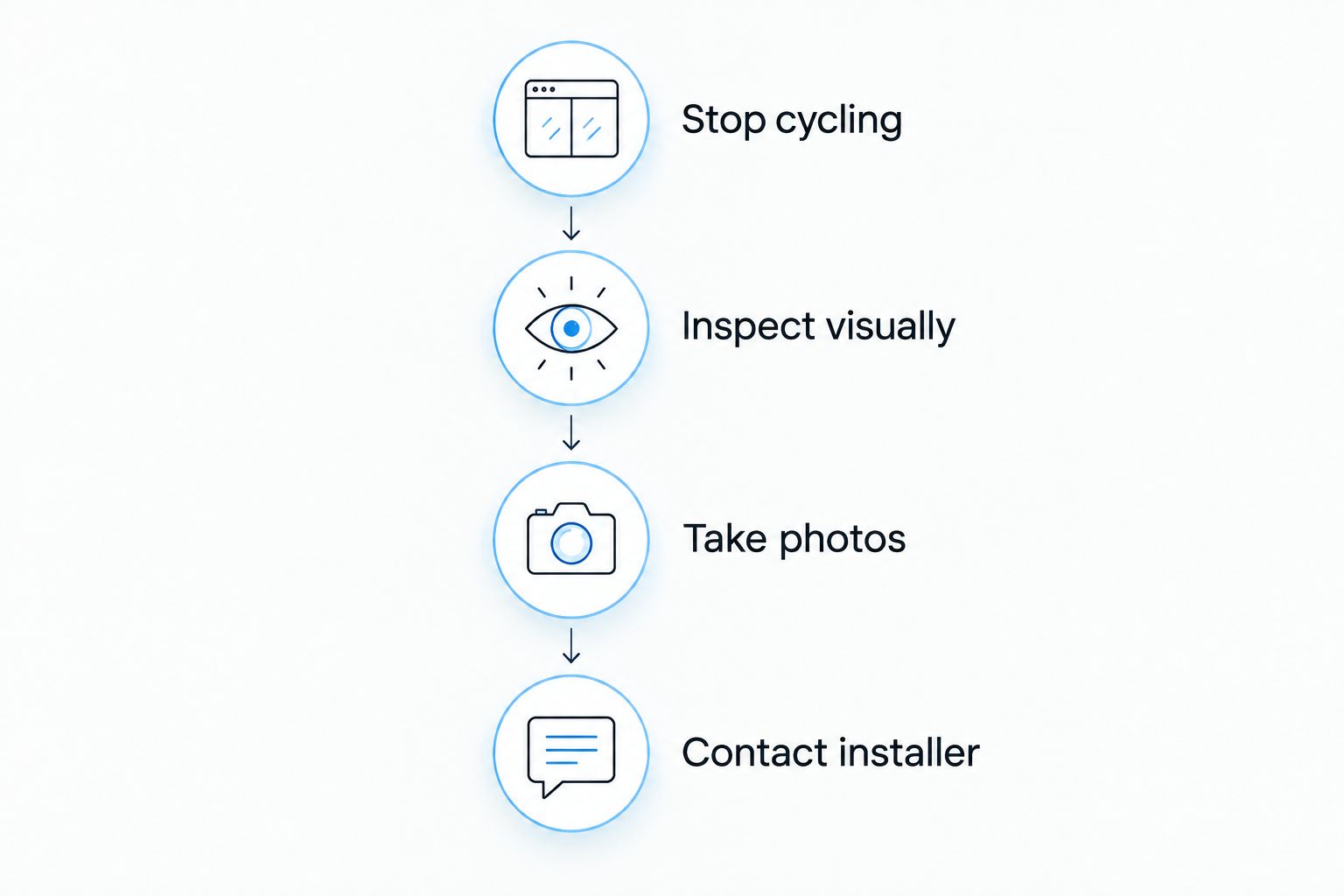
Use this response rather than trying to repair the film yourself:
- Stop cycling. Do not keep lowering and raising the glass to check it.
- Inspect visually. Look for a shifted edge, a lifted corner, or a fold without pulling at the film.
- Take photos. Capture the affected area clearly, including the window edge if visible.
- Contact installer. Explain when the tint was installed, when the window moved, and what you noticed.
If the glass is partly open, ask the installer how to proceed rather than repeatedly moving it in search of a better position. Address immediate vehicle security and weather exposure safely, and explain those circumstances when you call.
Do not apply household glue, trim the edge, or force a bubble toward the seal. Those actions alter the installation and make a professional assessment more difficult.
Can you roll your windows down the next day?
Only if your installer's instructions explicitly allow next-day operation. The change of date does not establish that the film is ready, especially when conditions differ from those assumed in generic advice.
Ask for an actual return-to-use date or a clearly stated waiting period at handover. If the instructions are unclear, keep the tinted windows closed while you confirm them.
A useful question is whether the instruction applies equally to every tinted window. Fixed glass, sliding glass, and automatically indexing door glass do not all operate the same way.
Can you wash your car after window tinting?
Exterior washing and cleaning the inside of tinted glass are different activities. Automotive tint film is generally installed on the interior surface, so approval to wash the exterior does not automatically mean you should scrub the film inside.
Ask the installer when exterior washing is acceptable and when interior glass cleaning can resume. Follow any additional instructions for other work performed during the same appointment.
Once cleaning is permitted, use a cleaner approved for the installed film and a clean, soft cloth. Avoid abrasive pads, scraping tools, and aggressive rubbing around the edges.
For a 2026 appointment combining detailing and tint, clarify the order of work and aftercare before handover. A freshly cleaned cabin does not remove the need to protect newly installed film.
How do you know when it is safe to use the windows again?
Use the installer's stated waiting period as your starting point, then report anything visibly wrong before operating the glass. Do not add an improvised test involving pressure, scraping, or repeated window movement.
Before resuming normal use, check the following:
- The specified waiting period has ended.
- Any weather-related instructions have been followed.
- No film edge appears displaced or folded.
- Any concern raised during drying has been discussed with the installer.
When operation resumes, watch for an edge catching or film visibly moving. Stop if that happens and ask for guidance; continuing to cycle the window is not a repair.
What should you ask before booking window tint?
Choose an appointment that fits both the installation and the aftercare. Convenience includes what happens after the work, not just where the vehicle is parked during it.
Ask these questions before committing your daily driver, luxury vehicle, or business vehicle:
- When can you operate the tinted windows under the expected conditions?
- What temporary drying changes should you expect to see?
- When can you clean the interior glass, and what cleaner is suitable?
- How should you handle frameless glass or automatic window movement?
- Who should you contact if an edge lifts or the film shifts?
Royal Touch Mobile Detailing LLC is a fit for vehicle owners seeking window tint alongside mobile detailing services. That service combination is useful for planning appearance and protection work, but each treatment still needs its own aftercare instructions.
Tint also has limits: it is not a replacement for careful cleaning, and it should not be treated as scratch-proof. Choose it with a clear understanding of both its intended purpose and the care it requires.
Plan your window tint appointment
Ask about window tint services and the aftercare your vehicle will need.
FAQ
Can you roll your windows down after tinting?
Keep newly tinted windows closed until your installer's specified waiting period has passed. Early movement can disturb film at the window seals before the adhesive has sufficiently bonded.
Can I crack my windows a little after tinting?
Do not crack newly tinted windows during the instructed waiting period. Even partial movement takes the glass past contact points at the seals.
What happens if I accidentally lower a freshly tinted window?
Stop repeatedly operating the window and look for visible lifting, shifting, or creases without touching the film. Contact your installer with photographs if you notice a problem or need instructions.
Does hot weather mean I can roll tinted windows down sooner?
Hot weather does not give you permission to shorten your installer's waiting period. Temperature is only one part of the drying conditions, and film-specific instructions still apply.
Is cloudy window tint normal right after installation?
Temporary haze or moisture-related marks can appear while fresh tint dries. Ask your installer about the appearance rather than pressing, heating, or scraping the film.
Can I clean the inside of my windows after tinting?
Wait until your installer permits interior glass cleaning. Then use a film-approved cleaner and a soft cloth without abrasive tools or forceful rubbing at the edges.
What should I do if my frameless windows lower when I open the door?
Tell your installer about automatic window indexing before installation and request vehicle-specific instructions. Do not disable vehicle functions or improvise a workaround without appropriate guidance.
Does Royal Touch Mobile Detailing LLC offer window tint services?
Royal Touch Mobile Detailing LLC offers window tint services alongside mobile detailing, ceramic coating, and paint correction. Ask about the aftercare instructions that apply to your vehicle and installation.
One last thing
Check your key fob before your 2026 tint appointment. Some vehicles can open windows remotely, so protecting the dashboard switches alone does not cover every way the glass can move.
Tell anyone sharing the vehicle or keys that the tinted windows must stay closed. A short reminder protects the aftercare plan better than assuming every driver knows about the installation.