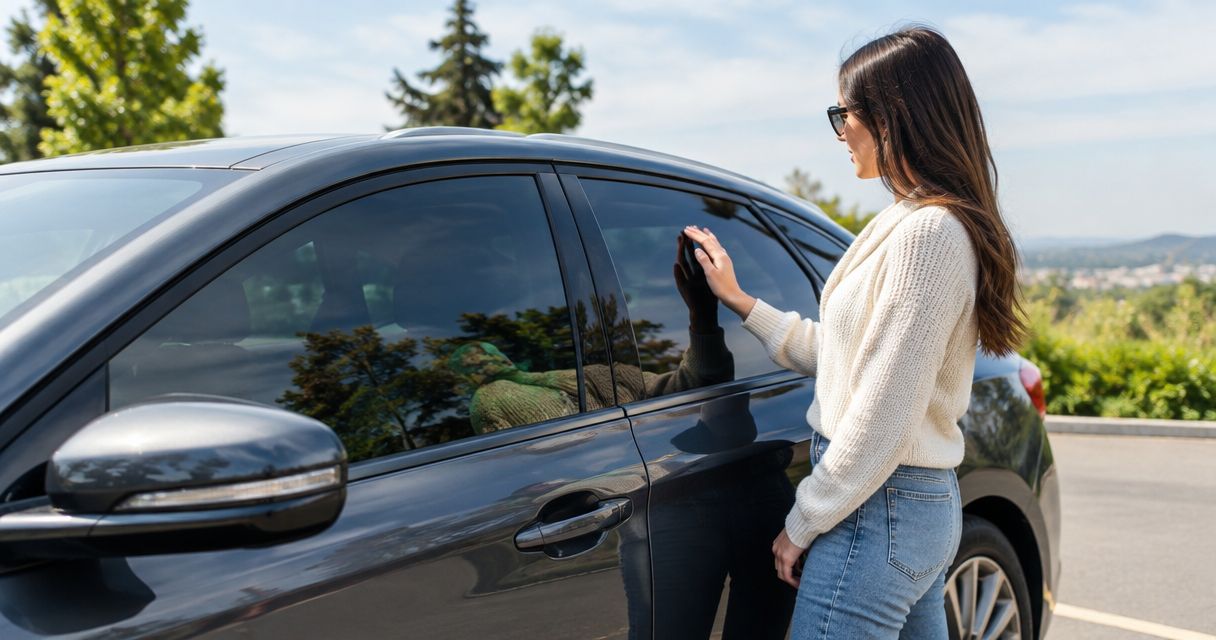
In North Carolina, most passenger-car windows must let through at least 35% of visible light, with a statutory measurement tolerance of 3 percentage points. For 2026, that means choosing tint by the finished glass-and-film reading—not simply buying film labeled 35%. Qualifying vehicle types and medical exemptions have different rules, while windshield tint is generally restricted to an upper strip.
- How dark can you legally tint your windows in NC? Most passenger-car windows require at least 35% visible light transmission.
- North Carolina regulates the combined glass-and-film reading, not just the percentage printed on the film.
- Qualifying multipurpose vehicles have rear-window exceptions; front side windows still face the standard limit.
- Royal Touch Mobile Detailing LLC offers window tint services for North Carolina vehicle owners seeking practical vehicle care.
Why this matters
A darker-looking window is not automatically a better choice. You need a setup that fits North Carolina law, preserves useful visibility, and addresses your actual concern—glare, privacy, or comfort.
Royal Touch Mobile Detailing LLC brings a faith-driven commitment to doing work right the first time, with services for everyday vehicles, premium vehicles, and aircraft. For automotive window tint, that starts with understanding your vehicle and the applicable rules before choosing a shade. Appearance matters, but it should not decide the whole job.
This 2026 guide uses North Carolina General Statutes § 20-127 and North Carolina Division of Motor Vehicles window-tint guidance as its legal references. Confirm current requirements with NCDMV before authorizing an installation, particularly when an exemption is involved.
How dark can you legally tint your windows in NC?
For an ordinary passenger car, use 35% visible light transmission as the minimum legal target for the covered side and rear windows. Visible light transmission, usually shortened to VLT, means the percentage of visible light that passes through the window. Lower percentages mean darker glass.
North Carolina's statute provides a tolerance of 3 percentage points. That tolerance is not a reason to request a deliberately darker installation: the straightforward specification remains a finished reading of at least 35%.
The window's location and the vehicle's classification also matter. Here is the practical comparison for 2026:
| Window or vehicle configuration | General NC rule | Best for | Limitation to understand |
|---|---|---|---|
| Ordinary passenger-car side windows | At least 35% VLT, subject to statutory tolerance | Drivers choosing a standard compliant setup | Existing glass affects the finished reading |
| Ordinary passenger-car rear window | At least 35% VLT, subject to statutory tolerance | Drivers seeking consistent shade around a sedan | Rear glass does not receive an automatic darker-tint exemption |
| Front side windows on qualifying multipurpose vehicles | Standard 35% VLT requirement applies | SUV and similar vehicle owners planning front-window tint | A rear-window exception does not extend to the front doors |
| Windows behind the driver on qualifying multipurpose vehicles | Exempt from the standard light-transmission limit | Owners whose vehicle meets the legal classification | Other applicable equipment and tint restrictions still matter |
| Windshield | Upper-strip restriction rather than full-windshield dark tint | Drivers addressing sunlight from above | The permitted strip does not authorize dark film across the windshield |
Do not use another driver's windows as your legal reference. Similar-looking vehicles can have different classifications, factory glass, and tint readings.
Passenger cars: 35% visible light transmission
For a typical sedan or coupe without an applicable exemption, the main number is 35% VLT. That requirement concerns the window as installed, including both the original glass and any added film.
This distinction is easy to miss. Automotive glass already reduces some visible light, so adding film reduces the combined transmission further. Film labeled 35% does not establish that the finished window transmits 35%.
Ask the installer to measure the existing glass and select film around the finished result. After installation, ask for the completed window reading rather than relying on the product label or its appearance indoors.
Best for ordinary passenger-car owners: choose a measured, compliant result rather than the darkest film on the sample board. The benefit is a clear specification you can discuss before work begins. The trade-off is that the legal choice might look lighter than the appearance you initially pictured.
Qualifying SUVs and trucks: rear-window exceptions
North Carolina law exempts windows behind the driver on qualifying multipurpose vehicles from the standard light-transmission restriction. The statutory classification matters; an SUV-style appearance alone is not enough to establish eligibility.
That exception does not turn every window into an unrestricted tint surface. Front side windows remain subject to the standard rule, and windshield restrictions still apply. Other statutory exceptions also exist, but they should be checked against the actual vehicle and use rather than assumed.
Best for owners seeking rear-seat privacy: first confirm whether the vehicle qualifies for the rear-window exception. Its advantage is flexibility behind the driver. Its limitation is that darker rear glass can make seeing through those windows harder in low light.
North Carolina also requires outside rearview mirrors on both sides when the rear window is tinted. Include mirrors in the discussion instead of treating the film shade as the only compliance question.
Windshields: the upper 5-inch or AS-1 limit
North Carolina generally permits windshield tint only in the upper portion: no more than 5 inches below the top, or below the windshield's AS-1 line, whichever measurement is longer. The AS-1 marking identifies the relevant boundary on windshields that carry it.
That rule is different from the side-window VLT rule. You cannot apply the passenger-car 35% figure to the entire windshield and assume the result is lawful.
Best for drivers bothered by overhead sunlight: discuss a compliant upper windshield strip. The benefit is targeted shading near the roofline. The limitation is equally important: this is not permission to darken your whole forward view.
Before choosing a strip, have the installer identify the permitted boundary on your particular windshield. Do not estimate it from a photograph of another car or from the height of an existing strip.
Why the legal tint limit varies by window
The basic percentage is only part of the decision. These factors determine how the rule applies to your vehicle:
- Window position: Windshields, front side windows, and windows behind the driver do not all follow the same restrictions.
- Vehicle class: Qualifying multipurpose vehicles have rear-window exceptions that ordinary passenger cars do not receive.
- Existing glass: The original glass contributes to the final light-transmission reading before film is added.
- Film choice: A film's labeled VLT is not the same thing as the completed glass-and-film measurement.
- Medical exemption: An approved exemption changes the applicable requirements only within its authorized conditions.
Reflectivity and color matter too. North Carolina limits light reflectance to 20% and prohibits red, yellow, and amber tint. A film can meet the light-transmission requirement and still be unsuitable because of another restriction.
For your 2026 installation, ask about transmission, reflectivity, permitted color, and placement together. A single percentage does not describe the entire legal setup.
How to choose compliant window tint before installation
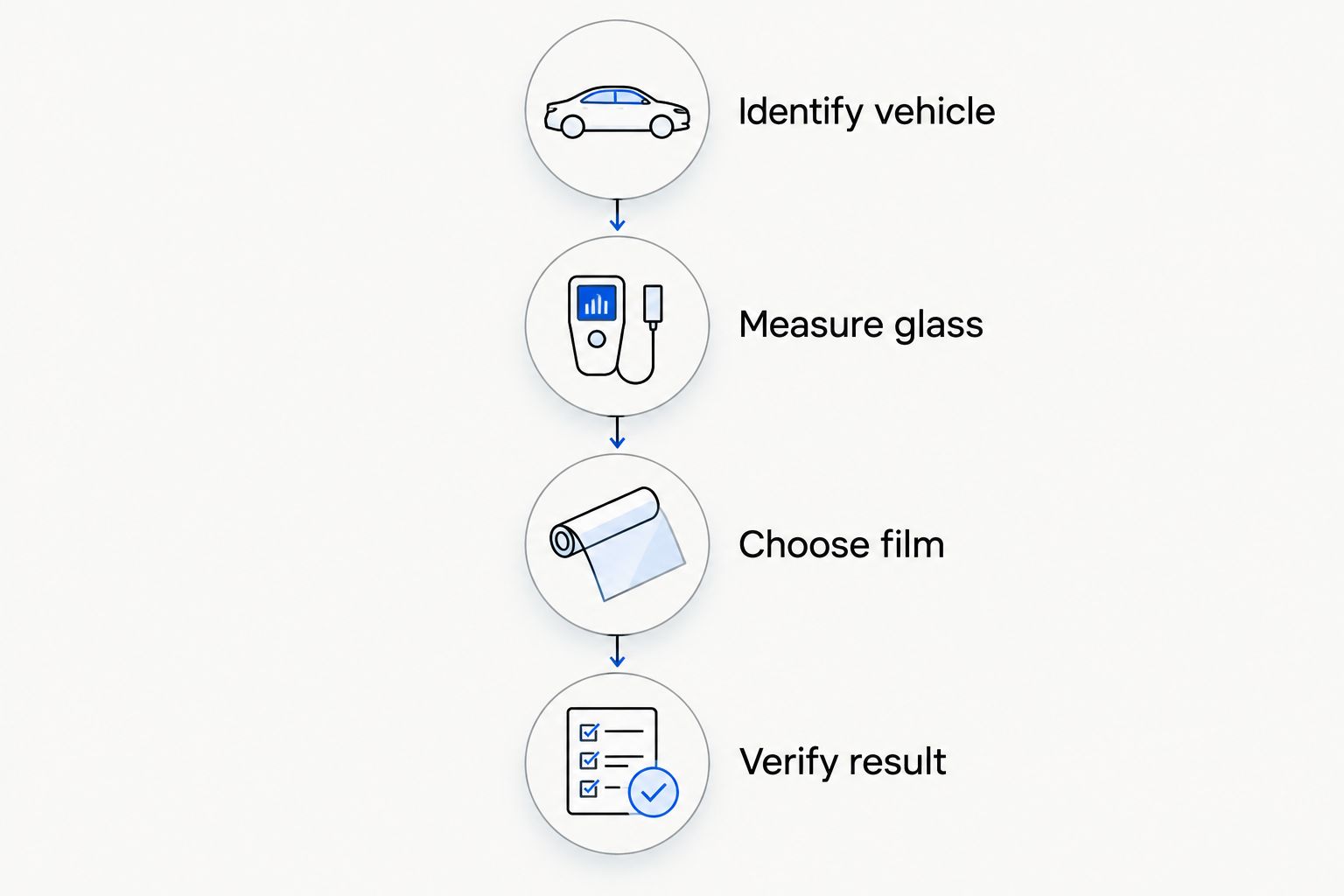
A good tint decision starts with your vehicle—not a shade chart. Use this sequence to give the installer a clear brief and keep the discussion practical.
- Identify vehicle. Confirm the vehicle classification and which windows you want treated. Explain whether the vehicle is your daily driver, a customer-facing work vehicle, or a passenger vehicle used after dark.
- Measure glass. Ask for the existing window readings before film selection. Mention any older film already on the glass so the installer can assess the actual starting point.
- Choose film. Request a film choice intended to meet the finished-window requirement. Discuss glare, appearance, and comfort separately rather than assuming the darkest option solves every concern.
- Verify result. Ask for final readings and confirmation of windshield placement. Keep the installation information with your vehicle records so you know what was fitted.
Your priorities belong in that conversation. If you routinely reverse into an unlit driveway, explain that before selecting rear-window darkness. If your concern is sunlight during long workdays, ask for the film's documented specifications rather than judging heat performance from its shade.
The guide to window tint percentages and heat and UV rejection in NC explains those selection questions separately from the legal limits. Legal darkness and useful performance are related decisions, not interchangeable measurements.
Royal Touch Mobile Detailing LLC is best for North Carolina vehicle owners seeking window tint alongside mobile vehicle-care services. The useful fit is having those care needs in one service conversation; the boundary is that window tint does not correct paint damage or replace other protective services.
Discuss Your Window Tint Needs
Explain your vehicle, the windows you want tinted, and your visibility priorities before choosing film.
Can you legally use 20% tint in NC?
20% VLT is below the standard 35% requirement for ordinary passenger-car windows. It is not a standard legal choice for those windows simply because it is commonly offered or seen on the road.
A qualifying rear-window exception or approved medical exemption requires a separate analysis. Neither makes 20% film automatically legal on every window of the vehicle.
Does 35% film automatically make your windows legal?
35% film does not automatically produce a legal 35% finished-window reading. The original glass and added film work together to determine how much light passes through.
A meter reading answers the transmission question more directly than a shade name. Placement, reflectivity, color, and any applicable exemption must also satisfy North Carolina's rules.
Can a medical exemption allow darker tint in NC?
North Carolina has a medical-exemption process through NCDMV for qualifying applicants. A medical concern does not itself authorize darker tint; follow the state's application process and the conditions of the issued permit.
For 2026, obtain current application instructions directly from NCDMV before choosing film around an exemption. Keep the required documentation with the vehicle as directed, and ask the installer to work from the actual authorization rather than a verbal description.
FAQ
What's the darkest legal tint for a regular car in North Carolina?
For an ordinary passenger car without an applicable exemption, the standard minimum is 35% visible light transmission on covered side and rear windows. North Carolina provides a statutory tolerance of 3 percentage points, but 35% remains the installation target.
Is 5% tint legal on my front windows in NC?
5% VLT does not meet North Carolina's standard 35% requirement for front side windows. Do not assume a rear-window exception also applies to the front doors.
Can I tint my entire windshield if the film looks clear?
A film's clear appearance does not establish that a full-windshield installation is permitted. North Carolina generally restricts windshield tint to the upper 5-inch or AS-1 boundary, whichever measurement is longer, unless an applicable exemption authorizes otherwise.
Can my SUV have darker rear windows than my front windows?
A qualifying multipurpose vehicle can have rear windows exempt from the standard light-transmission limit. Confirm the legal vehicle classification; the exception applies behind the driver, not automatically to the front side windows.
Does North Carolina allow reflective or colored window tint?
North Carolina limits tint reflectance to 20% and prohibits red, yellow, and amber tint. Meeting the VLT requirement alone does not establish compliance with those separate restrictions.
Will adding 35% film over factory glass keep my car legal?
Adding 35% film does not establish a legal finished reading because the existing glass also reduces visible light. Have the combined glass-and-film transmission checked rather than relying on the film label.
Who can help me discuss window tint for my North Carolina vehicle?
Royal Touch Mobile Detailing LLC offers window tint services to North Carolina vehicle owners. Discuss your vehicle classification, existing glass, intended windows, and visibility needs before selecting a shade.
One last thing
Ask for the finished-window reading, not just the film percentage. That small change in wording shifts the conversation from what is being sold to what will actually be on your vehicle.
For a 2026 tint appointment, write down your vehicle model, the windows you want treated, and when you drive most often. Bring any medical-exemption paperwork before installation—not after the shade has already been chosen.