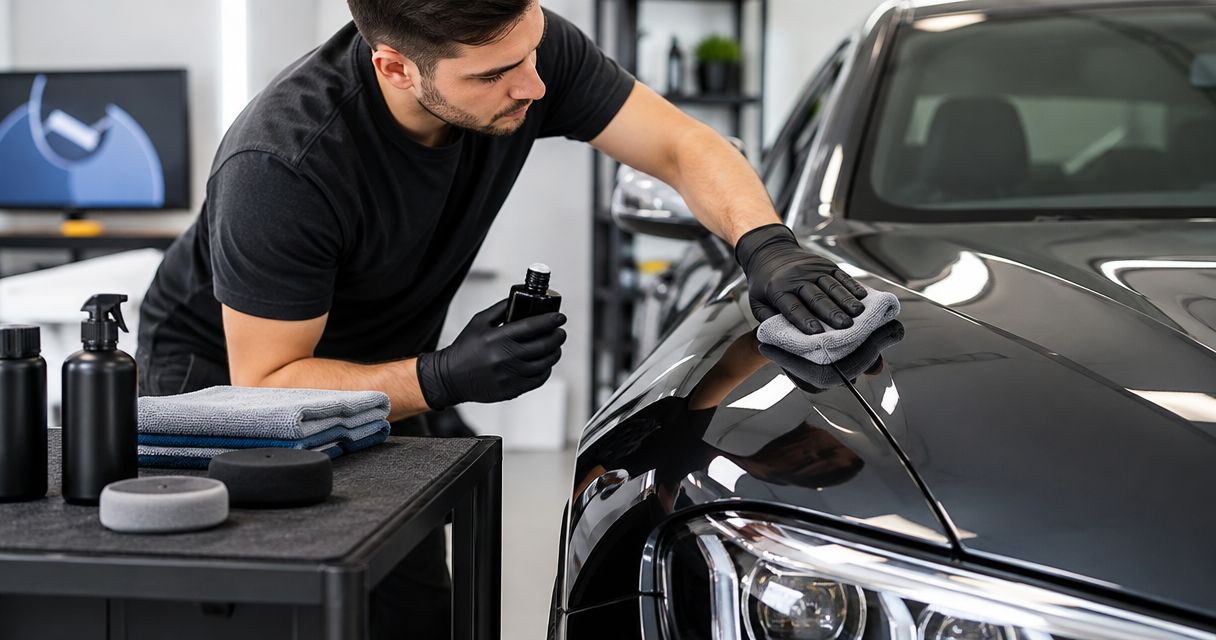
The fastest curing ceramic coating is the one with the shortest documented cure schedule that fits your vehicle, application conditions, and aftercare—not simply the quickest wipe-on process. Royal Touch Mobile Detailing LLC brings a faith-driven, do-it-right-the-first-time approach to vehicle and aircraft care; this 2026 guide ranks coating approaches by scheduling fit without confusing quick application with full cure.
- The fastest curing ceramic coating requires product-specific instructions; application speed alone does not establish cure time.
- Compatible accelerated curing suits controlled installations; single-layer ceramic coating simplifies application.
- Multilayer ceramic coating adds application steps; spray protection is not automatically an equivalent substitute.
- Royal Touch Mobile Detailing LLC offers ceramic coating services for owners seeking professional vehicle protection.
Why this matters
Your vehicle has more than an appointment time to meet. It also needs an appropriate place to remain while the coating develops, plus a clear plan for rain exposure and the first wash.
Royal Touch Mobile Detailing LLC offers ceramic coating and paint correction alongside mobile detailing. For your 2026 booking, discuss the vehicle’s condition and parking arrangements before choosing a protection approach. The ceramic coating cure-time guide addresses the distinction that matters most: finished application does not mean finished curing.
Choose a coating around its documented exposure restrictions, not a promise of the shortest appointment. That keeps appearance, convenience, and long-term care in the same conversation.
What makes the best fast-curing ceramic coating?
Use these criteria before comparing any coating names or package descriptions:
- Documented cure milestones: Separate application completion, permitted water exposure, first wash, and full cure. These are different instructions.
- Complete preparation: Include washing, surface cleaning, and any agreed paint correction in the schedule.
- Suitable application conditions: Check the product’s temperature, humidity, ventilation, and shelter requirements.
- Required layers: Count the coating layers and any waiting period between them. More steps affect scheduling.
- Supported acceleration: Heat-assisted curing belongs only in a process the coating manufacturer permits.
- Practical aftercare: Choose instructions you can follow where you actually park and drive.
A short cure claim without its conditions is not a useful comparison. Ask what event starts the clock, what exposure ends the protected waiting period, and whether later restrictions still apply.
Ceramic coating approaches at a glance
These are ranked scheduling choices, not a measured fastest-to-slowest product leaderboard. The order prioritizes a defined installation process; it does not claim that every coating in one category cures faster than every coating in another.
| Rank and approach | Best for | Scheduling advantage | Key limitation |
|---|---|---|---|
| 1. Manufacturer-approved accelerated cure | Controlled installations | Uses an expressly supported acceleration process | Requires compatible chemistry and suitable equipment |
| 2. Single-layer ceramic coating | Simpler coating appointments | Removes additional coating-layer application steps | One layer does not establish a shorter full cure |
| 3. Multilayer ceramic coating system | Owners able to accommodate staged work | Follows a defined sequence of compatible layers | Adds application and waiting steps |
| 4. Spray ceramic protection | Owners seeking a simpler protection routine | Offers a different application format | Is not automatically equivalent to a dedicated coating |
For a 2026 decision, request the current instructions for the exact product being proposed. Category labels alone cannot establish when your vehicle is ready for rain, washing, or normal care.
1. Manufacturer-approved accelerated cure: best for controlled installs
An accelerated-cure process uses a method expressly permitted for the selected coating, such as a specified heat-curing procedure. The equipment and settings must belong to that product’s instructions; adding heat without that support is not a shortcut to recommend.
This option ranks first for owners who can arrange an installation environment that supports the required process. It is not a claim that Royal Touch Mobile Detailing LLC offers heat-assisted curing, and it is not a universal winner across coating formulas.
Accelerated-cure pros:
- Makes the acceleration method part of the installation plan.
- Gives the installer a defined procedure rather than an improvised shortcut.
- Connects equipment use to the selected coating’s instructions.
Accelerated-cure cons:
- Requires a coating that explicitly supports the procedure.
- Adds equipment and environmental requirements.
- Does not erase remaining aftercare restrictions unless the instructions say so.
Best for: Owners with access to an appropriate controlled installation space and a compatible coating process.
Ask which cure milestone the procedure changes. A shorter initial waiting period does not automatically mean immediate washing permission or complete chemical cure.
Verdict: Buy only when the exact coating supports the proposed acceleration method.
2. Single-layer ceramic coating: best for simpler appointments
A single-layer ceramic coating uses 1 coating layer rather than a staged multilayer system. That simplifies the application sequence, but it does not establish a universal cure time or remove surface preparation.
This approach is a sensible starting point when your priority is reducing installation complexity. Ask whether the proposed service truly involves one coating layer or includes a separate finishing product with its own instructions.
Single-layer coating pros:
- Avoids an additional coating-layer application stage.
- Makes the installation sequence easier to understand.
- Gives you one primary coating schedule to discuss.
Single-layer coating cons:
- Cure restrictions remain specific to the formula.
- Paint correction can still be a substantial part of the appointment.
- A simpler sequence does not prove equal performance to another system.
Best for: Daily drivers whose owners want professional coating protection with fewer application stages to coordinate.
For 2026 appointments, ask for the full preparation-to-handoff plan rather than the coating application estimate alone. A vehicle needing paint correction presents a different scheduling problem from a surface already prepared for coating.
Verdict: Buy when the documented cure schedule fits your parking and driving needs.
3. Multilayer ceramic coating: best for planned installation windows
A multilayer system applies compatible products or repeated layers in a specified sequence. A system requiring 2 coating layers necessarily includes an additional application stage compared with a one-layer process, although total job time still depends on preparation and product instructions.
Choose this route because the proposed system suits your protection plan—not because additional layers automatically mean a better result. Layer count alone is not a substitute for product compatibility, preparation, or careful application.
Multilayer coating pros:
- Provides a defined sequence when the products form a specified system.
- Makes each layer’s purpose a concrete question for the installer.
- Suits an appointment planned around staged work.
Multilayer coating cons:
- Adds application stages and potentially interlayer waiting periods.
- Requires attention to compatibility and timing.
- Does not establish greater durability simply by having more layers.
Best for: Owners who can accommodate the complete installation sequence and understand why each layer is included.
Luxury and performance vehicle owners should discuss finish expectations before deciding on layer count. Coating over unwanted visible defects does not replace a paint-correction discussion.
Verdict: Hold until the purpose and timing of every layer are clear.
4. Spray ceramic protection: best for a simpler care routine
Spray ceramic protection describes an application format, not a single performance standard. A spray product can serve a different purpose from a dedicated ceramic coating, so the word ceramic does not make the two interchangeable.
Treat this as an alternative protection category rather than the automatic winner for fastest cure. Its preparation, application, compatibility, and exposure instructions still need checking.
Spray protection pros:
- Offers a spray application format for owners who prefer that routine.
- Allows selection around a specific maintenance or protection task.
- Can be assessed separately from a full coating installation.
Spray protection cons:
- The category name does not establish durability or cure time.
- Some products are intended for particular surfaces or maintenance roles.
- Easy application does not prove equivalent protection to another coating.
Best for: Owners seeking a simpler protection routine who accept the exact product’s stated purpose and limitations.
Do not substitute a spray product into an existing coating system without checking compatibility. Using the wrong maintenance product creates an avoidable uncertainty in an otherwise carefully planned service.
Verdict: Buy for its documented role; skip it as an assumed equivalent to a dedicated coating.
Build the schedule around preparation and aftercare
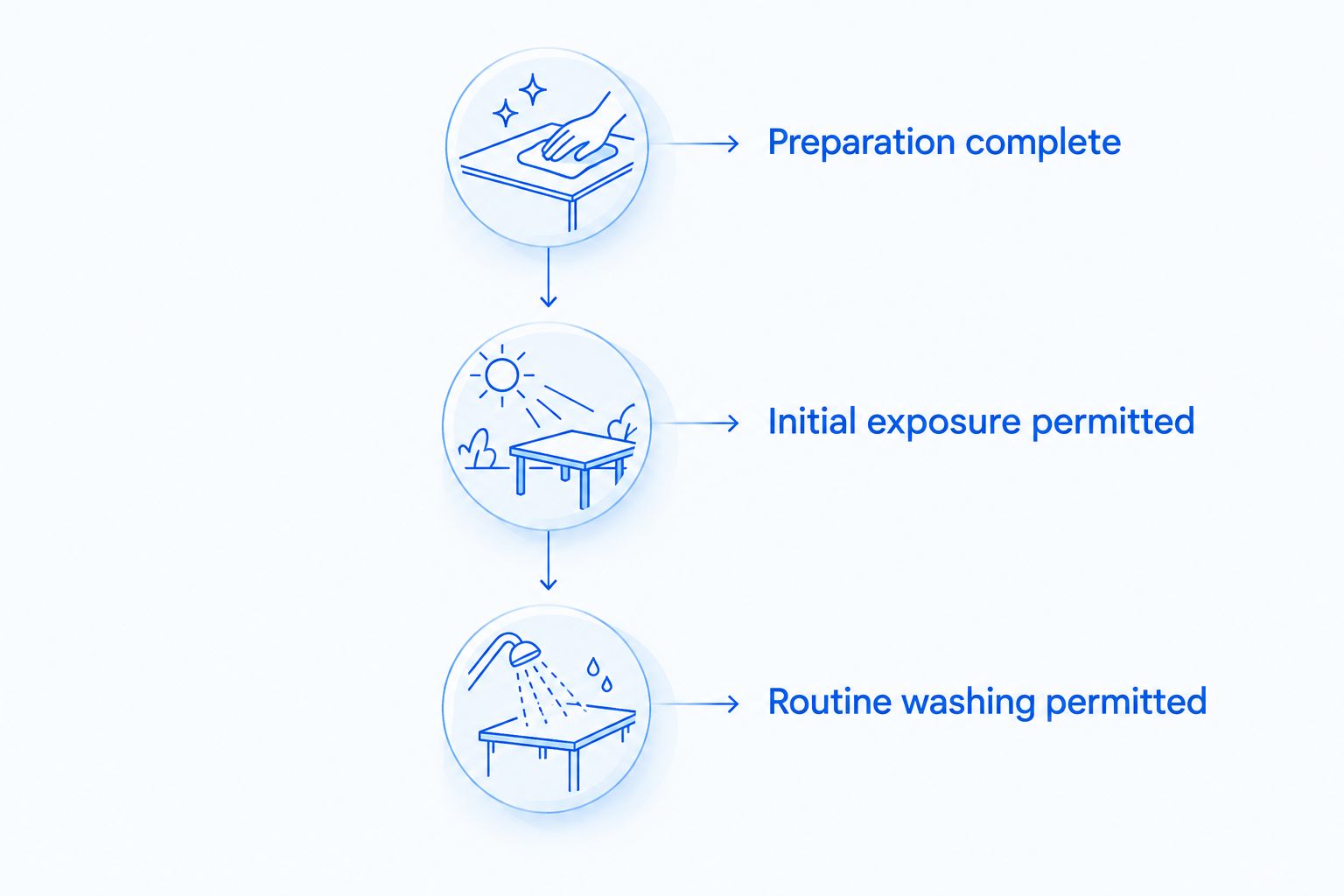
For a 2026 coating appointment, organize the discussion around 3 scheduling milestones: preparation complete, initial exposure permitted, and routine washing permitted. Full cure can remain a separate milestone if the manufacturer distinguishes it.
Start with the condition of the paint. Embedded contamination, visible swirls, and other surface concerns belong in the assessment before coating begins. Ask which concerns the proposed preparation addresses and which would remain afterward.
Next, identify the actual parking location. A covered space, an open driveway, and a shared parking area present different exposure questions. Confirm the installation requirements rather than assuming that mobile service makes every location suitable for every coating.
Finally, plan maintenance before the vehicle is handed back. Knowing when to wax after ceramic coating matters because adding wax is a separate product application, not proof that the coating has cured. Follow the coating manufacturer’s instructions on timing and compatibility rather than adding another product simply because the surface looks finished.
Write down the answers to these questions:
- When can the vehicle encounter water?
- When is washing permitted, and by what method?
- What should you do if unexpected contamination lands on the finish?
- Are any maintenance products required or prohibited?
- Does the coating need a different plan for your actual storage conditions?
Match the coating plan to the vehicle
A daily driver needs an aftercare plan that works around commuting and parking. Explain those constraints before the appointment, not after the coating has been applied. If the required protected waiting period cannot fit your schedule, change the installation date or discuss another appropriate approach.
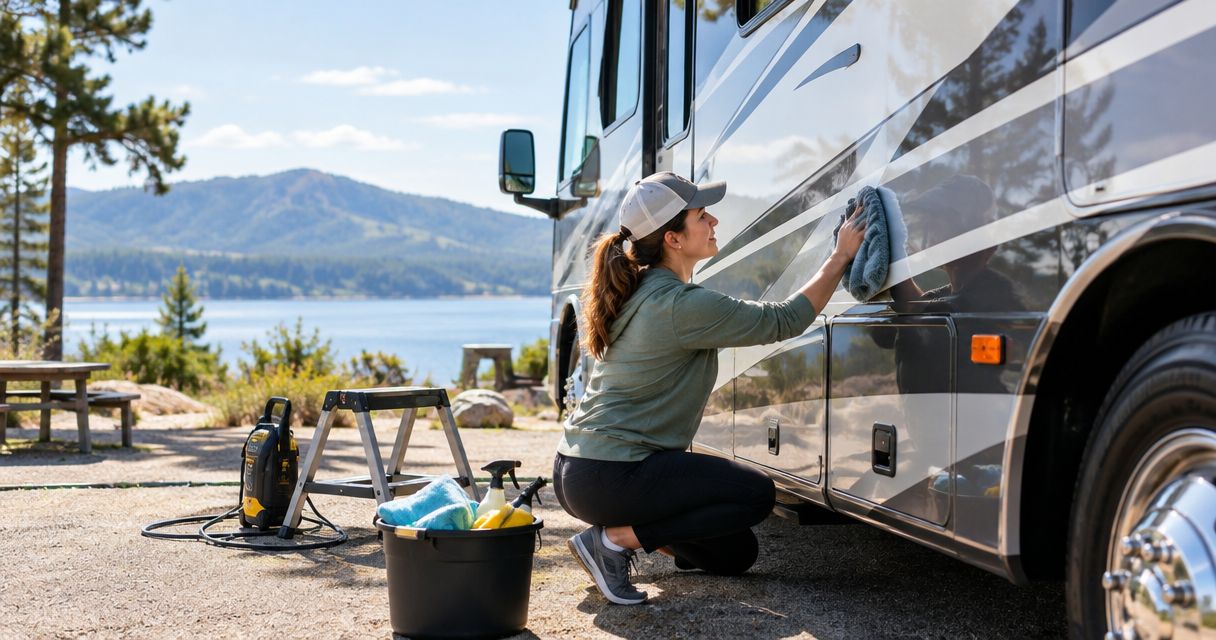
An RV adds more surface area and more surface types to assess. Painted panels, graphics, trim, and other materials should not be treated as interchangeable. Confirm which surfaces are included and which product instructions apply to each.
Aircraft require a separate suitability discussion. Private owners, flight schools, and charter operators should coordinate detailing with the responsible maintenance personnel and applicable aircraft guidance. A car-coating cure schedule does not establish aircraft suitability or permission to return an aircraft to operation.
Do not choose a coating for an aircraft solely because it advertises a short cure. Surface compatibility and aircraft-specific requirements come before scheduling convenience.
How these approaches are ranked
This 2026 ranking uses process clarity, application stages, environmental requirements, and aftercare fit. It does not assign unverified cure durations or declare an unnamed product the speed winner.
Accelerated curing leads only when expressly supported. Single-layer coating follows for its simpler sequence, while multilayer systems require a clearer reason for the added stages. Spray protection remains a separate alternative because its format alone cannot establish equivalent performance.
Royal Touch Mobile Detailing LLC ceramic coating services are best for owners seeking professional protection alongside mobile vehicle care. Ask which exact coating is proposed and how its instructions fit your vehicle before settling on an appointment.
Which ceramic coating approach should you choose?
Start by discussing a single-layer ceramic coating if your main goal is a simpler professional installation. Choose an approved accelerated process only when the product and installation environment support it. Choose multilayer work when its specific purpose justifies the additional stages.
If you cannot follow the required aftercare, wait. Moving the appointment is a better decision than choosing a process whose instructions conflict with your parking or travel plans.
Royal Touch Mobile Detailing LLC offers ceramic coating, paint correction, and mobile detailing throughout North Carolina and parts of Virginia and South Carolina. Discuss your location, vehicle, finish concerns, and intended use so the service conversation starts with the work needed—not an unsupported speed claim.
FAQ
What is the fastest curing ceramic coating?
There is no single fastest curing ceramic coating established by this comparison. Compare the exact products’ documented cure milestones under the required application conditions, not category names or application speed.
Is a single-layer ceramic coating faster than a multilayer coating?
A single-layer ceramic coating removes additional coating-layer application stages, but that does not prove a shorter full cure. Preparation, formula, conditions, and any required waiting periods determine the complete schedule.
Does heat make every ceramic coating cure faster?
Heat-assisted curing should be used only when the exact coating’s instructions support it. Do not assume that an improvised heating method is suitable or that approved acceleration removes every aftercare restriction.
Can I drive immediately after ceramic coating?
Follow the exact coating’s instructions and the installer’s handoff guidance before driving. Permission to move the vehicle does not automatically mean permission for rain exposure or washing.
Is spray ceramic protection the same as a professional ceramic coating?
Spray ceramic protection is not automatically equivalent to a dedicated professional ceramic coating. Compare the exact products’ intended roles, surface compatibility, preparation requirements, and care instructions.
Should I wax a car while its ceramic coating is curing?
Do not add wax during curing unless the coating instructions expressly permit it. An additional product application introduces a separate compatibility and timing question.
Can an automotive ceramic coating schedule be used for an aircraft?
An automotive ceramic coating schedule does not establish aircraft suitability or operational readiness. Coordinate product selection and application with the responsible maintenance personnel and applicable aircraft guidance.
One last thing
A shiny finish is not a cure test. Neither the appearance of the paint nor water beading tells you that every manufacturer restriction has ended.
Before handoff, save the coating name and written aftercare instructions somewhere you can find them. That small step makes the first unexpected rain shower or wash decision easier to handle correctly.