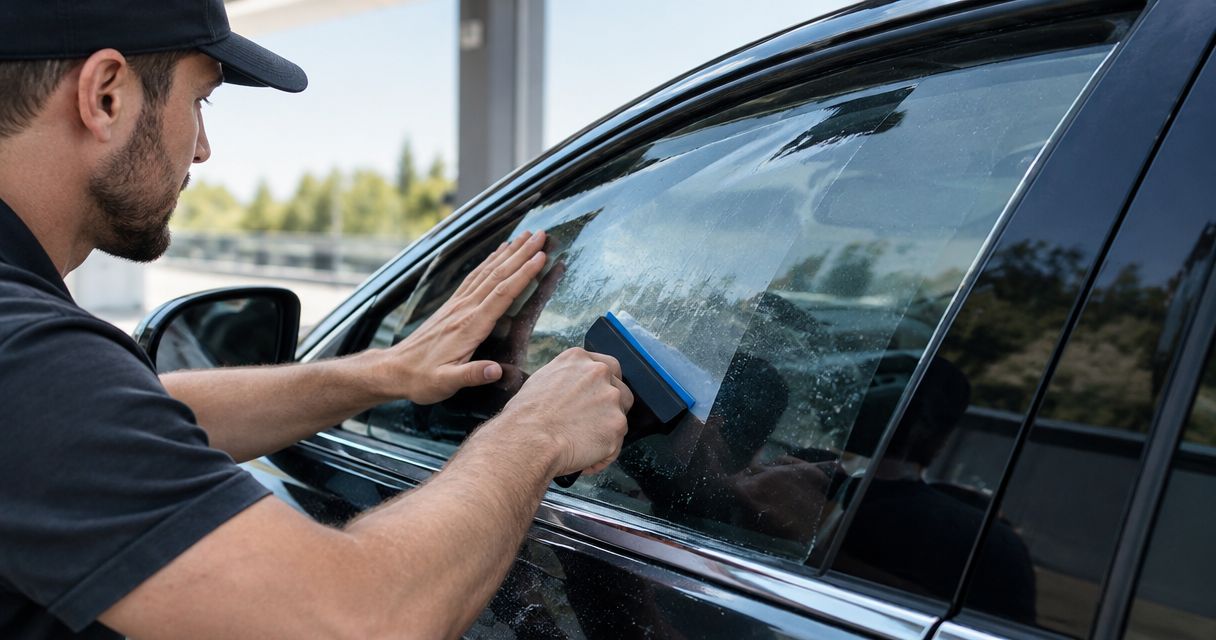
Window tint cures over days to weeks, not simply by the time your installation appointment ends. The exact waiting period depends on the film, temperature, moisture, and installation conditions; temporary haze can remain after the glass looks ready for normal use. Follow your installer's film-specific instructions for lowering windows, cleaning the glass, and checking the finished result.
- How long does window tint take to cure? Days to weeks; follow the film-specific aftercare instructions.
- Window tint curing and permission to lower windows are different milestones.
- Temporary moisture haze needs observation, not pressing, scraping, or extra heat.
- Royal Touch Mobile Detailing LLC offers window tint alongside mobile vehicle care.
Why this matters
Faith-driven service means caring about what happens after the appointment, not just how the vehicle looks at pickup. At Royal Touch Mobile Detailing LLC, the commitment to doing work right the first time extends across window tint, premium vehicle care, and aircraft detailing. For automotive window tint, practical aftercare helps you avoid disturbing newly installed film.
Royal Touch Mobile Detailing LLC is for drivers seeking window tint alongside mobile detailing and paint protection services. Whether you drive a daily commuter or a performance car, the useful question is not just when the tint looks clear. You also need to know when you can operate and clean each window.
How long does window tint take to cure?
Window tint takes days to weeks to finish curing because moisture left during installation must dry through and around the film. The installation appointment and the curing period are separate. You can leave with the film installed while its appearance continues to change.
For a window tint installation in 2026, use the instructions supplied for your actual film rather than a deadline borrowed from another vehicle. A friend's tint, installed during different weather or with a different product, is not a reliable calendar for yours.
| Milestone | What it means | What you should do |
|---|---|---|
| Installation complete | The film has been fitted to the glass | Get the written aftercare instructions before leaving |
| Window-operation clearance | The installer says the window can move safely | Follow that instruction even if the glass already looks clear |
| Moisture clearing | Installation moisture is drying and appearance is changing | Observe without pressing or scraping the film |
| Final inspection | The installer can assess the settled appearance | Report persistent defects or visibility concerns |
Clear-looking glass is not proof that every aftercare restriction has ended. Equally, a little temporary haze does not automatically mean the installation has failed. What matters is the appearance, how it changes, and whether it matches the installer's expectations for that film.
Ask for separate guidance on window operation and final appearance. Treating both as the same deadline creates unnecessary confusion.
Why window tint curing time varies
Curing is a drying process, not a timer that runs identically on every vehicle. These factors explain why an installer needs more than the appointment date to advise you:
- Film construction: Different film and adhesive systems have different drying characteristics. Use guidance for the installed product, not tint in general.
- Temperature: Warm conditions support drying, while cold conditions slow it. A cold-weather installation needs different expectations from a warm-weather installation.
- Humidity: Moist air slows evaporation. Damp weather can keep installation moisture visible longer.
- Sun exposure: A vehicle's exposure to warmth changes with its parking location. That does not make deliberate overheating a safe shortcut.
- Remaining moisture: Installation uses a wet application process. The moisture remaining after fitting affects the film's temporary appearance.
For your 2026 appointment, tell the installer whether the vehicle normally stays in a garage, outside, or under cover. Also mention upcoming travel or work that requires repeated window use. Those details help shape useful aftercare instructions without pretending there is one deadline for every situation.
Do not choose a darker shade because you think it will cure faster. Tint shade is not a dependable curing calendar, and darkness alone does not tell you the film's heat-control performance.
What should newly installed tint look like?
Fresh tint can show a cloudy appearance or small moisture pockets while it dries. These changes can be part of curing, but appearance alone does not let you diagnose every mark yourself. The safest approach is to observe the area and ask the installer when something looks unusual.
Temporary haze
A slightly foggy look can come from installation moisture. Leave the film untouched and watch whether the appearance improves under the conditions described by your installer. Do not rub harder to clear a patch that sits beneath the film.
Haze that obstructs your view deserves prompt attention. Do not drive with visibility you consider unsafe while waiting for a cosmetic issue to settle.
Moisture pockets
Small pockets beneath fresh film can contain installation moisture. Pressing them with a finger, card, or squeegee can disturb the installation rather than help it dry.
Photograph a questionable area and send the image to the installer. A photograph cannot replace an inspection, but it gives the installer a starting point and preserves what you noticed.
Lifted edges and fixed marks
An edge that lifts, folds, or catches against the window seal needs the installer's attention. Do not assume every visible defect will disappear through curing. Trapped debris, creases, and damaged film are different from drying moisture.
Avoid attempting a repair yourself. Peeling an edge back to inspect it changes the condition the installer needs to assess.
How should you care for window tint while it cures?
The best aftercare is usually restraint: keep the film undisturbed and follow the instructions you received. Extra cleaning, pressing, or heating is not a substitute for drying time.
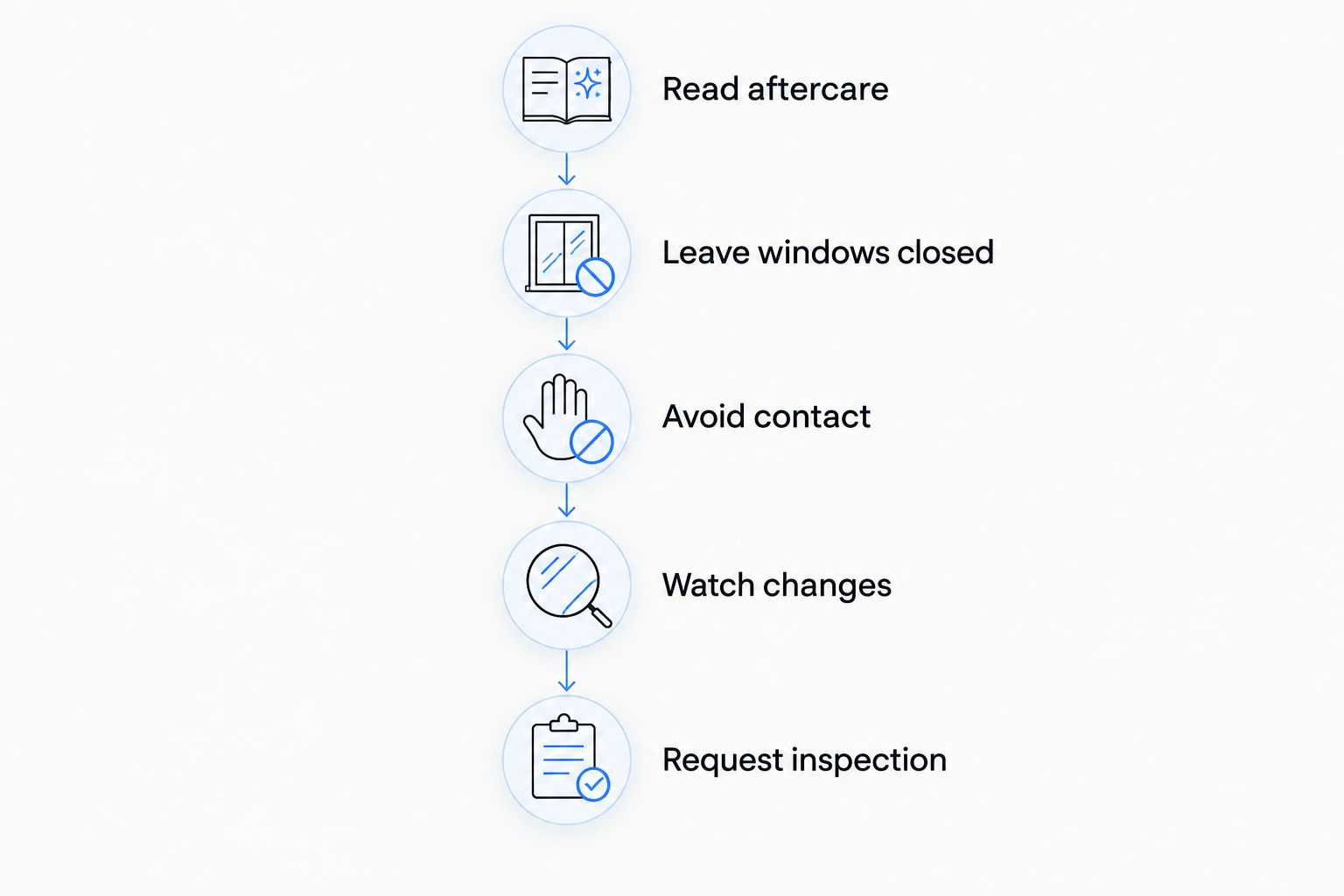
Use this sequence after your window tint appointment in 2026:
- Read aftercare. Confirm the restrictions for the installed film before operating the windows or cleaning the inside glass.
- Leave windows closed. Keep movable glass closed until the installer says it is ready. Looking clear is not permission to lower it.
- Avoid contact. Keep fingers, suction mounts, pets, and loose cargo away from newly tinted surfaces.
- Watch changes. Notice whether haze clears and whether any edge begins to lift. Photograph concerns instead of touching them.
- Request inspection. Contact the installer about persistent marks, damage, or visibility problems rather than trying a home repair.
Share those instructions with anyone who drives or cleans the vehicle. A careful owner can still have a passenger lower a window or a detailer clean the glass too soon. A brief reminder prevents conflicting care routines.
If your vehicle automatically lowers its glass slightly when a door opens, mention that feature before installation. Ask how to handle normal entry and exit during the initial aftercare period; do not alter the vehicle's settings without appropriate guidance.
Can you roll your windows down before the tint finishes curing?
Permission to lower a window and complete curing are not necessarily the same milestone. Follow the installer's window-operation deadline, even when moisture remains visible afterward. Do not substitute an internet rule for the instructions attached to your film.
Moving the glass too early can disturb vulnerable edges where the film meets seals and trim. Repeatedly lowering a window to check whether it is ready creates the very contact you are trying to avoid.
If you lower a window accidentally, close it carefully and inspect without touching the film. Report any lifting, scraping, or folding. An accidental movement does not establish that damage occurred, but visible damage needs assessment.
Can you wash your car while window tint cures?
An exterior wash and cleaning the tinted interior glass are different tasks. Automotive tint is commonly installed on the inside surface, so exterior washing does not directly clean that film. Still, follow your installer's restrictions and tell anyone washing the vehicle that the tint is fresh.
The benefit of postponing unnecessary interior glass cleaning is simple: you avoid rubbing a surface that is still settling. The limitation is that fingerprints or smudges might remain temporarily. Leave them alone until cleaning is permitted rather than scrubbing for an immediate finish.
Once cleaning is allowed, use a soft cloth and a cleaner approved for the installed film. Avoid abrasive pads, blades, and scraping tools. If the rear window has defroster lines, get instructions that account for both the film and the glass equipment.
Can you make window tint cure faster?
Normal warmth supports moisture drying, but forced heat is not a safe do-it-yourself curing method. Do not use a heat gun, hair dryer, or concentrated heater on the glass. You risk damaging the film or surrounding materials without establishing that the installation is ready.
Ask the installer about ordinary parking conditions instead. Sun exposure and shade affect drying conditions, but neither replaces the product's care instructions. During a hot-weather appointment in 2026, protecting people and pets from a hot vehicle remains more important than trying to accelerate tint curing.
Also ask before using rear defrosters or other glass-related features during the initial care period. Do not assume a universal instruction applies to every installation.
What should you ask before booking window tint?
A useful consultation covers your routine as well as your desired appearance. Tell the installer about drive-through visits, parking access, regular interior cleaning, and any automatic window movement. These details help you plan around the aftercare period.
Ask for clear answers to these questions:
- Which film will be installed, and where are its care instructions?
- When can each movable window be lowered?
- What temporary appearance changes should you expect?
- Which glass cleaner is suitable after curing?
- What should prompt an inspection rather than more waiting?
Royal Touch Mobile Detailing LLC offers window tint as part of its vehicle-care services. Discuss the installation and aftercare requirements before arranging other work, especially when another appointment includes interior glass cleaning.
Ask About Window Tint
Discuss your vehicle, window use, and aftercare questions before arranging service.
FAQ
How long does window tint take to cure in cold weather?
Window tint cures more slowly in cold weather because moisture dries more slowly. Follow the film-specific instructions and ask the installer how current conditions affect the expected appearance.
Is it normal for new window tint to look cloudy?
Temporary cloudiness can occur while installation moisture dries. Contact the installer if visibility is affected, the appearance worsens, or the haze remains beyond the expected drying period.
Can I roll my windows down when the tint looks clear?
Clear-looking tint does not establish that the windows are ready to lower. Use the window-operation instructions supplied by the installer rather than appearance alone.
Should I push bubbles out of new window tint?
Do not push, puncture, or scrape pockets beneath new window tint. Photograph the area and ask the installer whether it needs time to dry or an inspection.
Does ceramic window tint cure instantly?
Ceramic window tint still needs an appropriate drying period after wet installation. The ceramic label does not replace the film manufacturer's aftercare requirements.
Can I clean the inside windows right after tinting?
Wait until the installer permits interior glass cleaning. Once cleaning is allowed, use a soft cloth and a cleaner approved for the film, without scraping or abrasive tools.
When should I contact the installer about my tint?
Contact the installer promptly about lifted edges, creases, damaged film, or impaired visibility. Also request guidance when haze or pockets persist beyond the drying period described in your aftercare instructions.
One last thing
Ask for separate answers to when you can lower the windows and when the tint should look fully settled. Those questions sound similar, but they address different parts of aftercare. Writing both answers down before leaving your 2026 appointment is more useful than relying on a generic curing countdown.
Keep the film information with your vehicle records, too. If a concern appears later, identifying the installed film gives the installer a better starting point than describing it only as dark or ceramic.