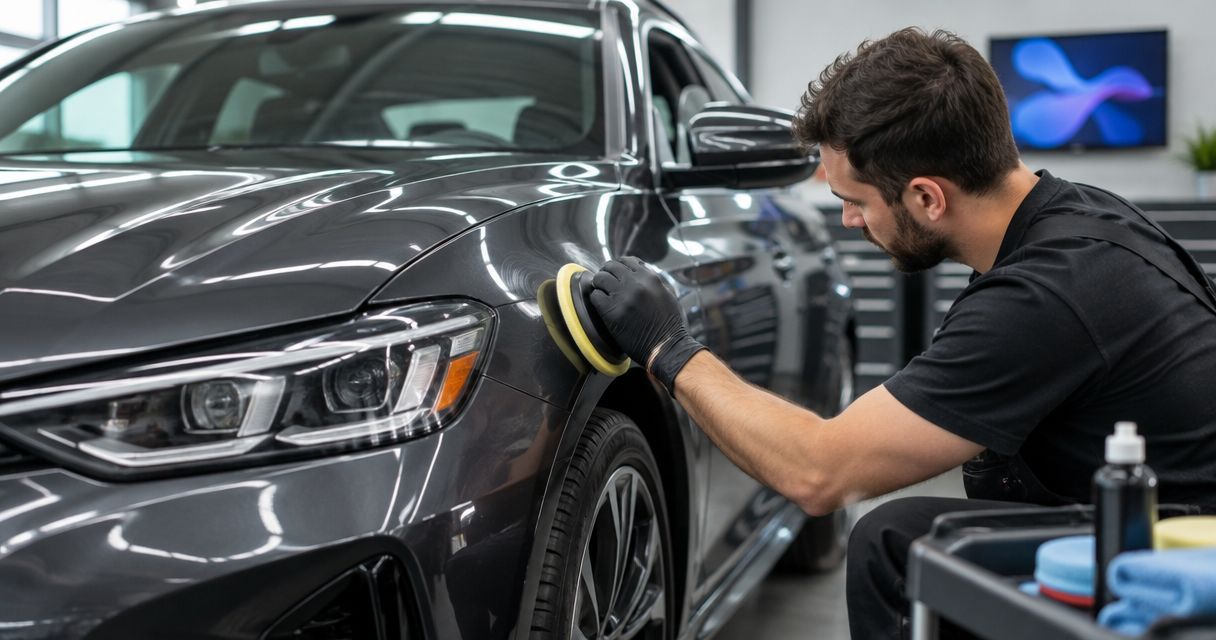
Paint correction cost in 2026 depends on your vehicle’s paint condition, the amount of polishing needed, and the finish you want; get a vehicle-specific quote rather than budgeting from a package name alone. Ask whether preparation, finishing, and protective products are included, because ceramic coating and other follow-on work can be separate. The right estimate explains both the improvement you’re paying for and the defects that should remain untouched.
- How much does paint correction cost? Compare vehicle-specific quotes with matching preparation, polishing, and protection.
- Royal Touch Mobile Detailing LLC offers paint correction and ceramic coating for owners seeking mobile vehicle care.
- Choose paint correction stages by paint condition and your goal, not by the largest package name.
- Deep scratches can require paint repair; polishing is not a substitute for missing paint.
How much does paint correction cost in 2026?
A useful paint correction quote prices a defined result on your vehicle—not just a polishing stage. Before comparing estimates, make sure each covers the same surfaces, preparation, correction work, and finishing steps. Otherwise, you’re comparing different jobs.
Royal Touch Mobile Detailing LLC brings a faith-driven commitment to doing work right the first time to mobile vehicle care, including premium vehicles and aircraft. That service-minded approach starts with understanding what you want improved rather than treating every finish alike.
Use this breakdown when asking what a correction estimate includes:
| Part of the work | What to clarify | Why it affects the estimate |
|---|---|---|
| Paint inspection | Which defects are suitable for polishing? | Surface marks and damaged paint need different treatment |
| Surface preparation | Are washing and bonded-contaminant removal included? | Polishing needs a properly prepared surface |
| Correction work | Which panels and polishing steps are covered? | A targeted job differs from whole-vehicle correction |
| Finish inspection | How will the finish be checked after polishing? | Lighting helps reveal haze and remaining marks |
| Protection | Is a protective product included or quoted separately? | Correction and protection serve different purposes |
A clear estimate also identifies exclusions. Chips, failed clear coat, dents, and scratches through the paint are not simply additional polishing tasks. Ask about those areas before approving the work so your expectations match the service.
Why this matters
You want your vehicle to look better without paying for work that doesn’t fit its condition or your priorities. A daily driver with wash marks calls for a different conversation from a collector vehicle with uncertain paint history.
Doing the job right does not mean removing every visible mark. Polishing removes a small amount of the surface being corrected, so preserving the finish matters alongside appearance. A sensible plan explains where improvement is appropriate and where restraint is the better choice.
For your 2026 vehicle-care budget, separate appearance correction from future protection. Correction addresses suitable existing defects; washing habits and protective products help you care for the result afterward. Neither makes paint immune to damage.
Single-stage correction: best for lighter surface defects
Single-stage correction uses a polishing step intended to improve the finish without a separate cutting-and-refining sequence. It suits an owner whose priority is reducing lighter wash marks and improving overall clarity rather than pursuing every remaining defect.
The advantage is a simpler correction process. The limitation is that deeper marks and more demanding finishes can need additional work, and a single polishing approach does not produce the same result on every paint system.
Ask what the proposed step is expected to improve on your vehicle. A test area can help establish whether that approach meets your goal before the entire vehicle receives the same treatment.
Recommendation: choose single-stage correction when the demonstrated improvement meets your needs. Don’t reject it simply because another estimate lists more stages.
Multi-stage correction: best for more involved finish improvement
Multi-stage correction separates more intensive defect removal from subsequent refinement. The initial work addresses suitable defects; later polishing refines the finish left by that process.
The benefit is greater flexibility when paint needs different polishing approaches. The trade-off is additional work and further surface removal, which must be justified by the paint’s condition. More steps do not automatically make a treatment appropriate.
For a luxury or performance vehicle, describe the result you want under ordinary viewing conditions as well as inspection lighting. A detailed appearance goal is more useful than asking for the most aggressive package.
Recommendation: choose multi-stage correction only when inspection supports the added work. A premium vehicle badge alone does not establish what its paint needs.
How do the correction options compare?
| Approach | Best for | Main advantage | Main limitation |
|---|---|---|---|
| Single-stage correction | Lighter defects and overall appearance improvement | A simpler polishing process | Deeper defects can remain |
| Multi-stage correction | Paint needing separate correction and refinement | More flexibility in addressing defects | Additional work and surface removal |
| Targeted correction | A specific panel or isolated concern | Focuses work on the affected area | Does not address the whole vehicle |
| Paint repair assessment | Chips, coating failure, or scratches through paint | Identifies damage polishing cannot restore | Requires a different repair process |
These are service approaches, not guaranteed outcomes or named packages. Match the approach to the actual finish before comparing estimates.
Why paint correction cost varies
The useful question is not just how much work a vehicle needs. It is which work makes sense for that finish and your expectations. Ask your detailer to explain these factors:
- Paint condition. Light wash marks, heavier scratches, oxidation, and coating failure are different problems. Some suit polishing; others need repair assessment.
- Vehicle size and shape. Larger painted areas and intricate bodywork change the amount of surface that needs preparation and attention.
- Paint history. Repainted panels and previous polishing affect how a technician approaches the job. Share any repair history you know.
- Correction scope. An isolated panel, exterior painted surfaces, and additional trim work are different scopes. Confirm exactly what is covered.
- Desired finish. General appearance improvement and close inspection under strong lighting are different goals. Describe yours plainly.
- Preparation and protection. Contaminant removal and follow-on protective products add distinct work. Get their inclusion or exclusion in writing.
For any 2026 estimate, ask which of these factors actually applies to your vehicle. You should be able to connect the proposed work to a visible concern or an agreed care goal.
How do you compare paint correction quotes fairly?
Compare the scope first and the total second. A short estimate leaves too much room for different expectations, even when the service name sounds familiar.
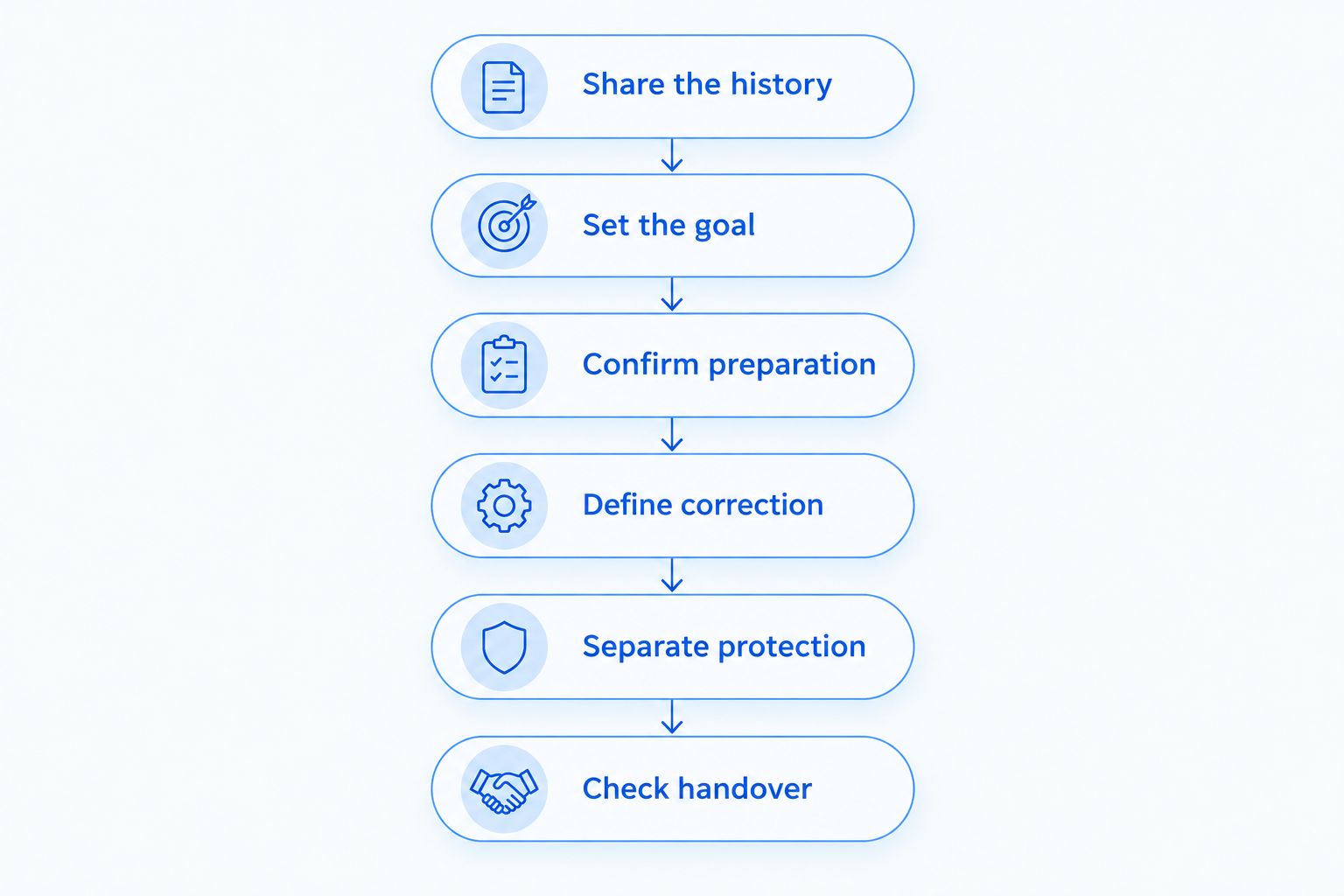
- Share the history. Explain previous repairs, known repainting, earlier correction, and the marks that bother you. Include clear photos, while recognizing that photos do not replace inspection.
- Set the goal. Say whether you want a cleaner-looking daily driver, improvement on a particular panel, or a more refined finish for a regularly displayed vehicle.
- Confirm preparation. Ask how the paint will be cleaned and whether bonded contamination needs treatment before polishing.
- Define correction. Identify the surfaces being treated, the proposed polishing approach, and defects expected to remain.
- Separate protection. Confirm whether the estimate ends after correction or includes a protective product and its preparation requirements.
- Check handover. Ask how the completed finish will be reviewed and what care instructions you will receive.
Make scheduling part of that conversation. Your vehicle’s condition and correction scope affect the work involved; the guide to how long paint correction takes to complete covers the related planning questions.
Keep the written scope with your estimate. It gives you a practical reference when discussing the finished vehicle, especially if some defects were deliberately left alone.
Is paint correction worth it for a daily driver?
Paint correction makes sense when suitable surface defects bother you enough to justify professional improvement. For a daily driver, an agreed, achievable appearance goal is more useful than chasing a flawless finish.
The benefit is a clearer-looking finish where polishing can address the defects. The drawback is that correction does not prevent new wash marks, scratches, or road damage. Your care routine still matters after the appointment.
Royal Touch Mobile Detailing LLC is best for owners seeking mobile paint correction alongside vehicle-care services. The company offers auto, RV, and aviation detailing, ceramic coating, and window tint; ask which services fit your vehicle rather than assuming they belong in every correction job.
Mobile service also needs a suitable working arrangement. Confirm access, working conditions, and scheduling requirements directly instead of assuming every location will suit the work.
Discuss Your Paint Correction Goals
Ask about paint correction, preparation, and protection for your vehicle.
Should you add ceramic coating after paint correction?
Ceramic coating is a separate protection decision, not a substitute for correcting visible defects. If you want both services, agree on the finish before coating preparation begins.
The benefit of discussing them together is a coordinated preparation plan. The limitation is that a coating does not erase scratches or remove the need for careful washing, and its application requirements depend on the product used.
For a 2026 correction-and-protection plan, ask where the correction scope ends and coating preparation begins. Confirm the chosen product’s care instructions without assuming a universal lifespan or maintenance schedule.
Can paint correction remove deep scratches?
Paint correction cannot replace paint that a scratch has removed. Polishing can improve some scratches within the surface coating, but damage extending through that coating needs a different assessment.
A mark that catches your fingernail is a reason to ask for closer inspection, not a reliable home diagnosis. Avoid repeatedly polishing one spot in an effort to force the scratch away.
Preserving the finish is more important than erasing an isolated mark. Ask whether softening a defect’s appearance is appropriate and when paint repair is the better route.
FAQ
How much does paint correction cost in 2026?
Paint correction cost in 2026 depends on paint condition, vehicle size, correction scope, and the agreed finish. Request a vehicle-specific estimate that identifies preparation, polishing, protection, and exclusions.
Is single-stage paint correction enough for my car?
Single-stage paint correction is suitable when its demonstrated improvement meets your appearance goal. Heavier defects or a finish needing separate refinement can call for another approach after inspection.
Does paint correction include ceramic coating?
Paint correction does not automatically include ceramic coating. Ask whether protection is included, optional, or quoted as a separate service.
Can you correct paint on a car that has been repainted?
Repainted panels need assessment before correction. Tell the detailer about known repairs so the proposed work accounts for the finish’s history and condition.
Will paint correction stop swirl marks from coming back?
Paint correction does not prevent new swirl marks. Careful washing and suitable maintenance remain necessary after existing defects are improved.
Can a mobile detailer assess paint correction from photos?
Photos help communicate visible concerns, but they do not replace inspection of the finish. Lighting, paint history, and defect depth affect the assessment.
Does Royal Touch Mobile Detailing LLC offer paint correction?
Royal Touch Mobile Detailing LLC offers paint correction alongside mobile detailing, ceramic coating, and window tint services. Discuss your vehicle’s condition and desired result before choosing the work.
One last thing
A quote that leaves a scratch alone can reflect better judgment than one that promises to remove everything. Ask your detailer to point out those limits before work begins—not only at handover.
For your 2026 appointment, bring a short list of the marks you notice most. Approve an improvement you understand, with limits you understand just as clearly. That is a practical way to protect both your expectations and your vehicle’s finish.