Window tint cost in North Carolina depends on your vehicle, the film selected, the windows covered, and whether old tint needs removal; get a written quote for that exact combination before booking in 2026. Removal, glass preparation, and optional coverage need separate attention because a headline quote does not tell you what is included. Royal Touch Mobile Detailing LLC brings a faith-driven approach and a commitment to doing work right the first time to vehicle care, including window tint.
- How much does window tint cost in North Carolina? Compare vehicle-specific quotes with matching film, coverage, and removal requirements.
- Royal Touch Mobile Detailing LLC offers window tint for North Carolina drivers seeking professional vehicle care.
- North Carolina generally requires passenger-car side and rear windows to transmit at least 35% of visible light.
- Choose tint by documented performance and legal installed darkness, not shade alone.
How much does window tint cost in North Carolina?
Your useful number is the written total for your vehicle and agreed scope—not a quote for an unspecified tint job. Start with the year, make, model, and body style, then identify every window you want included. Ask the installer to name the film and separate any removal work.
For window tint and related vehicle care, Royal Touch Mobile Detailing LLC serves customers throughout North Carolina and parts of Virginia and South Carolina. Confirm the appointment location and tint scope before making plans; a mobile detailing offering does not establish that every service happens at every location.
Use this breakdown when requesting a 2026 quote:
| Quote component | What the written scope should identify | Why it matters |
|---|---|---|
| Vehicle | Year, make, model, and body style | Glass size, shape, and access affect installation work |
| Film | Manufacturer, film line, and selected shade | Similar-looking films can have different documented properties |
| Coverage | Each window included or excluded | Front-window work is not the same scope as side-and-rear coverage |
| Existing tint | Removal and adhesive cleanup, if needed | Replacement involves preparation beyond applying new film |
| Glass condition | Any issues requiring assessment before installation | Surface problems need discussion before work begins |
| Final total | Agreed work, taxes, and any applicable charges | You need to know what the completed job includes |
A quote is easier to judge when those details appear together. If something changes after inspection, ask for the revised scope before authorizing the work.
Why this matters
Tint is something you look through every time you drive. Appearance matters, but so do visibility, legal compliance, and choosing film whose documented properties match your priorities.
Royal Touch Mobile Detailing LLC's vehicle-care experience includes premium vehicles and aircraft, with a service approach centered on care and doing the work right the first time. For your tint decision, apply that same practical standard: understand the glass, choose the scope, and ask clear questions before installation.
For a daily driver, useful questions focus on comfort and everyday visibility. For a luxury or performance vehicle, add existing glass treatments, trim condition, and the appearance you want. Neither situation calls for choosing the darkest film automatically.
Why window tint quotes vary
Window tint quotes vary because the installation is more than a sheet of film. Compare these factors before treating different totals as equivalent:
- Vehicle glass: Window dimensions, curved rear glass, and access around trim affect the work involved.
- Film selection: Film construction and documented solar-performance specifications distinguish options that look similar.
- Coverage: Front side windows, side-and-rear coverage, and additional glass are separate scopes.
- Existing film: Removing old tint and adhesive adds preparation to a replacement job.
- Glass condition: Contamination, damaged surfaces, and existing treatments need assessment before application.
- Installation terms: Location, aftercare instructions, and any written warranty terms belong in the comparison.
Compare matching scopes before comparing totals. A quote that includes removal cannot be judged fairly against one that assumes clean, untinted glass.
For a 2026 installation, ask for the current film specifications and terms rather than relying on an older advertisement. Keep the written quote so you can check the finished work against what you approved.
Which window tint option fits your priorities?
Film names alone do not settle the decision. Ask for the exact film line and its published specifications, then compare options at similar visible-light transmission levels.
Visible-light transmission, often shortened to VLT, means the proportion of visible light that passes through the glass or film. A lower percentage means a darker appearance—not an automatic promise of better heat control.
| Film option | Best for | Useful characteristic | Limitation to check |
|---|---|---|---|
| Dyed film | Drivers primarily seeking a changed appearance and reduced visible light | Uses dye to absorb visible light | Do not assume its shade establishes solar-heat performance |
| Metallized film | Drivers considering a metal-containing film with documented specifications | Uses a metallic layer in its construction | Ask about signal compatibility and reflectivity |
| Ceramic film | Drivers prioritizing documented solar-control properties | Uses ceramic materials in its construction | The ceramic label alone does not establish a specific performance level |
These are category distinctions, not a list of films offered by the client. Confirm which exact options are available for your vehicle before choosing.
Choose documented performance over a premium-sounding label. Ask whether quoted heat-related figures describe the same test measure; ultraviolet rejection, infrared rejection, and total solar energy rejection describe different things.
The guide to window tint percentages and heat rejection in NC explains the distinction between visible darkness and other film properties.
What North Carolina tint rules mean for your quote
North Carolina General Statute 20-127 sets the state's vehicle-window tint requirements. For a 2026 passenger-car installation, the general standard for side and rear windows is at least 35% visible-light transmission, with light reflectance no higher than 20%; vehicle-specific exceptions and other restrictions also apply.
Those figures concern the installed glass-and-film combination. They are not simply instructions to select a film package bearing the same number. Existing glass already affects how much light passes through the window.
For illustration, glass transmitting 70% of visible light combined with film transmitting 50% produces approximately 35% combined transmission. That is an arithmetic example, not a measurement of your vehicle or permission to install a particular film.
Ask the installer to assess your actual glass and explain the applicable requirements. Windshields, certain vehicle categories, and qualifying medical exceptions have separate rules; do not apply the general passenger-car side-window standard to every piece of glass.
Keep these distinctions clear:
- 35% transmission: A general legal light-transmission threshold for covered passenger-car windows.
- 20% reflectance: A separate limit concerning reflected light, not darkness.
- Installed measurement: The relevant result after accounting for glass and film together.
Check current North Carolina requirements before authorizing work. A film's marketing description is not a legal assessment of your vehicle.
How do you get a useful window tint quote?
Send the same information with every inquiry. That makes differences in the replies easier to identify and gives the installer a clearer starting point.
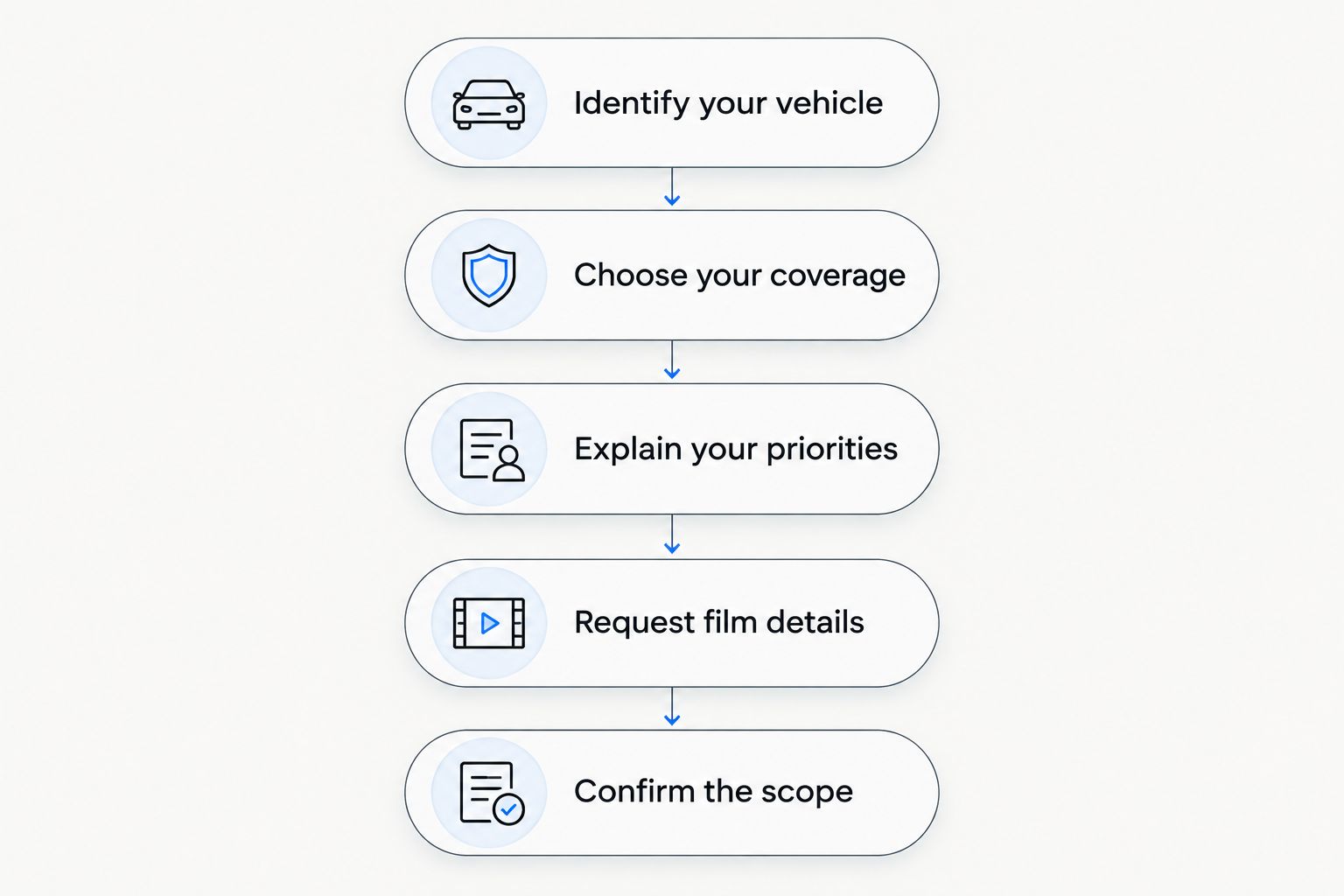
- Identify your vehicle. Provide the year, make, model, and body style. Mention any known aftermarket glass or existing tint.
- Choose your coverage. List the windows you want treated rather than requesting a full tint without explanation.
- Explain your priorities. Say whether appearance, glare, cabin comfort, or another concern matters most. Describe any night-driving visibility concerns.
- Request film details. Ask for the manufacturer, film line, shade, and relevant published specifications.
- Confirm the scope. Request a written explanation of removal, preparation, location, aftercare, and the final total.
This process gives you something concrete to approve. It also leaves room for an inspection to identify work that photos or a phone conversation cannot establish.
Before booking, read the reply for exclusions as carefully as inclusions. If removal or a particular window is not mentioned, ask about it rather than assuming it is covered.
Request Your Window Tint Quote
Discuss your vehicle, existing tint, coverage, and installation requirements.
Is ceramic window tint worth choosing?
Ceramic window tint deserves consideration when its documented properties match your comfort and visibility priorities. The deciding evidence is the exact film's specification sheet, not the word ceramic by itself.
Compare films at similar VLT levels and ask what each published performance measure describes. A darker sample can look more substantial without answering your actual question about solar heat.
The trade-off is that a category label does not explain every difference between film lines. Choose ceramic film only after the installer connects its documented properties to your needs. Do not assume a particular lifespan, warranty, or result unless it is stated in the applicable documentation.
Does old tint need removal before replacement?
Existing tint needs assessment before replacement, especially when it is peeling, bubbling, discolored, or leaving adhesive behind. Tell the installer about it during the initial inquiry and send clear photographs when requested.
Rear-window defroster lines and other glass features deserve particular care during removal. Ask how the installer will assess their condition and explain any concerns before work starts.
The benefit of discussing removal early is a clearer scope. The limitation is that photographs do not reveal every condition; an in-person assessment can change the work required.
What should you check before accepting the installation?
Before accepting the vehicle, confirm that the agreed windows received the agreed film. Request the film identification, care instructions, and any applicable written warranty documentation.
Ask the installer to explain normal drying conditions and what would require a follow-up inspection. Do not judge every temporary moisture appearance as a defect, but do not accept unexplained concerns without discussion either.
For your 2026 appointment, keep these practical checks together:
- Confirm which windows were treated.
- Ask about the installed tint's legal compliance.
- Review when to operate the windows and how to clean the film.
- Identify whom to contact about an installation concern.
- Save the invoice and film documentation with your vehicle records.
Follow the instructions for the installed film rather than a generic online timetable. Different products and conditions call for guidance specific to the job.
FAQ
How much does window tint cost in North Carolina in 2026?
Request a vehicle-specific written quote based on the film, windows covered, glass condition, and any existing-tint removal. Compare matching scopes and confirm the final total before authorizing installation.
What should a window tint quote include?
A window tint quote should identify your vehicle, exact film, treated windows, removal work, preparation, and final total. Ask about exclusions, installation location, and aftercare before booking.
Is 35% window tint legal in North Carolina?
North Carolina generally requires covered passenger-car side and rear windows to transmit at least 35% of visible light, subject to applicable rules and exceptions. A film labelled 35% does not establish the final transmission of the glass-and-film combination.
Does darker window tint block more heat?
Darker tint does not by itself establish better solar-heat performance. Compare the exact films' published specifications at similar visible-light transmission levels rather than choosing by appearance alone.
Is ceramic tint better than dyed tint?
Ceramic tint is not automatically the better choice for every driver. Compare documented performance, your appearance and comfort priorities, and the exact installation scope before choosing a film category.
Does a tint quote include removing old film?
Do not assume a tint quote includes old-film removal. Ask for removal and adhesive cleanup to appear explicitly in the written scope when your vehicle already has aftermarket tint.
Does Royal Touch Mobile Detailing LLC offer window tint?
Royal Touch Mobile Detailing LLC offers window tint alongside auto, RV, and aviation detailing, ceramic coating, and paint correction. Confirm the tint options, appointment location, and scope for your particular vehicle.
One last thing
The shade printed on a film sample is not the final reading through your window. Existing glass changes the combined result, so ask about installed transmission before settling on a shade.
That question connects your appearance preference to the actual vehicle. It is a better starting point than asking for the darkest option and working backward.