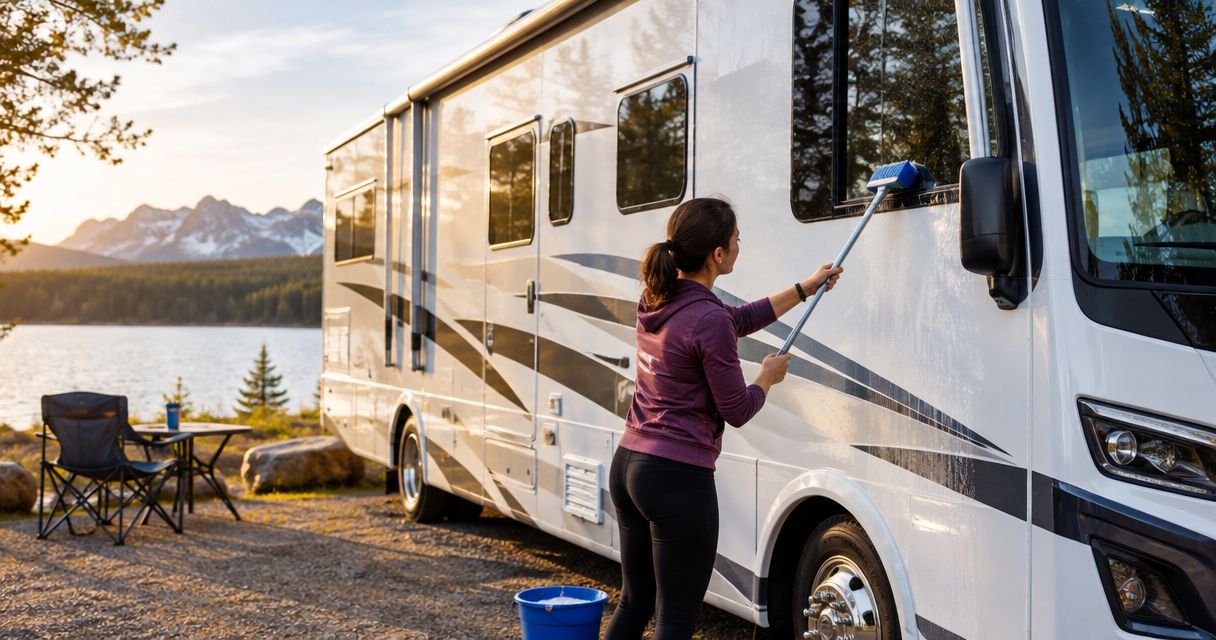
Detail your RV when its condition calls for deeper cleaning, and review those needs before storage, after storage, and after trips that leave heavy contamination. There is no single month-based schedule that fits every RV; follow your vehicle’s care instructions and any existing coating’s maintenance requirements. Doing the work right the first time means separating routine washing from interior deep cleaning, surface correction, and protection rather than treating every visit as the same job.
- How often should an RV be detailed? Follow condition, travel exposure, storage conditions, and manufacturer care instructions.
- Royal Touch Mobile Detailing LLC offers mobile RV detailing for owners seeking vehicle care without a separate detailing trip.
- Routine washing and full RV detailing serve different needs; visible dirt does not automatically require polishing.
- Ceramic coating still needs cleaning; follow its maintenance instructions rather than assuming protection eliminates upkeep.
Why this matters
Your RV combines exterior finishes, windows, seals, upholstery, and living spaces. Those materials do not all need the same treatment at the same time. A useful 2026 maintenance plan responds to what you find, not just what appears on the calendar.
Royal Touch Mobile Detailing LLC brings a faith-driven commitment to doing work right the first time, with services spanning cars, RVs, and aircraft. For your RV, that starts with matching the work to the actual need. If you already have a protective coating, the ceramic coating guide for RV owners provides related reading before you discuss maintenance.
How often should an RV be detailed?
Use condition-based detailing, supported by regular inspections and the care schedule for your RV’s materials. Review the exterior and interior after travel and around storage changes. Then choose the smallest appropriate scope of work that addresses the findings.
The table below compares maintenance needs, not fixed service packages. Its purpose is to help you describe what your RV needs before booking.
| Care option | Best for | When to consider it | Benefit | Limitation |
|---|---|---|---|---|
| Routine exterior wash | Owners managing ordinary travel dirt | When loose dirt, road film, or fresh contamination needs removal | Addresses surface dirt without automatically adding corrective work | Does not resolve every stain or finish defect |
| Interior cleaning | Owners returning from occupied trips | When crumbs, tracked-in dirt, spills, or dirty touchpoints remain | Focuses attention on the living space | Persistent odors need investigation, not just fragrance |
| Deeper exterior detailing | Owners with buildup beyond routine washing | When a suitable wash leaves contamination or visible concerns | Allows closer assessment and targeted cleaning | The method must match the finish and graphics |
| Correction and protection assessment | Owners concerned about dullness or finish damage | When clean surfaces still show defects or protection needs review | Separates appearance concerns from maintenance needs | Not every defect is suitable for polishing |
Avoid turning this table into a rule that every trip requires every service. A lightly used, sheltered RV and an RV returning from dirty roads present different cleaning jobs.
Frequently used RVs: inspect after travel
Best for: owners who take their RV out regularly. Make a walk-around and interior check part of returning home. Look at the front-facing surfaces, lower panels, windows, entry area, flooring, and places where food was prepared or eaten.
Remove fresh contamination using methods approved for the affected material. Do not wait for a full-detail appointment to address a spill or bird dropping. Equally, do not assume that ordinary road dirt means the finish needs polishing.
The advantage of a trip-based check is relevance: you assess what actually happened during use. Its limitation is that a quick look can miss roof-level dirt or subtle surface damage. Arrange a closer inspection when visibility or safe access is limited.
For your 2026 travel calendar, attach the inspection to the trip rather than selecting an unsupported interval and hoping it fits every outing.
Stored RVs: check before storage and before reuse
Best for: owners whose RV sits between travel seasons. Before storage, remove food waste, address spills, and check that cleaned interior materials have dried. Inspect the exterior for contamination that should not be left sitting on the surface.
When the RV comes out of storage, assess it again. Covered storage does not tell you whether the interior stayed dry or whether the exterior needs cleaning. Look for visible moisture, unusual odors, staining, debris, and changes in finish condition.
Storage-based checks fit the way seasonal owners use their vehicles. Their limitation is that storage itself does not replace ongoing inspections required by the RV manufacturer.
Keep detailing separate from mechanical preparation, winterizing, leak repair, and other maintenance. A clean RV still needs the appropriate operational and safety checks before travel.
Outdoor-kept RVs: let exposure guide the next cleaning
Best for: owners parking near trees or in exposed spaces. Inspect for sap, bird droppings, leaf debris, road residue, and runoff marks. Your parking environment helps explain why cleaning needs change even when your mileage does not.
Address contamination with a material-compatible method rather than scrubbing harder. If you cannot identify the finish or the substance, pause before applying a stronger cleaner. Graphics, roof materials, painted surfaces, and windows require their own care instructions.
Exposure-based cleaning responds to actual dirt instead of treating a parked RV as automatically clean. The trade-off is that you need to keep checking it between trips.
A 2026 detailing reminder is useful as an inspection prompt. It is not permission to leave fresh contamination untouched until that date arrives.
Why RV detailing frequency varies
These factors determine what you should inspect and which type of care to discuss:
- Travel exposure: Dirty roads and insect buildup create different cleaning needs from a short outing on clean pavement. Check the areas that received the most contamination.
- Parking conditions: Trees, open-air parking, and shelter change what reaches your RV. Inspect the vehicle rather than judging cleanliness from the storage description alone.
- Surface materials: Paint, graphics, roof membranes, glass, and interior fabrics have different care requirements. Follow the instructions for each material.
- Existing protection: Wax, sealant, or ceramic coating affects the maintenance instructions you need. Do not apply an unfamiliar product over existing protection without checking compatibility.
- Interior use: Cooking, pets, passengers, and wet gear change where cleaning is needed. Match the work to the occupied areas rather than requesting an identical interior treatment every time.
- Current condition: Dirt, staining, dullness, and persistent odors are different problems. Identify the problem before choosing a cleaning or correction method.
None of these factors establishes a universal interval by itself. Together, they give you a practical basis for deciding whether to clean now, request an assessment, or continue routine maintenance.
How do you decide whether your RV needs detailing now?
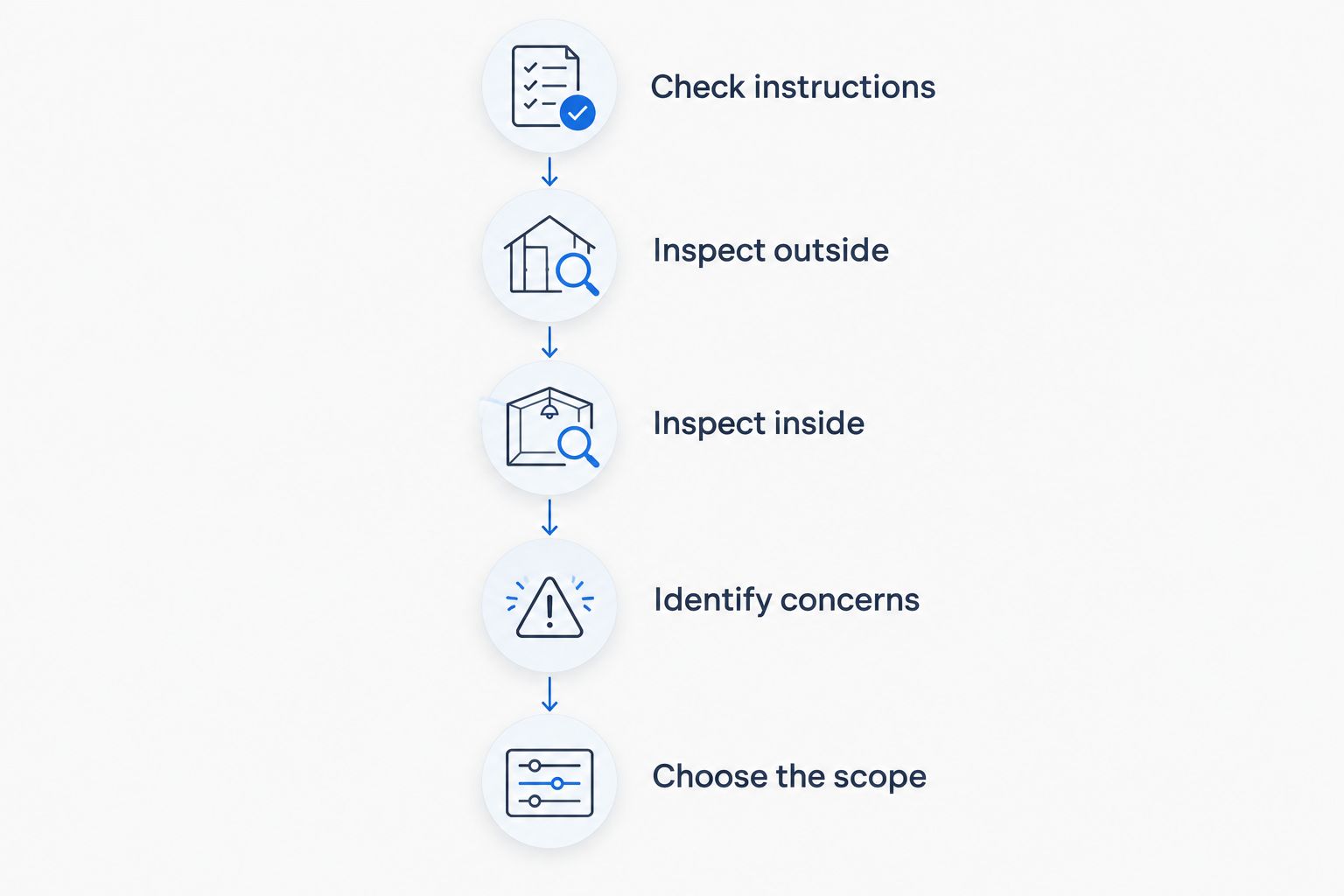
Use this inspection sequence before your next appointment. It helps you explain the work clearly and avoids asking for a full restoration when the RV only needs maintenance cleaning.
- Check instructions. Review the RV’s care guidance and any paperwork for applied protection. Identify restrictions before selecting cleaners or tools.
- Inspect outside. Walk around the RV in good light. Look for loose dirt, stuck contamination, streaks, dull areas, and visible damage without climbing onto unsafe surfaces.
- Inspect inside. Check floors, seating, storage spaces, touchpoints, and food areas. Note whether an odor remains after removing obvious waste.
- Identify concerns. Separate removable dirt from stains, finish defects, and signs of water intrusion. Photograph areas you want assessed.
- Choose the scope. Request maintenance cleaning, deeper detailing, or a finish assessment based on those findings. Ask what the proposed work includes and excludes.
You do not need to diagnose every mark yourself. You do need to tell the detailer where the concern is, when you noticed it, and what has already been applied. That information is more useful than asking for the strongest available treatment.
Does a ceramic-coated RV need less detailing?
A ceramic-coated RV still needs cleaning and inspection. Follow the coating’s maintenance instructions, and distinguish routine cleaning from any recommended assessment of the coating itself.
Do not use ceramic coating as a reason to ignore contamination. Protection does not make an RV self-cleaning, and beading alone does not explain every aspect of surface condition. Discuss unusual changes with the installer instead of adding products at random.
For a 2026 care plan, record the coating information alongside the RV’s other maintenance documents. That gives whoever cleans the vehicle a clear starting point without guessing what is already on the surface.
Should you detail an RV before or after a trip?
Detail your RV before a trip when it needs preparation for use, and clean it afterward when travel leaves dirt, spills, or other contamination. The condition determines the work; the trip date simply gives you a convenient inspection point.
Before departure, focus on a clean, usable living space and an exterior you can inspect clearly. After returning, remove food waste and address fresh contamination. A full corrective detail is a separate decision, not an automatic part of departure or arrival.
Can you wait until your RV looks dirty?
Visible dirt is a reason to inspect and clean, but it should not be your only maintenance trigger. Check less obvious areas, including storage spaces and places where moisture or food debris collects.
An unusual odor or recurring stain deserves attention even when the rest of the RV looks presentable. Cleaning can address contamination, but an unresolved leak or damaged material requires the appropriate repair rather than repeated cosmetic treatment.
When mobile RV detailing makes sense
Royal Touch Mobile Detailing LLC offers mobile RV detailing for owners who want service at their vehicle. The family-owned company serves customers throughout North Carolina and parts of Virginia and South Carolina, with auto, RV, and aviation detailing among its services.
Mobile service removes the need for a separate trip to a detailing location. It still requires planning: confirm service coverage, access around the RV, site permission, and any setup requirements before arranging the visit. Do not assume every parking location is suitable.
When contacting Royal Touch Mobile Detailing LLC, describe the RV’s condition, storage situation, and existing protection. Ask for the proposed scope before agreeing to work. The goal is practical care suited to your RV, not a larger service simply because a calendar reminder appeared.
Plan your RV detailing
Discuss your RV’s condition, storage setup, and cleaning priorities before choosing the work.
FAQ
How often should an RV be detailed if it stays outside?
An outdoor-kept RV needs condition-based cleaning and inspections guided by its exposure and manufacturer care instructions. Check for sap, bird droppings, debris, and runoff marks between trips rather than waiting for a fixed detailing date.
Does my RV need a full detail after every trip?
Your RV does not automatically need a full detail after every trip. Inspect it after travel and match the work to the dirt, spills, or finish concerns you actually find.
Should I detail my RV before putting it into storage?
Clean your RV as needed before storage, including removing food waste and addressing spills or exterior contamination. Make sure cleaned interior materials have dried, and follow the manufacturer’s storage instructions.
How often should I wash a ceramic-coated RV?
Wash a ceramic-coated RV according to its condition and the coating’s maintenance instructions. Ceramic coating does not eliminate cleaning, so address contamination with compatible methods.
Is washing an RV the same as detailing it?
Washing an RV is not the same as every form of detailing. Detailing can involve targeted interior cleaning, contamination assessment, or finish work beyond removing ordinary exterior dirt; confirm the actual scope before booking.
Can detailing fix a musty smell inside my RV?
Detailing can address dirty materials, but a musty smell also calls for checking moisture and its source. A leak or damaged material needs appropriate attention rather than repeated cleaning or added fragrance.
Does Royal Touch Mobile Detailing LLC offer RV detailing?
Royal Touch Mobile Detailing LLC offers mobile RV detailing, along with auto and aviation detailing. Confirm coverage and the proposed work for your location and vehicle before arranging service.
One last thing
Keep a short care log, not just a booking reminder. Record what you noticed, what was cleaned, which products were applied, and whether a concern remained afterward. Save the relevant care instructions with those notes.
For the rest of 2026, use that record to make the next decision easier. A recurring streak deserves a different conversation from fresh road dirt. An odor that returns after cleaning needs a different investigation from crumbs left after a trip.
Your RV does not benefit from unnecessary aggressive work, and it does not benefit from neglect while waiting for a scheduled appointment. Inspect it, identify the need, and choose the appropriate care. That is the practical meaning of doing the job right the first time.