Best overall: a full seasonal clean-and-protect detail; best for routine upkeep: an exterior wash-and-protect detail; best before storage: an interior clean-and-dry detail. At Royal Touch Mobile Detailing LLC, faith-driven service and a commitment to doing the work right the first time guide care for RVs, premium vehicles, and aircraft.
- For RV detailing packages for seasonal prep, choose a full clean-and-protect scope when both exterior and cabin need attention.
- Royal Touch Mobile Detailing LLC offers mobile RV detailing; discuss surface condition before choosing protection or correction.
- Exterior wash-and-protect detailing suits routine upkeep, not damaged finishes or neglected interiors.
- Before storage, prioritize a clean, dry cabin and address leaks separately from detailing.
- Choose ceramic coating only after confirming surface compatibility, preparation, and aftercare requirements.
Why this matters
Seasonal RV prep involves more than making the front cap shine. Road film, dirty living areas, tired exterior protection, and moisture concerns call for different work. A package that addresses one does not automatically address the others.
For your 2026 travel season, choose the scope around the RV’s condition and next use—not the most impressive package name. Detailing also stays separate from mechanical inspection, roof repair, and plumbing winterization. Keep those jobs on their own checklist.
The options below are service scopes to discuss with your detailer, not named Royal Touch Mobile Detailing LLC packages. Confirm individual tasks before booking, especially roof cleaning, awning care, upholstery cleaning, correction, and coating.
What makes the best RV seasonal-prep package?
- Surface compatibility: Painted panels, fiberglass finishes, decals, roof membranes, and trim need appropriate products and methods.
- Condition-first preparation: Cleaning comes before deciding whether the finish needs correction or added protection.
- Clear coverage: The written scope should identify the exterior areas, interior spaces, and specialty tasks included.
- Drying and storage readiness: Interior cleaning must account for drying before the RV is closed for storage.
- Practical aftercare: Protection should match how you wash, park, cover, and use the RV.
- Mobile access: Confirm parking permission, working clearance, water, electricity, and weather arrangements before the appointment.
The best package fixes the problem you have without adding work your RV does not need. Ask what each proposed step changes, and what it leaves untouched.
RV detailing packages at a glance for 2026
| Rank and service scope | Best for | Standout purpose | Key limitation |
|---|---|---|---|
| 1. Full seasonal clean-and-protect | Returning to travel after storage | Combines cabin cleaning with exterior cleaning and compatible protection | Does not automatically include correction, coating, or repairs |
| 2. Exterior wash-and-protect | Maintaining a sound exterior between trips | Removes exterior grime and addresses protective treatment | Leaves interior cleaning outside the scope |
| 3. Interior clean-and-dry | Preparing the living space for storage | Focuses on cabin cleanliness and drying | Does not repair leaks or winterize plumbing |
| 4. Exterior cleaning with surface correction | Addressing dullness or visible finish defects | Evaluates whether compatible polishing can improve appearance | Suitability depends on the surface and defect |
| 5. Ceramic preparation and application | Owners planning an ongoing exterior-care routine | Pairs surface preparation with compatible ceramic protection | Requires maintenance and does not repair damage |
These choices rank by seasonal use case, not by how many treatments they contain. An RV with a clean cabin and sound exterior does not need the same work as one returning from prolonged outdoor storage.
1. Full seasonal clean-and-protect: best for returning to travel
A full seasonal clean-and-protect scope is the strongest default when both the outside and living space need attention. Request exterior washing, appropriate interior cleaning, and a discussion of compatible exterior protection. Define the actual tasks rather than assuming “full detail” includes everything.
Best for: Owners bringing an RV back into regular use after storage or a break between trips.
Full seasonal clean-and-protect pros:
- Addresses exterior appearance and cabin comfort together.
- Gives you a clear opportunity to discuss stains, grime, and neglected areas.
- Connects cleaning with a protection plan suited to the finish.
Full seasonal clean-and-protect cons:
- Includes unnecessary work if the cabin is already clean.
- Does not automatically include oxidation removal, roof treatment, or coating.
Ask about kitchens, bathrooms, storage compartments, slide-out areas, and upholstery individually. Empty personal items so the detailer can assess and reach the agreed surfaces.
Royal Touch Mobile Detailing LLC is best for RV owners seeking mobile detailing and a condition-led discussion of seasonal protection. Confirm the location and requested scope before scheduling.
Verdict: Buy this scope when the cabin and exterior both need a seasonal reset.
2. Exterior wash-and-protect: best for routine upkeep
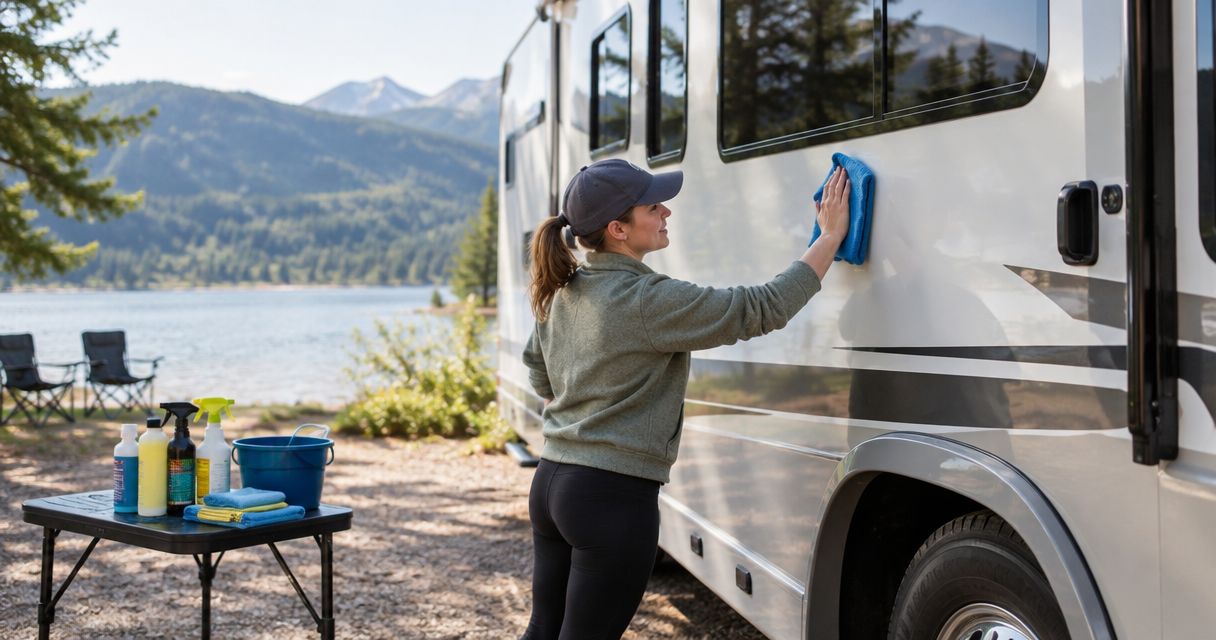
An exterior wash-and-protect scope suits an RV whose finish is in serviceable condition but carries travel grime. The aim is straightforward: clean the exterior and select protection compatible with the materials and any existing treatment.
Do not confuse a cleaner surface with a corrected surface. Washing removes dirt; it does not remove every stain, scratch, or dull patch.
Best for: Owners maintaining a sound exterior between trips during the 2026 travel season.
Exterior wash-and-protect pros:
- Focuses attention on the areas exposed during travel.
- Avoids repeating interior work when the cabin is already clean.
- Creates a useful point to review existing protection and washing habits.
Exterior wash-and-protect cons:
- Does not address interior odors, upholstery, or tracked-in dirt.
- Does not substitute for evaluating chalky or damaged finishes.
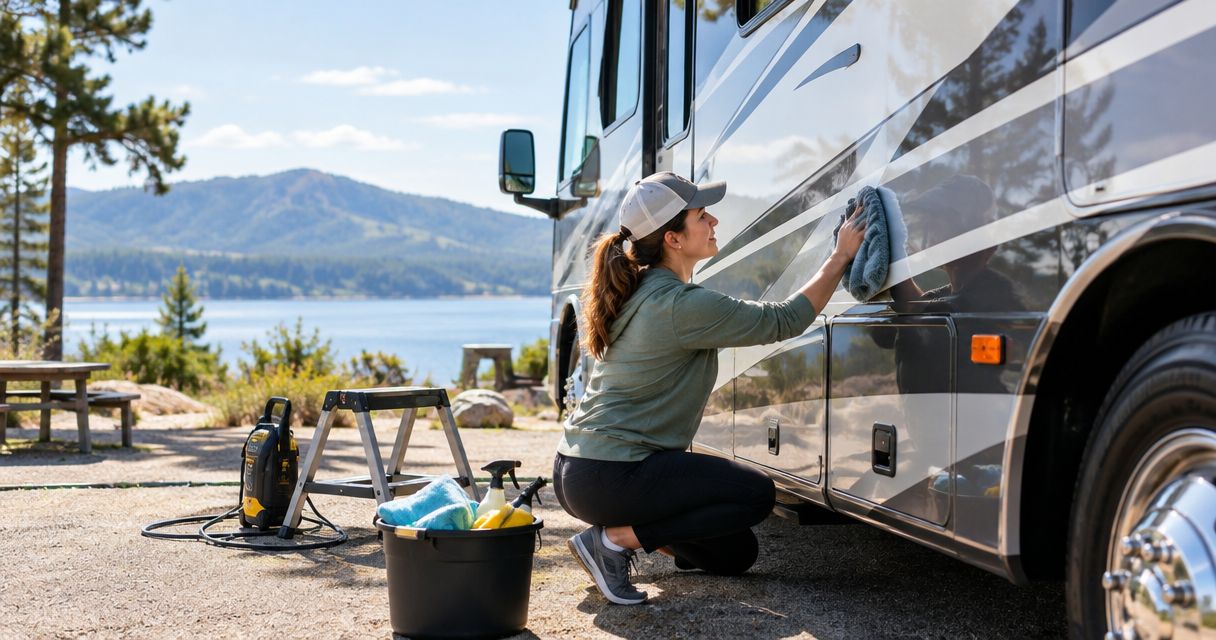
Ask whether bug residue, wheels, exterior glass, awnings, and the roof are included. Roof materials and sealants need particular care; do not assume a product suitable for painted sidewalls belongs on every exterior surface.
If the RV already has a ceramic coating, tell the detailer before treatment selection. Ask for a maintenance approach compatible with that coating.
Verdict: Buy for routine exterior upkeep; skip it as the sole answer to widespread dullness or cabin cleaning needs.
3. Interior clean-and-dry: best before storage
An interior clean-and-dry scope puts the living space first. Request cleaning appropriate to the flooring, seating, counters, and other agreed surfaces, with a clear plan for drying any damp-cleaned materials before storage.
For fall 2026 storage, separate cleaning from moisture diagnosis. A clean cabin does not establish that the RV is watertight, and fragrance does not resolve the source of a musty smell.
Best for: Owners preparing a used living space to sit closed between travel seasons.
Interior clean-and-dry pros:
- Targets crumbs, tracked-in dirt, and everyday cabin residue.
- Lets you address upholstery and flooring before storage.
- Makes drying an explicit part of the plan rather than an afterthought.
Interior clean-and-dry cons:
- Leaves exterior cleaning and protection for a separate scope.
- Does not repair water intrusion or replace plumbing winterization.
Remove food, trash, and personal belongings before the appointment. Report damp areas or recurring odors instead of asking only for deodorizing. Active leaks and suspected mold need appropriate assessment beyond ordinary detailing.
Ask which fabrics require wet cleaning and how drying will be handled. Do not close the RV for storage with damp upholstery or carpeting.
Verdict: Buy before storage when the cabin needs cleaning; hold wet-cleaning work until drying conditions are suitable.
4. Exterior cleaning with correction: best for dull finishes
An exterior cleaning-and-correction scope starts with identifying the finish and the problem. Compatible polishing can improve some surface defects, but painted panels, gelcoat, decals, and other materials do not all accept the same treatment.
Choose assessment before aggressive work. A test area helps establish whether the proposed method suits the surface and produces a useful improvement.
Best for: Owners whose main concern is dullness, oxidation, or visible defects rather than ordinary road grime.
Exterior cleaning with correction pros:
- Addresses appearance concerns that washing alone leaves behind.
- Supports a more informed decision about subsequent protection.
- Allows the work to be matched to the affected material.
Exterior cleaning with correction cons:
- Cannot repair every scratch, failed finish, or damaged decal.
- Requires restraint because polishing removes material from the treated surface.
For a 2026 appearance refresh, point out exactly what bothers you in daylight. Ask whether the issue sits on the surface, within the finish, or represents damage that needs repair.
Do not authorize broad polishing simply because a package includes it. The right choice is the least aggressive suitable approach, with realistic expectations for the affected panels.
Verdict: Hold until the finish is assessed; buy correction only where the surface and defect support it.
5. Ceramic preparation and application: best for planned protection
A ceramic-preparation scope combines suitable cleaning and preparation with a coating selected for the intended surface. It is a protection choice, not a way to hide unresolved defects or avoid future washing.
Before choosing this route, read the guide to ceramic coating for RV owners. Then discuss the condition of your RV, the surfaces proposed for treatment, and the aftercare you can realistically follow.
Best for: Owners who want ceramic protection and are prepared to maintain it appropriately.
Ceramic preparation and application pros:
- Makes preparation and surface compatibility part of the decision.
- Provides a defined opportunity to discuss ongoing exterior care.
- Suits owners who want protection considered alongside appearance.
Ceramic preparation and application cons:
- Does not repair scratches, failed finishes, or water leaks.
- Requires suitable application conditions and product-specific aftercare.
Ask which areas will be coated and which will be excluded. Confirm preparation, any recommended correction, post-application restrictions, and maintenance instructions before arranging travel or storage.
Royal Touch Mobile Detailing LLC offers RV detailing and ceramic coating services. Discuss the proposed RV application directly rather than assuming every surface belongs in the same treatment scope.
Verdict: Buy after a compatibility assessment and an agreed care plan; skip coating as a shortcut around preparation.
How these seasonal-prep options rank
The ranking follows the criteria above: material suitability, current condition, clear coverage, drying, aftercare, and mobile access. The full seasonal scope leads because it addresses both the cabin and exterior when an RV returns to use—not because it includes every available treatment.
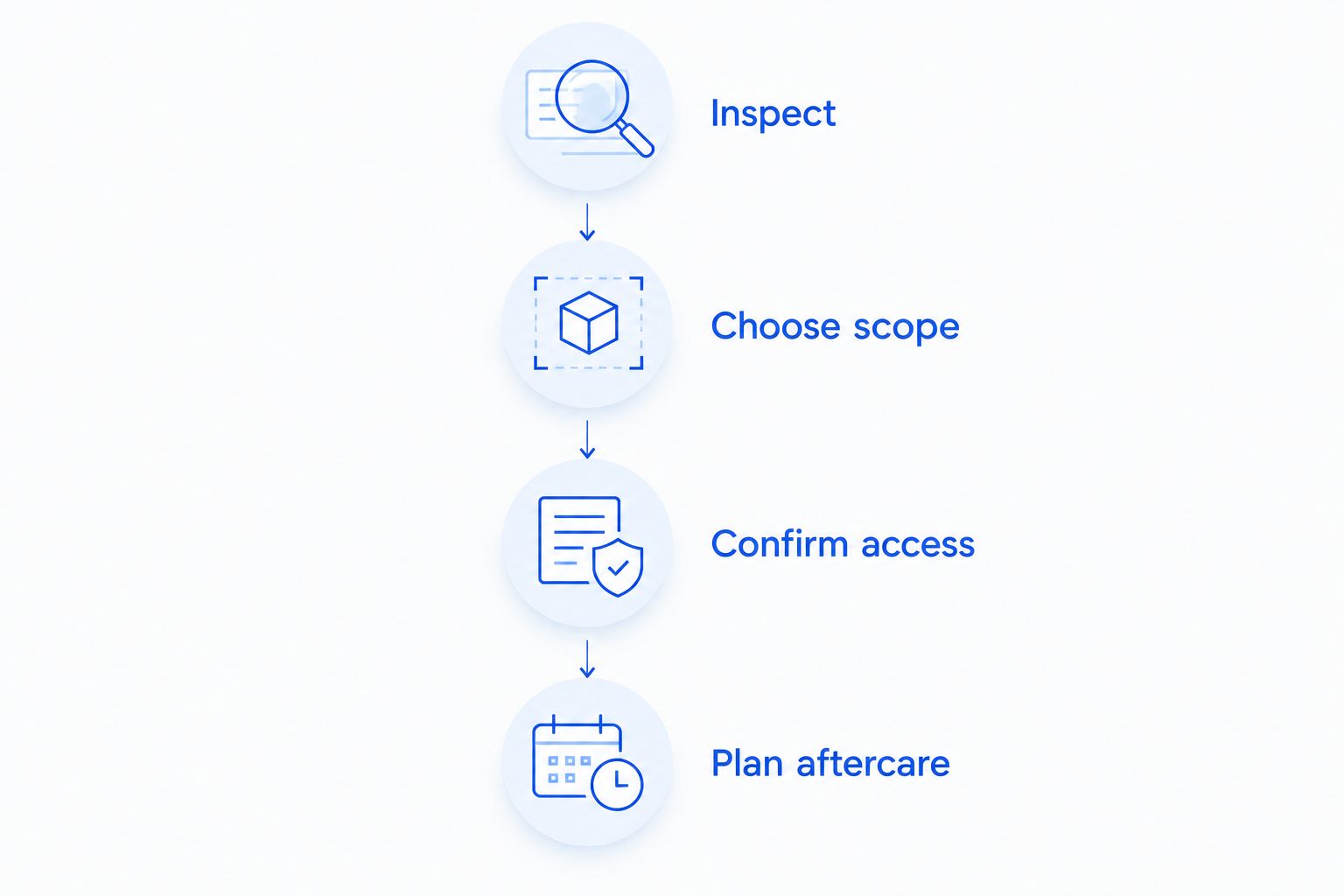
For your 2026 booking, work through this sequence:
- Inspect: Note dirt, dullness, stains, damp areas, and existing protection.
- Choose scope: Match the work to travel, routine upkeep, storage, or finish improvement.
- Confirm access: Check working space, permissions, utilities, and weather arrangements.
- Plan aftercare: Allow for drying or coating instructions before closing up or departing.
Which RV detailing package should you choose?
Choose the full seasonal clean-and-protect scope if you are unsure and both the cabin and exterior need attention. Narrow the work when only one area needs care, and add correction or ceramic protection only after discussing suitability.
Before booking, ask for the included tasks, exclusions, access requirements, and aftercare in writing. That is more useful than comparing package names that describe different amounts of work.
Discuss Your RV’s Seasonal Prep
Talk through your RV’s condition, location, and detailing priorities before choosing the work.
FAQ
What are the best RV detailing packages for seasonal prep?
A full seasonal clean-and-protect scope is the best default when both the exterior and cabin need attention. Choose a narrower exterior or interior scope when the other areas are already clean.
Should I detail my RV before or after winter storage?
Choose the timing around the RV’s condition and storage needs. Before storage, prioritize cleanliness and drying; after storage, reassess accumulated grime and exterior protection before travel.
Does RV detailing include winterization?
RV detailing does not automatically include winterization. Plumbing protection, mechanical checks, and leak repairs need separate confirmation with an appropriate service provider.
Is ceramic coating better than a wash-and-protect detail?
Ceramic coating and a wash-and-protect detail serve different needs. Choose routine cleaning for maintenance, and consider ceramic protection only after discussing preparation, compatibility, and ongoing care.
Can detailing remove oxidation from an RV?
Suitable polishing can improve some oxidation on compatible finishes. The detailer must identify the material and assess its condition before recommending correction; damaged finishes are not simply a cleaning problem.
Do mobile RV detailers need water and electricity?
Water and electricity arrangements depend on the provider and the proposed work. Confirm utility needs, parking permission, working clearance, and weather plans before the appointment.
How much should I expect to pay for seasonal RV detailing?
Request a quote for your RV’s condition and agreed scope. Describe the exterior materials, interior cleaning needs, and any proposed correction or coating so the quote reflects the work you actually want.
One last thing
Photograph the roofline, front cap, decals, and any stains before asking for a package recommendation. Include close-ups and wider views. A specific concern is easier to discuss than “it needs everything,” and it helps keep cleaning, protection, and repair decisions separate.