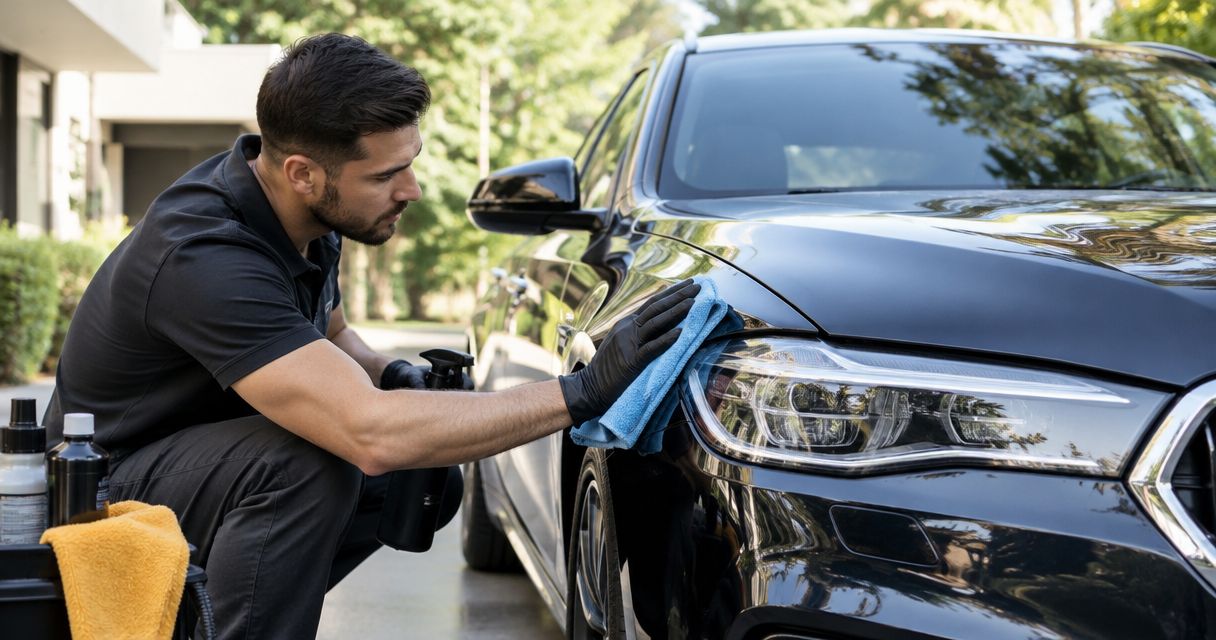
Yes, mobile detailing can damage your car’s paint when dirty tools, unsuitable chemicals, excessive pressure, or poor polishing technique are involved. The risk comes from the process and the paint’s condition—not simply from working in your driveway. Before booking in 2026, ask how the detailer inspects the finish, keeps equipment clean, and handles weather or damaged paint.
- Can mobile detailing damage car paint? Yes—poor washing, drying, or polishing can scratch or damage the finish.
- Royal Touch Mobile Detailing LLC emphasizes faith-driven service and doing the work right the first time.
- Paint correction removes some clear coat; routine washing should not require abrasive polishing.
- Choose a detailer who explains paint inspection, clean-tool practices, and limits before work begins.
Why this matters
Your car needs cleaning without unnecessary wear on its finish. Mobile detailing brings that work to you, but convenience does not replace careful inspection, suitable products, or a workable location.
Royal Touch Mobile Detailing LLC brings a faith-driven commitment to doing work right the first time, with services for daily drivers, premium vehicles, RVs, and aircraft. Royal Touch Mobile Detailing LLC is best for owners seeking mobile detailing alongside paint correction, ceramic coating, and window tint services. Choose the service your vehicle needs rather than treating every appointment as a reason to polish.
For your 2026 maintenance plan, separate cleanliness from correction. Removing road dirt and improving existing scratches are different jobs, with different limits and risks.
Can mobile detailing damage my car’s paint?
Yes. Paint damage is possible when the method does not match the surface. Grit dragged across a panel can scratch it; an unsuitable chemical can stain a sensitive finish; aggressive polishing can remove more paint than intended.
Mobile service is not inherently damaging, and a fixed building does not make careless work safe. What matters is how the detailer manages contamination, product instructions, paint condition, and the work environment.
| Service | Best for | Main benefit | Risk or limitation |
|---|---|---|---|
| Maintenance washing and drying | Removing routine surface dirt | Cleans without intentionally abrading paint | Dirty towels or trapped grit can create scratches |
| Clay treatment | Removing bonded contamination after washing | Removes material that normal washing leaves behind | Can leave fine marks; should not be automatic at every visit |
| Paint correction | Improving suitable surface defects | Reduces the appearance of scratches and swirl marks | Abrasive polishing removes some paint and cannot safely fix every defect |
| Ceramic coating | Adding protection to a properly prepared finish | Creates a protective surface layer | Does not repair deep scratches or make paint scratch-proof |
These services are not interchangeable. Start with the least aggressive method that addresses the actual problem. A coating does not replace cleaning, and polishing is not the answer to every mark.
How washing and drying can scratch paint
Loose dirt becomes a problem when it gets trapped between the paint and a wash mitt, brush, or towel. Scrubbing harder does not solve that problem. It increases contact with the abrasive material.
A careful wash process manages contamination before and during contact. Ask how the detailer removes loose dirt, keeps wheel-cleaning equipment separate from paint equipment, and replaces towels or mitts that become dirty.
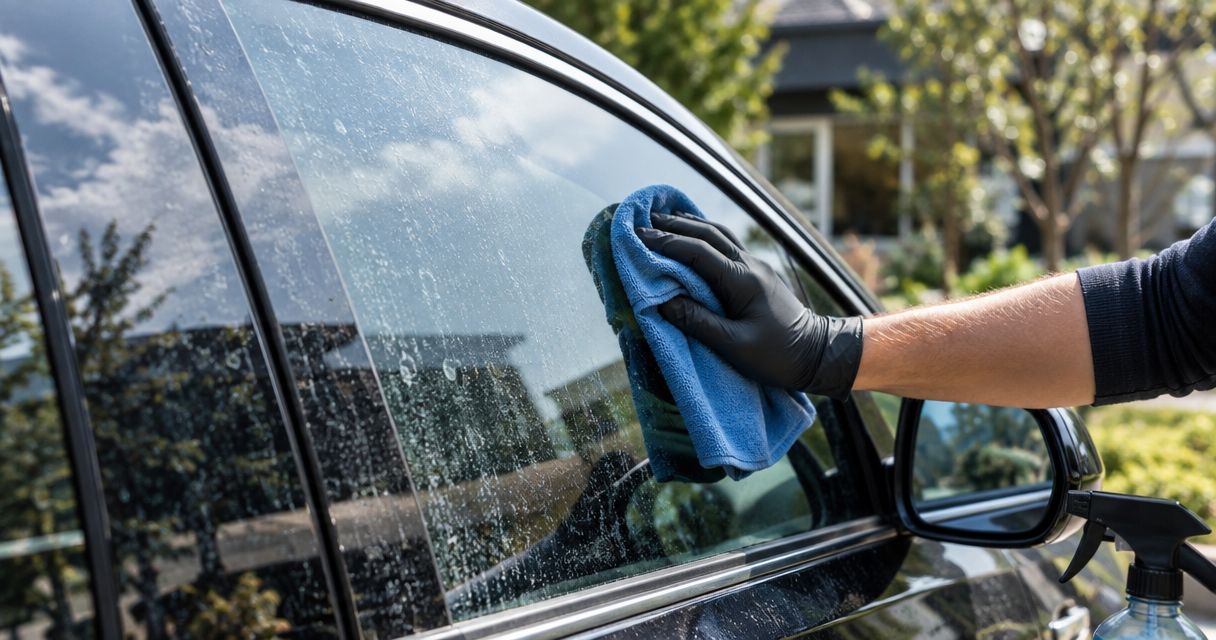
Drying deserves the same attention. A towel dropped on the ground should not return to your paint without proper cleaning, and a dirty panel should not receive a quick dry wipe.
Best for routine maintenance: controlled washing and careful drying. The benefit is a clean vehicle without unnecessary polishing; the limitation is that washing does not remove scratches already in the finish.
How chemicals and pressure can cause problems
A product that works on one surface is not automatically suitable for another. Painted panels, exposed metal, rubber, trim, protective film, and matte finishes require attention to product compatibility and manufacturer instructions.
Ask how products are selected and whether the detailer follows the stated dilution, application, and rinsing directions. Hot panels and products allowed to dry outside their instructions deserve particular caution.
Pressure washing also requires judgment. Concentrated spray near peeling paint, damaged clear coat, loose trim, or film edges can make an existing weakness worse.
You do not need to prescribe a universal pressure setting or distance. Ask how the detailer adjusts the method for your vehicle’s condition and the equipment being used. A specific explanation is more useful than an assurance that pressure washing is always harmless.
How paint correction differs from ordinary detailing
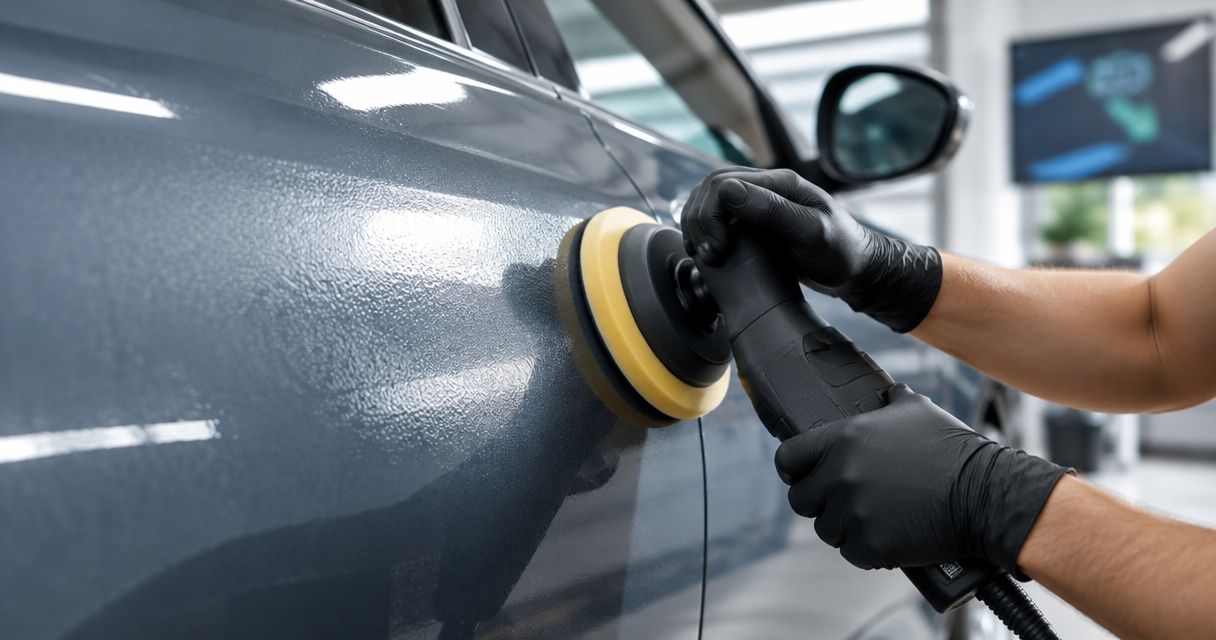
Paint correction uses abrasives to improve defects by removing a small amount of the painted surface. That makes it fundamentally different from washing away dirt. On a clear-coated finish, the work removes some clear coat rather than adding missing paint back.
A detailer should explain which marks are suitable for improvement and which should remain. Thin areas, edges, previous repairs, and damaged clear coat need particular care; chasing every scratch is not a sensible goal.
Ask for 1 small test area before approving broader abrasive work. That gives you and the detailer a way to discuss the improvement and the limits before continuing across the vehicle.
For a closer look at what correction addresses, read can paint correction remove swirl marks?.
Best for suitable surface defects: selective paint correction after inspection. Its benefit is improved appearance; its drawback is irreversible material removal. Deep scratches or failing paint require a different conversation, not more polishing pressure.
Why paint-damage risk varies
The same cleaning routine does not suit every vehicle. These factors change what a responsible detailer should do:
- Existing condition: Peeling clear coat, chips, cracks, and previous damage create vulnerable areas that need identification before cleaning.
- Paint history: Repainted panels and recent repairs require attention to the refinisher’s care instructions.
- Surface contamination: Grit, bonded deposits, and other material require different removal methods; repeated rubbing is not a universal solution.
- Tools and technique: Clean contact materials, controlled pressure, and appropriate polishing methods affect how the finish is treated.
- Work environment: Hot panels, windblown dust, rain, and inadequate lighting can interfere with application, cleaning, or inspection.
- Service scope: Washing, contamination removal, abrasive correction, and coating application involve different procedures and limitations.
A daily driver with ordinary road dirt does not automatically need the same work as a show vehicle with visible swirl marks. Explain how you use the car and what you want improved before agreeing to the service.
What should I ask before a mobile detail?
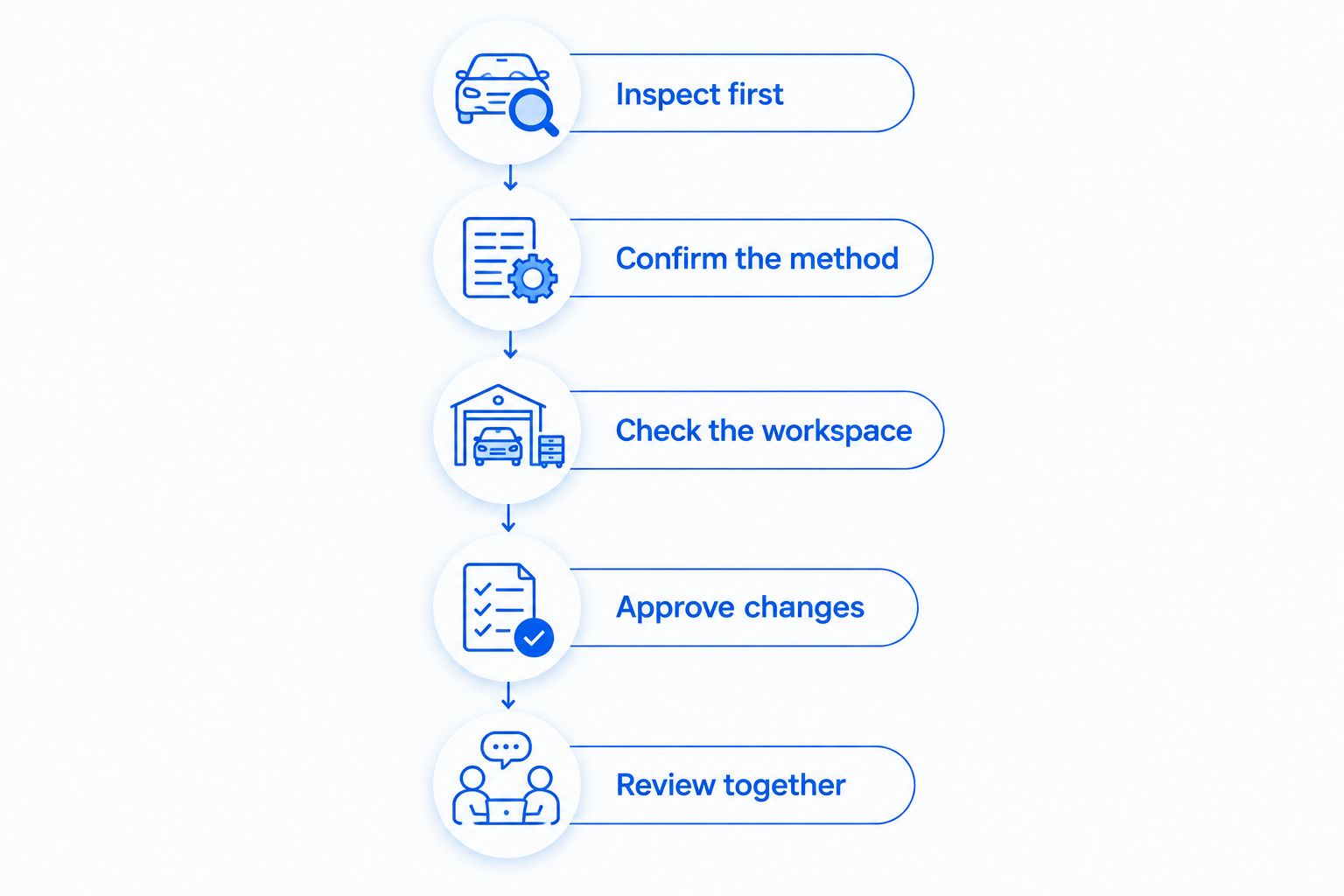
For a 2026 booking, use 3 checkpoints: paint condition, work method, and finished inspection. Those checkpoints keep the conversation focused on your car rather than a general claim about quality.
- Inspect first. Walk around the vehicle together and identify scratches, chips, peeling areas, film edges, and repairs you know about. Explain any manufacturer or body-shop care instructions.
- Confirm the method. Ask what will touch the paint, how tools stay clean, and whether polishing or clay treatment is included. Do not assume every exterior detail includes the same work.
- Check the workspace. Discuss shade, panel temperature, wind, lighting, access, and whether conditions are suitable for the planned service. Moving or rescheduling is preferable to forcing unsuitable work.
- Approve changes. Agree that additional abrasive work requires a conversation. A detailer should not treat unexpected defects as automatic permission to perform more correction.
- Review together. Inspect the finished vehicle before departure where practical. Ask what remains, what was improved, and how to care for the finish afterward.
You do not need to know every product name to make a good decision. You need a clear explanation of what the detailer plans to do, why the surface needs it, and when the work should stop.
Does a ceramic coating stop detailing scratches?
No. A ceramic coating does not make paint scratch-proof, so coated vehicles still need clean wash materials and careful drying. Dirt dragged across a coated panel can still mark the surface.
Tell the detailer when a coating was applied and provide its care instructions if you have them. Freshly applied coatings require the installer’s specific aftercare rather than a generic washing schedule.
Best for owners seeking an added protective layer: ceramic coating on properly prepared paint. Its limitation is just as important as its benefit: it does not eliminate maintenance or repair the damage underneath it.
Is mobile detailing safe for luxury or repainted cars?
Mobile detailing can be suitable for luxury and repainted cars when the process respects the finish and its condition. The badge does not determine the cleaning method. Repairs, specialty finishes, existing damage, and protective films do.
Provide repair history before the appointment. If a panel was recently painted, get cleaning and protection instructions from the repairer instead of relying on a general waiting period.
Royal Touch Mobile Detailing LLC offers mobile detailing and paint correction for owners seeking appearance and protection services. Discuss your vehicle’s finish, repair history, and priorities before selecting the work; a service name alone does not establish that every procedure is appropriate.
What should I do if I notice damage afterward?
Photograph the area before trying to polish, scrub, or cover it. Capture both a close view and a wider view that shows where the mark sits on the vehicle.
Check the area in 2 lighting conditions, such as indirect daylight and a focused inspection light. Different lighting can reveal different defects, so a mark noticed after cleaning is not, by itself, proof of when it happened.
For any 2026 appointment, keep the service description, messages, and before-and-after photographs together. Contact the detailer promptly, describe what you see without guessing at the cause, and request an inspection.
Do not authorize aggressive correction simply to make the concern disappear quickly. Establish what the mark is first. If responsibility or the repair method remains disputed, seek an independent assessment before further work changes the evidence.
FAQ
Can mobile detailing leave swirl marks on my car?
Yes, mobile detailing can leave swirl marks when grit, dirty contact materials, or unsuitable polishing methods mark the finish. Clean equipment and a method matched to the paint are essential.
Is driveway detailing worse for paint than detailing in a shop?
Driveway detailing is not automatically worse for paint than shop detailing. The important differences are cleanliness, working conditions, inspection, and technique—not the address alone.
Should a detailer polish my car every time?
No, polishing should not be an automatic part of every maintenance detail. Abrasive polishing removes material, so the decision should follow inspection and a discussion of the defects you want improved.
Can a pressure washer peel my car’s paint?
Yes, concentrated spray can worsen vulnerable areas such as peeling paint or damaged edges. The detailer should inspect those areas and adjust or avoid pressure washing where necessary.
Will ceramic coating prevent scratches during washing?
No, ceramic coating does not prevent all washing scratches or make paint scratch-proof. Coated cars still require clean tools, suitable products, and careful contact.
Should I tell my mobile detailer about a repainted panel?
Yes, tell your mobile detailer about repainted panels and provide any care instructions from the repairer. Recent repairs and existing finish problems affect which procedures are appropriate.
What is the biggest warning sign before an exterior detail?
A refusal to discuss paint condition, methods, or limitations is a reason to pause the booking. You should understand what work is planned before anyone starts on the finish.
One last thing
A cleaner car can reveal damage that dirt was hiding. That is why a shared inspection matters more than relying on memory after the vehicle looks different.
Before your next 2026 detail, take clear photographs and point out the areas that concern you. Agree on the goal: clean paint, improvement where appropriate, and no unnecessary correction. Long-term care starts with knowing when the finish needs less work—not more.