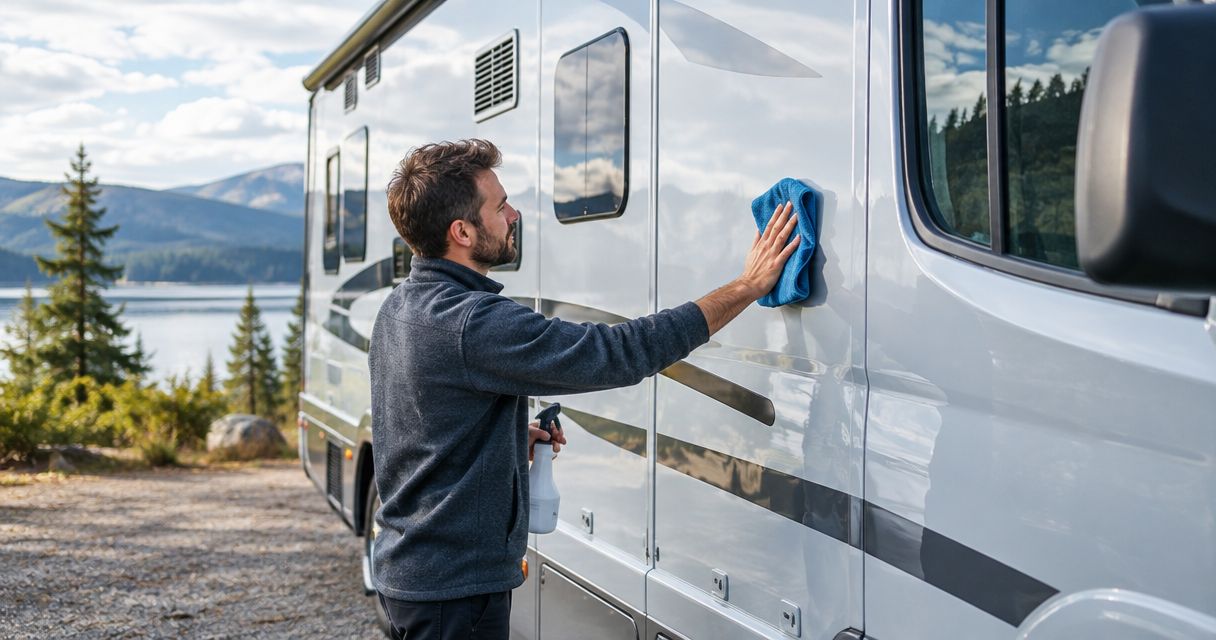
Yes, you can ceramic coat an RV when the coating is compatible with its exterior materials and the surface is properly prepared. Coating helps water and dirt release during cleaning, but it does not repair faded finishes, seal leaks, or make your RV scratch-proof.
- Can you ceramic coat an RV? Yes—match the coating to the surface and address oxidation before application.
- Royal Touch Mobile Detailing LLC offers RV detailing and ceramic coating; discuss your RV’s materials before choosing treatment.
- Paint, gelcoat, graphics, and roof materials need separate compatibility checks—not one blanket application.
- Ceramic coating supports easier maintenance, but regular washing and prompt contaminant removal still matter.
Why this matters
An RV is not one uniform surface. Painted panels, fiberglass gelcoat, vinyl graphics, plastic trim, seals, and roofing materials can require different care, even when they sit beside each other.
Royal Touch Mobile Detailing LLC brings a faith-driven commitment to doing work right the first time to its mobile detailing services for auto, RV, and aviation customers. For an RV owner planning protection in 2026, that starts with choosing the right treatment—not coating every visible surface simply because it is reachable.
For a broader look at preparation and upkeep, see the ceramic coating guide for RV owners.
Can you ceramic coat an RV?
Yes—ceramic coating is suitable for compatible RV exterior finishes that are clean, sound, and properly prepared. The deciding question is not whether the vehicle is a motorhome, travel trailer, or fifth wheel. It is whether the selected coating is approved for the material underneath it.
Use this surface-by-surface comparison before discussing an application. These are compatibility checks, not permission to apply an unspecified product.
| RV surface | Best for | Main benefit | Main limitation or check |
|---|---|---|---|
| Clear-coated paint | Owners protecting sound painted panels | Helps make routine cleaning easier | Does not remove existing scratches or repair failing clear coat |
| Fiberglass gelcoat | Owners maintaining a sound fiberglass finish | Adds a protective treatment after suitable preparation | Chalky oxidation needs assessment before coating |
| Vinyl graphics or wraps | Owners protecting graphics with an approved treatment | Provides protection where the coating and graphic maker allow it | Compatibility, finish, and warranty instructions must be checked |
| Exterior plastic trim | Owners treating trim with a material-specific product | Supports easier surface cleaning | A paint coating is not automatically suitable for plastic |
| Roof membranes and seals | Owners following material-specific maintenance instructions | Appropriate maintenance protects these separate components | Do not assume a body coating is approved for roofs or seals |
Choose coating by surface, not by the size or value of the RV. A premium motorhome still needs a material check, and a daily-use travel trailer still deserves careful preparation.
Painted RV panels: protect a sound finish
Painted RV panels are candidates for a coating formulated for automotive paint. Before application, inspect for scratches, staining, peeling, and earlier repairs. Coating goes over the finish; it does not replace missing or damaged paint.
If you want swirl marks reduced, discuss polishing before protection. Not every mark can be safely removed, and preserving the finish matters more than chasing a flawless reflection.
Fiberglass gelcoat: address chalkiness first
Gelcoat is the outer finish found on many fiberglass RV bodies. When it oxidizes, it can look dull or leave a chalky residue. That condition needs assessment before a coating is applied.
Ask whether the preparation plan includes oxidation removal and a test area. Do not treat ceramic coating as a shortcut around restoring an unsound surface. The finish underneath determines what the completed job can look like.
Graphics and roof materials: check separately
Vinyl graphics are not painted panels, and a roof membrane is not gelcoat. Follow the coating maker’s compatibility instructions and the component manufacturer’s care guidance before treating either.
If compatibility is unclear, leave that surface out of the coating scope until it is confirmed. A written list of included and excluded surfaces is more useful than a broad promise to coat the entire RV.
How should an RV be prepared for ceramic coating?
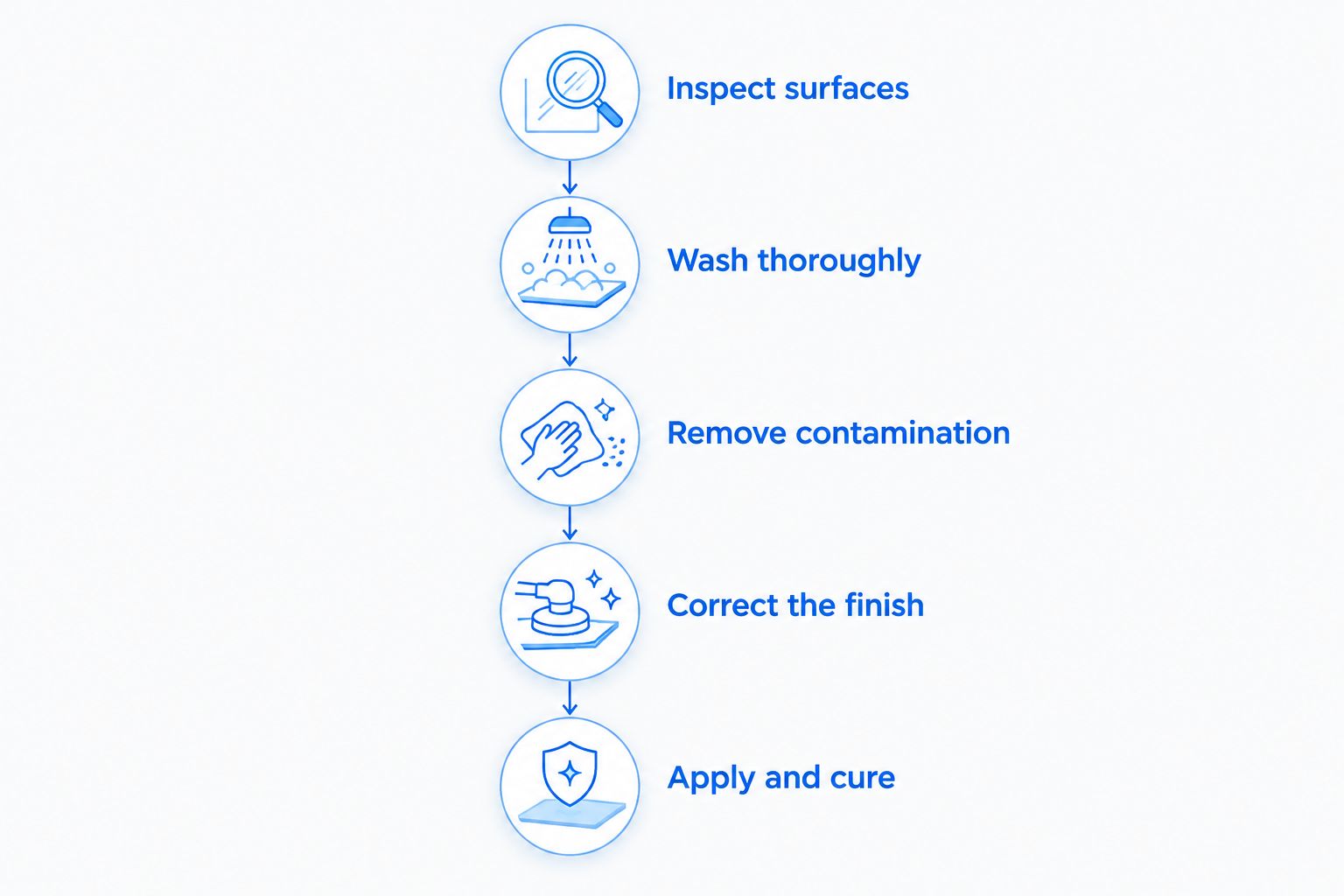
A practical preparation sequence separates cleaning, appearance correction, and protection. Each stage has a different purpose. Skipping one because the RV looks clean from a distance can leave problems hidden until application.
- Inspect surfaces. Identify paint, gelcoat, graphics, trim, repairs, and damaged areas. Record what will receive coating and what will not.
- Wash thoroughly. Remove loose dirt, road film, and accessible buildup using methods appropriate for each material. Clean around seams without treating coating as a substitute for seal maintenance.
- Remove contamination. Assess remaining deposits and use surface-compatible cleaning methods. A smooth-looking panel can still carry material that ordinary washing leaves behind.
- Correct the finish. Address agreed oxidation or paint defects where safe and appropriate. Review the result before covering it with protection.
- Apply and cure. Complete the coating maker’s final preparation, application, and curing instructions. Arrange a suitable place for the RV during the required conditions.
Before a 2026 appointment, photograph dull areas, peeling graphics, and roof concerns so you can explain them clearly. Photos help frame the conversation, but they do not replace an inspection of the actual finish.
Ask to review a small corrected area when oxidation or scratches are part of the job. That gives you a visible basis for agreeing on the appearance goal before the rest of the RV is treated.
What does ceramic coating do for an RV—and what does it not do?
Ceramic coating creates a protective surface treatment that can help water bead and make dirt easier to release during washing. For a large vehicle, easier cleaning is a practical benefit. It still takes safe washing methods to avoid dragging grit across the finish.
The strongest reason to choose coating is maintenance support, not the expectation that nothing will stick. Bug residue, bird droppings, tree sap, and water deposits still deserve attention. Follow product-specific care instructions rather than waiting for buildup to become difficult to remove.
What coating helps with
- Cleaning: A suitable coating helps reduce how firmly some contamination clings to the treated surface.
- Appearance: A properly prepared finish can show a cleaner, glossier appearance after treatment.
- Routine protection: Coating adds a sacrificial treatment over the compatible finish beneath it.
What coating cannot replace
- Damage repair: Cracked gelcoat, peeling clear coat, and damaged graphics need their own assessment.
- Leak maintenance: Roof seams, sealants, and gaskets still require the manufacturer’s inspection and maintenance routine.
- Impact protection: Coating is not a physical barrier against gravel strikes or collision damage.
- Regular washing: A coated RV still gets dirty, especially after highway travel or outdoor storage.
Coat an RV to support its care routine, not to eliminate that routine. If your main concern is a leaking seam or deteriorating finish, resolve that concern before discussing exterior protection.
Why RV ceramic coating preparation varies
An RV coating plan in 2026 should describe the vehicle in front of the detailer, not just its model name. These factors explain why two RVs can need different preparation and application plans:
- Surface material: Paint, gelcoat, graphics, and trim have different compatibility requirements.
- Current condition: Oxidation, scratches, contamination, and failing finishes change what must happen before application.
- Previous treatments: Existing wax, sealant, or coating affects surface preparation and must be assessed.
- Exterior layout: Tall sidewalls, roof transitions, ladders, and attachments affect safe access to the agreed areas.
- Application conditions: Temperature, moisture, wind, and shelter must meet the selected coating’s instructions.
- Maintenance plans: Storage conditions and your ability to wash the RV matter when choosing a practical care routine.
Ask for these factors to be reflected in the scope of work. A clear explanation of preparation and exclusions tells you more than an impressive-sounding coating label.
Is ceramic coating worth it for an RV stored outdoors?
Ceramic coating is a practical choice for an outdoor-stored RV when you want easier cleaning and are prepared to maintain the finish. It does not stop exposure to weather, falling debris, or contamination. Storage location still affects how you care for the vehicle.
For your 2026 maintenance plan, think about access as well as protection. If you cannot safely reach the upper sidewalls to wash them, arrange suitable cleaning help rather than assuming the coating will keep those areas clean by itself.
Can you ceramic coat an older RV?
Yes, an older RV can receive ceramic coating if its finish remains suitable after inspection and preparation. Age alone does not settle the question. Oxidation, repairs, peeling graphics, and the condition of the underlying surface matter more.
Ask what appearance improvement is realistic before agreeing to application. Restoration and protection are separate decisions: first determine whether the finish can be safely improved, then decide whether coating belongs in the plan.
Can mobile detailing include RV ceramic coating?
Yes, mobile RV coating is possible when access, weather, shelter, and curing conditions meet the selected product’s requirements. A convenient location is not automatically a suitable application site. Confirm those requirements before scheduling around a trip.
Royal Touch Mobile Detailing LLC is a fit for RV owners seeking mobile detailing and ceramic coating from a family-owned provider. Its stated service area includes North Carolina and parts of Virginia and South Carolina; confirm your location and the worksite requirements when discussing your RV with Royal Touch Mobile Detailing LLC.
Ask what happens if the application conditions are unsuitable. A clear rescheduling or location discussion is better than expecting outdoor work to proceed regardless of weather.
What should you ask before booking RV ceramic coating?
Bring questions about the finish, not just the final shine. Your answers should make the preparation, coverage, and maintenance responsibilities clear.
- Which exterior materials will receive coating?
- Which graphics, trim pieces, roof areas, or seals are excluded?
- Does the preparation include oxidation removal or paint correction?
- How will damaged or previously repaired areas be handled?
- What conditions are needed during application and curing?
- What washing instructions should you follow afterward?
- What documentation comes with the selected coating?
For a 2026 booking, also explain your travel schedule before setting the appointment. Do not plan immediate washing or road travel until the applicable curing instructions are clear. There is no single curing schedule that applies to every coating and every set of conditions.
Plan Your RV’s Protection
Discuss your RV’s surfaces, preparation needs, and mobile detailing location.
FAQ
Can you ceramic coat an RV with fiberglass siding?
Yes, compatible fiberglass gelcoat can receive ceramic coating after suitable cleaning and preparation. Chalky oxidation or damaged areas need assessment before application.
Can ceramic coating fix faded RV paint?
No, ceramic coating is not a repair for faded or failing paint. Assess the finish first and discuss appropriate correction before adding protection.
Can you put ceramic coating over RV decals?
Only use ceramic coating over RV decals when the coating and graphic manufacturer’s instructions allow it. Check compatibility and finish requirements rather than treating decals like paint.
Can you ceramic coat an RV roof?
Do not apply a body coating to an RV roof without confirming compatibility with the exact roof material. Roof membranes, sealants, and roof coatings have their own maintenance requirements.
Does ceramic coating mean I never have to wax or wash my RV?
Ceramic coating does not eliminate washing, and you should not add wax unless the coating’s care instructions allow it. Use the approved maintenance routine rather than layering unrelated products.
Can ceramic coating stop scratches on my RV?
No, ceramic coating does not make an RV scratch-proof. Safe washing, clean tools, and avoiding abrasive contact remain necessary.
Does Royal Touch Mobile Detailing LLC offer RV detailing and ceramic coating?
Yes, Royal Touch Mobile Detailing LLC offers RV detailing and ceramic coating among its services. Discuss your location, exterior materials, and preparation needs before confirming the work.
One last thing
Ask what will not be coated. That question can reveal whether the plan accounts for graphics, roof materials, seals, and damaged finishes—or treats the whole RV as one surface.
A careful exclusion is not a shortcoming. It is part of choosing the royal treatment your RV deserves: appropriate care for each material, with protection added only where it belongs.