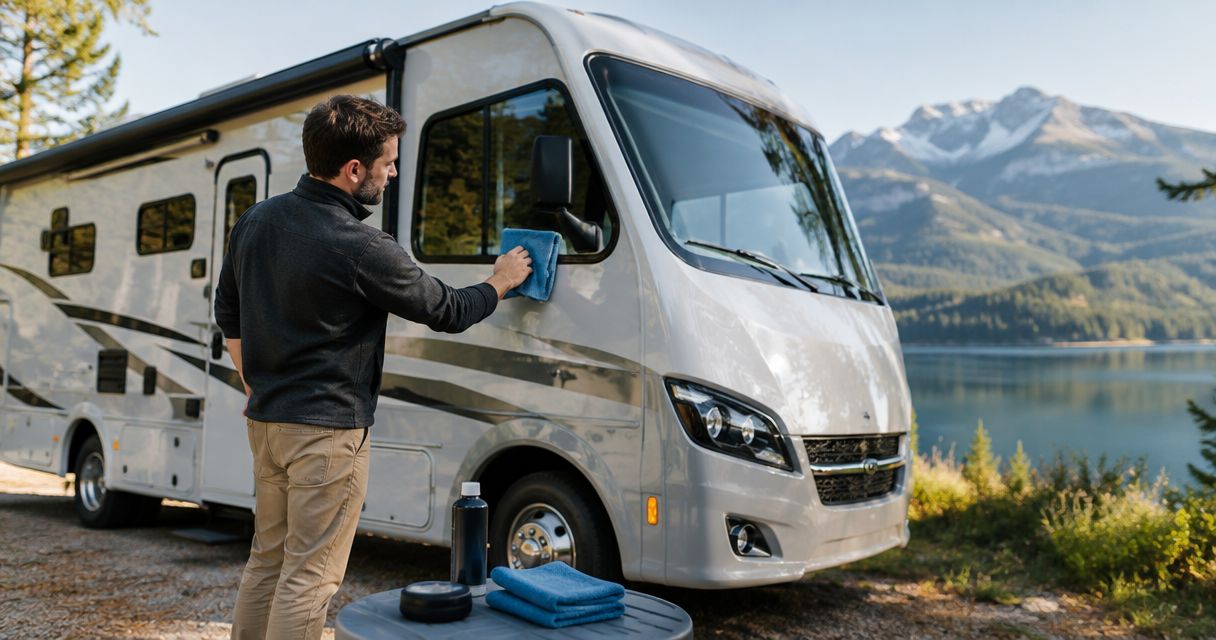
RV ceramic coating requires a vehicle-specific quote based on the exterior’s size, condition, preparation needs, and surfaces being treated. For a 2026 estimate, ask for surface preparation and any correction work to be listed separately from coating application; those steps can change the scope substantially.
- How much does ceramic coating cost for an RV? Get an itemized quote covering preparation, application, and aftercare.
- Royal Touch Mobile Detailing LLC offers RV detailing and ceramic coating; discuss your vehicle’s condition before choosing service.
- Ceramic coating does not replace oxidation removal, scratch correction, or regular washing.
- Compare the surfaces and preparation included, not just the final estimate.
How much does ceramic coating cost for an RV?
The useful answer is an itemized estimate for your RV, not a generic amount attached to its length. Length helps describe the vehicle, but it does not describe faded fiberglass, painted panels, decals, existing protection, or access to upper surfaces.
Start with the ceramic coating guide for RV owners if you are still deciding what you want protected. Then ask the detailer to connect each quoted task to a specific part of your RV.
An estimate should make these distinctions clear:
| Quote component | What you need explained | Why it matters |
|---|---|---|
| Exterior cleaning | Which surfaces will be washed and cleaned | Coating needs a properly prepared surface |
| Contamination removal | What bonded residue needs attention | Washing alone does not remove every surface contaminant |
| Surface correction | Whether polishing or oxidation removal is included | Coating application does not perform that work |
| Coating application | Which materials and exterior areas receive treatment | Sidewalls, glass, trim, and roof materials need separate consideration |
| Aftercare | Washing instructions and any follow-up requirements | Protection still requires maintenance |
Ask for exclusions beside the inclusions. A detailed estimate loses its usefulness if you have to guess whether the roof, front cap, or correction work belongs in the agreed scope.
Why this matters
Royal Touch Mobile Detailing LLC brings a faith-driven commitment to doing work right the first time to its mobile detailing services for autos, RVs, and aircraft. For an RV owner, that means starting the conversation with the vehicle’s actual needs rather than choosing a coating before discussing the surface beneath it.
Royal Touch Mobile Detailing LLC is a fit for RV owners seeking mobile detailing and ceramic coating with a preparation-first discussion. Ask how the proposed work addresses protection, appearance, and ongoing care—not simply how glossy the RV will look when finished.
Convenience matters, too. Mobile service brings the work to your location, but you still need to discuss suitable working space, access, and application conditions before booking.
A well-kept RV: focus on preparation and coverage
Best for: owners whose exterior is in sound condition and who want to add coating protection. A well-kept RV still needs inspection and cleaning before application. Looking clean from across the driveway is not the same as being ready for a coating.
Ask the detailer to inspect for bonded residue, old protection, water spotting, and surface defects. Request an explanation of which preparation steps are necessary and which appearance improvements are optional.
The advantage is a clearer starting point: you can discuss protection without automatically treating the exterior as a restoration project. The limitation is that a newer or cleaner RV is not automatically free of defects.
For your 2026 estimate, describe recent exterior work, previous protective treatments, and any areas you already find difficult to clean. That history gives the inspection a useful starting point without replacing it.
An oxidized RV: assess restoration before coating
Best for: owners whose RV has chalky, faded, or uneven-looking exterior surfaces. Ask for an assessment of the finish before agreeing to coating application. Oxidation removal and coating are different tasks, and the estimate should describe them separately.
Coating is not a substitute for restoring a deteriorated surface. Nor does polishing repair every kind of damage: peeling finishes, damaged graphics, and failing materials need their own assessment.
The benefit of addressing condition first is that you can make an informed decision about the appearance work. The drawback is a broader preparation scope, with more decisions about what is reasonable to improve.
Agree on the correction goal before discussing the finished shine. Ask the detailer to explain remaining defects and any areas that should not receive the proposed treatment.
An RV with mixed materials: define each surface
Best for: owners who want a clear treatment plan across different exterior materials. An RV exterior can include painted surfaces, gelcoat, graphics, glass, metal, plastic, and roof materials. Do not assume a single coating or preparation method belongs on all of them.
Ask the detailer to name the surfaces included in the proposed service and confirm compatibility with the selected product’s instructions. A description such as “complete exterior” needs clarification before you approve it.
The advantage of a surface-by-surface plan is a clearer agreement about coverage. The limitation is that different materials can require different treatment decisions, and some areas belong outside the coating scope.
| Exterior condition | Best for | Main benefit of this approach | Main limitation |
|---|---|---|---|
| Well-kept finish | Owners prioritizing protection | Focuses the discussion on preparation and coverage | A clean appearance can hide defects |
| Oxidized finish | Owners addressing fading or chalkiness | Separates restoration from coating application | Some deterioration requires repair rather than detailing |
| Mixed materials | Owners seeking clearly defined coverage | Identifies treatment by surface | Not every material accepts the same process |
These are inspection scenarios, not named service packages. Your RV can fit more than one row, which is why photographs and an inspection are more useful than selecting a package by label alone.
Why RV ceramic coating estimates vary
Use these factors to compare the scope of a 2026 estimate. Each should connect to an identifiable task rather than an unexplained adjustment.
- Exterior size: Length, height, and body shape affect the surface area and access involved. Describe the whole vehicle, not only its model name.
- Surface condition: Oxidation, staining, and visible defects change the preparation discussion. Ask what the proposed work will address and what it will leave alone.
- Existing treatments: Previous wax, sealant, or coating affects the preparation plan. Share whatever service history you have rather than guessing what remains on the surface.
- Material differences: Paint, gelcoat, graphics, glass, trim, and roof materials need compatibility checks. Request written inclusions and exclusions.
- Correction goals: Cleaning for protection and polishing for appearance are different objectives. Make sure the estimate reflects the result you are asking for.
- Working conditions: Access around the RV and the conditions required by the coating influence job planning. Discuss the parking location before scheduling mobile work.
None of these factors justifies a vague estimate. You should be able to point to the condition, surface, or task behind each part of the proposed work.
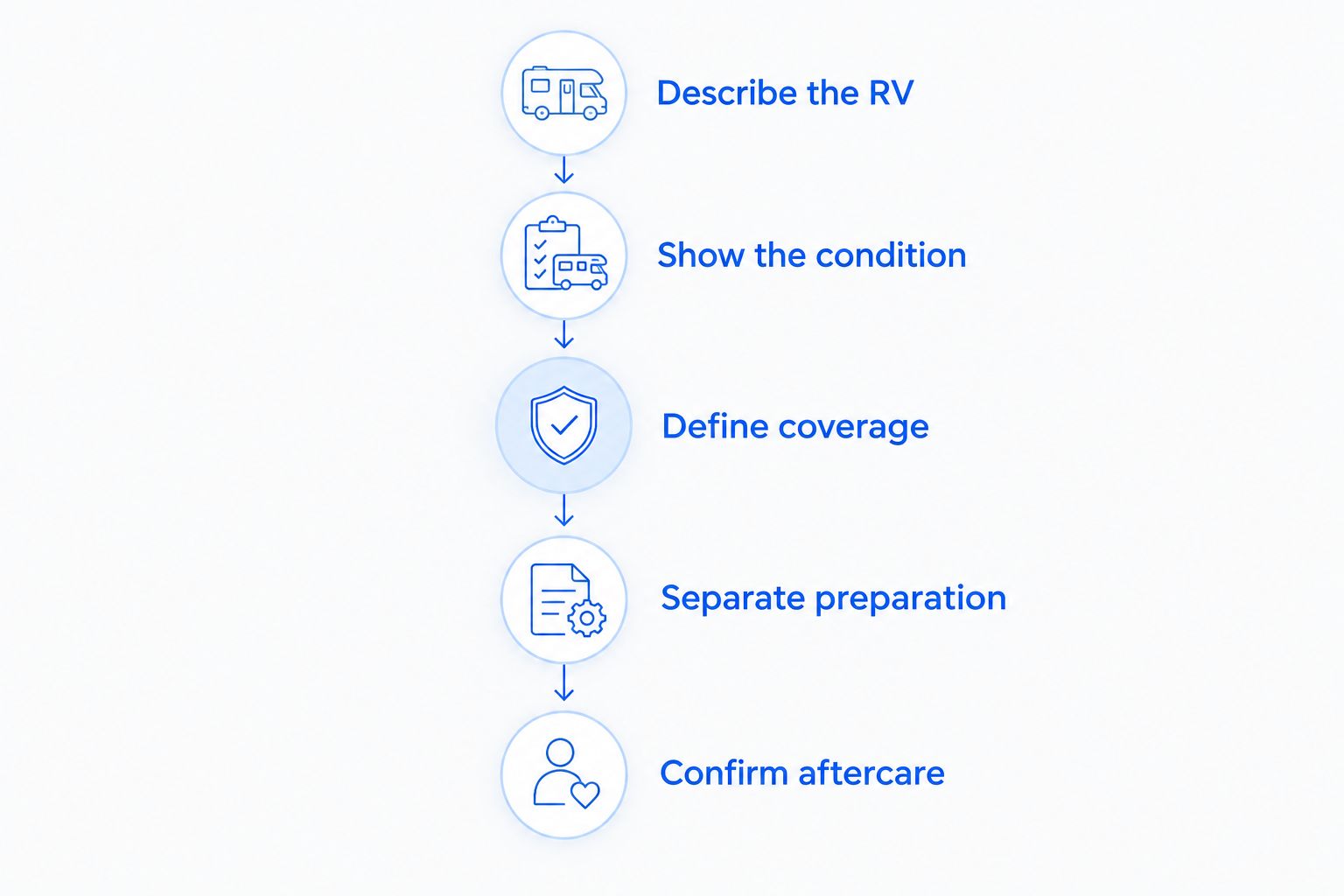
How do you get an RV coating quote you can compare?
Follow this sequence before approving service. It keeps the conversation practical and helps prevent a protection request from becoming an undefined restoration project.
- Describe the RV. Share the make, model, dimensions, and exterior materials you know. Include any previous coating or recent exterior repairs.
- Show the condition. Send overall views and close-ups of fading, stains, scratches, peeling areas, and graphics. Photograph the areas you are concerned about rather than only the best-looking side.
- Define coverage. Ask which surfaces are included and excluded. Clarify the front cap, roof, glass, trim, and other areas individually.
- Separate preparation. Request a distinction between cleaning, contamination removal, correction, and coating application. Ask which steps are essential for the proposed treatment.
- Confirm aftercare. Get the selected product’s instructions for curing, washing, and maintenance. Work those requirements into your travel plans before choosing an appointment.
Keep the answers together so you can review the whole job at once. A conversation spread across photographs, messages, and a short final estimate makes exclusions harder to spot.
For a 2026 booking, tell the detailer about your next departure and where the RV will stay after application. Ask whether those plans fit the coating’s instructions; do not assume you can immediately return to every normal activity.
Is RV ceramic coating worth it for your travel routine?
Ceramic coating is worth considering when you want surface protection and are prepared to maintain it. The decision becomes less useful when you expect it to eliminate washing, correct existing damage, or prevent every mark.
Start with your actual routine. Explain whether the RV spends long periods parked outdoors, travels frequently, or sits in storage between trips. Those details help frame a discussion about suitable protection and realistic upkeep.
The practical upside is a protective treatment intended to support exterior care. The trade-off is that preparation, application requirements, and ongoing maintenance still matter.
Do not judge long-term value only by shine on collection day. Ask what you will need to do during ownership and whether that care fits how you use the RV.
Does ceramic coating remove scratches or oxidation?
Ceramic coating does not remove scratches or oxidation; preparation and correction address those conditions. Ask the detailer to distinguish defects that can be improved through appropriate polishing from damage that needs repair.
A coating estimate should not imply that application alone restores a weathered exterior. If appearance is your main concern, make the condition assessment the first decision and the coating the next one.
Can you coat only part of an RV?
A partial-surface coating request needs a clearly defined scope and a compatibility check. Ask whether the proposed treatment can be limited to your selected areas and what preparation those areas require.
The benefit is a more focused discussion about your priorities. The limitation is that untreated surfaces still need their own care, and the finished appearance can differ where the underlying condition differs.
What should you ask before booking mobile service?
Ask where the work will happen, what access is required, and how the selected coating’s application conditions will be met. Confirm the plan for weather-related scheduling decisions rather than assuming any parking space is suitable.
Then ask what happens after application. You need clear instructions for the first wash, exposure to water, and routine cleaning, based on the product actually selected—not a generic timetable.
Discuss RV detailing and ceramic coating with Royal Touch Mobile Detailing LLC, including your location, exterior condition, and desired coverage. The company serves North Carolina and parts of Virginia and South Carolina; confirm your specific location when making the request.
Discuss Your RV’s Protection
Share your RV’s condition, location, and coverage goals before choosing ceramic coating service.
FAQ
How much does ceramic coating cost for an RV in 2026?
RV ceramic coating requires an estimate based on exterior size, condition, preparation, and treated surfaces. Request separate descriptions of correction work and coating application so you understand the proposed scope.
Is an RV ceramic coating estimate based only on length?
Length alone does not describe the work an RV needs. Surface condition, materials, coverage, and access also belong in the estimate discussion.
Does a new RV need preparation before ceramic coating?
A new RV still needs inspection and appropriate preparation before ceramic coating. Ask the detailer to check for contamination and finish defects rather than assuming the surface is ready.
Will ceramic coating fix faded RV fiberglass?
Ceramic coating does not replace an assessment and appropriate treatment of faded fiberglass. Ask whether oxidation removal is suitable and which defects will remain before approving application.
Can ceramic coating go over RV decals?
Compatibility depends on the graphics, their condition, and the selected coating’s instructions. Have the detailer assess the decals and explain any exclusions before treatment.
Does ceramic coating mean I can stop washing my RV?
Ceramic coating does not eliminate washing. Follow the selected coating’s care instructions and use cleaning methods appropriate for each exterior material.
How long should I wait to wash my RV after coating?
Follow the curing and first-wash instructions for the coating actually applied to your RV. Get those instructions before booking so they fit your storage and travel plans.
One last thing
Ask what will remain unchanged after the work. That question brings scratches, damaged graphics, excluded surfaces, and restoration limits into the conversation before you approve the job.
For your 2026 RV protection plan, a clear explanation of limitations is as useful as a list of benefits. Choose a scope you understand, then keep the written aftercare instructions with your RV’s service records.