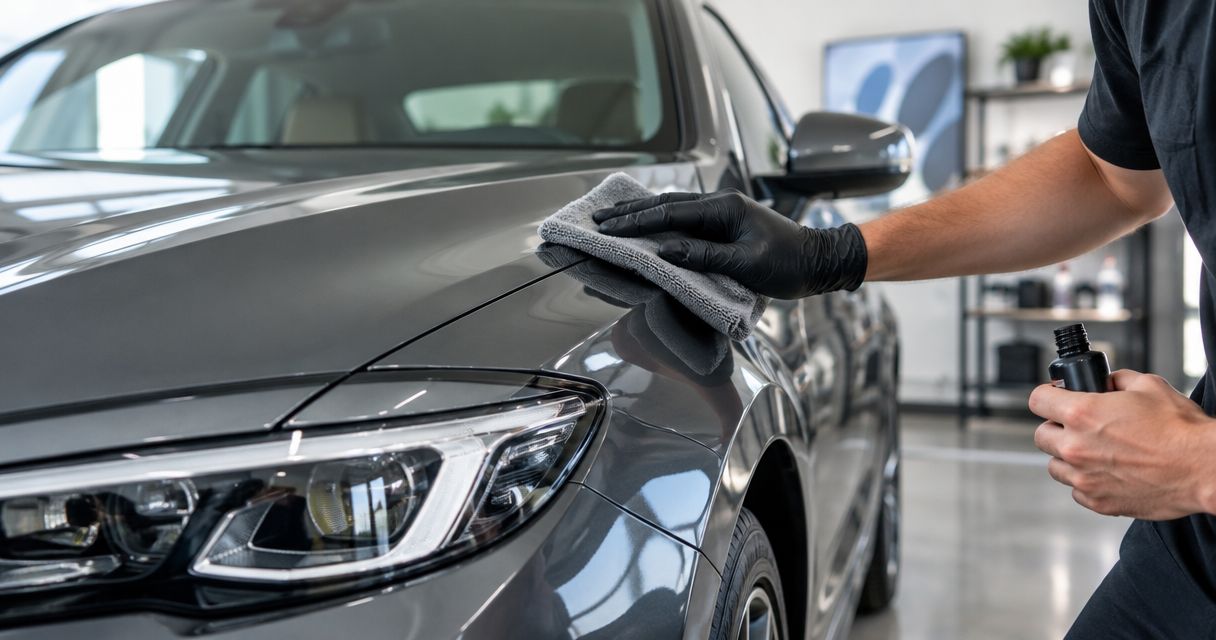
Reapply ceramic coating when an inspection shows the existing protection needs replacement, using the coating manufacturer’s instructions—not a universal yearly schedule. Reduced water beading alone does not prove you need a new coating; contamination, maintenance products, and surface condition need checking first.
- How often should ceramic coating be reapplied? Follow the coating’s instructions and assessed condition, not a universal calendar.
- Royal Touch Mobile Detailing LLC offers ceramic coating; ask for a condition assessment before requesting replacement.
- Ceramic coating maintenance, protective toppers, and full reapplication are different jobs.
- Weak water beading is a reason to investigate, not automatic proof that a coating has failed.
Why this matters
Royal Touch Mobile Detailing LLC’s faith-driven service centers on doing the work right the first time, with services for cars, RVs, and aircraft. For your vehicle, that starts with choosing the work the surface actually needs—not assuming a fresh application is always the answer.
Royal Touch Mobile Detailing LLC is best suited to owners seeking mobile detailing and ceramic coating from one service provider. The practical limitation is that a service description cannot establish how much protection remains on your particular vehicle; that requires its coating history and a surface assessment.
You can discuss your vehicle’s condition with Royal Touch Mobile Detailing LLC. Bring any installation paperwork and explain what changed: water behavior, washing difficulty, visible marks, or the feel of the paint.
How often should ceramic coating be reapplied?
There is no single reapplication interval that applies to every ceramic coating. For your 2026 maintenance plan, start with the instructions for the exact coating installed, then check whether the vehicle’s current condition supports maintenance or replacement.
Use this sequence before authorizing another application:
- Identify the coating. Find the product name, application date, care instructions, and any recorded maintenance. A general description such as ceramic protection is not enough to identify the correct care process.
- Review recent care. Note the soaps, spray protectants, automatic washes, polishing, and body repairs used since installation. These details help explain changes in surface behavior.
- Clean appropriately. Have contamination assessed and removed using methods compatible with the installed coating. Do not jump straight to aggressive chemicals or abrasive treatment.
- Assess the clean surface. Compare different panels and look beyond water beads. Persistent roughness, visible defects, and uneven behavior need separate explanations.
- Choose the next action. Continue routine care, perform compatible maintenance, or prepare for reapplication according to the findings and product instructions.
A coating’s stated service life is useful background, not a diagnosis of your paint today. The guide to how long ceramic coating lasts explains the separate question of expected longevity; this page focuses on deciding whether replacement is actually due.
Maintenance, a topper, or full reapplication?
These services solve different problems. Ask which one is being recommended and why before agreeing to the work.
| Action | Best for | Main benefit | Limitation |
|---|---|---|---|
| Compatible cleaning and maintenance | A coated surface with contamination or a care-related concern | Addresses surface buildup before replacement is considered | Does not recreate coating that has been removed |
| A compatible protective topper | Owners whose coating instructions allow supplemental protection | Adds a temporary surface layer as part of the care plan | Can change water behavior without proving the underlying coating’s condition |
| Full coating reapplication | A surface assessed as needing replacement protection | Establishes a new application after suitable preparation | Requires preparation and product-specific curing care; it is not simply another wash |
Cleaning and maintenance: assess before replacing
A coated vehicle still needs washing. Road film, mineral deposits, and other contamination can sit on the surface and change how it looks or sheds water.
The benefit of maintenance is straightforward: you address the material on the coating before deciding the coating itself is the problem. The limitation matters just as much—cleaning cannot put back a layer that polishing or other treatment has removed.
Protective toppers: supplemental care, not a reset
A topper is a supplemental product applied over an existing surface. Use one only when it fits the coating manufacturer’s care instructions.
Fresh water beading after a topper shows how the outermost surface behaves. It does not establish that the original coating has regained its original condition, and it should not be presented as a replacement installation.
Full reapplication: preparation comes first
Full reapplication means preparing the surface for another coating application. Depending on the paint and the installed product, that preparation can include cleaning, removal of contamination, and correction of defects where appropriate.
Do not approve reapplication without understanding the preparation. Applying more material over an unresolved surface problem does not explain or correct the problem underneath.
Why ceramic coating reapplication timing varies
Your 2026 reapplication decision should account for the coating and the way the vehicle is used. These factors explain why two coated vehicles do not necessarily need the same work at the same time:
- Coating instructions. Different formulations have different application, maintenance, and replacement guidance. Follow the instructions for the installed product rather than advice for an unidentified coating.
- Environmental exposure. Outdoor parking, road contamination, bird droppings, and mineral-heavy water create different care demands. Explain what the vehicle encounters instead of relying on its age alone.
- Washing methods. Abrasive contact and incompatible cleaning products can affect the finish. Tell the detailer how the vehicle is actually washed, including occasional automatic washes.
- Surface contamination. Deposits can interfere with water behavior and appearance. A dirty surface is not a reliable basis for deciding that protection has ended.
- Polishing and repairs. Abrasive paint correction removes material from the surface, while refinishing creates its own preparation and coating requirements. Identify treated panels before planning replacement.
- Vehicle materials. Automotive paint, RV surfaces, and aircraft finishes are not interchangeable. Product suitability and care instructions matter as much as the word ceramic on the label.
These factors guide an assessment; they do not create a universal replacement date. Avoid turning any one of them into a precise lifespan prediction without product-specific support.
What should you check before booking a recoat?
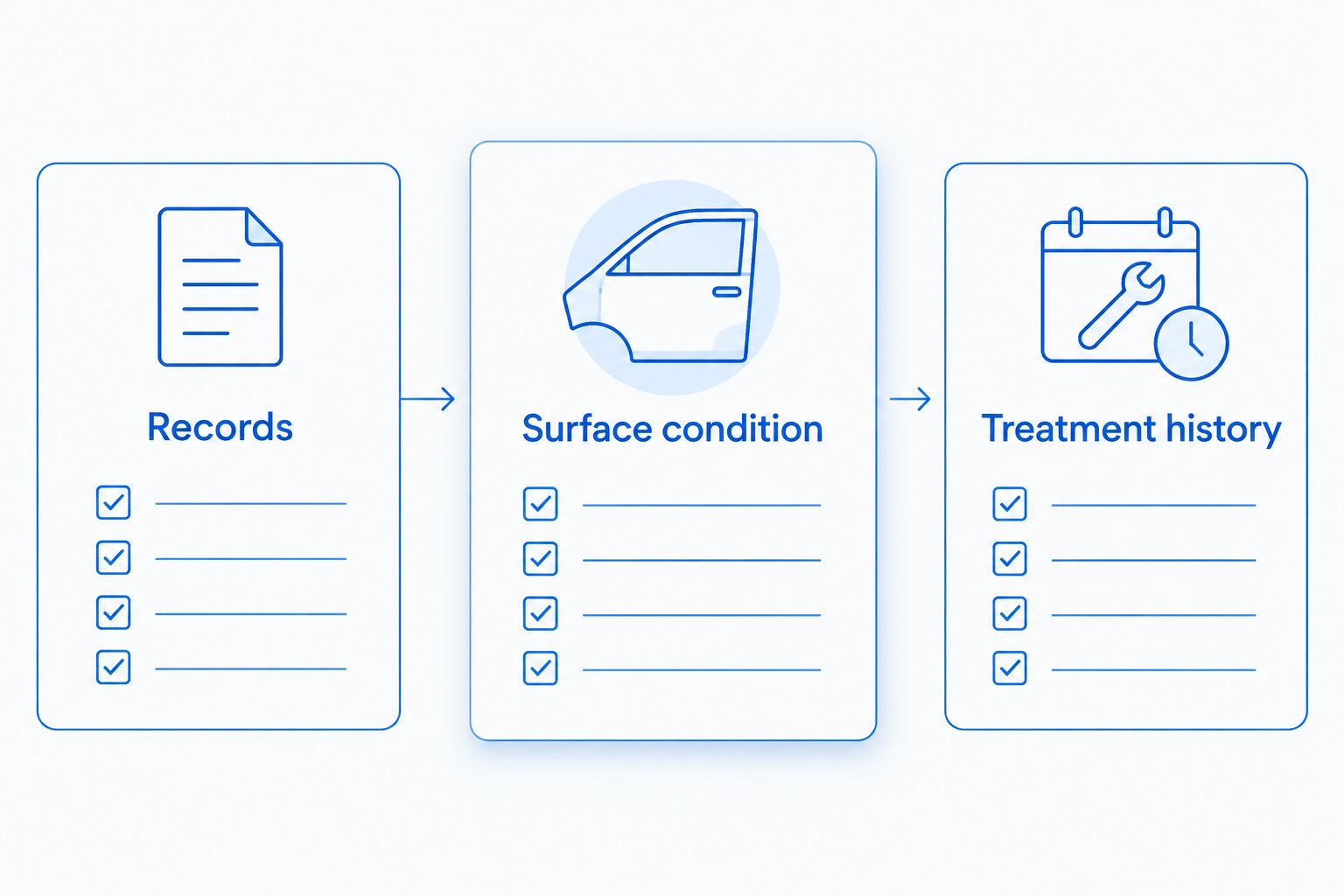
Build your 2026 decision around three practical checks: records, surface condition, and treatment history. Together, they give the detailer a clearer starting point than a photograph of water beads.
Check the records
Find the coating name and installation paperwork. Also note whether subsequent appointments involved a wash, a maintenance treatment, or a full application; those are not interchangeable entries in your service history.
If you bought the vehicle already coated, ask the previous owner or installer for documentation. Without it, describe the protection as unidentified rather than assigning it a lifespan.
Check the surface
Look at the vehicle after an appropriate wash, not through a layer of road film. Record visible spotting, rough areas, dull sections, and changes that appear only on certain panels.
Do not use touch alone to diagnose coating failure. A rough surface can indicate contamination, while a smooth surface does not prove that a particular protective layer remains intact.
Check the treatment history
List recent polishing, scratch removal, repainting, or strong cleaning treatments. Even if the rest of the vehicle behaves normally, an individually treated panel needs its own assessment.
Ask whether the recommended work applies to a panel or the whole vehicle. A local concern deserves a local assessment before it becomes a full-vehicle replacement recommendation.
Does weak water beading mean ceramic coating has failed?
Weak water beading alone does not establish ceramic coating failure. Dirt, mineral deposits, and previously applied maintenance products can affect the behavior you see on the outer surface.
Water behavior is still useful information. Tell the detailer whether the change happened across the vehicle, followed a particular wash, or appeared after work on one panel.
Avoid a harsh home experiment to test the coating. Aggressive cleaning or polishing can alter the very surface you are trying to assess, making the original concern harder to separate from the treatment.
Do you need to reapply ceramic coating after polishing?
Polishing can remove or alter an existing ceramic coating, so the polished area needs assessment before you assume it remains protected. The required next step depends on the correction performed and the coating’s application instructions.
This matters for swirl removal and isolated scratch work. Ask the person performing the correction how the treated surface will be prepared and protected afterward.
Do not assume the entire vehicle needs another application because one panel received correction. Equally, do not assume an untouched-looking panel retains its coating after abrasive work.
Should a daily driver and a stored vehicle follow the same schedule?
A daily driver and a stored vehicle should follow their respective coating instructions, with maintenance decisions based on actual exposure and condition. A shared application date does not establish an identical replacement need.
Daily use brings its own washing and contamination history. Storage changes that history, but it does not eliminate the need to inspect the finish or follow product guidance.
For a 2026 care plan, describe how the vehicle is used rather than choosing a schedule from the vehicle category alone. Luxury paintwork deserves careful assessment, but a premium badge does not determine coating lifespan.
What changes for RVs and aircraft?
RV coating decisions start with identifying the surface and the product used on it. Do not assume instructions for automotive clear coat apply to every RV exterior material or component.
Aircraft require an additional boundary: approved maintenance practices and material compatibility come first. Private owners, flight schools, and charter operators should coordinate cosmetic work with the responsible aircraft maintenance personnel, particularly around sensitive components.
The benefit of a vehicle-specific plan is appropriate care. Its limitation is that a general car-coating schedule cannot substitute for the requirements of a particular RV surface or aircraft finish.
Questions to ask before approving the work
A useful recommendation should explain both what needs doing and what does not. Ask for the reasoning in plain language:
- What coating is currently on the vehicle, if it can be identified?
- What evidence supports replacement rather than cleaning or maintenance?
- Which panels need work, and why?
- What preparation is included before the new application?
- What care instructions apply after application?
- How will the next maintenance or inspection decision be made?
For your 2026 booking, keep the answers with the service record. That creates a useful reference for future care without pretending every owner needs the same appointment interval.
Discuss Your Ceramic Coating Care
Share your vehicle’s condition and coating history before choosing the next service.
FAQ
How often should ceramic coating be reapplied?
Reapply ceramic coating according to the installed product’s instructions and an assessment of its condition, not a universal annual schedule. Check whether compatible cleaning or maintenance addresses the concern before replacing the coating.
Does ceramic coating need to be reapplied every year?
Ceramic coating does not have a universal yearly replacement requirement. Follow the specific product’s guidance and distinguish any required maintenance appointment from full reapplication.
Can I tell whether my ceramic coating is gone by spraying water on it?
Water behavior alone cannot establish whether a ceramic coating is gone. Contamination and supplemental products affect the outer surface, so assess the cleaned finish alongside its treatment history.
Can I put another ceramic coating over the old one?
Do not apply another coating over an unidentified existing layer without checking the new product’s preparation and compatibility instructions. More material is not a substitute for a correctly prepared surface.
Does a ceramic coating maintenance spray count as reapplication?
A ceramic coating maintenance spray is not automatically a full coating reapplication. Its purpose and compatibility depend on the product, and it does not establish the condition of the original coating.
Should I reapply ceramic coating after paint correction?
Paint correction can remove or alter ceramic coating, so the corrected area needs a protection assessment. Ask how the treated panels will be prepared and protected after polishing.
Can Royal Touch Mobile Detailing LLC help with ceramic coating care?
Royal Touch Mobile Detailing LLC offers mobile detailing and ceramic coating services. Share the coating name, installation history, and current concerns when discussing the appropriate service for your vehicle.
One last thing
Your most useful coating-care tool is a clear service record. Save the product name, application date, care instructions, and details of later polishing or maintenance together.
Before you book another application, ask one question: what evidence shows this surface needs replacement rather than maintenance? A clear answer keeps the focus on protection and doing the right work—not simply adding another layer.